
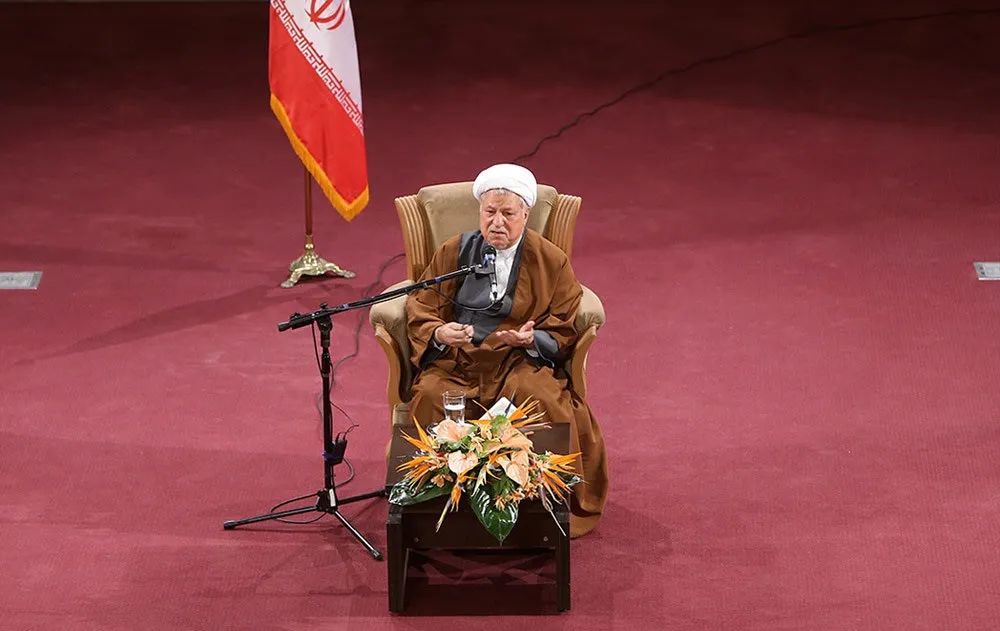
Because of last night's lack of sleep and the long trips by car, I was tired and exhausted. In the morning, from this same accommodation, we visited the Kaaba. Because I am accompanied by a large number of officers in military uniforms, I go less often inside the shrine. In the Al-Diyafah Palace, on the 15th floor where we are, there is also a mosque overlooking.
Due to last night's lack of sleep and the long car trips, I was tired and exhausted. In the morning, from this same residence, we performed the pilgrimage of the Kaaba. Because of the accompaniment of a large number of agents in military uniform, I go less inside the shrine. In the Qasr al-Diyafa, on the 15th floor where we are, they have also considered a mosque overlooking the shrine, with large windows; it is as if we are on the roof of the shrine. The scene of the prayers and circumambulations is interesting and worth seeing.
At nine in the morning, to see the development and service projects, we went to Mina. They are busy installing new fireproof tents. After last year's fire in the tents of Mina, such a decision has been made. The Minister of Hajj and a group of Saudi officials were waiting for us.
The manager of the Bin Laden Company and the Minister of Hajj gave explanations; they are spending nearly two billion riyals on creating 30 thousand fireproof tents, which is one-fifth of the needed tents. They are equipped with coolers and an alarm system and sprinklers. They said that among the three options—1- creating buildings in Mina, 2- continuing the previous traditional situation, 3- creating tents of this type—they considered the third way expedient, and its cost will be taken from the pilgrims over two years, instead of the money that was previously given to the mutawwifs for tents. The area of Iran's tents is near completion and the work continues in other places.
Then we visited the huge water reservoirs used by the project on top of the mountains. We saw the large reservoirs of one million six hundred thousand cubic meters of water and also the innovative project of digging a tunnel in the mountain and closing its two sides and insulating it as a water reservoir, which was chosen for speed of action; it is interesting, but they are building them expensively. There they explained that in the city of Mecca and Mina, they have so far implemented about 53 kilometers of wide and equipped tunnels, and they spend about 30 million dollars for each kilometer.
Then we visited the emergency center and the site of the stoning of the pillars and the bridges and other places. The Minister of Hajj gave explanations about the Hajj program and the number of Hajj pilgrims and Umrah performers. Last year they had about two million Hajj pilgrims and 600 thousand Umrah pilgrims, which is more than the capacity of the shrine and the holy sites. The restrictions they have placed for foreign and domestic pilgrims to control the crowd; currently each person is allowed to perform Hajj only once in five years, but Umrah has no restriction and quotas have been given to foreign countries.
He said that for Umrah, all countries except Iran can come to Mecca without quota restrictions, in any number they want, but they do not come much; but Iran has a quota and if it is freed, more will come. It was arranged to investigate removing the restriction on Iran's quota. He said the most orderly pilgrims in the world are the Iranians. He said that overall the government's spending on Hajj and Umrah is more than its income, but for the macroeconomy of Saudi Arabia, overall it is profitable; the private sector benefits.
The minister's information about the matters related to Hajj was not sufficient and in the face of my many questions, he ran into difficulty; especially when passing in front of the Khayf Mosque, he was unable to answer a question about the meaning of Khayf and the reason for its naming, and also the question about the reason for limiting the number of Iran's Umrah pilgrims despite the capacity to accommodate.
From there we went to Muzdalifah and toured the area by car. They said the pebbles that the pilgrims take from here to Mina are returned from Mina to here again for the next year. We went to Arafat. Most of the lands of Arafat have been planted with trees and we went up the mountain of "Jabal al-Rahmah." The cultural heritage officer gave explanations, but his information was incomplete. He spoke about the presence of the Prophet (PBUH) there and the possible antiquity of a mosque from the time of Hazrat Abraham. I gave an interview to Riyadh radio about my trip and the situation of Saudi Arabia and the development projects of the holy sites.
From there we moved toward the city of Taif. From Mecca, two roads go to Taif. One is the same Jeddah-Mecca-Dammam highway and the other is the mountain road, most of which is also a highway. The region is mountainous and has sparse forests and protected animals like monkeys and so on. Before reaching the city, we entered the Sheraton Hotel in the "Hada" area. The governor of the region, Mr. Fahd bin Abdulaziz, and other officials of the city welcomed us.
We prayed the noon and afternoon prayers. There was an introduction and welcome ceremony. They gave gifts; local perfumes and books explaining the situation and history of Taif. Then we had lunch, where the variety of local and general foods had turned the ceremony into a food exhibition; they have delicious foods.
Then, with a double-decker bus, we saw the various sections of the city and its surroundings. In the front of the upper floor, we sat with the Prince and the translator. They said they have about 200 millimeters of annual rain and sometimes swift floods and hail. They have built about 30 small dams and barriers on them. We saw two dams on the route. Many tanker trucks were lined up to take water to the villages and water-scarce areas. They bring 64 thousand cubic meters of water daily from the Red Sea from a distance of 200 kilometers, which they desalinate.
He showed the place of the Prophet's entry into Taif where he was harmed by the people, and the garden where a person hosted that Holiness, and the "Kaw'a" Mosque where the Prophet sat after being harmed, because he had placed his hand under his chin, and the Martyrs' Cemetery, and the "Wadi al-Nabi" area where Hazrat Solomon's conversation with the ants took place on a trip to the south, and they said there are still all kinds of ants there, and the Ibn Abbas Mosque, which they said is the third most important mosque in Saudi Arabia, after Mecca and Medina.
The point that they said was among the properties of Amr al-As and Sulayman, the Marwanid caliph, on a trip to Taif told Umar that I have a request from you and you must not refuse, and Umar said, on condition that you too accept a request. Then the caliph announced his request, which was the transfer of this property, and Umar in return [made] his request that the caliph return this property to him, and they consider this an example of Umar's brilliance; I said it is not consistent with the facts.
The city is vast and clean and has boulevards and many trees and has an agricultural and animal husbandry and tourism nature. On the return, we visited the Miqat of Qarn al-Manazil in Sabil al-Kabir, which is beside the Riyadh-Mecca highway. The people of Yemen and Iraq and all countries who come from that road put on ihram here. They have built a good mosque and facilities.
Near sunset we reached Mecca. We postponed the program of seeing the Hira Cave to tomorrow due to fatigue. With an hour of sleep and rest, I compensated for the lack of sleep. I wrote part of the backlogged memoirs. These days the memoir notes are becoming long and fill the remaining spaces in the previous pages.
We went for the recommended circumambulation. According to the previous arrangement, they opened the door of the Holy Kaaba for us. They placed stairs and took me and the companions inside the Kaaba, which is a very important and valuable event in our lives; although previously Mr. Prince Abdullah in Riyadh had told me personally that the ladies should not go inside the Kaaba, because the clerics oppose it, but they allowed the ladies to enter too, and a group of Arab and other men and women also came with us.
The head of the Two Holy Shrines and the Friday prayer leader and one of the imams of the Masjid al-Haram and the key-bearer of the Kaaba, who according to tradition is from the Banu Shaybah tribe, and Engineer Bin Laden, who is responsible for the repair of the House of God, also welcomed us there. The members of the embassy and the Hajj Organization also came.
Mr. Iranmanesh was reciting prayers. Because the environment and the interior of the Kaaba were dark, we used a flashlight. In the four corners of the Kaaba, we prayed eight rak'ahs and near the first of the three pillars of the house, two more rak'ahs. The companions had a very good feeling. After completing the pilgrimage of the men, it was the women's turn. I spoke with the key-bearer of the Kaaba. He said that from the time of the Prophet (PBUH) until now, the honor of key-bearing has been in their tribe.
Then we visited the various sections of the development of the Holy Shrine; we also saw the second floor and the roof. Engineer Bin Laden gave explanations. He said they have identified a stone mine in Greece whose stone material prevents heat absorption and therefore in summer the stones do not become hot under the sun. He said they have paved the free courtyard of the shrine with that stone, and it is such that people think pipes of water or cold air pass under the stones; incidentally, our ambassador, before hearing this news, was saying the same idea of cooling the stones.
I asked the Saudi agents to call the guards away from the shrine so that they would not be around me during the circumambulation; they accepted with dignity, but they still kept a number. We performed a circumambulation and a prayer and a supplication and returned to the residence.
I had dinner. For food, here they prepare everything in special containers and keep it warm automatically at the desired temperature in a device with electric heat, and we ourselves choose the food. Tonight I used sheep's brain and tongue and so on. Some of the companions who do not reach the food on time come late and eat from the remaining available food, which is usually plenty.
I read the news from the computer. The joint statement of mine and Prince Abdullah has had wide global coverage, and Mr. Mohammad Yazdi's speech at the Friday prayer, in response to the left faction's criticisms about the torture of Tehran municipality managers, has peaked and is noteworthy as the beginning of the battle between the left and the right in Iran. Mr. Hossein Marashi, who is with us, also said that the Society of Fighting Clergy has also written a letter to the Leadership in this regard, and the members of parliament from the Hezbollah faction of the Society have also written a collective letter; after the released prisoners in their session gave them an account of the mistreatments.
At the Shajara Mosque, when putting on the ihram clothing, I handed over my shoes to the guards; unfortunately they left the shoes there.
Take less than a minute, register and share your opinion under this post.
Insulting or inciting messages will be deleted.
Sign Up