
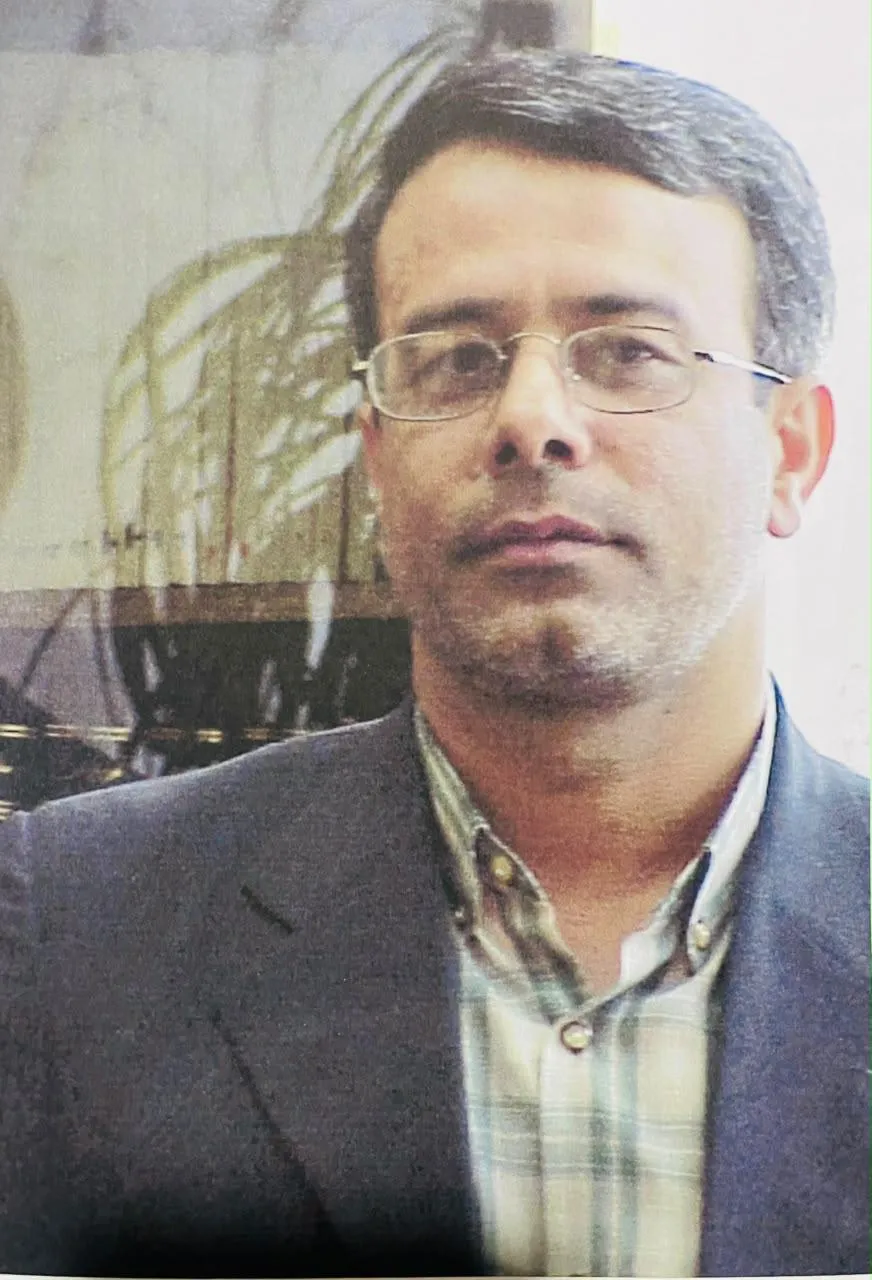
I do not know whether politics chose me or I chose politics. I suddenly fell into politics.
Rah va Rahavard
An Experience-Narrative of a Life
Mohammad Kianoush-Rad
Part Nine
**Don't go that way, come this way**
For a few days I had bought two books: "The Songs of Khayyam" and "The Benefits of Vegetarianism" by Sadegh Hedayat. The first chapter of the vegetarianism book had an interesting title: "The Devotees of the Belly." Hedayat had written: "Hunger is a treacherous commander whose tyranny does not leave us in peace for a moment—we must eat to live. Today we eat, tomorrow we eat, always we eat. A blind and ravenous desire..."
I was sitting in my room leafing through the book when my father came and said: "Get up, Abdullah ibn Saeed is at the door and has work with you." In those days, we knew Abdullah Tarfavi by this same name. With Abdullah, we walked a few steps away from the house. Mohammad Ali Maleki was on a motorcycle. We went toward him. Abdullah said: "We are going to do something. Are you ready?" I said: "Yes, I am." Mohammad Ali said: "Then wait. Pahlavi Street, the Central Saderat Bank." I asked: "When?" He said: "We will let you know."
In 1976, at the Ahvaz Teachers' Training College, only two of the female students wore headscarves. My sister and Fatemeh Alavi. This was enough for the religious kids to find each other in that suffocating atmosphere, join together, and form a group. In the university and the teachers' college, the leftists were traditionally more active, and the religious ones had been expanding their activities since the 1960s and 1970s. In this situation, both currents, in competition with each other, were seeking recruits and attracting forces.
For this reason, Abdullah Tarfavi, Rahim Kordouni, Yousef Faryabi, Fatemeh Alavi, and some other religious kids from the teachers' college would come and go at our house. In this way I became connected to them. After that, through Abdullah, I became acquainted with Kazem Alam al-Hoda, Kazem Shafaat, Esmail Kouroshavi, Yadollah Golabkesh, and others, and the ground for cooperation with them was formed.
I looked at study and lessons—both before becoming political and after it—to the extent of fulfilling an obligation. At that time, I had absolutely no conception of what I wanted to do in the future or what profession I would have. Shariati had said: "If someone can be a good teacher, he has betrayed [his duty] if he takes up another good work."
Later I thought perhaps I could be a mediocre teacher and a thirsty water-carrier. But when and how, I had no thought or plan. As "Ayn al-Sad" says, some people are springs, some are water-carriers, and some are thirsty passersby. Tired thirsty ones who are looking for a pure sip of water. I was both thirsty and wanted to be a water-carrier. To take water from the spring, drink a sip, and deliver a sip to another.
After passing through the amusements and games of childhood, I was happy in this state. I did not think about anything else—not even studying. In the trap of events, I was being dragged this way and that. I do not know whether politics chose me or I chose politics. I suddenly fell into politics.
The human aspect of politics was valuable and attractive to me. By falling into the valley of politics, every day more than before I understood that politics is the science or art of expediency and agreement, not the discovery of truth. The one who seeks truth will find less truth in politics. Nevertheless, I understood that politics is neither for amusement nor for addiction—it is the noblest of works and sometimes the dirtiest of works.
Anyway, my cultural activities became tainted with politics. With a group of the mosque kids, we would read and review "Tafsir-e Novin" and "Partovi az Quran" at home and seek water to the extent of our thirst.
With Mehdi I went to the Maktab-e Quran. Mohammadzadeh, the founder of Maktab-e Quran, was originally from Bushehr. He wore a suit, sometimes with a professor's beard, and was warm and well-mannered. The lecture hall of Maktab-e Quran was arranged with chic chairs. The speakers spoke behind a tribune. The format of the meetings was new to us and attractive in its own way, and evoked an atmosphere like the Hosseiniyeh Ershad. Maktab-e Quran was an unprecedented event and a new movement in religious-revolutionary activities in the 1970s in Ahvaz. At this time, Maktab-e Quran was at the forefront among the mosques and religious circles of the city.
Hadi Karami, Kazem Alam al-Hoda, and Seyyed Ahmad Mousavi played a role in carrying out the programs of Maktab-e Quran. Al-e Eshaq, Dr. Sabour Ardobadi, Mousavi Jazayeri, Parvaresh, Ahmad Beheshti, Hadi Karami, Motahhari, Qaraati, and Dr. Beheshti were among the speakers of Maktab-e Quran. After each lecture, Taher Obayat, in the darkness of the night and in a quiet corner on Kaveh Street, would sell Shariati's books, which had been printed under the pseudonyms Ali Mazinani or Ali Sabzevari.
I obtained a number of Shariati's books and sold them privately to my high school classmates such as Rahim Kaab Omair, Shirazi, and some trusted acquaintances in the small room I had on the roof of the house.
My cultural activities gradually extended outside Kianpars too. Shirazi lived in the houses of the employees of the Sugar Refining Company on the road to Daghaghleh. I would go there by Honda 110 motorcycle to give speeches. On the way back, it was me and the night, and the desert and the cold that reached the bone. But I did not care.
I also went to the mosque of the Kuy-e Nirou—the houses of the employees of the Water and Power Organization. There I became acquainted with Majid Marvani, Khosrow Shah-Mohammadi, Eskandar Hayyavi, Mohammad Reza Marvani, and a group of the mosque's youth. A friendship that still stands. At the invitation of Majid Marvani, I participated in meetings held for discussion and dialogue, and during the days of Muharram, I had classes and speeches for the youth about the goals of Imam Hussein's uprising. I expressed the views of the book "Shahid-e Javid" without mentioning the name of the book or Salehi Najafabadi. Some of those who participated in my classes have today become my teachers.
In these days, the Hojjatiyeh Society was active and had become a fresh rival for the Muslim fighters. Between the Hojjatiyeh Society and political activity, I had to choose one. For a short time I went to the Hojjatiyeh Society. In the initial course on the principles of beliefs of the Society I participated, but it did not last long and I abandoned them. My choice was political activity.
To be continued...

Take less than a minute, register and share your opinion under this post.
Insulting or inciting messages will be deleted.
Sign Up