
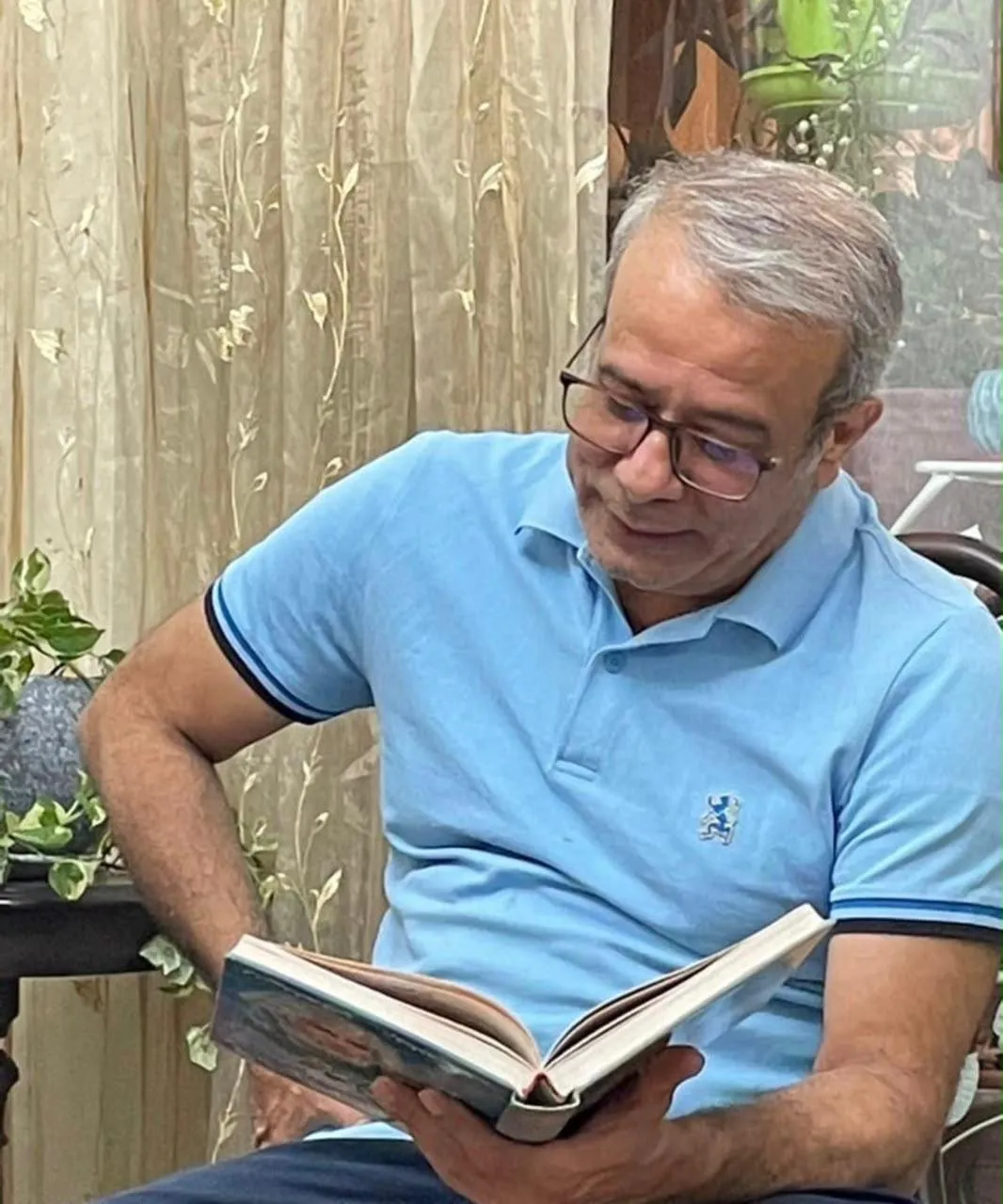
From the 30-meter street, I used to buy Bakhsam bread and sell it to construction workers. I also worked as a laborer myself. I would stack the bricks in bundles and hand them to the foreman.
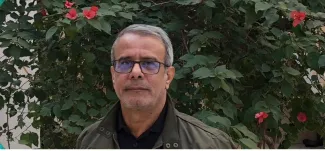
Memoirs and Experience-Narrative of Mohammad Kianoush-Rad, Representative of the Sixth Term of the Islamic Consultative Assembly
Rah va Rahavard
(An Experience-Narrative of a Life)
Mohammad Kianoush-Rad
Part Six
**The Pleasure of Adventure**
The pleasure of adventure was the best discovery I made in my youth.
Mehdi's uncle was the pole of the Khaksariyeh order in Ahvaz. His Khanqah was opposite the current Friday prayer Mosalla of Ahvaz, where now there is no trace of the Khanqah and the Khaksariyeh dervishes in Ahvaz; now a small group of Khaksariyeh are in Shushtar.
I wanted to meet the dervishes up close. To see what the dervishes say. What kind of place a Khanqah is.
I wanted to understand everything myself and see it up close.
We made an appointment and went with Mehdi to visit the head of the Khanqah.
In Ahvaz there were dervishes such as the Zahabi, the Khaksariyeh, and the Nematollahi. Rouhani was the pole of the Khaksariyeh in Ahvaz. Rouhani's house was right behind his Khanqah. He received us warmly.
We were teenagers, 15 or 16 years old. Entering a place that admits few besides its own members was exciting for me.
Now what should I ask? I was waiting to face a man with long hair and beard, a disheveled appearance and special clothing, as I had heard and seen. But I faced a man with an appearance different from what I had imagined.
The Friday morning of an autumn day in Ahvaz, the air is cool, pleasant, and enjoyable. Absolute silence ruled the Khanqah. The only sound was the untimely crowing of a rooster that echoed in the solitude of the morning.
After crossing the Khanqah courtyard, we climbed a few steps at the threshold of the large porch. The Khanqah porch was held up by two tall columns. The pole's room was simple and unadorned.
I was afraid and anxious, but the sense of curiosity and adventure was attractive to me.
The blind dervish was sitting on the ground. Around the room, a white spread was laid out. The dervish had a neat appearance and wore a white, clean shirt. Hearing the sound of our arrival, he rose. He carefully turned toward the direction of the sound and spoke to us with calm and dignity.
After greetings and pleasantries, cautiously and respectfully, I began my words and without any introduction questioned the very existence of the Khanqah. I stubbornly repeated my question.
I would not back down, but he answered calmly and deliberately. His calm added to his allure.
He said, ask whatever question you have.
I told him:
Why do you sit in the Khanqah? Why do you not come to the mosque? Why is the name of the Muslims' place of worship, the mosque, mentioned in the Quran, but there is no mention of the Khanqah, yet you gather in the Khanqah and recite dhikr and pray?
He said we are no different from you and other Muslims. We are also Shia and accept the Imams and are people of prayer and fasting.
He evaded answering my main question, and I did not get a clear and convincing answer from him. I was not convinced, but politeness did not permit continuing the debate.
I had learned this argument from my uncle. My uncle Majid had good Quranic and religious studies. Whenever I went to their house, my time was spent discussing and asking about religious matters.
Uncle Majid was a railway employee. He was religious and pious. He was seriously opposed to a few things: the Baha'is, the dervishes, and Ali Shariati. I learned things from him, but at that time and regarding Shariati, he was not able to convince me.
Another group of dervishes were in Kianpars, in our neighborhood. Once I went to their Rumi recitation session; they were Nematollahi dervishes.
Someone was sitting at the top of the gathering and reciting poems from Rumi. The gathering of dervishes, or the poor ones, sitting opposite the Rumi reciter, would go into a trance-like state by saying the dhikr "Hu Hu."
Besides Ahvaz, in Dezful too there were Zahabi dervishes and Khaksariyeh dervishes. Now the Khaksariyeh dervishes have no presence in Dezful. But in Shushtar a small number of Khaksariyeh dervishes reside.
The head of the Zahabis in Dezful was Dr. Hossein Attarian, and another branch of it, which is apparently a splinter of the Zahabiyeh, is called Mahdaviyeh, and its head is Mr. Mohseni.
According to Ibn Battuta, in his travelogue, many dervishes lived in Izeh. In the Atabakan period, in the city of Izeh alone there were forty-four Khanqahs.
Another part of my youth passed in the pleasure of working.
In the summers I worked. We did not have a comfortable life, but our financial situation was not bad either.
There was no need for me to work. Working was enjoyable for me and gave me a sense of greatness and independence.
The family never advised or encouraged me to work. It was my own decision. They did not object either.
When my father was not in his small fruit shop, I would stand in his place. The mosque kids would gather around me. My father would say, women do not come to the shop because of these young men.
When my father came, he would say: "Sir, go, go, you do not need to be behind the counter. With all these young men you are driving the customers away."
From the 30-meter street, I used to buy Bakhsam bread and sell it to construction workers. I also worked as a laborer myself. I would stack the bricks in bundles and hand them to the foreman.
For a while I was also an apprentice in blacksmithing and welding.
In the newly built houses of the national railway, I was employed to water the lawns. The money I earned was spent on going to the cinema, recreation, buying clothes, and traveling to Tehran, Qom, Shiraz, and Isfahan.
In the years 1975 and 1976, through the window of the Khanqah, I came to know Rumi and Shams. On a trip to Tehran in 1977, with Ahmad and Mehdi, I bought the "Collected Works of the Masnavi-ye Ma'navi" and the "Divan of Shams Tabrizi" and the "Spiritual Stations of Khajeh Abdullah Ansari" written by Mohsen Bina.
I had taken the book "The Third Line" by Naser al-Din Sahebzamani from my sister and read it.
Shams's words were engraved in my mind. "That calligrapher wrote three kinds of script: one only He read and no one else, one both He and others read, and one neither He nor others read. That third line is me."
I loved Rumi and Shams. The melodious poems of the Divan of Shams would excite me in solitude. I would dance without dancing.
Sufism in its historical course has had many positive effects from the individual aspect as well as in art, literature, and music, but from the social aspect it has serious room for reflection.
Pole-making and master-making, even if they had value, belonged to the traditional world. Today the time is a different time.
Do not entrust your reason and intellect to another.
With your sound reason
know the way.
To be continued...

Take less than a minute, register and share your opinion under this post.
Insulting or inciting messages will be deleted.
Sign Up