
In the face of one who wants to ignore you, negate you, humiliate you, and break you, something must be done.
Memoirs and Experience-Narrative of Mohammad Kianoush-Rad, Representative of the Sixth Term of the Islamic Consultative Assembly
Rah va Rahavard
An Experience-Narrative of a Life
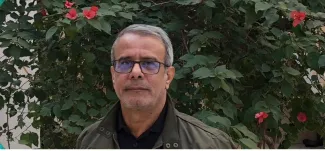
Mohammad Kianoush-Rad
Part Five
**I choked up. I did not cry.**
I felt hurt and upset. I felt he was mocking me. I was stuck on what to say. I could not speak. The lump in my throat had tied my tongue. If I wanted to speak, I would certainly have burst into tears. I did not want to cry. That is, I should not have cried. But I had to do something.
In the face of one who wants to ignore you, negate you, humiliate you, and break you, something must be done. But one should not cry. I swallowed my lump. I preferred to do something without speaking. Something better than begging and requesting.
I had not yet started school. On West Kaveh Street, before reaching the 24-meter street, there was a skilled and famous tailor named Mr. Mafakher. He was supposed to sew a shirt for me. Happy to get the shirt, I went to the tailor shop several times. Mafakher would promise every day and bring an excuse for delivering the shirt. One time he would say only the collar is left to sew, come tomorrow. The next day he would say only the buttons are left to sew, it will be finished tomorrow. The day after he would say it just needs to be ironed. It is finished, come tomorrow.
I could not bear it. Angrily, I picked up the large spool of white thread from his sewing shop, with which he was busy sewing, and ran away. Like today's professional thieves, purse-snatchers, and phone snatchers, I jumped on his industrial sewing machine, snatched the large spool of thread, and fled into the crowded crowd of the Kaveh bazaar.
I was running. The tailor was running after me too. He was shouting. He was out of breath, but I was getting farther away faster.
Mafakher was tall, thin, bony, and spoke through his nose and rapidly. In his shop, he would sit behind the sewing machine in his pajamas. The story of Mafakher running in pajamas and without shoes in the bazaar, chasing a fleeing child, had made the bazaar merchants laugh—that Hamid's son had taken the spool of thread from Mafakher's sewing machine and run away.
My anger and rage and aberrant reaction formed suddenly and instantaneously. False promises, even in trivial matters, also drive children to frustration, agitation, and anger, and ultimately to rebellion and disobedience.
About forty years after this incident, I went to his house in Bagh-e Sheikh. Behind the Oksin cinema. Ashamed, embarrassed, and apologetic. He had become old and decrepit. Recalling that memory, we laughed a lot.
I asked him what he remembered of old Ahvaz. He said: Now when I look at Ahvaz, I go crazy. He was circling his hands in the air and around his head. He said everything has changed. This same 30-meter street was once a large canal. It was in a miserable state. Livestock would pass through it. Water and sewage flowed in it. And from the bazaar and Bagh-e Shekareh and Obbareh... and we talked of everything. At the end I told him, now when should I come to pick up my shirt? The old man laughed a lot.
My father used to buy the Ferdowsi magazine and the Negin magazine for Mehri. Sometimes a poem by Mehri was published in it. One of our religious relatives expressed surprise at seeing these magazines in our house.
My father said that because of reading the book "Mohammad, a Prophet Who Must Be Known Anew," he named me Mohammad. The book was by Virgil Gheorghiu, translated by Zabihollah Mansouri.
To go to school, there was no vehicle to speak of. The road was dirt and desert. On the way back from school, we would pass in front of the 92nd Armored Garrison. On the way back, I saw the Shah up close and easily twice. Another time I saw Farah. She was going there to visit the children's orphanage in the second roundabout of Kianpars. Farah was standing in a white, open, very luxurious and beautiful carriage and expressing her feelings to the people.
After the revolution, the orphanage was placed under the authority of the Welfare Organization. The Welfare Organization demolished the orphanage and turned it into a collection of commercial units and sold them.
A large part of the lands of Kianpars belonged to Arbab Fereydoun, a Zoroastrian. The Bastani family invited us to a celebration program on Dez Street in Amaniyeh. The Zoroastrians had also built the Clock Roundabout. Dariush, Parvin, and Parivash were the children of the Bastani family. This family was such that Mr. Bastani would give a votive offering on the day of Ashura.
The hall was full of people. A group of young people in white clothes were singing a hymn from Zoroaster's "Gathas." The white clothes, the smell of perfume and incense, the flame of the sacred fire, the spiritual calm combined with silence, had drawn the crowd into a halo of heavenly imaginings. I was at the end of the hall, watching the ceremony through the crowd.
We grew up in the mosque. I was the muezzin. I would say the call to prayer afterward. During the months of Ramadan, in turns, I, Mehdi, and Ahmad would say the call to prayer from the loudspeaker.
In those days, with the Friday prayer leader of the mosque, Mr. Sheikh Shafiei, who was one of the Iraqi returnees, I read the book "Bab Hadi Ashar." From that time I became interested in philosophy and rational-argumentative discussions. I learned the discussions of the cause of causes, circularity and infinite regress, the discussions related to the Necessary Being, the Possible Being, and the Impossible Being, and so on, from Mr. Shafiei. The question is sometimes more important than the answer. My interest in philosophy started here.
I also read the book "Jame' al-Moqaddamat" for a few sessions, but I found no inclination in myself and abandoned it.
Mr. Shafiei was a very prejudiced person. He would say that in the month of Muharram, when everyone is mourning, in Arab countries they hold celebrations. He had such prejudice or zeal for religion that when saying these words, his hands and chin would tremble with distress. Of course, the month of Muharram is the beginning of the Hijri lunar year, and perhaps on this basis, such a thing may have occurred somewhere, but its connection to joy for the martyrdom of Imam Hussein seems far-fetched.
Today I have learned that nothing should be accepted without reason.
Today I think pure reason is not possible.
The heart and desire sometimes direct our reason too.
I have learned that a human being, perhaps in particular spiritual situations, accepts reasons better and more easily, and in other conditions, regards the same reasons as nothing.
To be continued...

Take less than a minute, register and share your opinion under this post.
Insulting or inciting messages will be deleted.
Sign Up