
At that time, in our old neighborhood, meaning Ferdowsi Street, a custom called "Omar-Koshan" or Eid al-Zahra was held during the month of Rabi' and on the day of the death of the second caliph, Omar.
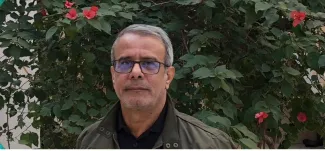
Memoirs and Experience-Narrative of Mohammad Kianoush-Rad, Representative of the Sixth Term of the Islamic Consultative Assembly
Rah va Rahavard
An Experience-Narrative of a Life
Mohammad Kianoush-Rad, Part Three
**The Ardor of Inquiry**
The city of Ahvaz was also gradually expanding. In addition to the "Old Ahvaz" area, three new areas of Ahvaz were gradually coming to life.
Amaniyeh, with the opening of the customs and government offices; the Bagh-e Moin area, through the efforts of Moin al-Tojjar; and Hafez and Ferdowsi Streets and several streets around them, which were mainly made up of craftsmen and wholesalers. The end of Ferdowsi, Hafez, Nezami, and other streets led to Zand Street. After that, there were shanty houses. They called Zand Street "the end of the asphalt."
The residential area of the oil company, "New Site," had a modern, beautiful, exceptional, and very different condition from other residential areas of Ahvaz.
In the middle of the Karun—from the current Pahlavan Street to the other side of the Karun, meaning the current Ameri Bazaar—a series of rocky, waterfall-like protrusions has divided the Karun into two parts.
In my youth, to swim in the river, we would go to its waterfall section at the end of what is now Pahlavan Street in Ahvaz.
There, for the first time, I felt death. I acted fearlessly and foolishly and stood with difficulty on top of the main rock. The pressure of the water pulled me under and made it hard to come up. Finally, frantic and with great struggle, I pulled myself up. After being saved, I had experienced a terrible but sweet thing.
Anyway, with the entry of commercial and cargo ships into the lower Karun—or, as the locals of that time called it, "Dejil"—with the concession of Naser al-Din Shah to the "Lynch" brothers, an important step in the modernization of new Ahvaz began on the ruins of the eastern part of the ancient and forgotten "village-city" of Ahvaz.
I have described the neighborhoods of Ahvaz and the quality of the city's expansion in the story "Baskul, the Shadow of the Leafless Tree" and in the book "The Best Time to Die."
At that time, in our old neighborhood, meaning Ferdowsi Street, a custom called "Omar-Koshan" or Eid al-Zahra was held during the month of Rabi' and on the day of the death of the second caliph, Omar.
They would make a wooden figure and burn it with celebration and joy. Some wore red clothes, and even some men dressed in women's clothes and engaged in dancing and buffoonery.
This custom has long been forgotten, but still some extremist Shia perform this ugly and aberrant custom at home and in secret, with the utterance of all kinds of obscene words and in the form of joking and with behavioral aberrations.
There was another happy and beautiful custom known as "Gargi'an" or "Gargar'an." The Persians called it "Nimeh Barat" or the custom of "door-knocking" or the custom of "We are Aunt Moradmand."
Small children, who were mostly Persian, would knock on the doors of houses and, saying "We are Aunt Moradmand," would ask the homeowner for halva and sweets. Even some boys would jokingly put on a chador and knock on the doors of houses.
The Arab children would also wear new clothes. The boys would wear white dishdasha and the girls would wear abaya and celebrate. This custom is now performed publicly and on a wide scale and has been registered as the cultural heritage of the Arabs of Khuzestan. The ceremony was held on the night of the fifteenth of Ramadan and after iftar.
My grandfather's name was "Khodai" and my grandmother's name was "Sadaf." Khodai was a reputable bazaar merchant. He had a shop in the city center. His financial situation and business were good. With Khodai's death and despite the large number of children, the family's financial situation fell from its previous good and comfortable position.
Khodai had a large house in the city center. The second floor of the house had two large rooms and a shared kitchen. All of Khodai's children grew up in this large house, married, and gradually became independent and made room for the settlement of the rest of the sons.
My father and my uncle "Ramazan" bought two plots of land in the first roundabout of Kianpars from "Arbab Fereydoun," a Zoroastrian. In those days, a major part of Kianpars was barren and desert.
From the age of six, we moved to Kianpars, Mazdisnan Street (the street that was renamed Mohedin at the beginning of the 1979 revolution).
In Kianpars too, like our previous neighborhood, different groups lived. Nematollahi dervishes, Baha'is, and in the third roundabout, Assyrian Christians and a house church belonging to Protestants in the third roundabout.
Sometimes I went to the ceremonies of the Nematollahi dervishes and their Rumi recitations, and once I also went to the Protestant house church.
I was the third child and the only son of the family.
My sisters Mehri, Nahid, and Zohreh are teachers, and Shahreh is a journalist.
I was a quiet, down-to-earth child, but sometimes I was not far from mischief either. Usually, compared to other children, I had more friends. In childhood, I would imitate the artists of cinema films, especially the artists of cowboy films like Ringo and John Wayne.
Part of my memories was formed in the bazaar, whose description is beyond patience.
In the bazaar, the merry-go-round performers were part of the people's entertainment. Among them were "Fereydoun Avareh," "Rasoul Mar-Khor," and "Hossein Chakkeshi," whose stories the old-timers still remember.
Pahlavi Street (now Imam Khomeini) was the main center of the city and the bazaar. The Apadana, Donya, and Aria cinemas were on Pahlavi Street, and a little further, the Oksin cinema, Shahr-e Farang, and Sahel, and the Karun cinema (now the Tharallah Hosseiniyeh). Other cinemas like Moulin Rouge in Kharmakoushk, a cinema in Kamplu, the oil company cinema, and the army cinema were also active in those years.
I watched police and action films and was interested in the films of Kimiai and Mehrjui.
In high school, my father bought me a Phoenix bicycle as a gift and later a Honda 110 motorcycle.
We did not have a comfortable life, but I have never regretted not having something. This was my father's spirit. Perhaps it also had some effect on me.
I am not dissatisfied with life and what has happened to me. I am satisfied.
To be continued...

Take less than a minute, register and share your opinion under this post.
Insulting or inciting messages will be deleted.
Sign Up