
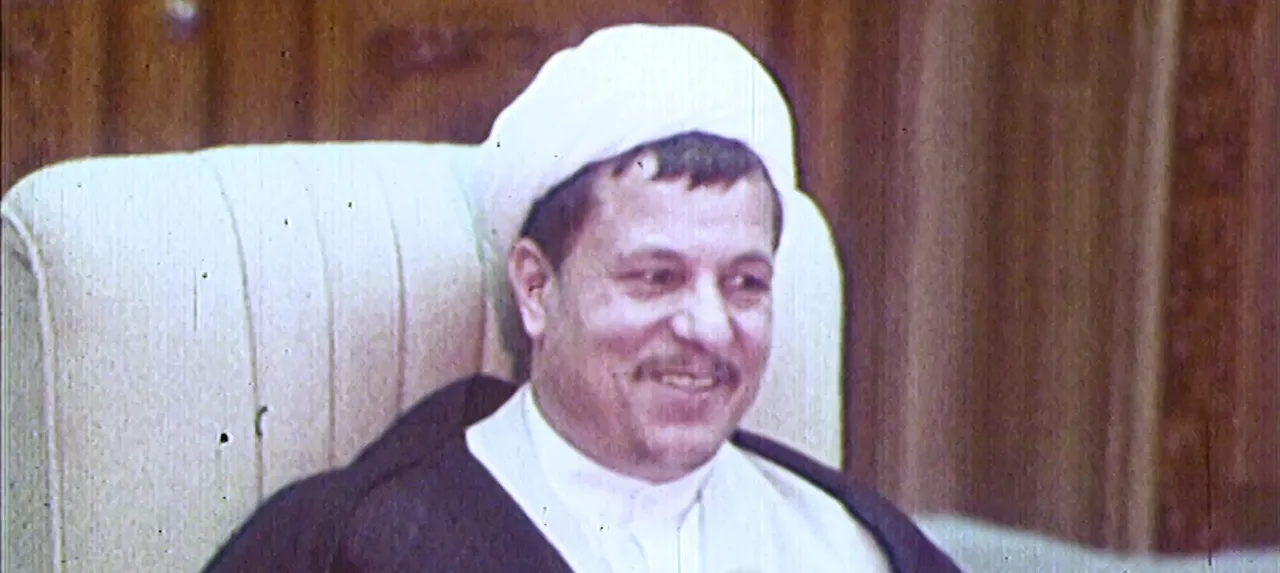
Until sunrise, I prayed and supplicated in the Qasr al-Diyafa Mosque. The morning prayer in front of the Kaaba created a good feeling for me. We had breakfast in a self-service manner. I went through the newspapers. We went to Umm Al-Qura University on the way to Mecca and Taif. The president, managers, and professors gave us a warm welcome.
Until sunrise I engaged in prayer and supplication in the mosque of Qasr al-Diyafa. The morning supplication facing the Kaaba created a suitable feeling for me. We had breakfast buffet-style. I reviewed the newspapers. We went to Umm al-Qura University on the Mecca-Taif road. The president, managers, and professors gave a warm welcome. In the briefing session, they gave information. The main core of the university is formed by the Center for the Study of Religious Sciences, which was founded fifty years ago, and gradually the fields of medicine, technical, and humanities and a special section for Hajj were established. Today it has 22 thousand students, seven thousand of whom are in Taif and about a quarter of whom are girls, most of whom are in Taif and their university is separate. It has six million square meters of land, whose different sections are gradually being built.
I visited its exhibition; it was not noteworthy. I also visited the Hajj Research Center section. They have conducted research about transportation and accommodation and sacrifice and the problem of stoning the pillars and the Zamzam well water and so on, and they help the government to solve problems and improve the administration of Hajj. Regarding the Zamzam well, by presenting a model they said it has a depth of 32 meters, the first 14 meters of which have no water and have been lined with building materials, and the last 17 meters have seepage and near 20 water-yielding points, and although water extraction has increased in recent years, there is no shortage of water for the intended uses. He said they have managed and directed the sewage of the city of Mecca in such a way that it has not leaked into the well water and the water is completely healthy.
In response to the question about the amount of water extracted annually, or the amount of the well's yield, he could not answer and was embarrassed; because in such a center, there should not be no answer to these simple questions. Fundamentally, Saudi officials, in many cases, are not ready to answer my questions, which are many, and are caught off guard; but sometimes later they send or bring the answers to the questions. They gave gifts; such as historical photos of Mecca and Medina and a Quran, and they also gifted a Quran to Effat. In their memorial book I wrote some sentences. Three people also read Persian, and some also uttered sentences in Persian while speaking.
From there we went to the workshop for producing the covering of the Kaaba. The Imam of the Shrine and the officials welcomed. In the briefing session, I asked many questions; [the Imam of the Shrine] is a humble scholar and has been appointed by Mr. King Fahd. He studied in religious schools. He said the Masjid al-Haram has six Friday prayer leaders, of whom he is one. He is also the head of the Two Holy Shrines and the Friday prayer leader. He usually leads the night prayer.
I asked about the reason for the Kaaba's floor being raised like a platform, which is about two meters above the ground. He said it was not so in Abraham's time. The Quraysh, before Islam, in rebuilding, did this to protect against floods and to prevent too many people from going inside the Kaaba. Abdullah ibn Zubayr, during his rule, restored it to its first state, but Hajjaj ibn Yusuf returned it to the state of the Quraysh's time. During the Abbasid rule, a council of scholars examined the matter and did not deem it advisable to touch its state and make a change, so that change and replacement in the Kaaba's structure would not become customary.
We saw the stages of making the covering. Its materials are mainly imported from abroad; silk and cotton threads. Silver threads are given gold water and their quality and color and properties are also examined in the laboratory. They are given suitable coloring. Then with special film and zinc, the intended lines are printed on the fabrics that are woven right there. Then on the lines, with needlework, golden lines are written. For the interior of the Kaaba and the shrine of the Prophet too they make coverings there.
These coverings are changed every year. They cut them into pieces and give them as sacred and desirable gifts to guests. I myself have received several pieces of them on various occasions, and today they gave a large piece as a gift, and to all the companions. I asked two of the needlework workers questions. They have a monthly salary of about four thousand five hundred Saudi riyals, equivalent to 1200 dollars or 700 thousand tomans in Iranian money.
We returned to the residence. Until the afternoon I wrote the memoirs and read the news. It became clear that the Iranian newspapers have written about the incident of the Friday prayer leader of the Prophet's Mosque. I said to also write the subsequent matters, which are the apology and condemnation by the Saudi authorities.
In the afternoon, with a group of companions including Fati, a group of ladies, Mehdi, Yaser, Karbaschi, Hossein Marashi, and the ambassador, we went to see the Hira Cave on the peak of the Jabal al-Nur mountain. The accompanying minister and Colonel Ebrahim did not come due to the difficulty of the mountain route and remained at the foot of the mountain. Going to the peak is not easy; it would be appropriate to build a cable car. On the route, there are several business units selling cold drinks, water, and tea, mostly from the people of Kashmir; they usually did not know Arabic or Persian either. They have taken a camel near the peak of the mountain; I do not know why and how? It was suspected that they took a baby camel and it grew up there. The child who was managing it said he brought it gradually. Without need, we bought water and tea to help them.
In the last stage, near the cave, one must pass through a narrow crevice that an average person can barely pass through. Huge stones are piled on top of each other and the cave itself is in such a state. It has room for the prayer of only two or three people. It overlooks the entire city of Mecca. We took souvenir photos and films. Some of the companions were saying that on other trips when they had come, they had not passed through such a crevice and it was not clear how they had arrived. But Yaser said that in 1990 when he came, he went through this same crevice. The coffee sellers said about 400 people come to the Hira Cave daily and it increases during Hajj and Umrah.
On the way it became clear that Hossein Marashi, to gain the reward of visiting the Shadharwan of the Kaaba with the help of Mr. Karbaschi, the mayor of Tehran, had gone behind the Kaaba shrine and had been put under pressure by the weight of the covering and run into a problem, which caused memorable joking and mockery of him. We also teased him a bit. He too retaliated by bringing up the situation of Mr. Karbaschi, who is worried about the state of the court in Tehran.
On the return, at the foot of the mountain, the mayor of Mecca gave a welcome and presented gifts that included books and pictures of Mecca. They expressed surprise at my walking power. We returned to the residence. They announced that the Prince of Mecca and Jeddah is on a trip abroad and his deputy, Mr. Saud Abdulhasan, is our host. It occurred to me that I should not participate in the banquet and the accompanying delegation should go, but the ambassador and Mr. Bijan Namdar Zangeneh, [the Minister of Oil], and others said that the deputy of the Prince is an influential person and especially in the matter of Hajj, it is better not to offend him; I accepted.
For the banquet ceremony that was in Jeddah, we set off at eight at night. At nine we arrived. The banquet venue is a luxurious hall of the private sector. A number of political and economic figures from the government and the Organization of the Islamic Conference and the private sector and princes and military personnel were gathered. The introduction ceremony was long. At the dinner table I asked Prince Saud many questions, to which he usually did not have a ready answer; some remained unanswered and some he answered by asking others.
The important problem of Jeddah and many other places in Saudi Arabia is the water shortage. In Jeddah, they desalinate 400 thousand cubic meters of sea water daily, where the cost of each cubic meter, without fuel, becomes four riyals, and for consumption they mix it with well water. He said that to support Saudi jobs, they have started expelling immigrants who have come to Jeddah without official permission. He expressed interest in traveling to Iran; like many other princes, they have the dream of hunting and touring in Iran and are happy about the improvement of the strained relations, and for this reason they assess our trip as very good. It seems we have had a suitable ground for relations.
We returned to Mecca. We arrived at ten at night. We went for the pilgrimage of the shrine. The accompaniment of the military agents does not let the pilgrimage be pleasant. Until twelve at night, I read the reports and slept.
Take less than a minute, register and share your opinion under this post.
Insulting or inciting messages will be deleted.
Sign Up