
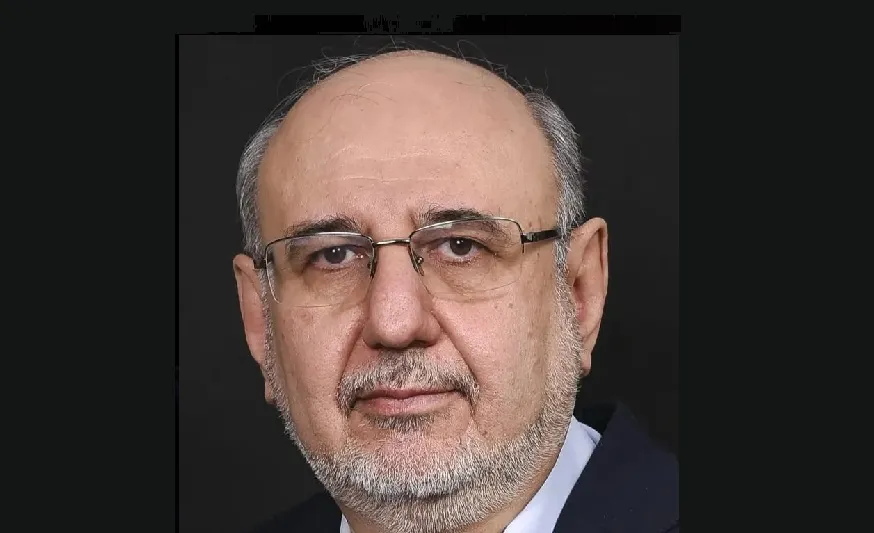
Shahin Sharghi, a technology researcher, an experienced entrepreneur in exports to the former Soviet Union, a futurist, and an analyst of governance of emerging technologies, is one of the prominent figures of the middle generation of interdisciplinary specialists in Iran. He presented his most important analytical conversation in the program "Simorgh" in a dialogue with Mehdi Motaharnia on the topic of "Future Governance and New Technologies." Sharghi, with a pragmatic approach to futurology — which he considers "conscious creation of the future" — offers a unique model of linking business, technology, and analysis of the power structure in contemporary Iran.
Who is Shahin Sharghi?
Shahin Sharghi, a technology researcher, entrepreneur, futurist, and analyst in the fields of governance and emerging technologies, is one of the prominent figures of the middle generation of interdisciplinary technology-business specialists in contemporary Iran. Sharghi, with a unique combination of engineering background, practical entrepreneurial-export experience, and futures studies expertise, has become one of the reference analysts in the fields of future governance, emerging technologies, and power dynamics in Iran's administrative structure in recent years. His highly reflected presence in the program "Simorgh" — a joint production of Abdi Media and Didar News — in a dialogue with Dr. Mehdi Motaharnia on the topic of "Future Governance and New Technologies," is considered one of the most widely discussed recent intellectual-analytical conversations in Iran regarding the link between technology and governance.
The importance of Shahin Sharghi in Iran's intellectual-technological sphere can be examined from several aspects. First, his interdisciplinary expertise — which lies at the intersection of engineering, futures studies, business, and technology governance — has given him a unique analytical tool for understanding the complexities of emerging technologies. Second, his practical entrepreneurial experience — particularly with a background in exporting Iranian goods to the former Soviet Union — places him among the most experienced futurist entrepreneurs in Iran and provides his theoretical analyses with a practical-empirical foundation. Third, his structural-critical view of power dynamics in Iran — in which, by identifying "power circles acting in silos" and the fact that "the critics of the system are themselves the officials of the system," he offers one of the innovative analyses of contemporary institutional discourse. Fourth, his highly reflected presence on prominent intellectual-analytical platforms — from the podcast "We Are Entrepreneurs," the Sharif Entrepreneurs Conference, to the Abdi Media program "Simorgh" — has placed him among the prominent figures in the interdisciplinary discourse of technology and governance.
Life and Background
Detailed information about Shahin Sharghi's birth date, birthplace, and family background is limited in open media sources; a characteristic that is relatively common among Iranian technology entrepreneurs and researchers who primarily focus on their specialized-professional activities. What is clear from published accounts of his professional path is that Sharghi belongs to the middle generation of Iranian entrepreneurs — a generation that began its initial entrepreneurial activities in the post-war era and during the collapse of the Soviet Union and the opening of new markets for Iranian exports.
Education and Academic Background
Shahin Sharghi is an engineer, and his presence at the Sharif Entrepreneurs Conference — which is mainly dedicated to graduates and activists associated with Sharif University of Technology — indicates a possible connection to this university. The title "Engineer" in his identification in Iranian media indicates his technical-engineering expertise, which forms the foundation of his futures studies and technology activities.
Entrepreneurial Activity and Export Experience
The initial notable point in Shahin Sharghi's career is his practical experience in entrepreneurship and exports. In his widely discussed interview with the podcast "We Are Entrepreneurs," Sharghi recounted that he had "gained his first experiences exporting Iranian goods to the former Soviet Union."
This experience, which occurred during the collapse of the Soviet Union and the opening of Central Asian, Russian, and Caucasian markets to Iranian goods, is considered one of the notable points in his practical career. During that period, exports to the former Soviet Union and then post-Soviet countries created a great opportunity for Iranian entrepreneurs, and Sharghi was among the pioneers in this field.
Expertise in Futures Studies
Shahin Sharghi's core expertise is Futures Studies; an interdisciplinary field in which probable future scenarios are identified and analyzed using scientific tools.
In one of his notable intellectual positions, Sharghi explained his intellectual framework regarding futures studies as follows: "The future is something that we create, and we can move towards it consciously, and knowing the path we are taking can be a source of income and business for us, because we know something and create something that others will use."
This definition indicates Sharghi's pragmatic and entrepreneurial view of futures studies; a view in which the future is seen not as a predictable phenomenon, but as an arena for "creation and conscious making."
Presence on Abdi Media's "Simorgh" Program
The turning point in Shahin Sharghi's recent media-analytical career was his presence on the program "Simorgh" — a joint production of Abdi Media and Didar News — in the fourth episode of this series on the topic of "Future Governance and New Technologies." This dialogue, conducted by Dr. Mehdi Motaharnia (futurist and university professor) with Sharghi and produced by Abdollah Abdi (director of Abdi Media), is considered one of the most widely discussed interdisciplinary conversations on the link between technology and governance in contemporary Persian-language discourse.
Topic of the Dialogue: Future Governance and New Technologies
The central topic of the dialogue was "Future Governance and New Technologies"; a topic that, in the tense atmosphere of the transition to the information society and challenges related to artificial intelligence, data governance, and power dynamics in the digital age, is considered one of the most prominent topics of discussion in contemporary discourse. This episode of the program was produced before Israel's attack on Iran (June 2025) — a point noted in the producer's explanations.
Notable Positions in the Dialogue
Shahin Sharghi presented several notable analytical positions in this dialogue that received wide coverage in Iranian media:
"Power circles in Iran act in silos": This analysis, which indicates Sharghi's structural view of institutional coordination problems in Iran's administrative structure, was one of the most widely discussed positions of the dialogue. In his view, the lack of coordination among power institutions — each acting as an independent "island" — is one of the main obstacles to efficient governance in Iran.
"The critics of the system are themselves the officials of the system": This paradoxical analysis, in which the critique of the administrative structure comes from within the structure itself, indicates Sharghi's deep view of the complex dynamics of criticism and power in contemporary Iran. This position is considered one of the innovative analyses in the literature on critiquing Iran's power structure.
"In our governance, the attachment...": In this part of the dialogue, Sharghi pointed to the necessity of "attachment study" (or analysis of social, cultural, economic, technological, etc. attachments for structural decision-making) in Iran's governance — a concept that in modern governance literature is considered one of the key tools of policy analysis.
Video: Shahin Sharghi as a guest on the program "Simorgh" | Conversation with Dr. Mehdi Motaharnia | Topic: Future Governance and New Technologies
Read the written report of this conversation here:
Future rulers and new technologies with the presence of Shahin Sharqi
The Importance of Simorgh as an Intellectual Platform
"Simorgh," as a joint production of Abdi Media and Didar News, is considered one of the prominent platforms for interdisciplinary intellectual-analytical dialogues in the Persian-language space. Shahin Sharghi's presence on this program, alongside other prominent figures of Iran's public discourse, indicates his enduring position among the specialists and reference analysts in this field.
Presence on Other Intellectual-Entrepreneurial Platforms
In addition to the "Simorgh" program, Shahin Sharghi is also active on numerous other platforms:
The Podcast "We Are Entrepreneurs"
Sharghi has also appeared on the notable podcast "We Are Entrepreneurs." In his interview on this podcast, he discussed his intellectual framework regarding entrepreneurship, futures studies, and his personal experience of his first exports of Iranian goods to the former Soviet Union. This interview is considered one of the notable narratives of the entrepreneurial path of Iran's middle generation.
The Sharif Entrepreneurs Conference
Sharghi has also spoken at the Sharif Entrepreneurs Conference; an event considered one of the notable gatherings of graduates of Sharif University of Technology — Iran's most prestigious technical university — in which prominent entrepreneurs and technology activists share their experiences and perspectives.
Views and Intellectual Approaches
Throughout his intellectual-analytical career, Shahin Sharghi has formulated a clear intellectual framework that can be pursued in several axes.
Proactive Approach to the Future
Sharghi's most central intellectual position is his proactive approach to the future. In his view, the future is not a predictable phenomenon but rather "something that we create" — a position that in contemporary futures studies literature falls under "futuring" approaches, standing in contrast to purely prediction-oriented approaches to the future.
Linking Futures Studies and Business
The distinguishing feature of Sharghi's intellectual framework is connecting futures studies with business. In his view, awareness of the future path "can be a source of income and business for us" — a position in which futures studies is seen not as a purely theoretical field but as a practical tool for entrepreneurship.
Critique of the Siloed Structure of Power
In the field of analyzing the power structure in Iran, Sharghi has pointed to the lack of coordination among institutions and the "siloed operation" of power circles. This analysis, reflected in the Simorgh dialogue, indicates his structural view of governance problems in contemporary Iran.
The Critic-Official Paradox
One of Sharghi's innovative analyses is identifying the paradox of the identity-sharing between critics and officials in Iran's structure; a phenomenon in which figures known as critics of the system are simultaneously part of the formal structure of that system. This analysis holds particular importance in understanding the complexities of critical discourse in contemporary Iran.
The Importance of Impact Assessment in Governance
In the Simorgh dialogue, Sharghi pointed to the necessity of "impact assessment" in Iran's governance structure — a concept in which any structural decision-making must be accompanied by analysis of social, cultural, economic, technological, environmental, and other impacts. This approach, in modern governance literature, is considered one of the key tools of evidence-based decision-making.
Emphasis on Interdisciplinarity
Shahin Sharghi emphasizes the "interdisciplinary" nature of his activities. This approach, in which engineering, business, futures studies, governance, and technology are analyzed in relation to one another, is one of the notable aspects of his intellectual framework.
Connection with Figures and Currents
Shahin Sharghi is situated within a network of intellectual-professional connections with prominent figures in Iran's technology-governance discourse. At the intellectual-futures studies level, his relationship with Dr. Mehdi Motaharnia (a prominent futurist and university professor, with whom he spoke on the Simorgh program) is considered one of his key professional connections.
At the media level, his relationship with Abdi Media (as a guest on the Simorgh program) and Didar News (Simorgh's partner) shapes his media communication network.
At the entrepreneurial level, his relationship with the network of entrepreneurs associated with Sharif University of Technology and the podcast "We Are Entrepreneurs" is considered among his professional-intellectual connections.
Conclusion
Shahin Sharghi is one of the prominent figures of the middle generation of interdisciplinary technology-entrepreneurship-futures studies specialists in contemporary Iran. With a unique combination of engineering background, practical entrepreneurial-export experience (starting with exports of Iranian goods to the former Soviet Union), concentrated expertise in futures studies, and a highly reflected presence in the analytical arena of technology governance — particularly through his notable dialogue with Dr. Mehdi Motaharnia on Abdi Media's "Simorgh" program about "Future Governance and New Technologies" — he has occupied a distinct position in Iran's interdisciplinary arena.
Shahin Sharghi's distinguishing feature, on the first level, is his pragmatic and entrepreneurial approach to futures studies; a characteristic in which futures studies is seen not as a purely theoretical field but as a practical tool for creating business. This approach is relatively unique among Iran's futurists. On the second level, his structural-critical view of power dynamics in Iran — particularly his innovative analyses of "power circles acting in silos" and the paradox of the identity-sharing of critics and officials — is one of the notable aspects of his analytical framework.
From an analytical perspective, Sharghi's position represents an example of the "entrepreneurial-futurist-analyst" phenomenon in contemporary Iran; a phenomenon in which a specialist with an engineering background simultaneously operates in the fields of futures studies, business, and governance analysis. This model, which has other examples among Iran's middle generation of interdisciplinary specialists, has found special reflection in Sharghi through his focus on the link between technology and governance.
What is clear from today's perspective is that the issues Shahin Sharghi has addressed in his analyses — from future governance, emerging technologies, the siloed structure of power, impact assessment in decision-making, and the link between futures studies and entrepreneurship — remain among the most enduring topics of discussion in contemporary Iran's interdisciplinary discourse. In a situation where Iran is in one of the most tense periods of transition to an information-technology society — particularly with the expansion of artificial intelligence, data governance challenges, and rapid technological transformations — Shahin Sharghi's analytical voice, with his combination of practical entrepreneurial experience and futures-oriented theoretical framework, will be one of the notable sources of Iran's intellectual dialogue in this arena.
Frequently Asked Questions
Who is Shahin Sharghi?
Shahin Sharghi is an Iranian technology researcher, entrepreneur, futurist, and analyst in the fields of governance and emerging technologies. In recent years, with concentrated expertise on "future governance and new technologies," he has become one of the prominent figures of the interdisciplinary technology-governance discourse in Iran.
What program did Shahin Sharghi have on Abdi Media?
Shahin Sharghi appeared on the program "Simorgh" — a joint production of Abdi Media and Didar News — in the fourth episode of this series on the topic of "Future Governance and New Technologies." This dialogue, conducted by Dr. Mehdi Motaharnia (futurist and university professor) with Sharghi and produced by Abdollah Abdi (director of Abdi Media), is considered one of the most widely discussed interdisciplinary conversations on the link between technology and governance. This episode was produced before Israel's attack on Iran in June 2025.
What is Shahin Sharghi's expertise?
Sharghi's core expertise is futures studies, emerging technologies, technology governance, and interdisciplinary entrepreneurship. He operates at the intersection of engineering, business, futures studies, and power structure analysis, and has presented notable analyses of power dynamics in Iran's administrative structure.
What is Shahin Sharghi's definition of futures studies?
In one of his notable intellectual positions, Sharghi has defined futures studies as follows: "The future is something that we create, and we can move towards it consciously, and knowing the path we are taking can be a source of income and business for us, because we know something and create something that others will use." This definition indicates his pragmatic and entrepreneurial view of futures studies.
What were Shahin Sharghi's most important positions in the Simorgh dialogue?
Among Sharghi's most notable positions in the Simorgh dialogue are: "Power circles in Iran act in silos" (critique of institutional incoordination), "The critics of the system are themselves the officials of the system" (analysis of the paradox of the identity-sharing of critic and official in Iran's structure), and emphasis on the necessity of "impact assessment" in governance structure.
What is Shahin Sharghi's entrepreneurial background?
Among Sharghi's notable entrepreneurial background is his first experiences exporting Iranian goods to the former Soviet Union. This experience, which occurred during the collapse of the Soviet Union and the opening of post-Soviet markets for Iran, is considered one of the notable points in his practical career.
On which intellectual platforms does Shahin Sharghi appear?
Shahin Sharghi has appeared on numerous intellectual-analytical platforms, including: Abdi Media's "Simorgh" program (on the topic of future governance and new technologies), the podcast "We Are Entrepreneurs" (focusing on the narrative of entrepreneurial experiences), and the Sharif Entrepreneurs Conference (with speeches on entrepreneurship and futures studies).
What is Shahin Sharghi's view on the power structure in Iran?
In the Simorgh dialogue, Sharghi presented a structural-critical view of power dynamics in Iran. In his view, "power circles in Iran act in silos" — a position in which the lack of coordination among power institutions is identified as one of the main obstacles to efficient governance in Iran. He has also pointed to the paradox of the identity-sharing of critics and officials in Iran's structure.
Is Shahin Sharghi still active?
Yes, Shahin Sharghi, as one of the active figures of the interdisciplinary technology-governance discourse in Iran, is active on numerous intellectual-media platforms. His recent highly reflected presence on Abdi Media's "Simorgh" program, in dialogue with Mehdi Motaharnia, is considered one of the most widely discussed interdisciplinary conversations on the link between technology and governance in contemporary Persian-language space. His Instagram account (@shahin.sharghi) is also one of his communication channels with his audience.
Take less than a minute, register and share your opinion under this post.
Insulting or inciting messages will be deleted.
Sign Up