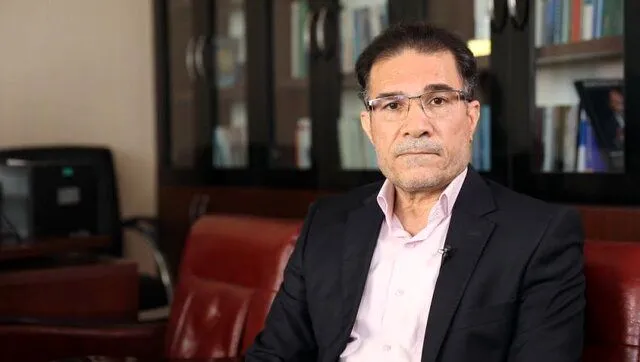
Dr. Seyed Jalal Dehghani Firouzabadi, full professor and one of the most prominent theorists of international relations and foreign policy in contemporary Iran, born on March 22, 1965, in the city of Meybod, Yazd province, was recently appointed on December 20, 2025, by decree of Seyed Kamal Kharazi as the secretary of the Strategic Council on Foreign Relations. Considered the youngest full professor in the field of political science and international relations in Iran, he received his PhD from the University of Brussels in Belgium. His notable textbook "Foreign Policy of the Islamic Republic of Iran" (Samt Publications), which was selected as a distinguished work at the 7th International Farabi Festival, is among his most important works. Dehghani Firouzabadi was also honored as a "prominent theorist" at the 8th edition of the same festival. With a background that includes serving as Iran's cultural attaché in the UAE, head of the Faculty of Law and Political Science at Allameh Tabatabai University, editor-in-chief of the Foreign Relations Quarterly at the Center for Strategic Research (during the period when Hassan Rouhani was editor-in-chief), and scientific secretary of the Tehran Security Conference, he now assumes the secretaryship of the Strategic Council on Foreign Relations at one of the most sensitive junctures of Iran's foreign policy — considering regional developments, possible negotiations with the United States during Trump's second term, and the role of Russia and China.
Who is Seyed Jalal Dehghani Firouzabadi?
Dr. Seyed Jalal Dehghani Firouzabadi, full professor and one of the most prominent theorists of international relations and foreign policy in contemporary Iran, born on March 22, 1965, in the city of Meybod, Yazd province, is considered one of the main reference points for studies on the foreign policy of the Islamic Republic of Iran over the past two decades. Dehghani Firouzabadi, who was appointed on December 20, 2025, by decree of Seyed Kamal Kharazi, head of the Strategic Council on Foreign Relations, as the secretary of this council, is one of the few academic figures in Iran who, in addition to a prolific research-educational background, has also played a structural role in strategic-policy-making institutions in the field of foreign policy.
The importance of Seyed Jalal Dehghani Firouzabadi in Iran's academic-political sphere can be examined from several perspectives. First, his position as the youngest full professor in the field of political science and international relations in Iran — indicating an unprecedented speed of academic advancement in the university hierarchy — places him among the academic elites of the middle generation in this field. Second, his distinguished educational background — with a PhD in International Relations from the University of Brussels, Belgium, in 1995 — which, among Iranian international relations professors, is considered studying at a prominent European university, has given his views an international theoretical framework. Third, his extensive academic legacy — especially his notable textbook "Foreign Policy of the Islamic Republic of Iran" (Samt Publications), which is taught as a textbook in Iranian universities and was selected as a distinguished work at the 7th International Farabi Festival in 2013 — has made him one of the main reference points for the new generation of Iranian international relations researchers. Fourth, his recognition as a "prominent theorist" at the 8th International Farabi Festival — which is considered the most prestigious award in the Islamic-humanities sciences in Iran — cemented his theoretical position in Iran's academic discourse.
Dehghani Firouzabadi has also served as the scientific secretary of the Tehran Security Conference — Iran's most important international security conference — during its first two rounds (2016 and 2017), and for years, as editor-in-chief and manager of prominent scientific-research journals, has played a strategic role in the intellectual-research structure of Iran's international relations.
Life and Background
Dr. Seyed Jalal Dehghani Firouzabadi was born on March 22, 1965 — on the first days of the year 1965 — in the city of Meybod, one of the oldest cities in Yazd province in central Iran. Meybod, a city with a rich historical-cultural background and one of the prominent centers of traditional Iranian culture, has introduced notable figures in academic and political arenas to Iranian society in the post-revolution decades.
Information about Dehghani Firouzabadi's family background and childhood-adolescence is limited in open media sources, but the title "Seyed" in his name — indicating lineage from the family of the Prophet of Islam — and the surname "Firouzabadi" — a well-known family name in the Firouzabad region of Yazd — indicate his connection to the traditional-religious culture of this region.
Born on March 22, 1965, Dehghani Firouzabadi belongs to a generation that spent its childhood in the final years of the Pahlavi era and, as an adolescent, witnessed the events of the 1979 Islamic Revolution and then the beginning of the Iran-Iraq War.
Education
Dehghani Firouzabadi's educational path is one of the notable examples of combining domestic and international education in the middle generation of Iranian political science researchers.
PhD in International Relations from the University of Brussels, Belgium (1995)
The educational turning point for Dehghani Firouzabadi was receiving his PhD in International Relations from the University of Brussels, Belgium, in 1995. The University of Brussels (Université Libre de Bruxelles), one of Europe's most prestigious universities in the social sciences and international relations, is considered among the leading academic institutions in Europe.
Studying at a prominent European university in the 1990s — that is, in the years after the end of the Iran-Iraq War and in the post-initial sanctions atmosphere — was a relative advantage for Iranian researchers and gave Dehghani Firouzabadi a unique foundation in understanding Western theories of international relations — a foundation that was widely reflected in later years in his efforts to present Islamic-Iranian theories of international relations, at the intersection with Western theoretical frameworks.
Academic Activities
After returning from Belgium, Dehghani Firouzabadi joined Allameh Tabatabai University and over approximately three decades has worked in various positions within the academic structure of this university.
Faculty Member in the Department of International Relations at Allameh Tabatabai University
Dehghani Firouzabadi has worked as a faculty member at the Faculty of Law and Political Science of Allameh Tabatabai University — one of Iran's most important universities in the humanities and social sciences. Allameh Tabatabai University, which specializes in the humanities and social sciences, is considered among the most prominent centers for training political science and international relations researchers in Iran.
The Youngest Full Professor in Political Science
One of the notable aspects of Dehghani Firouzabadi's academic career is his position as the youngest full professor in the field of political science and international relations in Iran. This academic rank, the highest level in the hierarchy of university professors, is mainly granted after years of research-educational activity, and achieving it at a relatively young age indicates his expertise and prolific scientific output.
Head of the Faculty of Law and Political Science (2009-2012)
From 2009 to 2012, Dehghani Firouzabadi was appointed as the head of the Faculty of Law and Political Science at Allameh Tabatabai University. This position is considered one of the most important managerial-academic positions in Iran's political science. In 2012, Dehghani Firouzabadi voluntarily resigned from this position — a decision indicating his focus on research activities rather than executive management.
Executive and Strategic Activities
In addition to his academic career, Dehghani Firouzabadi has also worked in numerous executive-strategic positions over the past two decades.
Iran's Cultural Attaché in the United Arab Emirates (2004-2006)
From 2004 to 2006, Dehghani Firouzabadi served as the cultural attaché of the Islamic Republic of Iran in the United Arab Emirates. This position, in the final years of Seyed Mohammad Khatami's reformist administration and the beginning of the Ahmadinejad administration, was one of Iran's cultural diplomacy missions in the Persian Gulf region. The United Arab Emirates, with its large Iranian community and strategic location, is one of Iran's notable cultural missions in the region.
Deputy for Political-Legal Affairs of the Research Center of the Islamic Consultative Assembly
Dehghani Firouzabadi has also served as the deputy for political-legal affairs of the Research Center of the Islamic Consultative Assembly. This center, considered the research arm of the Islamic Consultative Assembly, plays a strategic role in Iran's legislative policy-making.
Scientific Secretary of the Tehran Security Conference (2016, 2017)
Dehghani Firouzabadi served as the scientific secretary of the first International Tehran Security Conference in 2016 and the second conference in 2017. The Tehran Security Conference, held annually in Iran's capital, is one of Iran's most important international security conferences, in which prominent diplomatic, military, and academic figures from numerous countries participate.
Secretary of the Strategic Council on Foreign Relations (from December 20, 2025)
The peak of Dehghani Firouzabadi's strategic career was his appointment on December 20, 2025, as the secretary of the Strategic Council on Foreign Relations. This appointment was made by decree of Seyed Kamal Kharazi (former Minister of Foreign Affairs and current head of the Strategic Council on Foreign Relations).
The Strategic Council on Foreign Relations is one of the most important advisory-policy-making institutions in Iran in the field of international relations, established in 2010 by order of the Supreme Leader, in which prominent Iranian diplomatic figures — including Saeed Jalili, Ali Akbar Salehi, Mohammad Javad Zarif, and others — are members.
Chronology of Council Secretaries
The previous secretaries of the Strategic Council on Foreign Relations were:
Seyed Abbas Araghchi (currently Minister of Foreign Affairs of Pezeshkian's fourteenth administration)
Ali Bagheri Kani (Iran's senior nuclear negotiator during the Raisi administration)
Seyed Jalal Dehghani Firouzabadi (from December 20, 2025, to present)
Dehghani Firouzabadi's appointment followed the appointment of Ali Bagheri as Deputy for International Affairs of the Secretariat of the Supreme National Security Council. This transition holds particular importance in the tense atmosphere of Iran-US relations during Trump's second administration and on the eve of possible negotiations.
Editor-in-Chief of Prominent Journals
One of the notable aspects of Dehghani Firouzabadi's career is his editorship of several prominent scientific-research journals in the field of international relations and security:
Foreign Relations Quarterly (2009-2013)
From 2009 to 2013, Dehghani Firouzabadi was the editor-in-chief of the Foreign Relations Quarterly of the Center for Strategic Research — a journal whose editor-in-chief was Dr. Hassan Rouhani. This position, during the years when Rouhani headed the Center for Strategic Research of the Expediency Discernment Council, formed the foundation of Dehghani Firouzabadi's close familiarity with the theoretical-political circle close to Rouhani.
Strategic Studies Quarterly
Dehghani Firouzabadi has also been the editor-in-chief of the Strategic Studies Quarterly — one of the most prominent publications in the field of strategic studies in Iran.
Current Journals
Currently, Dehghani Firouzabadi is the editor-in-chief of the scientific-research journal "Rahyafte Enghelabe Eslami" (Approach of the Islamic Revolution) and the "Journal of Global Relations." He is also a member of the editorial board of several of the most important scientific-research journals in the field of international relations in Iran.
Academic and Research Works
Dehghani Firouzabadi is the author of a significant number of books and scientific-research articles in the fields of international relations and foreign policy. His most important works include:
The Book "Foreign Policy of the Islamic Republic of Iran"
Dehghani Firouzabadi's most prominent work is the book "Foreign Policy of the Islamic Republic of Iran" — published by Samt Publications (The Organization for Researching and Composing University Textbooks in the Humanities). This book, which is taught as a textbook in Iranian universities, is organized in two main parts:
Part One: The Foreign Policy of the Islamic Republic of Iran in Theory, including Chapter One: Theoretical Approaches to the Foreign Policy of the Islamic Republic of Iran; and Chapter Two: Sources of Foreign Policy...
This book was selected as a distinguished work at the 7th International Farabi Festival in 2013 — an honor indicating its prominent place in Iran's political science academic discourse.
The Book "Theory and Metatheory of International Relations"
Another notable work of Dehghani Firouzabadi is the book "Theory and Metatheory of International Relations," in which he addresses fundamental issues of theoretical studies in international relations — including epistemology, methodology, and metatheory.
Numerous Scientific Articles
Dehghani Firouzabadi is the author of dozens of scientific-research articles in various fields, including:
Theories of regionalism (including neo-functionalism, neoliberal institutionalism, neo-realism, constructivism, critical theory, and globalism)
Justice in principlist foreign policy (studying the foreign policy of the Ahmadinejad era)
Islamic theory of international relations (attempting to develop an Islamic theoretical framework for studying international relations)
Sources of the foreign policy of the Islamic Republic
This extensive body of work has made Dehghani Firouzabadi one of the most prolific international relations theorists in contemporary Iran.
The International Farabi Festival
Dehghani Firouzabadi was honored as a distinguished figure in two rounds of the International Farabi Festival — Iran's most prestigious award in the Islamic-humanities sciences:
7th Round: Distinguished Work
In the 7th International Farabi Festival in 2013, Dehghani Firouzabadi's book "Foreign Policy of the Islamic Republic of Iran" was selected as a distinguished work.
8th Round: Prominent Theorist
In the 8th International Farabi Festival, Dehghani Firouzabadi was selected and honored as a "Prominent Theorist." This title indicates his position in the theoretical discourse of Iran's political science.
Theoretical Views and Positions
Throughout his theoretical-analytical career, Dehghani Firouzabadi has formulated a clear intellectual framework that can be traced in several axes.
Multidimensional Approach to Theories of International Relations
The most central theoretical feature of Dehghani Firouzabadi is his multidimensional approach to theories of international relations — a feature in which a full spectrum of theories, including neo-realism, neoliberal institutionalism, constructivism, critical theory, neo-functionalism, and globalism, are simultaneously examined. This approach has given Dehghani Firouzabadi a unique ability to provide multidimensional analyses of international relations phenomena.
Emphasis on Theoretical Ambiguity of the Islamic Republic's Foreign Policy
One of Dehghani Firouzabadi's central theses is pointing to the lack of consensus on the appropriate conceptual-theoretical framework for studying the foreign policy of the Islamic Republic. In one of his notable theoretical positions, he stated: "There is no consensus on the appropriate conceptual or theoretical framework for studying and analyzing the foreign policy of the Islamic Republic. These disagreements originate from the relationship between international relations theory and foreign policy theory on the one hand, and the nature and identity of the Islamic Republic on the other hand."
This position, which in Iran's international relations theoretical discourse is considered one of the most important methodological challenges, indicates Dehghani Firouzabadi's deep theoretical insight into the fundamental issues of the discipline.
Effort to Present an Islamic Theory of International Relations
Another notable aspect of Dehghani Firouzabadi's theoretical project is his effort to develop an Islamic theory of international relations. In one of his theoretical articles, he argued that "the possibility of developing an Islamic theory of international relations based on Islamic fundamental presuppositions" exists. This effort falls within the broader context of "Islamic humanities" — a notable intellectual project of the academic discourse close to the system of the Islamic Republic.
Analysis of the Evolution of Regionalism Theories
In one of his notable theoretical articles, Dehghani Firouzabadi addressed the "evolution of regionalism theories." In his view, this evolution "has manifested itself in two ways: transformation and metamorphosis of each of the theories, and the evolution of theorizing in regional studies." This position indicates his special attention to contemporary theoretical developments in the field of international relations.
The Full Recording of the Interview with Dr. Jalal Dehghani Firouzabadi, Professor at Allameh Tabatabai University, International Relations Theorist
Listen to the full, unfiltered recording of the interview with Dr. Jalal Dehghani Firouzabadi, professor at Allameh Tabatabai University and international relations theorist, on Castbox
Connections with Figures and Currents
Dehghani Firouzabadi is situated within a network of academic-executive connections with prominent figures in Iran's political science and diplomacy. At the academic level, his relationship with Allameh Tabatabai University (his sustained academic workplace), Samt Publications (publisher of his notable textbook), and the Committee for Supporting Theoretical Chairs are among his key connections.
At the executive-political level, his relationship with Seyed Kamal Kharazi (head of the Strategic Council on Foreign Relations and former foreign minister of the Khatami administration) — who issued his appointment decree — and Hassan Rouhani (during whose tenure as head of the Center for Strategic Research, Dehghani Firouzabadi was editor-in-chief of the Foreign Relations Quarterly of this center) are among his key connections.
At the peer-academic level, his relationship with prominent figures in Iran's political science — including Seyed Abdolali Ghavam (professor of international relations theories), Ebrahim Barzegar (professor of the history of government in Islam and Iran), and other prominent professors in the field of international relations — forms his academic network.
In the succession of secretaries of the Strategic Council on Foreign Relations, his relationship with Seyed Abbas Araghchi (first secretary, now Minister of Foreign Affairs) and Ali Bagheri (second secretary, now Deputy for International Affairs of the Secretariat of the Supreme National Security Council) are among his direct institutional connections.
Conclusion
Dr. Seyed Jalal Dehghani Firouzabadi is one of the most prominent theorists and professors of international relations in contemporary Iran. With a unique combination of a distinguished educational background (PhD in International Relations from the University of Brussels, Belgium), a prominent academic position (the youngest full professor in the field of political science and international relations in Iran, faculty member at Allameh Tabatabai University), prolific scientific output (author of the notable textbook "Foreign Policy of the Islamic Republic of Iran" and dozens of scientific-research works), a role in strategic institutions (as secretary of the Strategic Council on Foreign Relations, scientific secretary of the Tehran Security Conference, editor-in-chief of several prominent journals, cultural attaché in the UAE, head of the Faculty of Law at Allameh University, and deputy of the Research Center of the Parliament), and being honored in two rounds of the International Farabi Festival (as a distinguished work and as a prominent theorist), he has occupied a distinctive position in Iran's academic-policy-making structure. His career — from his birth on March 22, 1965, in Meybod, Yazd, doctoral studies in Brussels, sustained presence at Allameh Tabatabai University, editorship of the Foreign Relations Quarterly of the Center for Strategic Research during Hassan Rouhani's tenure as head, and finally, his appointment on December 20, 2025, as secretary of the Strategic Council on Foreign Relations — presents a picture of a multidimensional "strategic theorist-policymaker."
Dehghani Firouzabadi's distinguishing feature, at the first level, is his exceptional ability to bridge academic theory and practical policy-making — a characteristic in which a prominent theorist of international relations, alongside prolific academic activities, plays a role in the strategic-policy-making institutions of the system — from editorship of prominent journals to the secretaryship of the Tehran Security Conference and ultimately the secretaryship of the Strategic Council on Foreign Relations. This bridge is relatively rare among Iranian international relations professors. At the second level, his extensive theoretical project — in which a full spectrum of international relations theories (from neo-realism to constructivism and critical theory), alongside an effort to develop an Islamic theory of international relations, are examined — is one of the notable aspects of his intellectual framework.
From an analytical perspective, Dehghani Firouzabadi's position exemplifies the phenomenon of the "strategic academic-technocrat" in the power structure of the Islamic Republic — a phenomenon in which an academic researcher with high theoretical expertise, in addition to research-educational activities, plays a role in the strategic-policy-making institutions of the system. This pattern, which has numerous examples among senior diplomatic managers in contemporary Iran (such as Mohammad Javad Zarif, Seyed Kamal Kharazi, Ali Akbar Salehi, and others), has found particular reflection in Dehghani Firouzabadi with his distinctive broad theoretical-academic background.
What is clear from today's perspective is that with Dehghani Firouzabadi's appointment as secretary of the Strategic Council on Foreign Relations in December 2025, a new chapter has begun in his activity at the intersection of theory and policy-making in Iran's international relations. At a time when Iran is in one of the most tense periods of its foreign policy — especially regarding the possible resumption of negotiations with the United States during Trump's second administration, regional challenges, and mediation plans by China and Russia — Dehghani Firouzabadi's role as secretary of a council considered among the most important specialized centers for strategic policy-making in Iran in the field of international relations will be one of the notable aspects of Iran's theoretical-practical foreign policy discourse.
Frequently Asked Questions
Who is Seyed Jalal Dehghani Firouzabadi?
Dr. Seyed Jalal Dehghani Firouzabadi (born March 22, 1965, in Meybod, Yazd) is a full professor and one of the most prominent theorists of international relations and foreign policy in contemporary Iran. He is a faculty member of the Faculty of Law and Political Science at Allameh Tabatabai University and was appointed on December 20, 2025, by decree of Seyed Kamal Kharazi, as the secretary of the Strategic Council on Foreign Relations.
What is Dehghani Firouzabadi's educational background?
Dehghani Firouzabadi holds a PhD in International Relations from the University of Brussels, Belgium (Université Libre de Bruxelles), received in 1995. This university is considered one of Europe's most prestigious universities in the social sciences and international relations.
Why is Dehghani Firouzabadi known as the youngest full professor?
Dehghani Firouzabadi is the youngest full professor in the field of political science and international relations in Iran. This academic rank, the highest level in the hierarchy of university professors, is mainly granted after years of research-educational activity, and achieving it at a relatively young age indicates his expertise and prolific scientific output.
What are the most important works of Dehghani Firouzabadi?
Dehghani Firouzabadi's most prominent work is the book "Foreign Policy of the Islamic Republic of Iran" (Samt Publications), which is taught as a textbook in Iranian universities. This book was selected as a distinguished work at the 7th International Farabi Festival in 2013. Another notable work is the book "Theory and Metatheory of International Relations." He is also the author of dozens of scientific-research articles in various fields of international relations and foreign policy.
What was Dehghani Firouzabadi's role in the Farabi Festival?
Dehghani Firouzabadi has been honored in two rounds of the International Farabi Festival — Iran's most prestigious award in the Islamic-humanities sciences: In the 7th round, his book "Foreign Policy of the Islamic Republic of Iran" was selected as a distinguished work, and in the 8th round, he was selected and honored as a "Prominent Theorist."
What is the Strategic Council on Foreign Relations?
The Strategic Council on Foreign Relations is one of the most important advisory-policy-making institutions in Iran in the field of international relations, established in 2010 by order of the Supreme Leader. This council operates under the chairmanship of Seyed Kamal Kharazi (former Minister of Foreign Affairs of the Khatami administration), and prominent Iranian diplomatic figures are members. The previous secretaries of the council were Seyed Abbas Araghchi, Ali Bagheri, and currently Seyed Jalal Dehghani Firouzabadi.
Why did Dehghani Firouzabadi replace Ali Bagheri?
Dehghani Firouzabadi's appointment as secretary of the Strategic Council on Foreign Relations followed Ali Bagheri's appointment as Deputy for International Affairs of the Secretariat of the Supreme National Security Council. This development in Iran's diplomatic-security structure indicates a strengthening of the strategic-research role of the Strategic Council on Foreign Relations.
What is the Tehran Security Conference?
The Tehran Security Conference is one of Iran's most important international security conferences, held annually in Iran's capital. Prominent diplomatic, military, and academic figures from numerous countries attend this conference. Dehghani Firouzabadi served as the scientific secretary of the first International Tehran Security Conference in 2016 and the second conference in 2017.
What are Dehghani Firouzabadi's previous executive positions?
Dehghani Firouzabadi's previous executive-academic positions include: Iran's cultural attaché in the United Arab Emirates (2004-2006), head of the Faculty of Law and Political Science at Allameh Tabatabai University (2009-2012), deputy for political-legal affairs of the Research Center of the Islamic Consultative Assembly, editor-in-chief of the Foreign Relations Quarterly of the Center for Strategic Research (2009-2013) during the period when Hassan Rouhani was editor-in-chief, and editor-in-chief of the Strategic Studies Quarterly.
Is Dehghani Firouzabadi still active?
Yes, Dehghani Firouzabadi is simultaneously active in three arenas: faculty membership at Allameh Tabatabai University (academic activity), editorship of prominent scientific-research journals (including Rahyafte Enghelabe Eslami and the Journal of Global Relations), and currently, the secretaryship of the Strategic Council on Foreign Relations (since December 20, 2025). His recent appointment holds particular importance in the tense atmosphere of Iran-US relations during Trump's second administration and on the eve of possible negotiations.
Take less than a minute, register and share your opinion under this post.
Insulting or inciting messages will be deleted.
Sign Up