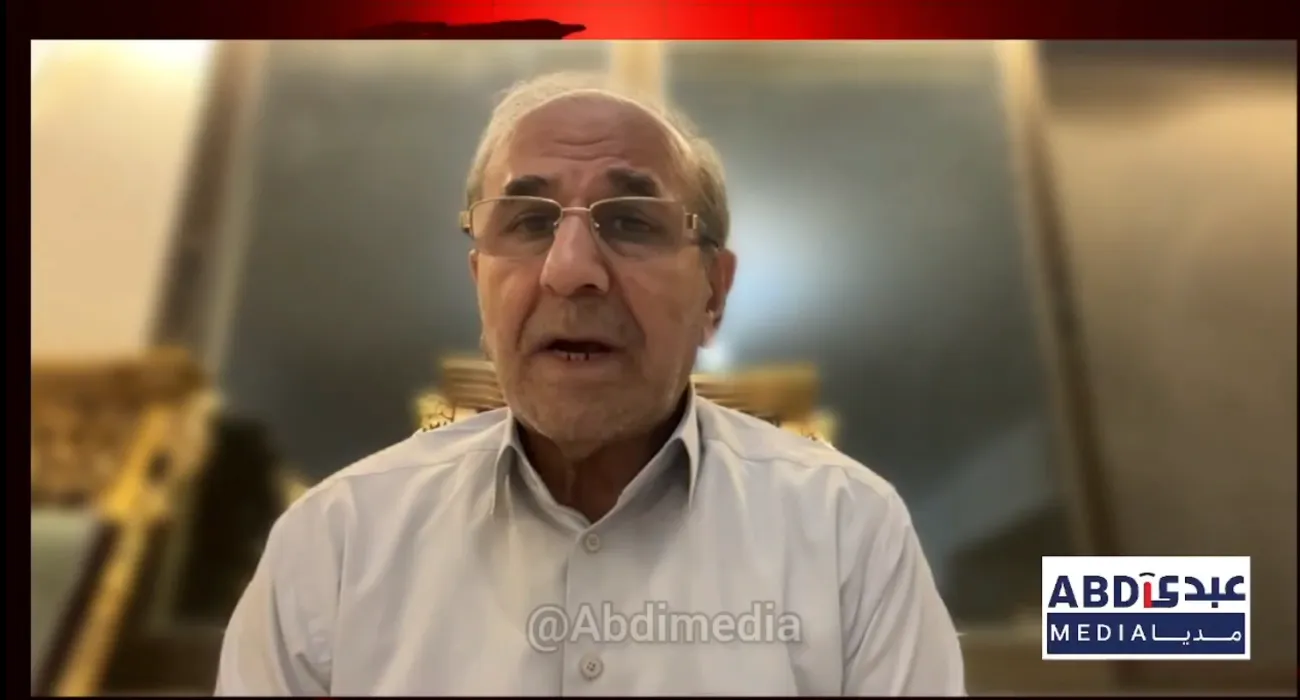
Dr. Seyed Davoud Aghaei, professor at the Faculty of Law and Political Science of the University of Tehran, prominent researcher and theorist in the field of international relations, is one of the main reference points for studies on the European Union, international organizations, and international law in Iran. Holding a PhD in International Relations from Tarbiat Modares University, over the past decades he has published notable works such as "Iran's Mutual Relations with International Organizations" and "The Position of the European Union in the Foreign Policy of the Islamic Republic of Iran," and has analyzed important legal cases such as Airbus and the Iran-England Oil Company in international courts. Aghaei has also been a guest on the podcast "Iran Under the Blade" on Abdi Media, where he discussed the nuclear storm, hybrid threat, and the future of Iran's national security.
Who is Seyed Davoud Aghaei?
Dr. Seyed Davoud Aghaei, professor at the Faculty of Law and Political Science of the University of Tehran, researcher and theorist in the fields of international relations and foreign policy, is one of the prominent and experienced academic figures in Iran in the specialized areas of international organizations, the European Union, Iran-Europe relations, Iran-US relations, international law, and geopolitics. Aghaei, who holds a PhD in International Relations from Tarbiat Modares University — one of Iran's most prestigious research-educational institutions in the humanities — has over the past decades, with a dense record of authorship, translations, scientific-research articles, and supervision of numerous master's theses and doctoral dissertations, become one of the main reference points for international relations studies at the University of Tehran.
The importance of Dr. Seyed Davoud Aghaei in Iran's academic sphere can be examined from several perspectives. First, his position at the Faculty of Law and Political Science of the University of Tehran — Iran's most prestigious university and one of the most important centers for training international relations and political science specialists in the country — where figures such as Saeed Abedini Moghanki, Ahmad Naghibzadeh, Homeira Moshirzadeh, Abdolali Ghavam, and others have worked over the past decades. Second, his focused expertise on European Union studies and Iran-Europe relations — which in Iran's international relations literature is one of the most specialized fields and has gained particular practical importance in periods such as the post-JCPOA era. Third, his specialized field of international organizations — especially the United Nations and the Security Council — which has been at the center of attention during numerous crises related to Iran's nuclear file. Fourth, his participation in notable international-legal research — including analyses related to the Airbus case (the downing of an Iran Air plane in 1988) and the Iran-England Oil Company case at the International Court of Justice — which has given him distinctive dimensions in the legal-political discourse of Iran's international relations.
Life and Background
Detailed information about Dr. Seyed Davoud Aghaei's date of birth, place of birth, and family background is limited in open media sources — a characteristic relatively common among university professors, especially figures who focus primarily on academic activities and have a more limited public-media presence.
The title "Seyed" in his name indicates lineage from the family of the Prophet of Islam and, in Iran's traditional literature, is considered a sign of religious family background. What is clear from his professional path is that Aghaei belongs to the middle-experienced generation of Iranian political science-international relations researchers — a generation that pursued their graduate studies in the post-revolutionary academic structure of Iran during the 1980s and 1990s and, in subsequent decades, became the main pillars of this discipline in Iranian universities.
Education
Dr. Seyed Davoud Aghaei's educational path was shaped within Iran's academic structure and ultimately led to receiving the highest scientific degree in the field of international relations from one of the country's most prestigious research-educational institutions.
PhD in International Relations from Tarbiat Modares University
The educational turning point for Aghaei was receiving his PhD in International Relations from Tarbiat Modares University. Tarbiat Modares University, considered among Iran's most important research-educational institutions in the humanities and social sciences, has trained prominent figures in the fields of political science, international relations, and regional studies in the post-revolution decades.
This education formed the foundation of Aghaei's theoretical framework in the field of international relations — a framework in which classical approaches of realism, institutionalism, and constructivism, in conjunction with Iran-centered regional studies, can be traced.
Academic Activity: University of Tehran
The turning point in Aghaei's academic career is his faculty membership at the Faculty of Law and Political Science of the University of Tehran. The University of Tehran, considered among the oldest and most prestigious universities in Iran (founded in 1934), is one of the most reputable centers in the country in the field of political science and international relations.
The Faculty of Law and Political Science of this university, in the post-revolution decades, has trained prominent figures in the field of international relations and has itself been the place of teaching for many of the most experienced professors in this discipline in Iran.
Specialized Research Areas
The main axes of Dr. Seyed Davoud Aghaei's expertise and research throughout his academic career include:
The European Union and its foreign policy
Iran-Europe relations
The United Nations and international organizations (especially the Security Council)
Iran-US relations (especially legal dimensions)
International law (notable cases)
Geopolitics of the Islamic world
Asian studies (India, China, Shanghai Cooperation Organization)
The Eurozone crisis
European Union energy policy
This diversity of expertise indicates the breadth of Aghaei's intellectual scope and his ability to link different fields of international relations and international law.
Academic and Research Works
Dr. Seyed Davoud Aghaei is the author of a significant number of books and scientific-research articles in the fields of international relations and foreign policy. His most important works include:
The Book "Iran's Mutual Relations with International Organizations"
One of Aghaei's notable works is the book "Iran's Mutual Relations with International Organizations," published by the Islamic Revolution Documentation Center in 2002. This book, considered among the reference works in the field of international organizations studies in Iran, analyzes Iran's relations with various international organizations — from the United Nations to its specialized agencies.
The Book "The Position of the European Union in the Foreign Policy of the Islamic Republic of Iran"
Another notable work of Aghaei is the book "The Position of the European Union in the Foreign Policy of the Islamic Republic of Iran" — a book in which the evolution of Iran-European Union relations in the post-imposed war and post-Cold War period is examined. In this work, Aghaei explains how "with the end of the Iraq-imposed war on Iran and the necessity of reconstructing damaged areas... and following the collapse of the Soviet Union and, in any case, the transformation of the international system... new considerations were presented to Iran's foreign policy" which also affected Iran-Europe relations.
Notable Scientific-Research Articles
Aghaei is the author of dozens of scientific-research articles published in reputable Iranian political science and international relations journals. Among his notable articles are:
"Legal Challenges Facing Iran and the United States over the Airbus Case" (International Relations Research Journal, Islamic Azad University, Central Tehran Branch, Year 6, Issue 22, 2013)
"A Proposed Solution for Reforming the Structure of the United Nations Security Council" (co-authored with Faezeh Ghasemi, Political Science Journal, Volume 43, Issue 3, 2013)
"India and Shanghai" (co-authored with Ebrahim Taheri, Political Science Journal, Volume 43, Issue 4, 2013)
"A Perspective on the Geopolitics of the Islamic World in the Game of Power and Global Leadership, Opportunities and Challenges" (Islamic Revolution Studies, Year 11, Issue 36, 2014)
"Rereading the Iran-England Oil Company Case at the International Court of Justice" (International Relations Research Journal, Issue 26, 2014)
"US Asian Policy in the Obama Era: Examining US Political-Security Relations with India (2008-2012)" (co-authored with Seyed Hedayatollah Aghdaei, Political Science Journal, Volume 44, Issue 2, 2014)
"The European Union's Approach to the Eurozone Crisis" (co-authored with Roxana Niknami, Political Science Journal, Volume 45, Issue 1, 2015)
This extensive body of work has made Aghaei one of the most prolific international relations researchers at the University of Tehran.
Supervision of Master's Theses and Doctoral Dissertations
One of the enduring aspects of Aghaei's academic activity is the supervision of master's theses and doctoral dissertations at the University of Tehran and other Iranian universities. Among the notable theses he has supervised are:
"The Impact of Political Tensions..." (University of Tehran, 2011, Samad Vahdanian)
"A Comparative Study of the Performance of the US Republican and Democratic Parties toward the Islamic Republic of Iran" (University of Islamic Teachings, Qom, 2014, Mohammad Mehdi Goodarzvand Chegini)
European Union Energy Policy and the Caspian Region
This activity has formed the foundation for training several generations of international relations researchers in Iran.
Views and Theoretical Approaches
Throughout his theoretical-analytical career, Dr. Seyed Davoud Aghaei has formulated a clear intellectual framework that can be traced in several axes.
Realist View of International Relations
The most central feature of Aghaei's theoretical approach is his realist view of international relations — a view in which structural factors, including the balance of power, national interests, and power dynamics, are at the center of analysis.
Emphasis on the Importance of the European Union in Iran's Foreign Policy
In Aghaei's view, the European Union, as a "stable political-economic partner" for Iran, holds particular importance. In his numerous studies, he emphasizes that the expansion of Iran-Europe relations in the post-Iran-Iraq war period was considered one of the most important diplomatic opportunities for Iran — an opportunity shaped by the "convergence of interests of European Union member states."
See Iran under the razor Nuclear storm, hybrid threat and the future of national security
Structural View of International Reform
In his research — particularly in his notable article on reforming the structure of the United Nations Security Council — Aghaei holds a structural view of the international system and believes that reforming international institutions is one of the most important necessities of the contemporary international order.
Analysis of Iran's Notable Legal Cases
A distinguishing feature of Aghaei's approach is his pursuit of Iran's notable legal cases in international courts. In two notable articles, he has analyzed the Airbus case (the downloading of an Iran Air passenger plane by the US warship Vincennes on July 3, 1988, which led to the deaths of 290 passengers) and the Iran-England Oil Company case at the International Court of Justice (related to the nationalization of Iran's oil industry during the Mossadegh era). This approach indicates his deep view of the enduring legal dimensions of Iran's relations with great powers.
Multidimensional View of the Geopolitics of the Islamic World
In his notable article on "The Geopolitics of the Islamic World in the Game of Power and Global Leadership," Aghaei has conducted a multidimensional analysis of the opportunities and challenges of the Islamic world in the contemporary international order.
Connections with Figures and Currents
Dr. Seyed Davoud Aghaei is situated within a network of academic connections with prominent figures in Iran's international relations and political science disciplines. At the academic level, his relationship with the University of Tehran (his academic workplace), Tarbiat Modares University (his graduate studies institution), and the Islamic Revolution Documentation Center (publisher of one of his notable books) are among his key connections.
At the peer-specialist level, his relationship with prominent figures in Iran's international relations discipline — including Saeed Abedini Moghanki, Ahmad Naghibzadeh, Homeira Moshirzadeh, Abdolali Ghavam, and other distinguished professors — forms his academic network.
At the research collaborator level, his relationship with Faezeh Ghasemi, Ebrahim Taheri, Seyed Hedayatollah Aghdaei, Roxana Niknami, Samad Vahdanian, Mohammad Mehdi Goodarzvand Chegini — who have collaborated with him as co-authors on articles or as doctoral dissertation students — forms his research-educational network.
Conclusion
Dr. Seyed Davoud Aghaei is one of the most experienced and, at the same time, most prolific researchers in the field of international relations at the University of Tehran. With a unique combination of outstanding educational background (PhD in International Relations from Tarbiat Modares University), sustained academic activity at the Faculty of Law and Political Science of the University of Tehran, focused expertise on European Union and international organizations studies, prolific scientific output (including reference books, dozens of scientific-research articles, and supervision of numerous master's theses and doctoral dissertations), and sustained presence in Iran's international relations academic circles, he occupies a distinctive position in the academic structure of Iran's international relations. His career — from doctoral studies at Tarbiat Modares University, sustained presence at the University of Tehran, publication of reference works including "Iran's Mutual Relations with International Organizations" and "The Position of the European Union in the Foreign Policy of the Islamic Republic of Iran," analysis of Iran's notable international-legal cases (from Airbus to the Iran-England Oil Company), to extensive research on Security Council reform, Iran-US relations, Asian policy, and the Eurozone crisis — presents a picture of a multidimensional "academic researcher with international-legal expertise."
Seyed Davoud Aghaei's distinguishing feature, at the first level, is his exceptional ability to link international relations and international law — a characteristic in which the analysis of international phenomena is conducted not only based on political-economic variables but also with attention to legal dimensions. This approach is relatively rare among Iranian political science researchers and places him in a special category. At the second level, his focused expertise on the European Union — which is relatively rare among Iranian international relations professors (the main focus is usually on the United States, Russia, China, or the region) — is considered one of the notable aspects of his analytical framework; an expertise that has gained particular practical importance in the post-JCPOA era and in the tense atmosphere of Iran-Europe relations.
From an analytical perspective, Aghaei's position exemplifies the phenomenon of the "specialized-regional academic professor" in Iran's international relations discipline — a phenomenon in which a researcher with focused expertise on a particular region or a notable international organization, over decades of academic activity, becomes a sustained reference in that specialized field. This pattern, which has numerous examples in Iran's academic structure, has found particular reflection in Aghaei with his special focus on the European Union and international organizations.
What is clear from today's perspective is that the issues Aghaei has addressed in his research — from Iran-Europe relations, Security Council reform, Iran's notable legal cases, the geopolitics of the Islamic world, and power dynamics in the international order — remain among the most enduring topics of discussion in contemporary Iran's academic international relations discourse. At a time when Iran is in one of the most tense periods of its relations with the European Union and international organizations — particularly after the activation of the snapback mechanism by the European troika and challenges related to the nuclear file — the expertise and research of Dr. Seyed Davoud Aghaei are considered one of the academic reference sources for structurally understanding these tensions.
Frequently Asked Questions
Who is Seyed Davoud Aghaei?
Dr. Seyed Davoud Aghaei is a professor at the Faculty of Law and Political Science of the University of Tehran, a researcher and theorist in the fields of international relations and foreign policy. His main expertise lies in the areas of the European Union, Iran-Europe relations, international organizations (especially the United Nations and the Security Council), international law, and geopolitics.
What is Seyed Davoud Aghaei's educational background?
Dr. Aghaei holds a PhD in International Relations from Tarbiat Modares University — one of Iran's most prestigious research-educational institutions in the humanities. This education has formed the foundation of his theoretical framework in the field of international relations.
What are the most important works of Seyed Davoud Aghaei?
Among Aghaei's most important works are the books: "Iran's Mutual Relations with International Organizations" (Islamic Revolution Documentation Center Publications, 2002) and "The Position of the European Union in the Foreign Policy of the Islamic Republic of Iran." He is also the author of dozens of scientific-research articles in reputable Iranian political science and international relations journals.
What are Aghaei's specialized research areas?
The main axes of Aghaei's expertise and research are: the European Union and its foreign policy, Iran-Europe relations, the United Nations and international organizations (especially the Security Council), Iran-US relations (especially legal dimensions), international law, geopolitics of the Islamic world, Asian studies (India, China, the Shanghai Cooperation Organization), the Eurozone crisis, and European Union energy policy.
What notable legal cases of Iran has Aghaei analyzed?
In two notable articles, Dr. Aghaei has analyzed Iran's high-profile legal cases in international courts: "Legal Challenges Facing Iran and the United States over the Airbus Case" (related to the downing of an Iran Air plane in 1988), and "Rereading the Iran-England Oil Company Case at the International Court of Justice" (related to the nationalization of Iran's oil industry during the Mossadegh era).
What is Aghaei's view on reforming the UN Security Council?
In his notable article titled "A Proposed Solution for Reforming the Structure of the United Nations Security Council" (co-authored with Faezeh Ghasemi, Political Science Journal, 2013), Aghaei addressed the necessity of structural reforms in the Security Council. In his view, reforming international institutions is one of the most important necessities of the contemporary international order.
What is Aghaei's view on Iran-Europe relations?
In his works, Aghaei analyzes Iran-Europe relations within the broader context of post-Cold War international system transformations. In his view, "with the end of the Iraq-imposed war on Iran and following the collapse of the Soviet Union, new considerations were presented to Iran's foreign policy," which provided the ground for the expansion of Iran's economic-political interaction with the European Union.
At which university does Aghaei teach?
Aghaei is a faculty member of the Faculty of Law and Political Science at the University of Tehran and teaches in the Department of Political Science of this faculty — one of the most prestigious centers for training international relations specialists in Iran. The University of Tehran, Iran's oldest university (founded in 1934), is considered one of the most reputable universities in the country in the field of political science and international relations.
Is Seyed Davoud Aghaei still active?
Yes, Dr. Seyed Davoud Aghaei, as a professor at the University of Tehran, remains active in academic activities — including teaching, research, publication of scientific-research articles, and supervision of master's theses and doctoral dissertations. His expertise in the fields of the European Union and international organizations, in the tense atmosphere of Iran-Europe relations in recent years (especially after the activation of the snapback mechanism and challenges of the nuclear file), is considered one of the academic reference sources for structurally understanding these tensions.
Take less than a minute, register and share your opinion under this post.
Insulting or inciting messages will be deleted.
Sign Up