
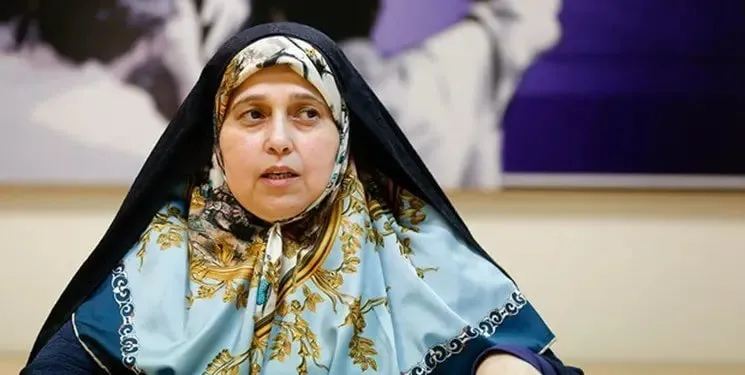
Parvaneh Salahshouri—a sociologist and former member of Parliament—has consistently been one of the most controversial and outspoken female figures in contemporary Iranian politics. From her fiery floor speeches in the 10th Parliament and her protest-driven refusal to run for re-election, to the recent headlines surrounding her husband’s managerial appointment within the Ministry of Petroleum under the 14th administration, she has frequently found herself at the center of the news cycle. This article provides a comprehensive look at her life, political stances, and academic record.
Who is the brave butterfly?
Dr. Parvaneh Selahshuri, politician, sociologist, university professor, women's rights activist, and former representative of Tehran, Ray, Shemiranat, Islamshahr and Fardis in the 10th term of the Islamic Council, born in 1343 in Masjid Suleiman, Khuzestan province, is one of the most well-known female figures of the reform movement in contemporary Iran. Selahshuri, who won 1,198,760 votes in the 11th rank of Tehran in the 10th parliamentary elections (March 2015), became one of the most reflective female representatives of the 10th parliament with controversial speeches and outspoken positions during her four years in parliament. She is the head of the women's faction of the 10th parliament and has a PhD in sociology from India. She is currently working as a professor at Islamic Azad University.
The importance of Dr. Parvaneh Selahshuri in Iran's socio-political sphere can be examined in several ways. First, his outstanding academic background - with a doctorate in sociology from one of the Indian universities and a long history of teaching at the Islamic Azad University - which has shaped his scientific-specialist framework in social fields, women's rights, and rural studies. Second, his very significant vote in the elections of the 10th parliament - more than one million and one hundred thousand votes, in the 11th place of Tehran - which is a sign of his strong social base among the reformist urban middle class of the capital. Third, her role as the head of the women's faction of the 10th Parliament - which gave her a strategic position in pursuing women's demands in the Iranian Parliament. Fourth, his frank and reckless positions - which were reflected in the important speeches of Shahrivar and December 2018 and resulted in the complaint of the Islamic Revolutionary Guard Corps and the political-security deputy of the Judiciary against him. Fifth, his symbolic decision not to register for the 11th Parliament elections - in protest of the discretionary supervision of the Guardian Council and the way of dealing with the protestors of the fuel protests of November 2018 - which made him one of the most prominent representatives criticizing the power structure.
In recent months (September 1404), Selahshuri's name was mentioned once again in the media space of Iran; This time, due to the appointment of his wife to one of the management positions of the oil industry in the 14th government of the Medicalists, an appointment that faced a massive attack by the media close to the fundamentalist current (such as the Student News Agency-SNN), who described him as a "radical representative and critic of the principles of the country's political system".
Life and background
Parvaneh Selhshuri was born in 1343 in the city of Masjid Sulaiman - one of the oldest and most historic cities in Khuzestan province and the birthplace of Iran's oil industry. Suleiman Mosque, which began its history in 1287 solar year (1908 AD) as the first oil discovery city in Iran and the Middle East, is considered a sign of connection with the history of the oil industry and the working-industrial class of southern Iran in the identity-historical literature of contemporary Iran.
Being born in 1343 - that is, during the peak years of the Pahlavi II era and on the threshold of the developments of the 40s and 50s - places Selhshouri in a generation that spent its childhood in the years of land reforms and the White Revolution, and at the age of a teenager, coincided with the events of the Islamic Revolution of 1357 and the Iran-Iraq war (especially since Khuzestan, as his hometown, was at the forefront of this war).
education
Salhshuri's academic path was formed in the field of sociology with the specialization of international graduate studies.
PhD in Sociology from India
The turning point of Salhshuri's education was receiving a doctorate degree in sociology from an Indian university. India, which has been one of the leading destinations for post-graduate studies for Iranian students in the fields of social sciences and humanities for the past decades, is one of the countries that has a rich academic tradition in the fields of sociology, social sciences, and development studies and is relatively independent from western frameworks.
This study formed the foundation of Selahshuri's theoretical framework in the field of sociology, especially in the fields of sociology of women, disadvantaged groups and rural development.
Academic activity: Professor of Islamic Azad University
The turning point of Salhshuri's academic record is his permanent membership in the faculty of Islamic Azad University. During the past years, as a professor of sociology, Selahshuri has been teaching and researching in this university. Islamic Azad University, which is one of the largest higher education centers in Iran and has many branches throughout the country, is considered one of the most important places of academic activity of Selahshuri.
Entering the 10th Parliament (March 2014)
The turning point of Selahshuri's political career was his victory in the elections of the 10th term of the Islamic Council; A victory that made her one of the most prominent female parliamentarians.
Participation in the comprehensive coalition of reformers "Gam II"
In the elections of March 2015, Selahshuri was included in the list of 30 members of the comprehensive coalition of reformists: "Gam Dom" - the main coalition of reformists in the Tehran constituency. This coalition, which was formed under the management of the Supreme Policy Council of the reformists, was considered an important electoral coalition during the election campaign and ultimately played a strategic role in the massive victory of the reformists in Tehran.
Obtaining 1,198,760 votes in the 11th place of Tehran
In this election, Selahshuri was ranked 11th in Tehran by winning 1,198,760 votes - that is, more than one million and one hundred thousand votes - and entered the 10th parliament. This vote was considered one of the important votes of the female representatives of the 10th Parliament and was a sign of her strong social base among the reformist voters of the capital.
Constituency
Selahshuri constituency in the 10th parliament included the five cities of Tehran, Ray, Shemiranat, Islamshahr and Pardis - one of the most populous constituencies in Iran, which sends 30 representatives to the parliament in each session of the parliament.
Head of the Women's Fraction of the 10th Parliament
One of the most important responsibilities of Seleshuri in the 10th parliament was the headship of the women's faction of the parliament; A faction that is one of the prominent thematic factions in the structure of the Islamic Council and plays a strategic role in pursuing the social-legal demands of women.
The chairmanship of this faction, which is currently held by Faridah Oladaghbad (Member of Parliament), gave Selashuri a special position in pursuing women's issues in Parliament. During his presidency, the plan to protect women against violence - one of the most reflected plans related to women's rights in recent years - was seriously pursued.
Membership in the Parliament's Cultural Commission
In addition to being the head of the women's faction, Selahshuri was a member of the Cultural Commission of the 10th Parliament during her parliamentary career. The commission is one of the prominent commissions of the parliament and plays a strategic role in following cultural, educational, media, and family issues.
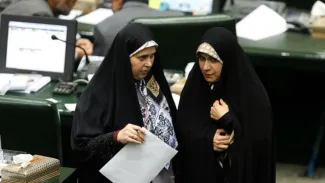
Salhshuri license in the parliament
Membership in the rural women's working group of the women's deputy of the 12th government
In addition to parliamentary activity, Selashuri worked in the 12th government of Hassan Rouhani as a member of the Working Group of Rural Women, Nomads and Underprivileged Regions of the Presidential Office for Women and Family. This working group, which operated under the supervision of the Presidential Vice President for Women and Family Affairs (at that time headed by Masoumeh Ebtekar), was considered one of the leading consultative institutions of the government in the field of women's rights of disadvantaged groups.
This membership, in connection with Salhshuri's sociological expertise in the field of deprived and rural strata, was one of the significant aspects of his executive activity.
Controversial speeches and judicial margins
The most reflective chapter of Selahshuri's parliamentary record was his controversial and frank speeches in the public hall of the Majlis; Speeches that resulted in numerous lawsuits.
Annual speech of September 1397
On 13 September 1397, Selahshuri delivered his annual speech in the public hall of the Islamic Council. This speech, in which Selahshuri pointed out the sensitive political and social issues of Iran, resulted in wide margins for him.
Video: Parvaneh Selhshuri's controversial and popular speech in the public hall of the Islamic Council
The speech of December and the complaint of the IRGC and the judiciary
Selahshuri's second speech in December 2017, in which he adopted more explicit positions, resulted in a complaint against him by the Islamic Revolutionary Guard Corps and the political-security deputy of the Judiciary. In explaining this case, Selahshuri stated: "Regarding the speech in Azarmah, the IRGC and the political security deputy of the Judiciary have filed a complaint against me, and I think I was acquitted, because my speech was in line with my duty as a representative." He also added: "I also tweeted on Twitter as a representative of the people."
Explanation of charges
Following this complaint, Selahshuri was at one point, appearing in the judicial authority, accused of imputed accusations - a phenomenon that is relatively rare among the members of the parliament, and in the tense atmosphere of the relationship between the legislature and the judiciary, it was considered one of the significant sidelines of the 10th term of the parliament.
Possible arrest
According to the reports published in the Iranian media, at one stage of Selhshuri's parliamentary activity, the news of his possible arrest was also raised in the media space - news that was considered one of the significant sidelines in the tense atmosphere of his relations with the security and judicial institutions.
Failure to register in the 11th Parliament (November 2018)
One of the most important symbolic decisions of Selahshuri was not to register in the 11th election period of the Islamic Council. This decision, which was taken in the tense atmosphere after the November 2018 protests (so-called fuel protests), was made for two clear reasons:
● Objection to the discretionary supervision of the Guardian Council, in which the Guardian Council had disqualified a large number of reformist candidates.
● Protest against the way of dealing with the protestors of the fuel protests of 2019, in which a significant number of protestors lost their lives.
This decision, which made Selahshuri one of the most prominent critical representatives in the 10th term of the parliament, is considered one of the symbolic actions of the post-Aban 2018 reform discourse.
Post-parliamentary activity
After the end of the 10th Majlis term in June 2019, Selahshuri returned to his academic activity at the Islamic Azad University and during the following years, he was active as one of the prominent reformist analysts in the Iranian media. During this period, she continued to pursue women's issues, civil rights, and criticism of power structures.
Margins of appointing a wife in the Ministry of Oil (September 2025)
The most reflective of Selahshuri's recent sidelines was the appointment of his wife to one of the management positions of the oil industry in the 14th government of the Medes in Shahrivar 1404. This appointment was met with a massive attack by the media close to the fundamentalist trend.
The Student News Agency (SNN) - one of the media outlets close to the fundamentalist movement - in a reflective report, described Selhshuri as a "radical representative and critic of the principles of the country's political system" and introduced this appointment as a sign of "radicals opening up to the appointments of the Ministry of Oil". This media added: "The appointment of Parvaneh Selhshuri's wife, a radical representative and critic of the principles of the country's political system, to one of the most important management positions in the oil industry has sparked a wave of questions and criticisms about the criteria for delegating responsibility in the government."
This margin, in the tense atmosphere of Iran's political discourse during the period of the medical government, is considered one of the most reflective recent cases related to the Selahshuri family.
Analytical views and positions
During his political-academic career, Dr. Parvaneh Selahshuri has formulated a clear intellectual framework that can be followed in several axes.
In a conversation with Abdi Media, Parvaneh Selhshuri, a sociologist and former MP, answers the key question, "Does the Islamic Republic accept the referendum?"
Defense of Women's Rights
The core strategic stance of Salahshouri is the defense of women's rights and the pursuit of this demographic's demands within the legislative and executive frameworks. During her tenure as the chair of the Women's Caucus in the 10th Parliament, Salahshouri played a strategic role in pursuing the women's protection bill. In evaluating the activities of the subsequent parliament, she stated: "The women's protection bill is not a priority on the agenda of the current parliament."
Emphasis on the Importance of Creating a Secure Family Environment
In one of her prominent stances as a member of the Cultural Committee of the 10th Parliament, Salahshouri declared: "To create a secure family environment, form healthy families, and even depict and promote the family..."—a stance that puts forward a structural view of the importance of the family in connection with women's rights.
Defense of Freedom of Expression
In another key position, Salahshouri stated: "Every citizen possesses the right to freedom of expression. This right must be exercised within the boundaries prescribed by law. Citizens have the right to express views..."—a position that stands as one of her most enduring stances amid the highly tense discourse on freedom of expression in Iran.
Criticism of Approbatory Supervision
One of Salahshouri's iconic stances is her criticism of the Guardian Council’s approbatory supervision (Nezarat-e Estesvabi). This stance culminated in her refusal to register candidacy for the 11th Parliament, serving as a clear indicator of her structural-critical view toward the electoral process in Iran.
Reaction to Faezeh Hashemi's Letter from Prison
In a highly publicized stance, Salahshouri reacted to a letter sent from inside prison by Faezeh Hashemi (a Reformist political activist and the daughter of Ayatollah Hashemi Rafsanjani)—a position demonstrating her solidarity with prominent Reformist figures in the post-election landscape.
Criticism of the Dominant Discourse on Elections
In one of her prominent analyses, Salahshouri stated: "Apparently, the public thinks along the lines that whoever becomes president makes no difference to us, and everyone..."—a position showing her deep understanding of the shifts in public discourse regarding contemporary politics in Iran.
Network of Alliances and Influential Figures
Dr. Parvaneh Salahshouri operates within a network of political and organizational ties with leading figures of the Iranian Reform movement:
The Organizational Level: Her relationship with the Supreme Council for Reformist Policymaking—the body that managed the comprehensive Reformist coalition list known as the "Second Step" (Gam-e Dovvom)—shapes her political communications network.
The Parliamentary Level: Her network within the legislature consisted of other Reformist women MPs of the 10th Parliament, including Fatemeh Saeidi, Tayyebeh Siavoshi, Tayyebeh Mirzayi, Fatemeh Zolqadr, Parvaneh Mafi, and other prominent figures of the Hope (Omid) Caucus.
The Executive Level: Her professional connections include Masoumeh Ebtekar (then-Vice President for Women and Family Affairs in the 12th administration), where Salahshouri served as a member of the Vice Presidency's Working Group on Rural, Nomadic, and Underprivileged Women.
Conclusion
Dr. Parvaneh Salahshouri stands out as one of the most prominent female figures of the Reform movement in contemporary Iran. She occupies a unique position in the politico-civic structure of Iranian Reformism through a distinct combination of a stellar academic background (a PhD in Sociology from India and long teaching tenure at the Islamic Azad University), an impressive parliamentary vote share (over 1.1 million votes, ranking 11th in Tehran during the 10th Parliament elections), a strategic legislative role (chairing the 10th Parliament's Women's Caucus and serving on the Cultural Committee), executive engagement (membership in the 12th administration's rural women's working group), and ultimately, her courageous refusal to run for the 11th Parliament in protest against approbatory supervision and the crackdown on protesters in November 2019.
Her trajectory—born in 1964 in Masjed Soleyman (the birthplace of Iran's oil industry), earning a PhD in Sociology in India, teaching at the Islamic Azad University, entering the 10th Parliament with a phenomenal vote count, chairing the Women's Caucus, delivering controversial floor speeches in September and December 2018, facing lawsuits from the Islamic Revolutionary Guard Corps (IRGC) and the judiciary, refusing to register for the 11th Parliament, up to the recent controversies surrounding her husband's appointment in the Ministry of Petroleum under the 14th administration—offers a portrait of a multidimensional "politician-sociologist-women's rights activist."
Salahshouri's distinguishing feature operates on two distinct levels:
The Parliamentary Level: Her courage to express unreserved stances on the parliament floor, as reflected in her high-profile September and December 2018 speeches, brought serious judicial and political costs for her, including lawsuits from the IRGC and the judiciary. Such outspoken boldness is relatively rare among female MPs in Iran's parliament.
The Symbolic Level: Her symbolic decision not to run for the 11th Parliament—in protest against approbatory supervision and the handling of the November 2019 fuel protests—is considered a milestone action within the post-November 2019 Reformist discourse, placing her among the few representatives who willingly accepted the political and principled cost of such a decision.
Analytically, Salahshouri represents the phenomenon of a "structurally critical female representative" in contemporary Iranian parliament. In this dynamic, a female representative backed by an academic pedigree looks at the power structure through a structural-critical lens while actively participating in legislative work, showing a willingness to bear the consequences of her critique. While this model has other historical precedents among female Iranian MPs (such as Azam Taleghani, Elaheh Koulaei, Fatemeh Rakei, and others), it found a distinct resonance in Salahshouri due to her fierce parliamentary candor and controversial speeches.
The issues Salahshouri focused on throughout her career—women's rights, protection against violence, approbatory supervision, the rights of protesters, freedom of expression, and rural development—remain the most enduring subjects of debate in contemporary Iranian sociopolitical discourse. At a time when Iran is traversing one of its most tense periods regarding the discourse on women's rights (particularly following the "Woman, Life, Freedom" movement) and escalating structural challenges, Salahshouri's parliamentary-academic experience serves as a prime resource for understanding the dynamics of Reformist women's representation within Iran's power structure.
Frequently Asked Questions (FAQs)
Who is Parvaneh Salahshouri? Dr. Parvaneh Salahshouri (born 1964 in Masjed Soleyman, Khuzestan) is an Iranian politician, sociologist, university professor, women's rights activist, and former member of Parliament representing Tehran, Rey, Shemiranat, Eslamshahr, and Pardis during the 10th legislative period. She also chaired the 10th Parliament's Women's Caucus and was a member of the Working Group on Rural, Nomadic, and Underprivileged Women within the Vice Presidency for Women and Family Affairs during the 12th administration.
What is Parvaneh Salahshouri's educational background? Salahshouri holds a PhD in Sociology from a university in India. Over the past decades, India has been a major destination for Iranian graduate students pursuing advanced degrees in the social sciences.
How many votes did Parvaneh Salahshouri secure in the 10th Parliament elections? In the March 2016 elections, she entered the 10th Parliament by securing 1,198,760 votes (over 1.1 million), ranking 11th in the Tehran constituency. She ran on the 30-member list of the "Second Step" comprehensive Reformist coalition.
Why did Parvaneh Salahshouri refuse to register for the 11th Parliament? Salahshouri declined to register candidacy for the 11th parliamentary elections in protest against two key issues: the Guardian Council's approbatory supervision (which resulted in the mass disqualification of Reformist candidates) and the heavy-handed state response to demonstrators during Iran's 2019 fuel protests, which led to a significant loss of life. This refusal remains one of the symbolic actions of the post-November 2019 Reformist narrative.
What was Parvaneh Salahshouri's controversial speech in parliament? Salahshouri delivered several highly controversial addresses during her term. Her annual floor speech on September 3, 2018, and another speech in December 2018 gained the widest traction. Following the December address, the IRGC and the political-security deputy of the judiciary filed lawsuits against her. Clarifying the status of the case, Salahshouri later stated: "I believe I was acquitted because my speech was delivered in fulfillment of my parliamentary duties."
What is Parvaneh Salahshouri's view on women's rights? The core of Salahshouri's strategic focus is the defense of women's rights. While chairing the Women's Caucus in the 10th Parliament, she played a strategic role in advancing the bill to protect women against violence. Assessing the subsequent parliament's performance, she noted: "The women's protection bill is not a priority on the current parliament's agenda."
What is the controversy surrounding the appointment of Parvaneh Salahshouri's husband in the Pezeshkian administration? In late 2025 (Shahrivar 1404 SH), Salahshouri's husband was appointed to a managerial post within the oil industry under the 14th administration led by Pezeshkian. The appointment drew fierce attacks from media outlets aligned with the conservative faction. The Student News Network (SNN) described Salahshouri as a "radical representative and a critic of the principles of the country's political system," labeling the appointment as evidence of "radicals infiltrating Ministry of Petroleum appointments." This issue stands as the most highly publicized recent controversy involving her family under the current administration.
Where was she born and where does she teach? Salahshouri was born in Masjed Soleyman, the oldest hub of the oil industry in Iran, located in Khuzestan province. She currently works as a professor of sociology at the Islamic Azad University.
Who is the current chair of the Parliament's Women's Caucus? While Salahshouri chaired the Women's Caucus during the 10th Parliament, Farideh Oladqobad subsequently assumed the leadership of this caucus.
Is Parvaneh Salahshouri still active? Yes. Dr. Parvaneh Salahshouri remains active in Iranian media as an Islamic Azad University professor and a prominent Reformist analyst. In the years following her parliamentary term, she has continued to track women's issues, civic rights, and critique the power structure. Her name returned to the forefront of Iranian media headlines following the controversy over her husband's managerial appointment in the Ministry of Petroleum.
Take less than a minute, register and share your opinion under this post.
Insulting or inciting messages will be deleted.
Sign Up