
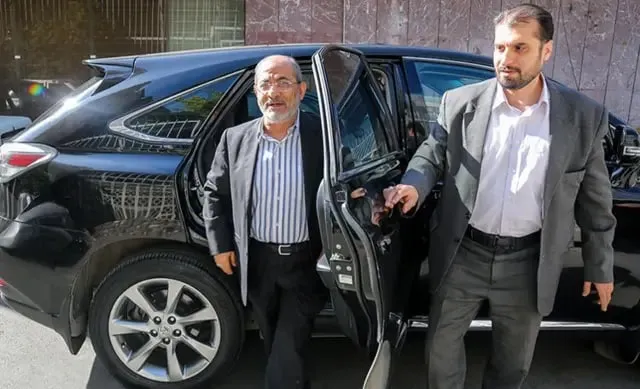
Mohsen Rafiqdoust, a commander, military leader, the first Minister of the IRGC, and former head of the Mostazafan Foundation, is one of the most prominent and controversial military-political figures of the Islamic Republic over the past five decades. Having a significant presence in pivotal moments of contemporary Iranian history—from driving Ayatollah Khomeini on February 1, 1979, to the founding of the IRGC, eight years as Minister of the IRGC (1982-1988), and a decade as head of the Mostazafan Foundation (1989-1999)—he became one of the most debated media figures in Iran in the past decade in March 2025, with his controversial confessions about commanding cross-border assassinations of prominent opposition figures from the Pahlavi era (Shapour Bakhtiar, General Oveisi, Fereydoun Farrokhzad, and Shahriar Shafiq). Rafiqdoust, currently a member of the board of trustees of the Mostazafan Foundation, is considered one of the founders of the Islamic Republic's defense capability through his purchase of weapons from Israel and other countries during the war and his role in shaping Iran's military industries.
Who is Mohsen Rafiqdoust?
Mohsen Rafiqdoust (born August 26, 1940, in Tehran) is a commander, military leader, the first Minister of the Islamic Revolutionary Guard Corps (IRGC), former head of the Mostazafan and Veterans Foundation, and a principlist political activist. He is one of the most prominent and, at the same time, most controversial military-political figures of the Islamic Republic of Iran over the past five decades. With a significant presence in the most pivotal moments of contemporary Iranian history—from driving Ayatollah Khomeini upon his arrival in Iran on February 1, 1979, to playing a role in the founding of the IRGC, responsibility for arms purchases and IRGC logistics during the Iran-Iraq war, eight years as Minister of the IRGC (1982-1988) in the first and second administrations of Mir-Hossein Mousavi, and a decade as head of the Mostazafan and Veterans Foundation (1989-1999)—he is considered one of the most experienced figures in the military-economic structure of the Islamic Republic. Rafiqdoust, who in March 2025, with controversial confessions in an interview with "Dideban-e Iran" about personally commanding the cross-border assassinations of prominent opposition figures from the Pahlavi era—including Shapour Bakhtiar, General Gholam Ali Oveisi, Fereydoun Farrokhzad, and Shahriar Shafiq (the son of Ashraf Pahlavi)—became one of the most widely discussed news stories in the Persian-language media space in the past decade, is currently a member of the board of trustees of the Mostazafan Foundation and one of the most prominent veteran figures of Iran's principlist movement.
The importance of Mohsen Rafiqdoust in Iran's contemporary military-political sphere can be examined from several angles. First, his unique biography linked to the moment of the establishment of the Islamic Republic—as Ayatollah Khomeini's driver on the day of his arrival in Iran—which places him among the narrowest circle of figures who witnessed the founding moment of the system. Second, his sustained presence in the military-economic structure of the Islamic Republic—as the first Minister of the IRGC (1982-1988), head of the Mostazafan Foundation (1989-1999), and current member of its board of trustees—which makes him one of the most experienced structural managers of the system. Third, his strategic role in the formation of Iran's military industries and arms manufacturing after the revolution—as the person responsible for purchasing weapons from numerous countries during the Iran-Iraq war—which places him among the founders of the Islamic Republic's military capability. Fourth, his recent controversial confessions about cross-border assassinations—which in March 2025 became one of the most widely discussed news stories in Persian-language media—and following which, the claims were denied by his personal office, the Islamic Motalefeh Party, and the IRGC spokesman, or attributed to "complications from brain surgery." Fifth, his management of one of Iran's largest economic foundations—which is among the three largest quasi-governmental-economic institutions in Iran and was under Rafiqdoust's management for about a decade.
Rafiqdoust is also the founder of the Noor Foundation (after his dismissal from the Mostazafan Foundation in 1999); a foundation that operates in the pharmaceutical and construction fields.
Life and Background
Mohsen Rafiqdoust was born on August 26, 1940, in Tehran. His birthplace was in the Khorasan Square and Sarcheshmeh neighborhood—one of the oldest and most traditional neighborhoods in southern Tehran; a neighborhood that, at that time, was considered one of the prominent religious-bazaar areas of the capital and the birthplace of many prominent activists of the pre-revolution Islamic movement.
In his widely discussed interview in March 2025, Rafiqdoust noted: "I was born on August 26, 1940, in the southernmost [district of Tehran]... there, our house was also privileged." He currently lives in the Farmanieh neighborhood—one of the northern and prominent areas of Tehran.
Pre-Revolution Activity
Before the Islamic Revolution, Rafiqdoust was one of the prominent activists of the Islamic movement and the Islamic Motalefeh Party.
Membership in the Islamic Motalefeh Party
Rafiqdoust was among the former members of the Islamic Motalefeh Party—one of the most prominent Islamic-bazaar organizations opposed to the Pahlavi regime. This party, which was considered among the circles close to Ayatollah Khomeini, formed the foundation of his political-revolutionary identity.
Killing a SAVAK Agent
According to Rafiqdoust's own account in his recent confessions (March 2025), before the 1979 revolution, with the permission of "several scholars," he killed a SAVAK agent who was involved in the attack on the Feyziyeh School in Qom on March 22, 1963, by hitting him on the head with a "club." This account, published in his recent widely discussed interview, is one of the debated aspects of his pre-revolution background.
Role in the Victory of the Islamic Revolution
The most prominent moment of Rafiqdoust's revolutionary career was driving Ayatollah Khomeini upon his arrival in Iran on February 1, 1979.
According to published accounts, Rafiqdoust drove the vehicle carrying Ayatollah Khomeini from Mehrabad Airport to Behesht-e Zahra—on the historic day of the revolutionary leader's return from Paris to Iran. This role, which is considered one of the most symbolic events of the 1979 revolution, placed Rafiqdoust among the narrowest circle of figures close to the revolutionary leader at the moment of his arrival in Iran.
Founding of the IRGC
After the revolution, Rafiqdoust was among the founders of the Islamic Revolutionary Guard Corps. This institution, which was officially established on April 22, 1979, by order of Ayatollah Khomeini, was considered one of the main centers of military-security power of the new system.
Minister of the IRGC (1982-1988)
The central chapter of Rafiqdoust's military-executive career was his role as the first Minister of the IRGC of Iran.
Ministerial Period
Rafiqdoust was the first Minister of the IRGC of Iran from 1982 to 1988. This period, which coincided with the entirety of the first and second administrations of Mir-Hossein Mousavi, covered one of the most sensitive periods of contemporary Iranian history—the peak years of the Iran-Iraq war.
Dissolution of the Ministry of the IRGC
After the end of the Iran-Iraq war in 1988 and following a review of Iran's military-ministerial structure, the Ministry of the IRGC was dissolved, and Rafiqdoust was removed from this position.
Responsibility for Arms Purchases and Logistics
During his tenure as Minister of the IRGC, Rafiqdoust was responsible for purchasing arms and logistics for the IRGC. This responsibility, which was carried out in the context of extensive international sanctions against Iran during the war, was one of his most complex executive missions.
In his interviews, Rafiqdoust noted: "In Mohsen Rafiqdoust's dictionary, 'impossible' and 'no' have no meaning, but there are red lines." This position is a sign of his pragmatic view of the military logistics mission during the war.
Arms Purchases from Israel and the Iran-Contra Affair
One of the most debated aspects of Rafiqdoust's logistics period was the purchase of arms from Israel—a country that in the official discourse of the Islamic Republic is identified as an "enemy." This purchase, which took place within the framework of the Iran-Contra affair—one of the most widely discussed political scandals of the 1980s in America—was one of the hidden aspects of Iran's military diplomacy during the war.
According to published accounts, Rafiqdoust was one of the individuals who even bought arms from Israel, Iran's greatest enemy, to supply the fighters on the front lines.
Founding of Iran's Military Industries
Rafiqdoust was among the founders of Iran's military and arms industries after the revolution. During the military logistics period, several notable measures were recorded in his name:
The purchase of 20,000 tons of Soren ingots from Mexico—a key material for making cannons and mortars—which was delivered to Iran within 22 days.
The import of 3,000 copying lathes for ammunition production.
Sending Iranians to Argentina for hands-on training in building TOW missiles from Argentine factories, without any written notes, merely by observation.
These measures formed the foundation of Iran's military-arms industries in the following decades.
Head of the Mostazafan and Veterans Foundation (1989-1999)
The most prominent chapter of Rafiqdoust's economic-managerial career was his decade as head of the Mostazafan and Veterans Foundation.
Appointment on September 7, 1989
On September 7, 1989, the Ettela'at newspaper reported the appointment of a new head of the Mostazafan and Veterans Foundation. Mohsen Rafiqdoust, by decree of Ayatollah Ali Khamenei, succeeded Mir-Hossein Mousavi—who had headed the foundation during his premiership. This appointment was initially issued for a three-year term but ultimately continued until 1999.
Scope of the Foundation's Activities
The Mostazafan and Veterans Foundation, which was formed after the 1979 revolution with the aim of managing the confiscated properties of the Pahlavi dynasty and its affiliates, is among the three largest quasi-governmental-economic institutions in Iran. During Rafiqdoust's management period, this foundation became one of Iran's most prominent economic hubs.
According to Rafiqdoust's account in his recent interview: "The Mostazafan Foundation could not do anything at all before I went there. Why couldn't the foundation do anything? Because more than 57% of the assets given to the foundation were under guardianship."
Dismissal in 1999
In 1999, Rafiqdoust was dismissed from the head of the Mostazafan Foundation. This dismissal, which occurred in the tense atmosphere of the Reform Era, was one of the notable events in the management of quasi-governmental foundations during that period.
The Noor Foundation
After his dismissal from the Mostazafan Foundation, Rafiqdoust personally founded the Noor Foundation—a foundation that operates in the pharmaceutical and construction fields and is among Iran's quasi-foundational economic institutions.
Current Member of the Board of Trustees of the Mostazafan Foundation
Rafiqdoust remains a member of the board of trustees of the Mostazafan Foundation—a position that keeps him in the supervisory structure of this large economic foundation. Additionally, he is a member of the IRGC with the rank of brigadier general.
Controversial Confessions in March 2025
The most prominent event of Rafiqdoust's recent career was his widely discussed interview with the website "Dideban-e Iran" in March 2025.
Content of the Confessions
In this interview, Rafiqdoust stated: "I was the commander of several assassinations." He went on to take responsibility for commanding the assassination of four prominent opposition figures from the Pahlavi era in Europe:
Shapour Bakhtiar (the last Prime Minister of the Pahlavi era, who was killed on August 6, 1991, on the outskirts of Paris).
General Gholam Ali Oveisi (the former commander of the Imperial Army's Ground Forces, who was killed along with his brother Gholam Hossein Oveisi in Paris on February 7, 1984).
Fereydoun Farrokhzad (an artist and prominent media figure opposed to the system, who was killed in August 1992 in Bonn, Germany).
Shahriar Shafiq (the son of Ashraf Pahlavi, who was killed in Paris in 1979).
Method of Carrying Out the Assassinations
According to Rafiqdoust's account: "We had a team there. Oveisi, the son of Ashraf, that guy (Farrokhzad), Bakhtiar, and... all of them were handled by the teams that were there. Usually, the Basque (Spain) kids were assigned to carry out the assassinations, they would hit them and no one would know anything... we actually went there (to Basque, Spain)."
According to this account:
The Basque separatists (ETA) of Spain were the executors of the assassinations.
Money was paid to the Basque group through a channel of an Egyptian cleric in Germany.
Anis Naqash was the leader of the execution team for Bakhtiar's assassination.
In the case of Oveisi's assassination, the Lebanese group Islamic Jihad, led by Imad Mughniyah, also played a role.
Threats to Western Countries
Rafiqdoust also noted in this video interview: "Tehran threatens Western countries if they do not release some of the agents arrested abroad."
Official Reactions
Rafiqdoust's confessions met with a wave of reactions in Persian-language media:
Rafiqdoust's personal office attributed his statements to "complications from his brain surgery" and rejected relying on these memories.
The Islamic Motalefeh Party confirmed the same position.
The IRGC spokesman denied Rafiqdoust's claims.
Sardar Esmail Kowsari stated: "He has said many things incorrectly. Not all the things he said relate to him. Some of them never happened at all."
Hossein Mousavian (former Iranian ambassador to Germany) stated: "I was shocked to read Rafiqdoust's interview!"—he also confirmed that at the time of Farrokhzad's assassination, Tehran officials had assured the Iranian embassy in Germany that Farrokhzad had been assassinated by the Iranian opposition abroad, and the embassy had conveyed the same position to German officials.
Discussions Surrounding the Confessions
According to the analysis of some experts, some of these assassinations occurred during a period when Rafiqdoust was head of the Mostazafan Foundation, not Minister of the IRGC. This point raised the question of whether his confessions related to his official position or parallel activity.
Some analysts interpreted Rafiqdoust's confessions as "confirmation of the allegations that opponents have been making against the Islamic Republic for over three or four decades"—an interpretation that received widespread coverage in Persian-language media.
Abdi Media's Interview with Mohsen Rafiqdoust, the First Minister of the IRGC and Former Head of the Mostazafan and Veterans Foundation
Part One
Part 2
Part 3
Positions and Views
Throughout his career, Mohsen Rafiqdoust has formulated a clear political-intellectual framework.
Loyalty to the Official Structure
Rafiqdoust's most central political position is his sustained loyalty to the official structure of the Islamic Republic and its leadership—a loyalty reflected in his appointment as Minister of the IRGC with the approval of the then Supreme Leader, his appointment as head of the Mostazafan Foundation by the current Supreme Leader, and his current membership on the foundation's board of trustees.
Constructive Criticism and Avoidance of Destruction
In one of his notable positions, Rafiqdoust has stated: "Criticism of the government is possible, but if criticism is constructive, it is good, and the people should be the eyes of the revolution. Society can criticize, but they should not destroy. That is, if there is really a flaw somewhere, they should criticize, and the government should listen to the criticism and correct it."
Pragmatic Approach
Another notable position of Rafiqdoust is his pragmatic view of executive duties: "In Mohsen Rafiqdoust's dictionary, 'impossible' and 'no' have no meaning, but there are red lines."
Connections with Figures and Currents
Mohsen Rafiqdoust is situated within a network of military-economic-political connections with prominent figures of the Islamic Republic. At the historical level, his relationship with Ayatollah Khomeini, Ayatollah Ali Khamenei, and Mir-Hossein Mousavi formed his central network of relationships.
At the party-political level, his relationship with the Islamic Motalefeh Party—of which he is a former member—formed his party network.
At the level of cross-border actors, according to recent confessions, Rafiqdoust had operational ties with Anis Naqash, Imad Mughniyah, and the Basque separatists of Spain.
At the current level, his relationship with the IRGC, the Mostazafan Foundation, and the Noor Foundation forms his current institutional network.
Conclusion
Mohsen Rafiqdoust is one of the most experienced and, at the same time, most widely discussed military-economic figures of the Islamic Republic of Iran over the past five decades. With a unique combination of a significant presence in the most pivotal moments of contemporary Iranian history, the first ministry of the IRGC, responsibility for arms purchases and IRGC logistics during the Iran-Iraq war, a strategic role in the formation of post-revolutionary military industries, a decade as head of the Mostazafan and Veterans Foundation, the founding of the Noor Foundation, current membership on the board of trustees of the Mostazafan Foundation, and finally, controversial confessions in March 2025 about commanding the cross-border assassinations of prominent opposition figures from the Pahlavi era, he occupies a unique position in the political-military-economic structure of contemporary Iran.
Rafiqdoust's distinguishing feature, on the first level, is his exceptional continuity in the official structure of the system over about five decades—a continuity in which a figure with a pre-revolution background has been consistently active in the most central military-economic positions of the system over the post-revolution decades. On the second level, his biography linked to cross-border operations and military diplomacy—which took shape during his tenure as Minister of the IRGC and then the Mostazafan Foundation and was reflected in recent confessions—is one of the most debated aspects of his career. On the third level, the controversial confessions of March 2025 and the numerous reactions to them—in which his personal office, the Motalefeh Party, and the IRGC rejected his account—are one of the most widely discussed media events in Iran in the past decade.
From an analytical perspective, Rafiqdoust's position exemplifies the phenomenon of the "founder-minister-foundation manager-principlist veteran" in contemporary Iran—a phenomenon in which a figure with a unique historical background at the founding moment of the system, over decades, serves in various military-economic-political positions and, in his later years, makes controversial statements that impact the media space. This pattern, which has other examples among the first-generation figures of the Islamic Republic, has found a special reflection in Rafiqdoust through his frankness in historical narration and its widely discussed consequences.
What is clear from today's perspective is that the topics Rafiqdoust has addressed in his activities and confessions—from the history of the founding of the IRGC, arms purchases from Israel in the Iran-Contra affair, the formation of Iran's military industries, the management of the Mostazafan Foundation, cross-border assassinations of opposition figures from the Pahlavi era, and relations with cross-border actors—remain among the most enduring topics of discussion concerning the contemporary history of the Islamic Republic. In a situation where Iran is in one of the most tense periods of its political-legal discourse—particularly after the 12-day Iran-Israel war in June 2025 and the 2025-2026 uprisings—Rafiqdoust's voice, with his recent widely discussed confessions, is one of the most cited references for dialogue surrounding the complex historical cases of the Islamic Republic.
Frequently Asked Questions
Who is Mohsen Rafiqdoust?
Mohsen Rafiqdoust is a commander, military leader, the first Minister of the IRGC of Iran (1982-1988), former head of the Mostazafan and Veterans Foundation (1989-1999), and a principlist political activist. He is currently a member of the board of trustees of the Mostazafan Foundation.
What was Rafiqdoust's role in the victory of the revolution?
The most prominent moment of Rafiqdoust's revolutionary career was driving the vehicle carrying Ayatollah Khomeini upon his arrival in Iran on February 1, 1979. He is also among the founders of the IRGC.
What was the Ministry of the IRGC, and what was Rafiqdoust's role in it?
The Ministry of the IRGC of Iran operated from 1982 to 1988, and Mohsen Rafiqdoust was its first minister. This period coincided with the first and second administrations of Mir-Hossein Mousavi. After the end of the Iran-Iraq war, the Ministry of the IRGC was dissolved. During this period, Rafiqdoust was responsible for arms purchases and IRGC logistics.
What was the issue of arms purchases from Israel?
According to published accounts, Rafiqdoust was one of the individuals who even bought arms from Israel, Iran's greatest enemy, to supply the fighters on the front lines. This purchase took place within the framework of the Iran-Contra affair—one of the most widely discussed political scandals of the 1980s in America. Additionally, Rafiqdoust provided Soren ingots from Mexico, copying lathes, and training in building TOW missiles from Argentine factories for Iran's military industries.
What is the Mostazafan Foundation, and when did Rafiqdoust become its head?
The Mostazafan and Veterans Foundation is among the three largest quasi-governmental-economic institutions in Iran. On September 7, 1989, Ayatollah Ali Khamenei appointed Rafiqdoust as the head of this foundation, succeeding Mir-Hossein Mousavi. Rafiqdoust served in this position until 1999.
What is the Noor Foundation?
After his dismissal from the Mostazafan Foundation in 1999, Rafiqdoust personally founded the Noor Foundation—a foundation that operates in the pharmaceutical and construction fields.
What were Rafiqdoust's controversial confessions in March 2025?
On March 8, 2025, Rafiqdoust stated in an interview with "Dideban-e Iran": "I was the commander of several assassinations." He took responsibility for commanding the assassination of four prominent opposition figures from the Pahlavi era: Shapour Bakhtiar, General Gholam Ali Oveisi, Fereydoun Farrokhzad, and Shahriar Shafiq (the son of Ashraf Pahlavi).
Who carried out the assassinations?
According to Rafiqdoust's account, the Basque separatists of Spain were the executors of the assassinations, and money was paid to the Basque group through a channel of an Egyptian cleric in Germany. Anis Naqash was the leader of the execution team for Bakhtiar's assassination. In the case of Oveisi's assassination, the Lebanese group Islamic Jihad, led by Imad Mughniyah, also played a role.
What was the official reaction to Rafiqdoust's confessions?
Rafiqdoust's personal office and the Islamic Motalefeh Party attributed his statements to "complications from his brain surgery." The IRGC spokesman denied his claims. Sardar Esmail Kowsari stated: "He has said many things incorrectly." Hossein Mousavian stated: "I was shocked to read Rafiqdoust's interview!"
Is Mohsen Rafiqdoust still active?
Yes, Mohsen Rafiqdoust remains present in Iran's political-institutional arena as a member of the board of trustees of the Mostazafan Foundation, a member of the IRGC with the rank of brigadier general, the founder of the Noor Foundation, and one of the most prominent veteran figures of the principlist movement. His consistent presence in prominent media outlets is a sign of his sustained activity. His recent confessions have become one of the most widely discussed topics in Persian-language media in the past decade.
Take less than a minute, register and share your opinion under this post.
Insulting or inciting messages will be deleted.
Sign Up