
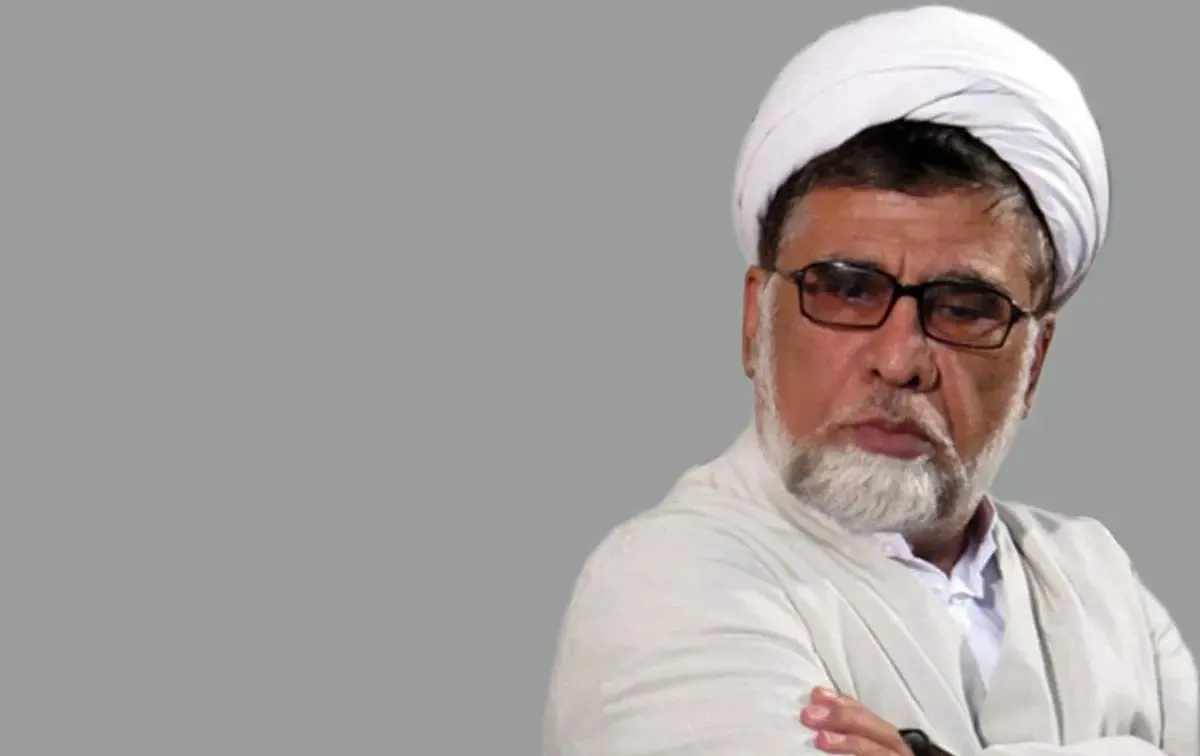
Mohammad Taghi Fazel Meybodi is a reformist cleric, jurist, religious thinker, professor at seminary and university, and one of the most prominent figures of the critical clergy in contemporary Iran. He was a student of Ayatollah Hossein Ali Montazeri (six years of advanced jurisprudence), Ayatollah Naser Makarem Shirazi (six years of advanced principles of Islamic jurisprudence), Ayatollah Yusef Sanei, and Ayatollah Abdollah Javadi-Amoli. He is a permanent member of the Society of Seminary Teachers and Researchers of Qom and a professor at Mofid University in Qom. In recent years, with his explicit critical stances — from criticizing government intervention in hijab and official clerical titles to supporting negotiations with the United States and criticizing the Arbaeen budget — Fazel Meybodi has become one of the most frequently cited voices of reformist clergy in Iranian media.
Who is Mohammad Taghi Fazel Meybodi?
Hojjat al-Islam Mohammad Taghi Fazel Meybodi, a reformist cleric, jurist, religious thinker, author, seminary and university professor, and one of the most prominent figures of the critical and reformist clergy in contemporary Iran, born on July 24, 1953, in the city of Meybod, Yazd province, has become one of the main architects of the reformist clergy discourse in Iran over more than five decades of activity in the seminary and public sphere. Fazel Meybodi, who stands at the intersection of the tradition of dynamic jurisprudence, modern religious thought, and reformist civil-political activism, is a member of the Society of Seminary Teachers and Researchers of Qom (a prominent reformist clergy organization formed after June 2, 1997) and a professor at Mofid University in Qom (one of the most prestigious higher education centers associated with the moderate-reformist clerical tradition in Iran).
The importance of Mohammad Taghi Fazel Meybodi in Iran's religious-political sphere can be examined from several perspectives. First, his distinguished academic background in the Qom seminary — particularly six years of advanced jurisprudence (Kharij Fiqh) under Ayatollah Hossein Ali Montazeri (former deputy supreme leader who was removed from this position in the late 1980s and in his final years became one of the important reference points for criticizing the power structure in Iran), and six years of advanced principles of jurisprudence (Kharij Usul) under Ayatollah Naser Makarem Shirazi (one of the current sources of emulation) — has formed his jurisprudential-scientific foundation. Second, his clear connection with the tradition of dynamic jurisprudence thought, reflected through studying under Ayatollah Yusef Sanei (late source of emulation and one of the main architects of reformist dynamic jurisprudence) and Ayatollah Abdollah Javadi-Amoli (prominent contemporary Shiite philosopher), has shaped his intellectual-philosophical framework. Third, his sustained role in the Society of Seminary Teachers and Researchers of Qom — which was established after June 2, 1997, and is considered one of the most important reformist clergy organizations in Iran — places him among the most veteran figures of the reformist clergy. Fourth, his high-profile media and public presence in recent years — as one of the few prominent clerics who appears in reformist media with explicit critical stances — has made him one of the most frequently cited critical clerical voices in contemporary Iranian discourse.
Fazel Meybodi has also faced several high-profile controversies in recent times, including extensive attacks from media outlets close to the principlist camp (who accuse him of "exaggeration and absurdity"), and his persistent defense of the Society following the organization's controversial condolence message for Yahya Sinwar in the fall of 2024. These controversies, in the tense atmosphere of contemporary Iran's religious-political discourse, form one of the significant aspects of his professional career.
Life and Background
Mohammad Taghi Fazel Meybodi was born on July 24, 1953, in the city of Meybod — one of the oldest cities in Yazd province in central Iran. Meybod, a city with a rich historical-cultural background and one of the prominent centers of traditional Iranian culture, has introduced notable figures in the fields of jurisprudence, clergy, political science, and academia to Iranian society over the decades following the revolution. (Another notable fellow citizen of Fazel Meybodi, Dr. Seyed Jalal Dehghani Firouzabadi — secretary of the Strategic Council on Foreign Relations — was also born in this city.)
Being born on July 24, 1953, places Fazel Meybodi in a generation born in the aftermath of the coup d'état of August 19, 1953, and who spent their childhood and adolescence during the 1960s — that is, the era of land reforms and socio-economic transformations of the Pahlavi II period.
Seminary Education
Fazel Meybodi's academic path is one of the most unique among contemporary Iranian reformist clerics, in which studying under prominent and sometimes ideologically diverse figures has been pursued.
Entry into Qom Seminary (1971)
Fazel Meybodi entered the Qom Seminary — the most important center of Shiite religious education in Iran — in 1971, at the age of 18. This entry, on the threshold of the transformations of the 1970s, a period when the Qom Seminary was on the verge of intellectual-political tensions before the Islamic Revolution, was one of the turning points of his life.
Studying under Ayatollah Yusef Sanei
One of Fazel Meybodi's key connections during his studies at the Qom Seminary was studying under Ayatollah Yusef Sanei (born 1937 in Nikabad, Isfahan, deceased). Ayatollah Sanei, who in his later years became one of the sources of emulation with high-profile reformist stances and after his notable positions following the 2009 events was removed from marja'iyyat (source of emulation) by the Society of Seminary Teachers of Qom, was one of the main architects of reformist dynamic jurisprudence in contemporary Iran.
Philosophy Teachers
Fazel Meybodi's philosophy teachers were Ayatollah Yahya Ansari Shirazi and Ayatollah Abdollah Javadi-Amoli. Javadi-Amoli, one of the prominent contemporary Shiite philosophers and a student of Allameh Tabatabai, is considered among the most important figures in Islamic philosophy and mysticism in contemporary Iran.
Advanced Principles of Jurisprudence (Kharij Usul) under Ayatollah Makarem Shirazi
Fazel Meybodi studied advanced principles of jurisprudence (Kharij Usul) under Ayatollah Naser Makarem Shirazi — one of the current sources of emulation for Shiites — for six years. This period formed the foundation of his knowledge in the field of principles of jurisprudence.
Advanced Jurisprudence (Kharij Fiqh) under Ayatollah Montazeri (Six Years)
Fazel Meybodi's key yet distinctive connection was his six-year study of advanced jurisprudence (Kharij Fiqh) under Ayatollah Hossein Ali Montazeri (1922-2009). This connection, over approximately six years, shaped his intellectual-jurisprudential foundation and is among the most prominent aspects of his intellectual-political character.
Ayatollah Montazeri, who was selected as deputy supreme leader in the 1980s and then on March 26, 1989, was removed from this position by Ayatollah Khomeini, became in his final years one of the high-profile reference points for criticizing the power structure in the Islamic Republic — especially after the events of the 2009 Green Movement. Studying under Montazeri, in the literature of Iran's reformist clergy, is considered one of the distinctive aspects of identity — a connection that also includes many current members of the Society of Seminary Teachers and Researchers of Qom.
Teaching at the Seminary and University
After completing his advanced courses (Kharij), Fazel Meybodi began teaching at the Qom Seminary and university.
Teaching at Qom Seminary
Among the notable courses that Fazel Meybodi has taught at the Qom Seminary are: Sharh al-Lum'ah, Hashiyat al-Mantiq, Bidayat al-Hikmah, Usul al-Fiqh, and Kifayah. These courses are considered among the important classical texts of seminary education, and teaching them is an indication of Fazel Meybodi's jurisprudential-principled-philosophical mastery.
Professor at Mofid University, Qom
Fazel Meybodi is a professor at Mofid University in Qom — which was established in 1989 by Ayatollah Abdolkarim Mousavi Ardabili. Mofid University, which is considered among the most prominent higher education centers of moderate-reformist clergy in Iran and where notable figures such as Mousavi Ardabili, Abdolkarim Soroush (for a period), and other distinguished professors have taught, is one of the intellectual hubs of the reformist clergy movement.
Academic and Research Works
Mohammad Taghi Fazel Meybodi is the author of several books and dozens of academic-research articles in the fields of jurisprudence, religious thought, and Islamic law. His most prominent work is the book "Sharia, Custom, and Rationality," which is considered among the reference works in the field of critique and revision of traditional jurisprudence.
Simorgh Program | Topic: The Future of Governance; Religion, Hostage of the Government? | Featuring Haj Sheikh Mohammad Taghi Fazel Meybodi
Membership in the Society of Seminary Teachers and Researchers of Qom
The turning point in Fazel Meybodi's organizational-political career is his sustained membership in the Society of Seminary Teachers and Researchers of Qom.
Establishment of the Society after June 2, 1997
The Society of Seminary Teachers and Researchers of Qom was founded in Qom after June 2, 1997 — that is, following the victory of Seyed Mohammad Khatami in the presidential election and the beginning of the reform era (Khor-dad 2nd Movement). This society engages in political activity in the public sphere of the country and, of course, in the Qom seminary, with "the approach of reformism, change, and authentic revolutionary principlism."
The main founders of this society include Ayatollah Mohammad Ali Abaei Khorasani, Ayatollah Hossein Mousavi Tabrizi, Ayatollah Bayat Zanjani, and others. Current members of the society, most of whom are reformists, teachers of advanced courses (Kharij) at the Qom seminary, seminary university professors, and students of Montazeri, include Hossein Mousavi Tabrizi, Seyed Mohammad Ali Ayazi, Mahmoud Salavati, Mohammad Taghi Fazel Meybodi, Seyed Abolfazl Mousavian, Mohammad Ali Kousha, and other prominent figures.
Fazel Meybodi's Role in the Society
In recent years, Fazel Meybodi has become one of the main defenders of this organization against the attacks of media outlets close to the principlist camp. In one of his notable positions (in an interview with Ham-Mihan Online, November 2024), he stated: "Usually, we in this society worked within the framework of the system, and the statements of the late Imam have also been one of the criteria for our political work. We also participated in every election; however, we entered from a reformist perspective and base. In sensitive times, the society has announced its position."
The Sinwar Condolence Message Controversy (Fall 2024)
One of the recent high-profile controversies of the Society of Seminary Teachers and Researchers was its condolence message on the occasion of the martyrdom of Yahya Sinwar (the late leader of Hamas) in the fall of 2024. In this message, the society had added a sentence that faced widespread attacks from media outlets close to the principlist camp. Fazel Meybodi, defending the society, stated: "There have always been those in the seminary who wanted the seminary to be single-voiced and not accept or tolerate any voice opposing the official one. This is not the first time the Society of Seminary Teachers and Researchers has been attacked... We hadn't drawn a sword; we weren't fighting anyone."
Views and Analytical Positions
Throughout his intellectual-analytical career, Hojjat al-Islam Mohammad Taghi Fazel Meybodi has formulated a clear intellectual framework that can be traced in several axes.
Criticism of Government Intervention in Hijab
One of the most widely reported stances of Fazel Meybodi in recent years is his serious criticism of government intervention in the issue of hijab. In one of his notable positions, he stated: "The less the government intervenes, the better. The government's main duty is to solve economic, security, and livelihood problems. Saying the issue of hijab..." He added: "Instead of using tools like fines and flogging, efforts should be made in promoting and encouraging hijab."
Regarding the behavior of the Guidance Patrol (Gasht-e Ershad), in August 2024 — after the release of a video showing the harsh treatment of two unveiled girls by the Guidance Patrol — Fazel Meybodi requested of Pezeshkian: "Closing down the Guidance Patrol was one of Dr. Pezeshkian's core slogans. Our demand is that his core slogans must be implemented."
Warning to Alam ol-Hoda
In one of his notable critical stances, responding to the remarks of Ayatollah Seyed Ahmad Alam ol-Hoda (Friday prayer leader of Mashhad) about unveiled women, Fazel Meybodi stated: "On what basis does he call unveiled women 'irreligious'? Which jurist has said that if someone is unveiled, they are faithless?" He added: "On what basis does he say that the West wants the Iranian people to be grass-eating sheep? For the sake of preserving the dignity of Islam and Iran, advise him to change his tone, or change it himself."
Criticism of Official Titles
One of Fazel Meybodi's widely reported stances is his criticism of the widespread application of the title "Ayatollah" to non-mujtahids. In one of his notable positions, he stated: "Ayatollah means someone who is a mujtahid and can perform ijtihad based on the rules of jurisprudence and principles as taught in the seminary. Someone who has studied and taught for years to reach the rank of ijtihad, and then be called Ayatollah." He called these common titles "made-up" and added: "A person who left the seminary years ago and went into executive work is not an Ayatollah."
Defense of Negotiation with the United States
Fazel Meybodi is one of the serious defenders of the Pezeshkian administration's negotiations with Trump. In one of his notable positions, he stated: "The Pezeshkian administration should seize the opportunity to negotiate with Trump and not allow extremists to turn this opportunity into an [obstacle]." In another tweet, he wrote: "To start negotiations, Trump should abandon threats and sanctions and enter with a logic of peace." And in explaining the Leader's position, he stated: "The Supreme Leader's remarks left the administration's hands open on the issue of negotiation, provided that the United States does not confront Iran with the language of force and threats."
Support for the Two-State Solution in Palestine
In one of his notable positions, Fazel Meybodi stated: "The two-state solution in the matter of Palestine and Israel was not our idea; many leaders of Hamas, Arab countries, and others have proposed it." This position, in the tense atmosphere of Iranian-Palestinian discourse, indicates his realistic view of the issue.
Criticism of the Paydari Current
Fazel Meybodi, in one of his notable positions, stated: "The Paydari people are a group who, if not stopped today, will create greater dangers for tomorrow." This position is considered an indication of his explicit criticism of the extremist principlist current.
Criticism of Economic Hardships
In one of his recent positions, Fazel Meybodi addressed the economic-livelihood situation and stated: "Who can buy chicken at 80,000 tomans per kilo and eggs at 90,000 tomans per tray and at night..." And in another position: "After a house, owning a car has also become impossible for young people."
Regarding the issue of femicide, in one of his recent high-profile positions (November 2025), he stated: "Femicide has become prevalent in the country. The establishment is also indifferent." This position was met with harsh criticism from media outlets close to the principlist camp (including Jahan-e-News), which threatened him with judicial summons.
Support for Removal of House Arrest from Karroubi
In March 2025, after the removal of Mehdi Karroubi from house arrest after 14 years, Fazel Meybodi reacted positively and considered this development a positive step.
Critique of the Reason for Public Discontent with the Clergy
In one of his widely reported analyses, Fazel Meybodi pointed to one of the reasons for public discontent with the clergy and stated: "Because the people see existing problems as the result of the clergy's actions, when we are alone..." — a position that indicates his deep understanding of the transformations in public discourse regarding the institution of the clergy.
Criticism of the Arbaeen Budget
In one of his notable positions, Fazel Meybodi criticized the allocation of a large budget for Arbaeen: "Among Dr. Pezeshkian's concerns was filtering (internet censorship), which had shut down many jobs. What happened? The First Vice President allocated 400 billion [tomans] for Arbaeen. Why? This administration's concern was not Arbaeen."
Rejection of Superstitions
In one of his recent critical stances, Fazel Meybodi rejected superstitions about spells and Israeli espionage using Jewish symbols, describing these claims as "baseless and for the benefit of certain people."
Abdi Media Exclusive Video | Topic: Islam and the Islamic Republic; The Future of a Governmental Interpretation | Guest: Haj Sheikh Mohammad Taghi Fazel Meybodi
Connections with Figures and Currents
Mohammad Taghi Fazel Meybodi is situated within a network of intellectual-organizational connections with prominent figures of Iran's reformist clergy. At the educational level, his relationship with Ayatollah Yusef Sanei (teacher of jurisprudence), Ayatollah Yahya Ansari Shirazi and Ayatollah Abdollah Javadi-Amoli (teachers of philosophy), Ayatollah Naser Makarem Shirazi (his teacher for six years in advanced principles of jurisprudence), and Ayatollah Hossein Ali Montazeri (his teacher for six years in advanced jurisprudence) are considered among his key connections.
At the organizational level, his relationship with Hossein Mousavi Tabrizi, Mohammad Ali Ayazi, Mahmoud Salavati, Abolfazl Mousavian, Mohammad Ali Kousha, and other members of the Society of Seminary Teachers and Researchers of Qom forms his close organizational network.
At the political level, his relationship with prominent figures of the reformist movement — including Masoud Pezeshkian (whom Fazel Meybodi supports in his fourteenth administration), Mehdi Karroubi (whose release from house arrest in 2024 was welcomed by Fazel Meybodi), and other prominent reformist figures — constitutes his political connections.
Conclusion
Hojjat al-Islam Mohammad Taghi Fazel Meybodi is one of the most prominent figures of the reformist clergy in contemporary Iran. With a unique combination of deep scholarly-seminary background (six years of advanced jurisprudence under Ayatollah Montazeri, six years of advanced principles of jurisprudence under Ayatollah Makarem Shirazi, jurisprudence under Ayatollah Sanei, and philosophy under Ayatollah Javadi-Amoli), sustained academic activity at Mofid University in Qom, persistent membership in the Society of Seminary Teachers and Researchers of Qom, prolific intellectual output (including the notable book "Sharia, Custom, and Rationality"), and high-profile media and public presence over the past decade as one of the most frequently cited critical clerical voices, he occupies a unique position within the structure of Iran's reformist clergy.
Fazel Meybodi's distinguishing feature, at the first level, is his exceptional educational-jurisprudential background — a background in which, while studying under original reformist figures (such as Ayatollah Sanei and Ayatollah Montazeri), he also studied under Ayatollah Makarem Shirazi (who belongs to the moderate principlist current) and Ayatollah Javadi-Amoli (who has been among the Supreme Leader's advisory philosophers). This educational diversity indicates his scholarly-jurisprudential depth. At the second level, his courage in openly criticizing the ruling current — which in the tense atmosphere of contemporary Iran's clergy comes with serious costs — is considered one of the notable aspects of his character.
From an analytical perspective, Fazel Meybodi's position exemplifies the phenomenon of the "critical-jurist cleric" in contemporary Iran — a phenomenon in which a cleric with deep jurisprudential-academic backing, in the public sphere with explicit critical stances, becomes one of the main references of reformist discourse. This pattern, which has other examples in the structure of contemporary Iran's clergy (such as Ayatollah Bayat Zanjani, Ayatollah Mousavi Tabrizi, Hojjat al-Islam Mohsen Kadivar, and others), has found particular reflection in Fazel Meybodi with his focus on timely critical stances in reformist media.
What is clear from today's perspective is that the issues Fazel Meybodi has addressed in his stances — from criticizing government intervention in hijab, criticizing the Paydari current, supporting negotiations with Trump, criticizing official clerical titles, supporting the two-state solution in Palestine, criticizing the Arbaeen budget, criticizing femicide, supporting the release from house arrest of Karroubi, and rejecting superstitions — remain among the most enduring topics of discussion in contemporary Iran's religious-political discourse. At a time when Iran is in one of the most tense periods of its religious-political discourse — particularly after the 12-day Iran-Israel war, the revival of nuclear negotiations, and increasing cultural-social challenges — Fazel Meybodi's voice, combining deep jurisprudential backing with a comprehensive critical stance, will remain one of the main references of this discourse.
Frequently Asked Questions
Who is Mohammad Taghi Fazel Meybodi?
Hojjat al-Islam Mohammad Taghi Fazel Meybodi (born July 24, 1953, in Meybod, Yazd) is a reformist cleric, jurist, religious thinker, author, seminary and university professor, and one of the most prominent figures of the critical clergy in contemporary Iran. He is a member of the Society of Seminary Teachers and Researchers of Qom and a professor at Mofid University in Qom.
What is Fazel Meybodi's educational background?
Fazel Meybodi entered the Qom Seminary in 1971. His most important teachers include: Ayatollah Yusef Sanei (jurisprudence), Ayatollah Yahya Ansari Shirazi and Ayatollah Abdollah Javadi-Amoli (philosophy), Ayatollah Naser Makarem Shirazi (six years of advanced principles of jurisprudence), and Ayatollah Hossein Ali Montazeri (six years of advanced jurisprudence). This educational background forms his jurisprudential-scholarly foundation.
What is the Society of Seminary Teachers and Researchers of Qom?
The Society of Seminary Teachers and Researchers of Qom is a group consisting of teaching and researching clerics of the Qom seminary, founded in Qom after June 2, 1997, which engages in political activity with "the approach of reformism, change, and authentic revolutionary principlism." Its founders include Ayatollah Abaei Khorasani, Ayatollah Mousavi Tabrizi, and Ayatollah Bayat Zanjani, and most of its current members are considered students of Ayatollah Montazeri.
What are Fazel Meybodi's most important works?
Fazel Meybodi's most prominent work is the book "Sharia, Custom, and Rationality," published in the field of critique and revision of traditional jurisprudence. He is also the author of dozens of articles and essays in the fields of jurisprudence, religious thought, Islamic law, and contemporary political-social issues.
What is Fazel Meybodi's view on hijab?
Fazel Meybodi is one of the serious critics of government intervention in the issue of hijab. In one of his notable positions, he stated: "The less the government intervenes, the better. The government's main duty is to solve economic, security, and livelihood problems." He added: "Instead of using tools like fines and flogging, efforts should be made in promoting and encouraging hijab." He has also criticized the behavior of the Guidance Patrol and asked Pezeshkian to implement his core slogan — namely, the closure of the Guidance Patrol.
What is Fazel Meybodi's view on negotiation with the United States?
Fazel Meybodi is one of the serious defenders of the Pezeshkian administration's negotiations with Donald Trump. In one of his notable positions, he stated: "The Pezeshkian administration should seize the opportunity to negotiate with Trump and not allow extremists to turn this opportunity into an obstacle." In explaining the Leader's position, he also stated: "The Supreme Leader's remarks left the administration's hands open on the issue of negotiation, provided that the United States does not confront Iran with the language of force and threats."
What is Fazel Meybodi's view on the title "Ayatollah"?
Fazel Meybodi is one of the serious critics of the widespread application of the title "Ayatollah" to non-mujtahids. In one of his notable positions, he stated: "Ayatollah means someone who is a mujtahid and can perform ijtihad based on the rules of jurisprudence and principles as taught in the seminary." He called these common titles "made-up" and added: "A person who left the seminary years ago and went into executive work is not an Ayatollah."
What was the Sinwar condolence message controversy?
In the fall of 2024, the Society of Seminary Teachers and Researchers of Qom published a condolence message on the occasion of the martyrdom of Yahya Sinwar (the late leader of Hamas), which faced widespread attacks from media outlets close to the principlist camp. Fazel Meybodi, defending the society, stated: "There have always been those in the seminary who wanted the seminary to be single-voiced and not accept any voice opposing the official one... We hadn't drawn a sword; we weren't fighting anyone."
What is Fazel Meybodi's view on the solution for Palestine?
In one of his notable positions, Fazel Meybodi stated: "The two-state solution in the matter of Palestine and Israel was not our idea; many leaders of Hamas, Arab countries, and others have proposed it." This position indicates his realistic view of the Palestinian issue.
Is Mohammad Taghi Fazel Meybodi still active?
Yes, Hojjat al-Islam Mohammad Taghi Fazel Meybodi is active as one of the most prominent reformist clerics in contemporary Iranian media. His recent notable stances — including criticism of the Arbaeen budget, criticism of official clerical titles, support for negotiations with Trump, criticism of the Paydari current, and criticism of femicide in the country — have received widespread coverage in Persian-language media. His persistent presence in prominent reformist media (Khabar Online, Fararu, Etemad Online, Dideban Iran, Ensaaf News) and his activity in cyberspace have made him one of the most frequently cited voices of reformist clergy in contemporary Iranian discourse.
Take less than a minute, register and share your opinion under this post.
Insulting or inciting messages will be deleted.
Sign Up