
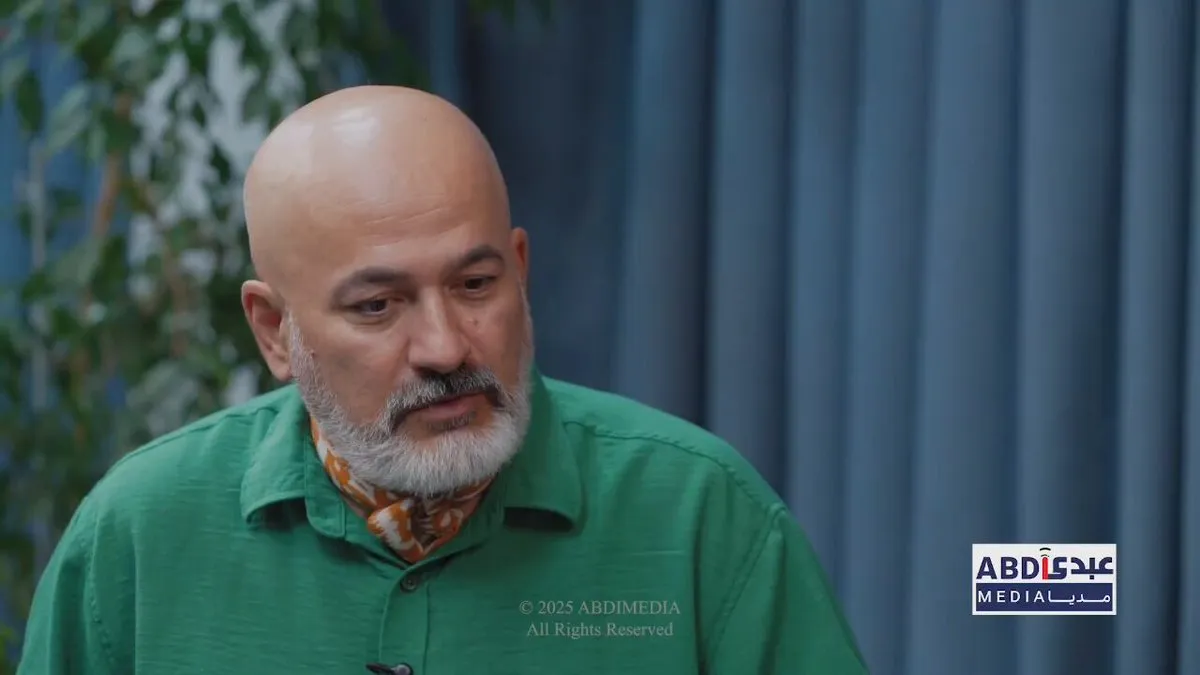
Mohammad Darvish, an expert in environmental science, rangeland and watershed management, a prominent activist, researcher, and Iranian desert specialist, is one of the most enduring and influential figures in contemporary Iran's environmental discourse. He has run the prominent blog "Combating Desertification" over the past two decades. His career spans more than three decades, from membership on the faculty of the Research Institute of Forests and Rangelands to serving as Director General of the Office of Education and Public Participation at the Department of Environment during Rouhani's first administration (appointed by Masoumeh Ebtekar), and as head of environmental policy at the Center for Strategic Studies under the Presidential Office. In Masoud Pezeshkian's fourteenth administration, Darvish played a pivotal role as the primary author of the electoral headquarters' environmental charter and as a member of the committee for selecting the head of the Department of Environment, which led to the appointment of Shina Ansari. With his demanding and critical approach — which does not consider activism to be "elegy" — and his emphasis on water as a "biological commodity" rather than an "economic commodity," he is considered one of the main reference points for criticizing Iran's environmental policies.
Who is Mohammad Darvish?
Mohammad Darvish, an expert in environmental science, rangeland and watershed management, a prominent environmental activist, researcher, and desert specialist, and one of the most well-known figures in contemporary Iran's environmental discourse, born on January 24, 1966, in Tehran, has become one of the main reference points for criticizing Iran's environmental policies and one of the principal architects of the environmental advocacy discourse in the country over more than three decades of sustained activity. Darvish, who is known to multiple generations of Iranian environmental enthusiasts through his prominent blog "Combating Desertification," has traversed a multifaceted path throughout his career: from membership on the faculty of the Research Institute of Forests and Rangelands (from February 1989 until his retirement in July 2021), to serving as Director General of the Office of Education and Public Participation at the Department of Environment during Rouhani's first administration (2013-2017, appointed by Masoumeh Ebtekar), to heading environmental policy at the Center for Strategic Studies under the Presidential Office, and finally, playing a pivotal role in the environmental structure of Masoud Pezeshkian's fourteenth administration — as the author of the Pezeshkian campaign's environmental charter and a member of the committee for selecting the head of the Department of Environment, which led to the appointment of Shina Ansari to this position.
The importance of Mohammad Darvish in Iran's environmental sphere can be examined from several perspectives. First, his more than three decades of sustained activity in the environmental field — from research-academic activity at the Research Institute of Forests and Rangelands (from age 24), to civil-media activism, and then to a role in the executive structure — has made him one of the most experienced environmental specialists in Iran. Second, his focused expertise on desert and desertification issues — one of the most specialized fields among Iranian environmental specialists — has given him a special position in Iran's sustainable development discourse. Third, his sustained and high-profile presence in Iran's media space — through blogging, appearances on prominent television networks (Channels 2, 4, and Amouzesh), EcoIran internet television, and Radio Goftogu — has made him one of the most present figures in the country's environmental discourse. Fourth, his exceptional ability to bridge civil activism and executive-political activity — in which a well-known activist, at the same time, plays a direct role in the policy-making structure in both the moderate (Rouhani) and reformist (Pezeshkian) administrations — is one of the notable aspects of his character.
Darvish, in recent times, in one of his notable positions after Shina Ansari's appointment as head of the Department of Environment, stated: "Now, a historic period has begun for the Department of Environment" — a position indicating his optimism about recent developments in the country's environmental structure.
Life and Background
Mohammad Darvish was born on January 24, 1966, in Tehran. In his personal view — reflected in numerous interviews — his birth date is intertwined with a poetic event: "In 1966, the year I — Mohammad Darvish — was born, Sohrab Sepehri composed his famous poem 'Let Us Not Pollute the Water.'" This symbolic simultaneity is considered one of the points of emotional-intellectual connection between Darvish and the contemporary Iranian literary-philosophical tradition regarding nature.
Being born in 1966 places Darvish in a generation that spent its childhood in the final years of the Pahlavi era and, as adolescents, witnessed the events of the 1979 Islamic Revolution and then the Iran-Iraq War.
Education
Mohammad Darvish's educational path was shaped by a focused specialization in fields related to natural resources.
Bachelor's Degree in Rangeland and Watershed Engineering from the University of Tehran
Darvish pursued his initial university education in the field of rangeland and watershed engineering at the University of Tehran. This field, considered one of the unique specializations in the area of natural resources, formed the foundation of his familiarity with practical issues of land, water, and rangeland plant management.
Master's Degree in Environmental Management from Islamic Azad University, Science and Research Branch, Tehran
After completing his bachelor's degree, Darvish received his master's degree in environmental management from the Science and Research Branch of Islamic Azad University in Tehran — one of the most prominent research centers of this university. The topic of his master's thesis was "Management Feasibility Study on the Use of..."
Activity at the Research Institute of Forests and Rangelands (1989-2021)
The turning point in Darvish's academic-research career was joining the Research Institute of Forests and Rangelands in February 1989. Due to being an outstanding student and passing the entrance interview, Darvish joined this institute at a young age and continued to work there continuously until the end of July 2021 — a period of more than three decades.
Faculty Membership
During these three decades, Darvish served as a faculty member of the Research Institute of Forests and Rangelands and as head of the socio-economic group in the desert research department. This position, which links technical-natural expertise with socio-economic analysis of environmental phenomena, is considered one of the distinctive aspects of his research activity.
Head of the Desert Group
Darvish also served as the head of the desert group at the Research Institute of Forests and Rangelands until 2021 — a position that placed him at the forefront of one of the most important environmental research groups in Iran.
Retirement in July 2021
At the end of July 2021, Darvish retired from the Research Institute of Forests and Rangelands — a decision that took place during the thirteenth administration and, at the same time, strengthened his distance from the formal research structure toward a role purely as a civil activist.
The Blog "Combating Desertification" and Media Presence
One of the distinctive aspects of Mohammad Darvish's media persona is the blog "Combating Desertification," which, over the past two decades, has been among the most prominent specialized Persian-language blogs in the field of environmental science. This blog, which now continues on his personal website (mohammaddarvish.com), is considered a reference source for new generations of environmental enthusiasts in Iran.
The name "Combating Desertification" reflects Darvish's focused expertise on this issue — an expertise in which "Iran is among the top five countries in the world in the rate of desertification" and Darvish, over decades, has tried to draw the attention of public opinion and policymakers to this crisis through sustained analytical reports.
Director General at the Department of Environment (2013-2017)
The turning point in Mohammad Darvish's executive career was his appointment in 2013 as Director General of the Office of Education and Public Participation of the Department of Environment — an appointment made by decree of Masoumeh Ebtekar, then head of the Department of Environment in Hassan Rouhani's first administration.
This position, within the structure of the Department of Environment, is considered one of the most important roles in bridging the official institution and civil society.
Position Change in March 2016
On February 27, 2016, the official title of Darvish's position was changed to "Director General of the Office of Public Participation of the Department of Environment."
Resignation in October 2017
Darvish resigned voluntarily on October 23, 2017, after approximately four years of service in this position. This resignation, in the tense atmosphere of Rouhani's second administration, was considered one of the significant developments in the environmental institution.
Head of Environmental Policy at the Center for Strategic Studies
After resigning from the Department of Environment, Darvish was appointed head of environmental policy at the Center for Strategic Studies under the Presidential Office and held this position until the end of Hassan Rouhani's second administration (August 2021).
The Center for Strategic Studies under the Presidential Office is one of the most important advisory-analytical centers within Iran's governmental structure and is considered among the country's prominent think tanks. Darvish's presence at this center had particular structural importance in the field of environmental policy-making.
Role in Pezeshkian's Fourteenth Administration
The most high-profile chapter of Mohammad Darvish's recent activity has been his pivotal role in the environmental structure of Masoud Pezeshkian's fourteenth administration.
Authoring the Environmental Charter of the Pezeshkian Campaign
During the fourteenth presidential election period in July 2024 — which was held early following the martyrdom of Ebrahim Raisi — Darvish was one of the primary authors of the environmental charter of Masoud Pezeshkian's campaign.
In the days leading up to this election, Pezeshkian published a tweet on the social network X stating: "If he wins the election, no plan that leads to environmental destruction will be approved." Darvish, emphasizing this tweet, actively supported Pezeshkian's candidacy through speeches, interviews, and social media.
Member of the Committee for Selecting the Head of the Department of Environment
After Pezeshkian's victory in the election, Darvish served as a member of the committee for selecting the head of the Department of Environment and formulating the environmental policies of the fourteenth administration. This committee, by reviewing the environmental programs of candidates, played a strategic role in identifying suitable candidates to lead this organization.
Role in the Selection of Shina Ansari
One of the most high-profile developments of this committee was the selection of Shina Ansari as the head of the Department of Environment. Darvish, in one of his notable positions, stated: "Her selection [Shina Ansari] was the first choice of the environmental committee from among eight people introduced to the president."
Darvish, in support of Ansari, stated: "In my opinion, Shina Ansari made a sacrifice by accepting this responsibility. She had fought the cancer giant for years and had successfully defeated it, and could have spent her remaining service years in peace."
He also stated: "Now, a historic period has begun for the Department of Environment. For the first time, we are witnessing the selection of a manager from within the organization."
Academic and Research Works
Mohammad Darvish is the author of numerous works in the field of environmental science, natural resources, and water management in Iran. His most important works include:
The Strategic Desert Document — Vision 2025 (contributor, at the Organization for Promotion, Education and Research)
Numerous articles in specialized environmental and natural resources journals
The prolific blog "Combating Desertification"
Numerous articles in Iranian media (Ensaaf News, Fararu, Iranian Diplomacy, Asr-e Iran, Etemad, and others)
Views and Analytical Positions
Throughout his intellectual-analytical career, Mohammad Darvish has formulated a clear intellectual framework that can be traced in several axes.
Water as a "Biological Commodity"
The most central theoretical position of Darvish in the field of water is defining water as a "biological commodity" rather than an economic commodity. In his view, water is opposed to the market and water exchange for discovering its equilibrium price and managing its consumption like other limited economic commodities. This position stands in opposition to the dominant discourse among some economists who manage water within the framework of market pricing
Activism as "Demanding Accountability" Not "Elegy"
In one of his notable intellectual positions, Darvish has stated: "For years, I have come to believe that the essence of activism in the field of environment is not about elegy, but about demanding accountability, and a true advocate must be patient, wise, courageous, and one who listens, sees, reads, and moves deliberately."
This position, which reflects his positive and constructive intellectual framework in the field of activism, is considered one of the notable aspects of his character.
Criticism of the Desertification Crisis
Over decades of activity, Darvish has consistently warned that "in terms of the rate of desertification, Iran ranks among the top five countries in the world." This warning, which has been reflected in numerous media outlets over the years, is considered one of his most enduring discursive concerns.
Criticism of the Lack of Attention to the Environment in Elections
In one of his notable positions, Darvish stated: "Until 1993, no election was held in which candidates made any reference to the environment. In the 1997 election, for the first time, faint references to the environment were made. Since then, we have seen an increase in candidates' attention to the environment, but in 2021, the environment was unprecedentedly removed from the programs of presidential candidates, and none of them made any reference to this issue."
Criticism of Land Subsidence
In recent years, Darvish has consistently warned about the land subsidence crisis in the Iranian plateau. In one of his notable positions, he stated: "The ground is sinking at an alarming rate in the Iranian plateau."
The Link Between Environment and Peace
A distinguishing feature of Darvish's intellectual framework is his linking of environment and peace. In his notable speech at the conference on "The Discourse of Peace and the Future Government of Iran" (August 2024), he stated: "Wherever the environment is destroyed, war, violence, and hatred arrive. In Tehran, according to a report published by the Municipal Studies Center, 7,000 conflicts occur per 100,000 people each year."
See | Waterless Iran; The Alarm of Climate Collapse | How They Brought a Land to Death
Criticism of the Issue of Weak Law
In one of his critical positions, he stated: "The problem of the environment in Iran is not the lack of law" and added that the main problem is the lack of advocacy from society and legal experts, as well as structural limitations on the activities of environmental non-governmental organizations.
Sustainable Development Framework
Darvish is a supporter of sustainable development models and, in a notable proposal, has suggested "building one-to-three-story villa-style residential neighborhoods suitable for Iran's climate in suburban areas or new towns in remote, pleasant-weather regions" as an alternative to high-density apartment construction — a plan which, according to his calculations, "to meet the needs of Iran's entire population, only requires the use of 2 million hectares out of 30 million hectares of identified suitable land."
Other Analytical Positions
Darvish also supports numerous other issues: promoting the nature school movement (as a modern educational method for children), introducing methods for curbing violence in Iran's environmental scene, changing the nature of environmental protection training, and rejecting car-centricity in urban furniture.
Celebration of "Mohammad Darvish Night" (February 2019)
On February 3, 2019, Bukhara Magazine, together with Sanubar Magazine and the House of Humanities Thinkers, held a ceremony "Mohammad Darvish Night" in recognition of his over three decades of effective efforts in Iran's environmental scene at the Grand Hall of Ferdowsi in Tehran. This ceremony, considered among the notable commemorations in Iran's cultural literature, was a sign of appreciation from Iran's cultural-academic community for Darvish's activities.
Connections with Figures and Currents
Mohammad Darvish is situated within a network of intellectual-organizational connections with prominent figures of the reformist movement and environmental activists in Iran. At the executive level, his relationship with Masoumeh Ebtekar (former head of the Department of Environment in Rouhani's first administration, who issued his appointment decree) and Masoud Pezeshkian (the fourteenth president, for whose campaign Darvish was an author of the environmental charter) are considered among his key connections.
At the peer-specialist level, his relationship with Shina Ansari (current head of the Department of Environment) and other environmental managers of the fourteenth administration forms his professional communication network.
At the intellectual-media level, his relationship with figures such as Maryam Zareian and Mohammad Reza Javadi Yeganeh (who have appeared alongside him in EcoIran roundtables), Ali Dehbashi (editor-in-chief of Bukhara Magazine, which held Darvish Night in 2019), and other environmental journalists and activists are considered among his professional-intellectual connections.
Conclusion
Mohammad Darvish is one of the most prominent and, at the same time, most enduring figures of environmental activism in contemporary Iran, who, with a career spanning more than three decades — from his birth on January 24, 1966, in Tehran, specialized education at the University of Tehran and Islamic Azad University, Science and Research Branch, sustained faculty membership at the Research Institute of Forests and Rangelands (1989-2021), headship of the desert group at this institute, executive role as Director General of the Office of Education and Public Participation of the Department of Environment in Rouhani's first administration (2013-2017, appointed by Masoumeh Ebtekar), head of environmental policy at the Center for Strategic Studies under the Presidential Office, resignation in October 2017, retirement in July 2021, and finally, a pivotal role in the environmental structure of Pezeshkian's fourteenth administration (as author of the campaign's environmental charter and a member of the committee for selecting the head of the Department of Environment, which led to the appointment of Shina Ansari) — has occupied a unique position in Iran's environmental structure.
Darvish's distinguishing feature, at the first level, is his exceptional endurance in the environmental field — an endurance in which a figure with a technical-natural sciences education has, over three decades, sustained activity in a single field with a focus on a key issue (desertification). This specialized focus is relatively rare among Iran's environmental activists. At the second level, his exceptional ability to bridge civil-media activism and executive-political activity — in which a well-known blogger, at the same time, plays a direct role in policy-making structure in reformist/moderate administrations — is one of the notable aspects of his character.
From an analytical perspective, Darvish's position exemplifies the phenomenon of the "environmental activist-policymaker" in contemporary Iran — a phenomenon in which a specialist with deep technical-academic expertise, in addition to research activities and civil activism, plays a role in the formal structure of the system at various points. This pattern, which has other examples among contemporary Iranian environmental activists (such as Esmail Kahrom and others), has found particular reflection in Darvish with his distinctive characteristic of over three decades of endurance and widespread media presence.
What is clear from today's perspective is that the issues Darvish has addressed in his activities — from the desertification crisis, land subsidence, water, forest destruction, natural resource challenges, the link between environment and peace, and environmental policy-making — remain among the most enduring topics of discussion in contemporary Iran's public-policy discourse. At a time when Iran is in one of the most tense environmental periods in its history — with the worsening water crisis, land subsidence, and air pollution — Darvish's analytical-activist voice, combining deep technical expertise and a civil-social perspective, will remain one of the main references of this discourse.
Frequently Asked Questions
Who is Mohammad Darvish?
Mohammad Darvish (born January 24, 1966, in Tehran) is an expert in environmental science, rangeland and watershed management, a prominent environmental activist, researcher, and Iranian desert specialist. He is known through his prominent blog "Combating Desertification" and, over more than three decades of activity, has become one of the main references of environmental discourse in Iran.
What is Mohammad Darvish's educational background?
Darvish holds a bachelor's degree in rangeland and watershed engineering from the University of Tehran and a master's degree in environmental management from the Science and Research Branch of Islamic Azad University in Tehran. Due to being an outstanding student, he joined the Research Institute of Forests and Rangelands in February 1989.
What are Mohammad Darvish's executive records?
Among Darvish's most important executive records are: faculty member and head of the socio-economic group of the desert research department at the Research Institute of Forests and Rangelands (1989-2021), Director General of the Office of Education and Public Participation of the Department of Environment (2013-2017, appointed by Masoumeh Ebtekar), Director General of the Office of Public Participation of the Department of Environment (until October 2017), head of environmental policy at the Center for Strategic Studies under the Presidential Office (until the end of Rouhani's second administration), and head of the desert group at the Research Institute of Forests and Rangelands (until July 2021).
What is Darvish's role in Pezeshkian's administration?
Mohammad Darvish plays a pivotal role in the environmental structure of Masoud Pezeshkian's fourteenth administration. He was an author of the Pezeshkian campaign's environmental charter and, in the days leading up to the election, actively supported Pezeshkian's candidacy by emphasizing Pezeshkian's tweet about not approving environmentally destructive plans. After Pezeshkian's victory, Darvish served as a member of the committee for selecting the head of the Department of Environment, and ultimately, with the appointment of Shina Ansari to this position, he stated: "Now, a historic period has begun for the Department of Environment."
What is the blog "Combating Desertification"?
The blog "Combating Desertification" (mohammaddarvish.com) is one of the most prominent specialized Persian-language blogs in the field of environmental science, which Mohammad Darvish has run for over two decades. This blog, whose name reflects Darvish's focused expertise on the issue of desertification, is considered a reference source for new generations of environmental enthusiasts in Iran.
What is Darvish's view on water?
The most central theoretical position of Darvish in the field of water is defining water as a "biological commodity" rather than an economic commodity. In his view, water should not be treated like a limited economic commodity, and Darvish opposes the water market and exchange for discovering its equilibrium price. This position stands in opposition to the dominant discourse among some economists who manage water within the framework of market pricing.
Why did Darvish resign from the Department of Environment?
On October 23, 2017, after approximately four years of service at the Department of Environment (as Director General of the Office of Education and Public Participation), Darvish resigned voluntarily. After his resignation, he was appointed head of environmental policy at the Center for Strategic Studies under the Presidential Office and held this position until the end of Rouhani's second administration.
What is Darvish's view on the desertification crisis in Iran?
Darvish has consistently warned that "in terms of the rate of desertification, Iran ranks among the top five countries in the world." This warning, which has been reflected in numerous media outlets over the years, is considered one of his most enduring discursive concerns. In one of his recent positions, he also stated: "The ground is sinking at an alarming rate in the Iranian plateau."
What is Darvish's intellectual framework in activism?
In one of his notable intellectual positions, Darvish has stated: "The essence of activism in the field of environment is not about elegy, but about demanding accountability, and a true advocate must be patient, wise, courageous, and one who listens, sees, reads, and moves deliberately." This position reflects his positive and constructive intellectual framework in the field of activism.
Is Mohammad Darvish still active?
Yes, despite his retirement from the Research Institute of Forests and Rangelands in July 2021, Mohammad Darvish remains one of the most present figures in Iran's environmental scene. His sustained presence in the media space — from his personal blog and prominent sites (Fararu, Ensaaf News, Asr-e Iran, Etemad, EcoIran) to television networks and numerous speeches — continues. He is also active in notable environmental roles in Pezeshkian's fourteenth administration.
Take less than a minute, register and share your opinion under this post.
Insulting or inciting messages will be deleted.
Sign Up