
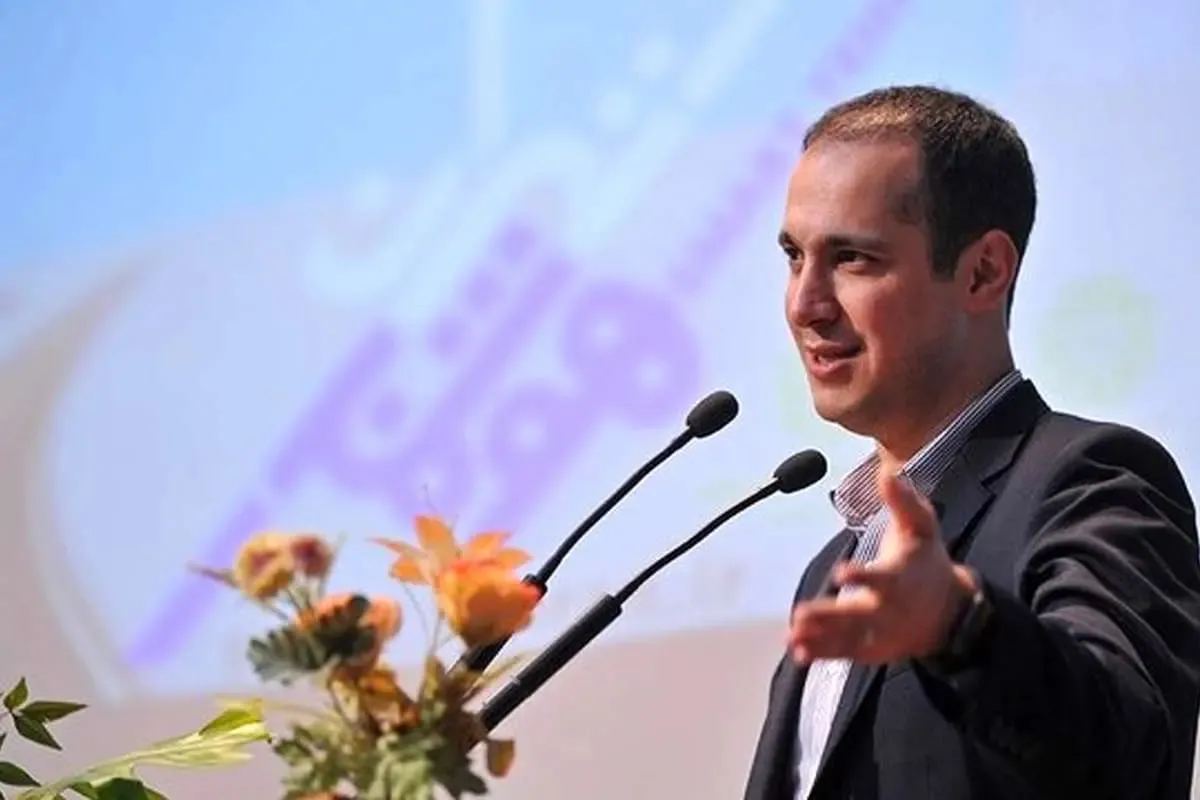
Dr. Kaveh Madani is a prominent international scientist, a leading researcher in the field of water and environment, a senior UN official, and the winner of the 2026 Stockholm Water Prize (the Nobel Prize for Water). He is one of the most recognized and widely discussed scientific-political figures of contemporary Iran on the international stage. Since February 2023, he has served as the Director of the United Nations University Institute for Water, Environment and Health (UNU-INWEH)—known as the "UN Water Think Tank." With a combination of a distinguished academic background at the Universities of Tabriz, Lund (Sweden), California, Imperial College London, and Yale, diplomatic experience as Vice-President of the UN Environment Assembly, and a tumultuous tenure at Iran's Department of Environment (including his arrest in February 2018), he has become one of the main references in the discourse on the water crisis and the environment in Iran and the world. The 2026 Stockholm Water Prize was awarded to him for "pioneering research, water diplomacy, and the translation of scientific knowledge into practical policy-making."
Who is Kaveh Madani?
Dr. Kaveh Madani is an internationally renowned scientist, a leading researcher in the fields of water and the environment, a senior UN official, an environmental activist, and a former Iranian politician. Born in August 1981 in Tehran, he is one of the most recognized and widely discussed scientific-political figures of contemporary Iran on the international stage. By winning the Stockholm Water Prize (the "Nobel Prize for Water") in 2026—the world's most prestigious award in the field of water resources—he has become one of the most influential scientists globally in water diplomacy and policy-making. Madani, who currently serves as the Director of the United Nations University Institute for Water, Environment and Health (UNU-INWEH)—known as the "UN Water Think Tank"—since February 2023, has become one of the main references in the discourse on the water and environmental crisis in Iran and the world through his multidimensional career. This has been achieved through a combination of a distinguished academic background at the world's most prestigious universities (studying at the University of Tabriz, Lund University in Sweden, and the University of California, with academic activity at Imperial College London, Yale University, and the City University of New York), significant international diplomatic experience (as Vice-President of the third UN Environment Assembly in 2017-2018 and leader of Iran's delegation to the COP23 climate change negotiations), a widely discussed presence in Iran's executive apparatus (as Deputy for Education and Research at the Department of the Environment from October 2017 to April 2018), and the highly publicized experience of his arrest in February 2018 on charges of espionage.
The importance of Dr. Kaveh Madani in Iran's and the world's scientific-political sphere can be examined from several angles. First, winning the Stockholm Water Prize in 2026—the world's most prestigious award in the water field, described as the "Nobel Prize for Water," awarded to Madani for "pioneering research, water diplomacy, and translating scientific knowledge into practical policy-making"—which places him among the most prominent global figures in the water field in recent decades. Second, his central institutional position at the United Nations—as Director of the UNU-INWEH, one of the 13 UN University institutes and the only one focused on water in this global body's structure—which has given him a strategic role in international water policy-making. Third, his significant academic contribution to water resources management—recognized in international specialized literature for his "fundamental contribution to integrating game theory and decision analysis with water resources management models"—which places him among the pioneers in this field. Fourth, his numerous international awards—including the AGU's Hydrologic Sciences Early Career Award in 2019, the Arne Richter Award for Outstanding Early Career Scientists from the European Geosciences Union, and the title of "Outstanding Early Career Scientist in Earth Sciences" at Imperial College London—which are signs of his global scientific credibility. Fifth, his widely discussed presence in Iran's public discourse—particularly through his clarifications about the mismanagement of water resources and raising public awareness about Iran's water and environmental crisis—which has made him one of the most cited scientific-analytical voices in Persian-language media.
Throughout his career, Madani's highly publicized experience of his arrest in Iran in February 2018 (during the mass arrest of environmental activists) and his subsequent resignation in April 2018 have made him one of the prominent examples of the complex relationship between diaspora scientists and Iran's official structure.
Life and Background
Kaveh Madani was born in August 1981 in Tehran. Being born in the early years of the Iran-Iraq war placed his generation in the tense post-revolution and post-war atmosphere—a generation that came of age and became active in student activities during the Reform Era (1997-2005).
Detailed information about his family and school years is limited in open media sources—a characteristic relatively common among prominent academic figures who primarily focus on their specialized scientific activities.
Education
Kaveh Madani's educational path is one of the most prolific academic trajectories of his generation, shaped at prominent universities in Iran, Europe, and the United States.
BSc in Civil Engineering-Hydraulics from the University of Tabriz
Madani completed his BSc in Civil Engineering, with a focus on Hydraulics, at the University of Tabriz—one of the oldest and most prestigious universities in northwestern Iran. This focus, which is closely linked to water issues and water resources management, formed the foundation of his subsequent specialization.
MSc in Water Resources from Lund University, Sweden
After completing his bachelor's degree, Madani moved to Sweden for further studies and earned his MSc in Water Resources from Lund University—one of the most prestigious universities in Scandinavia. This experience formed the foundation of his familiarity with European academic traditions in the water field.
PhD in Civil and Environmental Engineering from the University of California
Madani then received his PhD in Civil and Environmental Engineering from the University of California—one of the most prestigious universities in the United States. This period, in which his main expertise in integrating game theory and water resources management models took shape, formed the foundation of his subsequent scientific prominence.
Postdoctoral Fellowship in Environmental Economics and Policy
Following his PhD, Madani completed his postdoctoral fellowship in Environmental Economics and Policy at the same University of California. This interdisciplinary specialization, which integrates water science with environmental economics and policy, is one of the distinctive aspects of his academic background.
International Academic Activity
After completing his education, Madani became one of the most active academic figures in the water field globally.
Imperial College London
One of Madani's most important academic positions was as a Professor at the Centre for Environmental Policy at Imperial College London. This college, which ranks among the top 10 universities in the world, is one of the most important centers for scientific-engineering research globally. During this period, Madani was selected as an "Outstanding Early Career Scientist in Earth Sciences" at the college.
Yale University
Madani also served as a professor at Yale University—one of the world's most prestigious universities and a member of the Ivy League.
City University of New York
Currently, Madani serves as a professor at the Remote Sensing Earth System Institute of the City University of New York (CUNY).
K. N. Toosi University of Technology
In Iran, Madani also served as a professor at K. N. Toosi University of Technology.
Director of UNU-INWEH
Madani's most prominent current position is his directorship of the United Nations University Institute for Water, Environment and Health (UNU-INWEH).
About UNU-INWEH
The UNU Institute for Water, Environment and Health—known as the "UN Water Think Tank" or the "UN Water University in Canada"—was established in 1996 with the support of the Canadian government in response to growing concerns about the global water crisis and its impacts on human health, the environment, and sustainable development.
This institute is one of the 13 UN University institutes—the scientific and educational arm of the UN—and is the only institute focused on water in this global structure. UNU-INWEH serves as the UN University's representative in UN-Water and is responsible for leading and coordinating the activities of UN member bodies during the International Decade for Action "Water for Sustainable Development" (2018-2028).
Appointment as Director (February 2023)
In August 2022, by decree of the Deputy Secretary-General of the UN, Kaveh Madani was selected as the future Director of this institute and succeeded Dr. Vladimir Smakhtin (who had been Director since June 2016) in February 2023. This appointment, considered one of the most significant appointments of an Iranian in the UN structure in the past decade, solidified his international credibility.
Stockholm Water Prize (Nobel Prize for Water) 2026
Madani's most widely discussed scientific-international achievement was winning the Stockholm Water Prize in 2026.
Significance of the Prize
The Stockholm Water Prize, described as the "Nobel Prize for Water," is one of the world's most prestigious awards in the field of water resources and is presented annually to individuals who have made outstanding contributions to the conservation and sustainable management of water resources. Since 1991, this prize has been awarded to some of the world's most prominent water scientists and activists.
Reason for the Award
The prize was awarded to Kaveh Madani for "pioneering research, water diplomacy, and translating scientific knowledge into practical policy-making." This rationale, which links three dimensions—scientific research, diplomacy, and practical policy-making—is a sign of Madani's multidimensional framework of activity.
Other International Awards
In addition to the Stockholm Water Prize, Madani has won numerous other international awards:
The AGU's Hydrologic Sciences Early Career Award in 2019: This award was given for "pioneering research in developing methods for allocating limited water resources through the integration of conflict resolution concepts and game theory for application in complex water resources systems."
The Arne Richter Award for Outstanding Early Career Scientists from the European Geosciences Union.
The title of "Outstanding Early Career Scientist in Earth Sciences" at Imperial College London.
Activity at Iran's Department of the Environment (October 2017 – April 2018)
The most widely discussed chapter of Madani's Iranian career was his brief and eventful tenure at Iran's Department of the Environment.
Appointment as Deputy
In October 2017, Madani was appointed by Isa Kalantari (the Vice President and then Head of the Department of the Environment in Rouhani's government) as the Deputy for Education and Research at the Department of the Environment. This appointment, occurring during the 12th government, was a sign of the government's effort to attract diaspora elites to the executive apparatus.
Head of the Center for International Affairs and Conventions
Madani also served as the Head of the Center for International Affairs and Conventions at the Department of the Environment. In this role, he led Iran's delegation to several major intergovernmental meetings, including the COP23 climate change negotiations (held in Bonn, Germany, in November 2017).
Vice-President of the UN Environment Assembly
During his tenure in Iran, Madani was elected Vice-President of the third UN Environment Assembly—a position he held from 2017 to 2018.
Arrest in February 2018
The most widely discussed controversy of Madani's Iranian career was his arrest in February 2018 on charges of espionage.
Context of the Arrest
This arrest occurred during the widespread detention of environmental activists in the winter of 2018—a detention in which several members of the Persian Wildlife Heritage Foundation (an Iranian wildlife conservation society) were arrested, and ultimately one of them (Dr. Kavous Seyed Emami) died in prison.
Privacy Violation
During his tenure at the Department of the Environment, Madani consistently expressed his dissatisfaction with the violation of his privacy, the lack of ability to work in Iran, and the numerous interrogations. In one of his statements, he said: "As soon as I arrived in Tehran, I was interrogated. My email and social media accounts were checked without my permission."
In his resignation letter, he also wrote: "Since the time I decided to return to my homeland, various issues were created for me by some supporters and those concerned about the system, to the extent that upon my arrival in Iran, in the absence of any judicial authorization, all my personal hardware and user accounts were breached, and my citizenship rights and privacy were violated from the very beginning."
Resignation (April 2018)
After a diplomatic trip abroad, Madani did not return to Iran and resigned from his deputy position at the Department of the Environment in April 2018. This development, occurring in the tense post-arrest atmosphere, marked a turning point in his return to international activity.
Widely Discussed Controversies
During his tenure at the Department of the Environment, Madani faced numerous controversies—including the publication of images from a diplomatic trip to Southeast Asia, which were reflected in media close to the principlist current with claims of "merrymaking with public funds." These media-security pressures were one of the main reasons for his resignation.
Editorial Positions
Madani is also among the most prominent figures on the editorial boards of international water journals:
Member of the Editorial Board of the Journal of Water Resources Planning and Management (American Society of Civil Engineers - ASCE).
Member of the Editorial Board of Sustainable Cities and Society (Elsevier).
These positions are a sign of his academic credibility at the global level.
Scientific Expertise
Kaveh Madani's main expertise is concentrated in the following areas:
Integration of game theory and decision analysis with water resources management models (the main focus of his research).
Water resources conflict resolution.
Environmental policy-making.
Environmental economics.
Climate change.
Water diplomacy.
Urban sustainability.
Water resources management in complex systems.
Views and Analytical Positions
Throughout his intellectual-analytical career, Kaveh Madani has formulated a clear intellectual framework.
The Nexus of Science, Society, and Policy
Madani's central intellectual framework is the nexus of science, society, and policy—a framework in which scientific knowledge is translated into practical policy-making. This framework, which was also emphasized in the rationale for the Stockholm Water Prize, is one of the notable aspects of his intellectual framework.
Clarification on Iran's Water Crisis
In recent years, Madani has played a significant and influential role in clarifying the mismanagement of water resources and raising public awareness about Iran's water and environmental crisis. His consistent presence in Persian-language media, emphasizing the scientific and policy-making dimensions of the water crisis, is one of the most cited scientific-analytical voices in this field.
Water Diplomacy
One of the central concepts in Madani's intellectual framework is "Water Diplomacy"—a concept in which water issues are analyzed from the perspective of inter-state relations and international dialogue. This framework, rooted in his doctoral expertise at the University of California, has become one of the most important aspects of his international activity.
Emphasis on Integrating Game Theory in Water Management
Madani's most important scientific contribution is the integration of Game Theory and decision analysis with water resources management models. This approach, which applies economic and decision science concepts to water conflict resolution, is one of the most pioneering contributions of the new generation of water researchers.
Water Crisis in Iran; A Candid Conversation with Dr. Kaveh Madani, Head of the Water, Environment, and Health Institute at the United Nations University
Listen unfiltered on the Abdi Media Castbox.
Connections with Figures and Currents
Dr. Kaveh Madani is situated within a complex network of academic, institutional, and political connections. At the institutional level, his relationships with the United Nations University, UN-Water, Imperial College London, Yale University, and the City University of New York form his institutional network.
At the Iranian level, his relationships during his tenure at the Department of the Environment with Isa Kalantari (who appointed him as Deputy), Mahmoud Sadeghi (the Tehran representative in parliament who announced his arrest during the detention period), and other prominent reformist figures formed his political network in Iran.
At the international level, his relationships with Vladimir Smakhtin (the former Director of UNU-INWEH, whom he succeeded) and prominent figures in water diplomacy and global environmental affairs form his international communications network.
At the media level, his sustained presence in prominent Iranian and international media—from Radio Farda, Voice of America, Iran International, IranWire, and BBC Persian to Forbes Persian—is a sign of his enduring media presence.
Conclusion
Dr. Kaveh Madani is one of the most prominent and widely discussed scientific-political figures of contemporary Iran on the international stage. With a unique combination of a distinguished international academic background (studying at the Universities of Tabriz, Lund, and California, and academic activity at Imperial College London, Yale University, and the City University of New York), pioneering contributions to the integration of game theory and water resources management, significant international diplomatic experience (as Vice-President of the third UN Environment Assembly 2017-2018 and leader of Iran's delegation to COP23), a widely discussed presence in Iran's executive apparatus (as Deputy for Education and Research at the Department of the Environment from October 2017 to April 2018), the highly publicized experience of his arrest in February 2018 on charges of espionage, his appointment as Director of UNU-INWEH from February 2023, and finally, winning the Stockholm Water Prize (the "Nobel Prize for Water") in 2026—the world's most prestigious award in the water field—he occupies a unique position in the scientific-political structure of Iran and the world.
Kaveh Madani's distinguishing feature, on the first level, is his exceptional ability to connect academic, diplomatic, and policy-making spheres—a characteristic explicitly reflected in the rationale for the Stockholm Water Prize (emphasizing "pioneering research, water diplomacy, and translating scientific knowledge into practical policy-making"). On the second level, his pioneering contribution to integrating game theory into water management—which has made him one of the most prominent theorists of the new generation in this field—is one of the notable aspects of his scientific career. On the third level, his ability to serve as a prominent Iranian scientist in the UN structure—reflected in his directorship of UNU-INWEH and his Vice-Presidency of the third UN Environment Assembly—is an example of the international success of Iranian diaspora elites.
From an analytical perspective, Madani's position exemplifies the phenomenon of the "successful Iranian scientist on the international stage" in contemporary Iran—a phenomenon in which a specialist with a distinguished academic background ultimately reaches strategic positions in the UN structure and other international institutions. This pattern, which has other examples among Iranian diaspora elites, has found a special reflection in Madani through his special focus on the water field and winning the prestigious Stockholm Water Prize.
What is clear from today's perspective is that the topics Madani has addressed in his works and positions—from integrating game theory into water resources management, water diplomacy, environmental policy-making, clarifying Iran's water crisis, critiquing mismanagement of water resources, and climate change—remain among the most enduring topics in contemporary scientific-analytical discourse in Iran and the world. In a situation where Iran is in one of the most tense periods of its water crisis history—particularly with the increasing dryness of the capital's dams, land subsidence, and growing environmental challenges—Madani's scientific voice, with a combination of distinguished international credibility (as Director of the UN Water Think Tank and winner of the Nobel Prize for Water) and the ability to clarify in Persian-language discourse, is one of the main references for this dialogue.
Frequently Asked Questions
Who is Kaveh Madani?
Dr. Kaveh Madani (born August 1981 in Tehran) is an internationally renowned scientist, a leading researcher in the fields of water and the environment, a senior UN official, and an Iranian environmental activist. He currently serves as the Director of UNU-INWEH—the "UN Water Think Tank"—since February 2023, and won the Stockholm Water Prize (the Nobel Prize for Water) in 2026.
What is Kaveh Madani's educational background?
Madani received his BSc in Civil Engineering-Hydraulics from the University of Tabriz, his MSc in Water Resources from Lund University in Sweden, his PhD in Civil and Environmental Engineering, and completed a postdoctoral fellowship in Environmental Economics and Policy from the University of California.
What is the Stockholm Water Prize and why was it awarded to Madani?
The Stockholm Water Prize, described as the "Nobel Prize for Water," is one of the world's most prestigious awards in the field of water resources. In 2026, this prize was awarded to Kaveh Madani for "pioneering research, water diplomacy, and translating scientific knowledge into practical policy-making."
What is UNU-INWEH?
The United Nations University Institute for Water, Environment and Health (UNU-INWEH), known as the "UN Water Think Tank," was established in 1996 with the support of the Canadian government. It is one of the 13 UN University institutes and the only institute focused on water in this structure. Kaveh Madani has served as its Director since February 2023.
What is Kaveh Madani's scientific expertise?
Madani's main expertise is the integration of game theory and decision analysis with water resources management models. He also specializes in water resources conflict resolution, environmental policy-making, environmental economics, climate change, and water diplomacy.
Why did Kaveh Madani resign from Iran's Department of the Environment?
Madani, who was appointed as Deputy for Education and Research at the Department of the Environment in October 2017 by Isa Kalantari (Vice President and then Head of the Department of the Environment) at the invitation of Rouhani's government, was arrested in February 2018 during the mass detention of environmental activists on charges of espionage. After his release and a diplomatic trip abroad, he resigned in April 2018 and did not return to Iran.
What positions did Madani hold during his tenure in Iran?
Madani's most important positions during his tenure in Iran include: Deputy for Education and Research at the Department of the Environment, Head of the Center for International Affairs and Conventions, Vice-President of the third UN Environment Assembly (2017-2018), and leader of Iran's delegation to the COP23 climate change negotiations.
What other international awards has Kaveh Madani won?
In addition to the Stockholm Water Prize, Madani has won other notable international awards: the AGU's Hydrologic Sciences Early Career Award in 2019, the Arne Richter Award for Outstanding Early Career Scientists from the European Geosciences Union, and the title of "Outstanding Early Career Scientist in Earth Sciences" at Imperial College London.
At which international universities has Madani been a professor?
Madani has been a professor at several prominent international universities: Imperial College London (Centre for Environmental Policy), Yale University, the City University of New York (Remote Sensing Earth System Institute), and in Iran, K. N. Toosi University of Technology.
Is Kaveh Madani still active?
Yes, Dr. Kaveh Madani, as the current Director of UNU-INWEH, a professor at the City University of New York, and the recent winner of the 2026 Stockholm Water Prize, is one of the most active scientific-international figures in the water and environment field. His sustained presence in prominent Persian-language and international media—particularly regarding Iran's water crisis, climate change, and recent regional developments—has received widespread coverage. Winning the Stockholm Water Prize in 2026 is a sign of his established position as one of the world's most influential scientists in the water field.
Take less than a minute, register and share your opinion under this post.
Insulting or inciting messages will be deleted.
Sign Up