
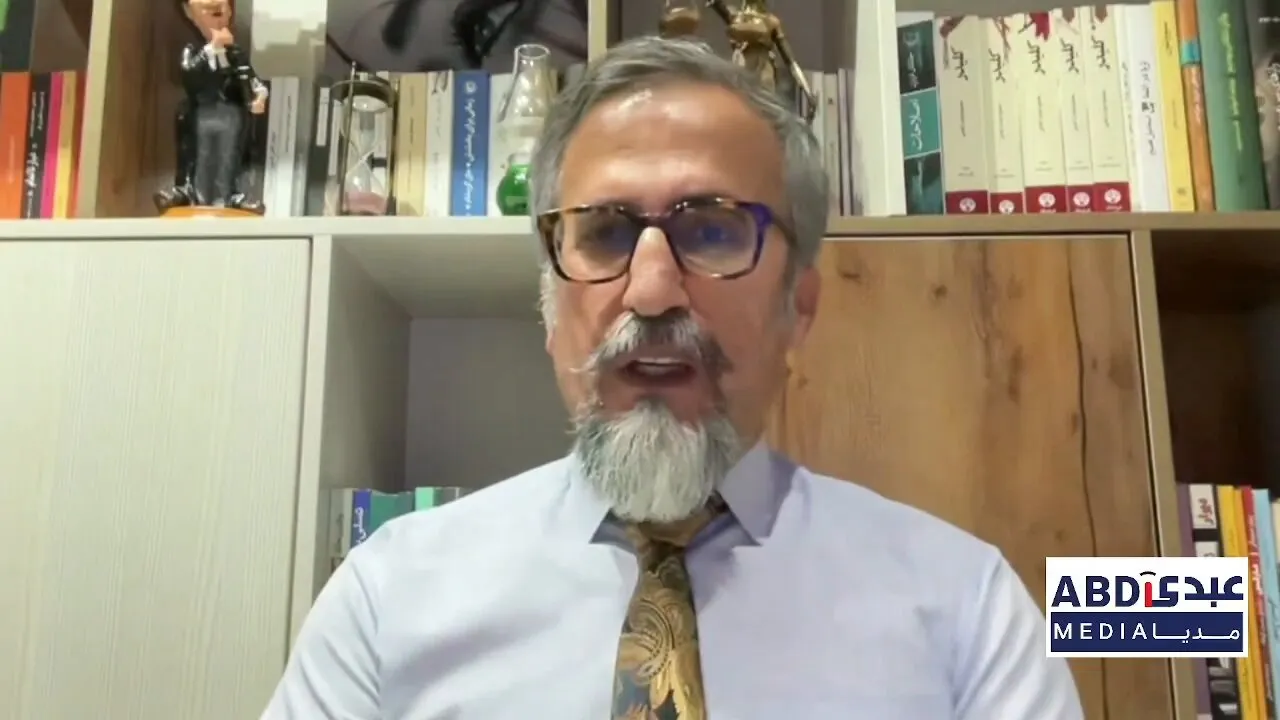
Hossein Bayat, a jurist, first-class attorney, author, and civil activist, is one of the most well-known critical lawyers in contemporary Iran. As a member of the Central Bar Association (license number 9478), he has become one of the most frequently cited critical legal voices in Iran's public discourse in recent years, heavily criticizing the structural framework of the Hijab and Chastity Bill and defending the privacy rights of citizens.
In 2022, Bayat was sentenced to 40 months in prison on charges of "insulting sanctities" and "disturbing the public mind," serving six months of this sentence in Evin Prison. Following his release under a general amnesty, he has continuously maintained his structural critiques of sensitive legislation. His judicial case has become an iconic example of the personal and professional costs borne by critical legal professionals within contemporary Iran's judicial system.
Who is Hossein Bayat?
Hossein Bayat (full name Hossein Bayat Pilan Karaki), a jurist, first-class attorney, author, columnist, and civil activist, is one of the most recognized critical lawyers in contemporary Iran. In recent years, through a combination of professional practice, a highly covered media presence, and outspoken stances on civil rights issues—particularly his critique of the Hijab and Chastity Bill—Bayat has become one of the most frequently cited critical legal voices in Iran's public discourse. His career is also tied to a highly publicized judicial case: his conviction in 2022 on charges of "insulting sanctities" and "disturbing the public mind," serving six months of imprisonment in Evin Prison, and ultimately, his release under an amnesty—a case that underscores the costs borne by critical legal voices within the judicial framework of contemporary Iran.
The significance of Hossein Bayat within Iran's legal-civil sphere can be examined from several key dimensions. First, his prominent media presence—through column writing for the Iran newspaper, extensive interviews with Dideban Iran, Ensaf News, Vokala Press, and highly followed activity on his personal Instagram account—has made him one of the most recognized attorneys in modern Iranian media. Second, his direct and bold stances in criticizing sensitive bills and legislation—especially the Hijab and Chastity Bill (introduced in the wake of the 2022 "Woman, Life, Freedom" protests)—have structurally challenged the bill through precise legal analyses. Third, his highly covered judicial case—in which an attorney was sentenced to 40 months in prison due to "notes and material published in his personal Instagram posts"—became a benchmark example of the status of lawyers' civil rights in contemporary Iran. Fourth, his persistence after his release—demonstrating that even after experiencing imprisonment, he continues to provide structural critiques of sensitive topics within Iranian media.
Life and Background
Detailed biographical records concerning Hossein Bayat's birth date, birthplace, and family background remain limited in public media sources; a trait that is relatively common among Iranian attorneys who focus primarily on their specialized and professional activities. What is clear from published accounts is that Bayat comes from a family with the surname extension "Pilan Karaki"—which may indicate a regional or ethnic ancestral background (likely linked to the northwestern regions of Iran).
Professional Activity: First-Class Attorney
The milestone of Hossein Bayat's professional career is his membership as a first-class attorney in the Central Bar Association—the bar association of Tehran Province, which ranks among the oldest and most prestigious bar associations in Iran. His attorney license number is 9478.
The Central Bar Association, which stands as one of the foundational bar associations in Iran and gained its independent legal identity in 1952 pursuant to the Bill on the Independence of the Bar Association, is considered one of the oldest Iranian non-governmental organizations.
Media Presence
One of the defining aspects of Hossein Bayat's activity is his prominent and pervasive presence across the Iranian media landscape. In recent years, Bayat has shared his analytical stances with the general public through several distinct channels.
Column Writing for the Iran Newspaper
Bayat is recognized as a notable columnist for the Iran newspaper (the official government daily). In one of his prominent columns published in May, he addressed the culture of consulting lawyers in Iran, writing: "In Iranian society, the culture of referring to a lawyer has not expanded significantly among various strata of the people."
In the same piece, he diagnosed the root issues of this phenomenon, stating: "Unfortunately, most clients, when consulting a lawyer, expect the lawyer to remove all walls and barriers in exchange for the fee paid, such as shortening the trial process, and to bypass legal obstacles through illegal means during enforcement." This position reflects his critical diagnostic view toward the institution of legal advocacy within Iran's public culture.
High-Profile Interviews with Dideban Iran
One of the primary outlets for Bayat's media presence is Dideban Iran, which has published numerous analytical interviews with him on contemporary Iranian legal issues. The most prominent among these was his sharp critique of the Hijab and Chastity Bill in July 2023.
Activity on Instagram
His personal Instagram account served as another prominent channel for his media presence, where he regularly published legal-social commentaries and analyses. According to the court's narrative, the "notes and material published in his personal Instagram posts"—which the court interpreted as being aimed at "sensationalism and disturbing the public mind"—formed the foundation of his judicial case.
Other Media Platforms
In addition to these channels, Bayat has appeared across a broad spectrum of Iranian media:
Ensaf News (which covered his conviction and subsequent release)
Vokala Press (the specialized digital platform for the legal profession)
Iran International (which mirrors his Dideban Iran interviews)
VOA Persian (which covered his columns in the Iran newspaper)
Judicial Case and Conviction (2022)
The most publicized chapter of Hossein Bayat's career was his judicial case in 2022, which unfolded in the atmosphere following the nationwide protests (known as the "Woman, Life, Freedom" movement) and stood as one of the most widely reported legal cases involving an Iranian attorney during that period.
Preliminary Ruling: 40 Months Imprisonment and Three Months of Public Service
Amir Raesian, Hossein Bayat's defense counsel, detailed the preliminary ruling to Ensaf News as follows:
On the charge of "insulting sanctities": 40 months of discretionary imprisonment
On the charge of "disturbing the public mind by publishing falsehoods": 16 months of discretionary imprisonment and a fine of 15 million Tomans
Supplementary penalties including:
A two-year travel ban (prohibition from leaving the country)
Three months of public street-sweeping services (four hours a day, during hours vacant of public presence, performing public services including cleaning parks and pastures under the supervision of the Security Department of the Agricultural Jihad of Tehran Province)
Confiscation of his mobile phone
This ruling was considered one of the most prominent sentences issued against an attorney during that period and was met with widespread coverage in the Iranian media.
The Court's View on the Instagram Posts
According to Amir Raesian, "By this phrase [insulting sanctities], the court meant the notes and materials that he [Bayat] had published in his personal Instagram posts. The tone of his writing was legal and legitimate; he offered analytical and foundational critiques regarding current events, but the court nonetheless interpreted this case as intended for sensationalism and disturbing the public mind."
Self-Defense in the Preliminary Court
A notable feature of this case was that "during the preliminary stage, Mr. Bayat, being a lawyer himself, appeared alone"—meaning that during the first tier of the trial, Bayat acted as his own defense counsel.
Confirmation of Sentence in the Court of Appeals
The preliminary ruling was subsequently upheld and finalized by the Court of Appeals.
Critique of the Supplementary Penalties
The supplementary penalties handed down to Hossein Bayat—particularly the "street-sweeping" service—faced severe criticism within Iran's media and legal spheres. Mohammad Kazem Amarati, an attorney, analyzed and critiqued these penalties in a column titled "The Supplementary Penalties of Mr. Author" published on Vokala Press.
Retrial and Reduction of the Sentence
Following the confirmation of the ruling by the Court of Appeals, a retrial was granted by the Ninth Branch of the Supreme Court, and the case was sent back for re-examination by the 34th Branch of the Appeals Court. During the retrial process, significant shifts occurred:
Bayat was acquitted of the charge of "disturbing the public mind."
The prison term was reduced to one year.
Amnesty and Release from Evin Prison (February 2023)
Ultimately, after serving six months of imprisonment in Evin Prison, Hossein Bayat was released under a general amnesty. The news of his release was published by Ensaf News. This amnesty occurred within the framework of broad pardons issued during that period following a decree from the Leadership in the post-protest climate.
Analytical Perspectives and Stances
Throughout his intellectual and legal career, Hossein Bayat has formulated a clear conceptual framework tracking several key themes.
Structural Critique of the Hijab and Chastity Bill
The central analytical stance of Bayat's recent years has been his structural critique of the bill titled "Supporting the Family by Promoting the Culture of Chastity and Hijab"—a 9-article bill initially drafted by the Judiciary, expanded to 15 articles by the Government, and ultimately bloated to 70 articles within the Legislature.
In his widely covered interview with Dideban Iran, Bayat critiqued the bill, stating: "This is a confrontational bill, not a cooperative one. This bill dictates that you are not safe even in the lobby of your own home, or inside your car, and that we can file a case against you anywhere under the pretext of non-compliance with the hijab, pitting you face-to-face with government and state apparatuses. This bill violates privacy and freedom, declaring: 'We can and we will convict you, and that is just the way it is.'" This stance, identifying "confrontation" (as opposed to "cooperation") as the core trait of the legislation, remains one of the most widely cited legal critiques of the bill.
Critique of Legislative Animus
In a prominent stance, Bayat asserted: "The legislator has expressed animus and vindictiveness toward a specific segment of society." This position, challenging the emotional-social bias of lawmakers against a particular demographic (women protesting the mandatory hijab), stands as one of his structural critiques of the bill.
Critique of the Bill's Economic Dimensions
Continuing his critique, Bayat stated: "Under the pretext of protection, they are reaching into the people's pockets." This stance, targeting the heavy financial fines outlined in the hijab bill, signals his multi-dimensional view regarding the socio-economic and legal implications of the text.
Defense of Privacy
The central tenet of Bayat's legal methodology is the defense of privacy and individual liberties. In his view, "this bill violates privacy and freedom"—a position that places privacy at the center of fundamental civil rights.
Diagnostic View of the Legal Profession
In one of his major columns for the Iran newspaper, Bayat provided a diagnostic look at the legal institution and the public culture of consulting attorneys in Iran. In his view, "the culture of referring to a lawyer has not expanded significantly among various strata of the people in Iranian society." This perspective highlights the socio-cultural challenges facing the legal profession in Iran.
Critique of Misguided Expectations of Lawyers
Further in the same column, Bayat noted: "Unfortunately, most clients expect the lawyer to remove all walls and barriers in exchange for the fee paid, such as shortening the trial process, and to bypass legal obstacles through illegal means during enforcement." This stance highlights his emphasis on professional legal ethics over flawed public expectations.
See The war against Iran and its effects on fundamental rights; Is war a license to suspend people's fundamental rights? A conversation with Dr. Hossein Bayat, a lawyer
Connections with Figures and Movements
Hossein Bayat operates within a network of professional and intellectual ties involving prominent figures in Iran's legal and media communities. At the professional level, his relationship with Amir Raesian—his defense counsel during the appeals process and one of Iran's leading civil rights defense attorneys—stands as a key connection.
At the trade union level, his relationship with Mohammad Kazem Amarati (the lawyer who critically reviewed his supplementary penalties in a column for Vokala Press) along with other prominent attorneys within the Central Bar Association forms his immediate professional network.
In the media landscape, his key collaborative links include regular engagements with the Iran newspaper, Dideban Iran, Ensaf News, and Vokala Press.
Hear | The war against Iran and its effects on fundamental rights; Is war a license to suspend people's fundamental rights? A conversation with Dr. Hossein Bayat, a lawyer
Conclusion
Hossein Bayat stands out as one of the most prominent critical lawyers in contemporary Iran, occupying a distinct position within the nation's legal and civil discourse. He has forged this identity through a unique combination of sustained professional practice as a first-class attorney with the Central Bar Association, a highly covered media presence (spanning the Iran newspaper, Dideban Iran, Ensaf News, Vokala Press, and Instagram), and the courage to articulate explicit stances on sensitive issues—most notably his structural critique of the Hijab and Chastity Bill. Furthermore, his willingness to bear the heavy personal cost of his principles—manifested in a 40-month prison sentence on charges of "insulting sanctities," serving six months in Evin Prison, and his subsequent release under an amnesty in February 2023—presents a multifaceted portrait of a "structural lawyer-critic."
Bayat's defining characteristic is his steadfastness in maintaining his critical positions following his imprisonment. Rather than retreating from the public eye after serving time in Evin, he has doubled down on his rigorous analysis of the Hijab and Chastity Bill, emerging as one of the most frequently cited critical legal voices in the post-2022 public square. A secondary, yet vital, dimension of his analytical framework is his capacity for precise legal dissection of sensitive legislation, translating dense technical and statutory flaws into an accessible, public-facing vocabulary.
From an analytical standpoint, Hossein Bayat exemplifies the phenomenon of the "structural critic lawyer" in modern Iran. This model describes a legal professional who leverages broad media channels to critically evaluate statutory and judicial frameworks in the public arena while fully accepting the severe personal risks involved, including criminal prosecution and imprisonment. While this paradigm shares historical ground with other notable Iranian attorneys who faced judicial pressures (such as Nasrin Sotoudeh, Abdolfattah Soltani, and Mohammad Seifzadeh), Bayat’s profile is distinctly characterized by his hyper-focus on immediate, day-to-day civil rights legislation combined with a pervasive digital and print media footprint.
Ultimately, the core subjects defining Bayat's columns, interviews, and legal arguments—ranging from the defense of privacy and the diagnosis of institutional animus in lawmaking to the socio-cultural challenges facing the legal profession—remain highly relevant to Iran's contemporary legal-social sphere. As the country navigates a tense period regarding civil liberties, expanding challenges around the hijab legislation, free expression, and personal privacy ensure that Hossein Bayat's voice, combining technical acumen with overt advocacy, remains a primary reference point in this ongoing national conversation.
Frequently Asked Questions (FAQ)
Who is Hossein Bayat?
Hossein Bayat (full name Hossein Bayat Pilan Karaki) is an Iranian jurist, first-class attorney, author, columnist, and civil activist. He is a member of the Central Bar Association (license number 9478) and ranks among the most widely recognized critical legal voices in contemporary Iranian media.
What was Hossein Bayat's judicial case?
In 2022, Bayat received a preliminary sentence comprising 40 months of discretionary imprisonment for "insulting sanctities," 16 months of discretionary imprisonment alongside a 15 million Toman fine for "disturbing the public mind by publishing falsehoods," and supplementary penalties. These penalties included a two-year travel ban, three months of public street-sweeping duty, and the confiscation of his mobile phone. The foundation of the charges rested on the legal-social commentaries and notes he published on his personal Instagram account.
Why was Hossein Bayat released?
Following the confirmation of his sentence by the Court of Appeals, a retrial was granted by the Ninth Branch of the Supreme Court. During the subsequent re-examination by the 34th Branch of the Appeals Court, Bayat was acquitted of the charge of "disturbing the public mind," and his prison term was reduced to one year. Ultimately, after serving six months of imprisonment in Evin Prison, he was released in February 2023 under a general amnesty.
Who was Hossein Bayat's defense counsel?
His defense attorney during the appellate and conviction process was Amir Raesian, a prominent lawyer widely known for handling high-profile civil rights cases in Iran. During the initial preliminary stage of the trial, Bayat utilized his own background as a lawyer to represent himself alone.
What is Hossein Bayat's view on the Hijab and Chastity Bill?
Bayat is a fierce structural critic of the bill titled "Supporting the Family by Promoting the Culture of Chastity and Hijab." In a notable interview with Dideban Iran, he stated: "This is a confrontational bill, not a cooperative one. This bill dictates that you are not safe even in the lobby of your own home, or inside your car... It violates privacy and freedom, declaring: 'We can and we will convict you, and that is just the way it is.'" He has further asserted that the legislature displayed clear animus and vindictiveness toward a specific demographic of society, using the pretext of protection to financially exploit the public through heavy fines.
What is his perspective on the legal profession in Iran?
In a major column written for the Iran newspaper, Bayat pointed out that the culture of retaining and consulting a lawyer has not expanded adequately across the various socio-economic strata of Iranian society. He also critiqued the flawed expectations of clients, noting that most individuals expect an attorney to bypass legal structures through illicit channels or perform miracles to shorten judicial timelines simply in exchange for a fee.
In which media platforms is Hossein Bayat active?
Bayat maintains an active presence across a wide range of major Iranian media outlets, including the Iran newspaper (as a regular columnist), Dideban Iran (for major analytical interviews), Ensaf News (which detailed his legal proceedings and release), Vokala Press (the specialized professional portal for the legal community), and his personal Instagram page.
What did the "street-sweeping" penalty in his sentence entail?
As part of his supplementary punishments, Bayat was sentenced to three months of mandatory public service. This required him to perform four hours of daily public street-sweeping and environmental cleanup in parks and pastures under the strict oversight of the Security Department of the Agricultural Jihad of Tehran Province, specifically during hours when the public was not present. This particular penalty drew sharp criticism within Iran's legal community, prompting a critical analysis by attorney Mohammad Kazem Amarati in a Vokala Press article titled "The Supplementary Penalties of Mr. Author."
Which bar association does Hossein Bayat belong to?
He is a member of the Central Bar Association (the bar association representing Tehran Province) under license number 9478. The Central Bar Association is recognized as one of the oldest, most foundational, and prestigious legal bodies in Iran.
Is Hossein Bayat still active?
Yes. Following his release from Evin Prison in February 2023, Bayat has continuously practiced law and remained active in Iranian media as a prominent legal critic. His widespread public analysis and intense critique of the Hijab and Chastity Bill during the summer of 2023 underscore his persistence in maintaining his critical positions despite his experience with imprisonment.
Take less than a minute, register and share your opinion under this post.
Insulting or inciting messages will be deleted.
Sign Up