
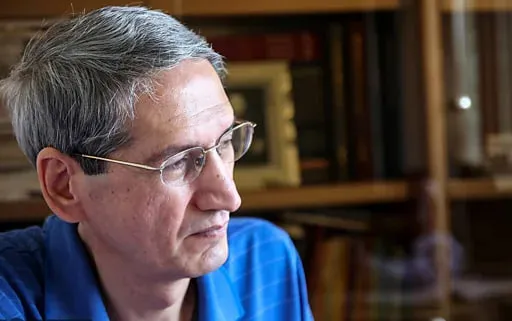
Hatam Qaderi, a researcher, theorist, and retired professor of political science, is one of the most prominent and, at the same time, controversial figures in the discourse of contemporary Iranian political thought over the past three decades. With 25 years of academic activity at Tarbiat Modares University (1994-2019) and the authorship of about 19 reference books in the field of political thought, he has become one of the main references in this field. With his distinctive theory of "Za'im-garai and Velayat-khoi"—in which he attributes the main reason for Iran's lack of desirable development to the structural-historical inclination of Iranians toward "leadership-centrism and authority-orientedness"—he has found a special place in Iran's political sociology discourse. Qaderi, who in recent years has become one of the most cited theoretical voices of the Persian-speaking opposition through his triple model of "human nationalism, traces of socialism, and federalism" for transitioning from the Islamic Republic, has always been at the center of Iran's intellectual-political debates due to his consistent opposition to participating in elections and his outspoken positions.
Who is Hatam Qaderi?
Dr. Hatam Qaderi, a researcher, theorist, and retired professor of political science, born in 1956 in Tehran, is one of the most prominent and, at the same time, controversial figures in the discourse of contemporary Iranian political thought over the past three decades. Qaderi, a retired faculty member of the Political Thought Department at Tarbiat Modares University and an instructor at the Tazeh Institute, has become one of the main references of Iran's contemporary theoretical-critical discourse through his combination of deep expertise in the history of political thought (especially Greek political philosophy, Islamic political thought, and contemporary Iranian political thought), distinctive theorizing in the fields of Iranian political sociology, and a highly visible presence in Persian-language debates and media.
The importance of Dr. Hatam Qaderi in Iran's intellectual-political sphere can be examined from several angles. First, his prolific academic legacy—with about 19 published books, many of which are taught as academic reference sources in the field of political thought at Iranian universities—which has made him one of the most popular authors in the Persian-language political science field. Second, his distinctive theory of "Za'im-garai and Velayat-khoi"—a unique theory in which, with a historical sociology and cultural determinism framework, he attributes the main reason for the "lack of desirable development of the country" to the structural-historical inclination of Iranians toward "leadership-centrism and authority-orientedness"—which is among the prominent theories of contemporary Iranian political sociology. Third, his extensive media-lecture presence over the past three decades—from highly attended lectures at Hosseiniyeh Ershad and Baran Foundation in the 1990s to the 2010s, to widely viewed interviews with prominent media outlets such as BBC Persian—which has placed him among the most cited Persian-language political analysts. Fourth, his proposed triple model for transition—including human nationalism, traces of socialism, and federalism—which is one of the most cited recent theoretical frameworks in the Persian-speaking opposition discourse. Fifth, his courage in expressing structural critical positions—which both during his official academic activity and after, has been one of the notable aspects of his character.
In recent years, Qaderi, through highly visible conversations with figures such as Bijan Abdolkarimi and Mohammad Zarghami, has been one of the most prominent theoretical voices of the transition discourse in contemporary Iran.
Life and Background
Hatam Qaderi was born in 1956 in Tehran. This generation, born in the post-August 1953 coup atmosphere, came of age during the significant developments of the 1960s and 1970s—including land reforms, the formation of the urban middle class, the growth of universities, and ultimately the events of the 1979 Islamic Revolution.
Qaderi's student years, occurring precisely in the years leading up to the 1979 Islamic Revolution and the early post-revolution period, shaped the foundation of his intellectual-political experience and were reflected in his later theoretical framework regarding contemporary Iranian developments.
Education
Qaderi's educational path took shape at Iran's prestigious universities and ultimately led to a PhD in Political Science from one of the country's most important research-educational centers.
BA in Political Science from Shahid Beheshti University (1979)
Qaderi completed his BA in Political Science in 1979 at Shahid Beheshti University—one of Iran's most prestigious universities. This graduation, exactly in the first year after the Islamic Revolution, in the tense revolutionary atmosphere, formed his academic foundation.
MA and PhD in Political Science from Tarbiat Modares University
Qaderi received his MA in Political Science in 1988 and his PhD in Political Science in 1994 from Tarbiat Modares University—one of Iran's most prestigious research-educational centers in the humanities. Tarbiat Modares University is among the most important centers for training political science and political thought specialists in post-revolutionary Iran and has trained prominent figures in this field over the past decades.
Academic Activity: Tarbiat Modares University (1994-2019)
The turning point of Qaderi's academic career was his 25-year membership in the faculty of the Political Thought Department at Tarbiat Modares University from 1994 to 2019. This professional longevity—a quarter-century of consistent activity in one of the most important centers for training political thought specialists in Iran—formed the foundation of his academic legacy, and several generations of Iranian political thought researchers were trained under his supervision.
End of Activity in 2019
In 2019, Qaderi retired from Tarbiat Modares University. This retirement, described in some sources as "early retirement" or "dismissal," occurred at the rank of assistant professor. Some sources have placed Qaderi's name on the list of "85 professors who were dismissed, suspended, banned from teaching, removed, or forced into compulsory and early retirement during the 9th and 10th governments"—although his retirement in 2019 occurred during Rouhani's second administration.
Tazeh Institute
After the end of his formal activity at Tarbiat Modares University, Qaderi has been consistently active as one of the instructors at the Tazeh Institute. The Tazeh Institute, which is among the private-free centers of intellectual discourse in Iran's post-university academic space, has been one of the main centers of Qaderi's activity in recent years.
Scientific-Research Works (19 Books)
Dr. Hatam Qaderi is the author of about 19 books in the field of political thought, many of which are taught as academic reference sources at Iranian universities. His most important works include:
Prominent Works on Islamic Political Thought
"The Political Thought of Ghazali"—an analysis of the thought of Abu Hamid Mohammad Ghazali, one of the most important thinkers of Islamic political thought.
"The Evolution of the Foundations of the Legitimacy of the Caliphate from the Beginning to the Fall of the Abbasids with an Approach to the Opinions of Asl-e Sonnat"—a historical-analytical study of the foundations of the legitimacy of power in the Islamic world.
"Political Thoughts in Islam and Iran"—one of the academic reference books in the field of political thought.
Prominent Works on Western Political Philosophy
"Political Thoughts in the 20th Century"—an academic reference text for the course on contemporary political philosophy.
"Iran and Greece: Philosophy Amidst Politics and in the Context of History" (Negahe Moaser, 2009).
"Socrates in the Mirror of the Apology" (Negahe Moaser, 2009)—an analytical study of the text of Socrates' defense.
"The Flat Philosopher, the Non-Flat Philosopher, or a Schematic of an Interconnected Reading of Philosophy and the Philosopher" (Elm, 2011).
Prominent Works on Contemporary Iran
"An Analysis of the Islamic Revolution of Iran."
"A Foot in the Alley of Iran" (Nashr-e Elm, 2013).
"Thought at the Border" (Negahe Moaser, 2008).
"Aspects of Identity: A Collection of Articles" (Shirazeh, 2008).
Other Works
"A Study of Iran-Russia Relations during the Soviet Era."
"Understanding Imperialism and the Islamic Perspective."
"A Collection of Articles on the Third World."
"Other Thoughts."
This prolific collection, covering a range of topics from classical Islamic political thought to Greek political philosophy to 20th-century political thought to the analysis of contemporary Iran, is a sign of the breadth of his intellectual scope.
Supervision of Numerous Theses
One of the enduring aspects of Qaderi's academic activity was his supervision of numerous master's and doctoral theses at Tarbiat Modares University. The prominent topics of these theses are a sign of the breadth of his intellectual scope:
A dissection of decline and political decay from the perspective of Ibn Khaldun and Machiavelli.
Freedom and the reaction of two thinkers in the revival of religious thought: Dr. Ali Shariati and Professor Morteza Motahhari.
An analysis of Sadegh Hedayat's vengeful mentality based on Axel Honneth's recognition theory.
The ideological foundations of jihadist neo-Salafism in Syria and Egypt.
The emergence of the new concept of homeland in Iran during the modern era: Mirza Malkam Khan Nazem al-Dowleh and Mirza Yousef Khan.
The political implications of Dariush Shayegan's thought.
The relationship between diagnosing pain and alternative conditions in the thought of Dr. Ali Shariati.
Romanticism, utilitarianism, and the concept of freedom in the political philosophy of John Stuart Mill.
Religious government in the political thought of Thomas Aquinas and Imam Khomeini.
A comparative study of the concept of polis in Greek political philosophy and the concept of Medina in the thought of Muslim philosophers.
The impact of the political structure of Reza Shah's government on the formation of the political culture of the Iranian people.
High-Profile Lectures at Hosseiniyeh Ershad and the Baran Foundation
One of the notable aspects of Qaderi's media-intellectual presence is his series of high-profile lectures at prominent Iranian intellectual circles from the 1990s to the 2010s.
Hosseiniyeh Ershad
Hosseiniyeh Ershad, a prominent cultural-religious center established in 1967, became one of the main centers of Iranian religious intellectual discourse over the decades, with the presence of figures such as Ali Shariati, Morteza Motahhari, Mohammad Mojtahed Shabestari, and others. Qaderi's presence at this center—which was a sign of his acceptance in religious intellectual circles—had a significant impact on contemporary intellectual discourse.
Baran Foundation
The Baran Foundation, which is among the intellectual-discursive institutions close to Seyyed Mohammad Khatami, was another venue for Qaderi's high-profile lectures. This foundation, established in the post-reform government period, hosted prominent intellectual-political figures as one of the discursive centers of the reform movement.
Distinctive Theory: Za'im-garai and Velayat-khoi
The most central theoretical contribution of Qaderi to Iranian political sociology is his theory of "Za'im-garai and Velayat-khoi," presented within a framework of historical sociology and cultural determinism.
Theoretical Framework
In Qaderi's view: "Iranians absorbed slogans and values such as freedom, justice, civil society, etc. from the West since the Constitutional Revolution, but society remained entangled in the issue of velayat and za'im-garai, lacking self-awareness. The tendency toward this form of social action in Iranian society before or after the 1979 revolution, or before Islam, has been the main reason for the lack of desirable development in the country."
This theory, in which za'im-garai and velayat-khoi are identified as structural characteristics of Iranian culture, is one of the most widely discussed analytical frameworks in contemporary Iranian political sociology.
Historical Analysis
In one of his notable analytical positions, Qaderi referred to the historical roots of this phenomenon and said: "If there were sub-sources of emulation at the time of the Constitutional Revolution, it was because in the pre-constitutional era, we were seeking to become the primary unity of the Iranian nation... Those who considered themselves part of a tribe were intensely za'im-garai-oriented. After the Reza Shah era and the relative unity of the nation, the signifiers also transformed into the national signifier."
He added: "Among intellectuals, political authorities such as Jalal Al-e Ahmad, Shariati, the Mujahedin, and the guerrillas, and ultimately Mr. Khomeini emerged, who did not allow other aspects of thought to form." This analysis, in which intellectuals of the 1960s and 1970s—especially Jalal Al-e Ahmad and Ali Shariati—are identified as part of the phenomenon of "za'im-garai," is one of Qaderi's most widely discussed critical positions in contemporary Iranian intellectual discourse.
Proposed Triple Model for Transition
To remove the obstacle of "za'im-garai" in Iran, Qaderi has presented a distinctive theoretical framework for the transition from za'im-garai culture, religion, and governance in Iran. This framework includes three fundamental principles:
Human Nationalism
Traces of Socialism
Federalism
1. Human Nationalism
Qaderi is a serious critic of Iranian nationalism. In his view, a new type of nationalism—"human nationalism"—should replace traditional nationalism. The main distinction of this framework is its orientation toward universal and cosmopolitan values.
2. Traces of Socialism
The second principle is the acceptance of traces of socialism. In Qaderi's view: "In the suffering society of Iran, where poverty levels have risen, we need a kind of social and economic justice, and in socialism, this social justice is realized."
3. Federalism
The third principle is federalism. In Qaderi's view: "Fundamental freedoms will be realized through federalism."
The Necessity of an "Office Outside Iran"
To implement this triple framework, Qaderi believes that there is a need to "establish an office outside Iran" that would pursue the transition based on these three principles. This position is one of the most cited theoretical proposals of Qaderi in the Persian-speaking opposition discourse.
Views and Analytical Positions
Throughout his intellectual-analytical career, Dr. Hatam Qaderi has formulated a clear intellectual framework that can be traced in several axes.
Consistent Opposition to Participating in Elections
One of Qaderi's most enduring positions is his opposition to participating in elections in Iran since the 1980s. Over the past three decades, he has been one of the most prominent debaters against participating in elections in Iranian media space.
New Theology
Qaderi believes that for the transition from traditional culture and traditional za'im-garai religion in Iranian society, a "new theology" is needed. This position, in which religious transformation is recognized as a prerequisite for socio-political transformation, is one of the notable aspects of his intellectual framework.
Analysis of Iran's Bipolar Society
In his notable debate with Bijan Abdolkarimi following the death of Ebrahim Raisi in June 2024, Qaderi analyzed the bipolarization of Iranian society and pointed to the growing gap between the people and the government.
The "Bloody Transition" Framework
In his notable conversation with Mohammad Zarghami, Qaderi addressed the "bloody transition" framework—a position in which the possibility of a non-peaceful transition in Iran is raised. This position, along with his support for Statement 17, is one of the widely discussed aspects of his recent theoretical discourse.
Reproduction of Authoritarianism
In the prominent podcast "Daghdegh-e Iran" (Episode 114), Qaderi addressed the concept of "the reproduction of authoritarianism in Iran"—a position in which the structural processes of reproducing authoritarianism in Iran's political system are analyzed.
Request for Help from "Financial Oligarchies"
One of Qaderi's more controversial positions in recent years has been his request for help from "financial oligarchies" for change in Iran. This position, which faced backlash in media close to the principlist movement, is one of the widely discussed controversies of his recent theoretical discourse.
The Future of Monarchy in Iran: A Frank Conversation with Dr. Hatam Qaderi, Professor of Political Science at the University of Tehran
Listen unfiltered on the Abdi Media Castbox.
Connections with Figures and Currents
Dr. Hatam Qaderi is situated within a network of intellectual-organizational connections with prominent figures of Iran's intellectual discourse. At the academic level, his relationship with colleagues in the Political Thought Department at Tarbiat Modares University and Iranian political thought researchers forms his academic network.
At the intellectual level, his relationship with prominent figures of Iran's intellectual discourse—including Bijan Abdolkarimi, Dariush Shayegan, and other figures of the intellectual discourse—forms his discursive network.
At the organizational level, his relationship with Hosseiniyeh Ershad, the Baran Foundation, and the Tazeh Institute are among his institutional connections.
At the media level, his relationship with BBC Persian, Iran International, Iran Global, Didar News, and various domestic and international Iranian media outlets forms his media communications network.
Conclusion
Dr. Hatam Qaderi is one of the most prominent and, at the same time, controversial figures in the discourse of contemporary Iranian political thought. With a unique combination of a deep academic background (a PhD in Political Science from Tarbiat Modares University, with 25 years of membership in its faculty), prolific academic production (about 19 books in the field of political thought, many of which are recognized as academic reference sources), distinctive theorizing in the fields of Iranian political sociology, a highly visible lecture presence at prominent Iranian intellectual circles, and finally, his role as one of the most cited theoretical-critical voices of the transition discourse in contemporary Iran, he occupies a unique position in Iran's intellectual-political structure.
Qaderi's distinguishing feature, on the first level, is his exceptional ability to connect deep academic research in the history of political thought with clear positions on contemporary Iranian issues—a characteristic in which a researcher with deep expertise in Greek political philosophy, Islamic political thought, and 20th-century political philosophy is also actively involved in the public sphere with distinctive theories of Iranian political sociology and transition frameworks. This connection is relatively rare among Iranian political science professors. On the second level, his distinctive intellectual framework connecting cultural determinism and critique of the power structure—reflected in his theory of "Za'im-garai and Velayat-khoi"—is one of the notable aspects of his theoretical framework. On the third level, his proposed triple model for transition—which presents an innovative framework for structural change in Iran by combining three apparently different principles—is one of the most cited theoretical frameworks of the Persian-speaking opposition in recent years.
From an analytical perspective, Qaderi's position exemplifies the phenomenon of the "academic professor-theorist-structural critic" in contemporary Iran—a phenomenon in which a figure with a sustained academic background, while participating at the theoretical level, is also present in the public sphere with structural critical positions. This pattern, which has other examples among contemporary Iranian political science professors, has found a special reflection in Qaderi through his special focus on the history of thought and his cultural determinism framework.
What is clear from today's perspective is that the topics Qaderi has addressed in his works and positions—from the history of Islamic and Greek political thought, the evolution of the foundations of the legitimacy of power, the theory of Za'im-garai and Velayat-khoi, the necessity of a new theology, the triple transition model, opposition to participating in elections, and structural critique of authoritarianism—remain among the most enduring topics in contemporary Iranian intellectual-political discourse. In a situation where Iran is in one of the most tense periods of its intellectual-political discourse—particularly after the "Woman, Life, Freedom" movement in the fall of 2022, widespread protests, and the 12-day Iran-Israel war in June 2025—Qaderi's theoretical voice, with a combination of deep academic credibility and courage in expressing critical positions, will be one of the main references for the theoretical discourse of transition in Iran.
Frequently Asked Questions
Who is Hatam Qaderi?
Dr. Hatam Qaderi (born 1956 in Tehran) is a researcher, theorist, and retired professor of political science. He is a retired faculty member of Tarbiat Modares University and an instructor at the Tazeh Institute. Qaderi is one of the main references in the discourse of contemporary Iranian political thought and a prominent theorist in the field of "Za'im-garai and Velayat-khoi."
What is Hatam Qaderi's educational background?
Qaderi completed his BA in Political Science in 1979 at Shahid Beheshti University. He received his MA in Political Science in 1988 and his PhD in Political Science in 1994—both from Tarbiat Modares University.
What are Hatam Qaderi's most important works?
Among Qaderi's most important works (totaling about 19 books) are: "The Political Thought of Ghazali," "Political Thoughts in Islam and Iran," "Political Thoughts in the 20th Century," "The Evolution of the Foundations of the Legitimacy of the Caliphate," "Iran and Greece: Philosophy Amidst Politics and in the Context of History," "Socrates in the Mirror of the Apology," "A Foot in the Alley of Iran," "Thought at the Border," and "Aspects of Identity."
What is the theory of Za'im-garai and Velayat-khoi?
Qaderi's most central theoretical contribution is the theory of Za'im-garai and Velayat-khoi in Iranian society—a theory presented within a framework of historical sociology and cultural determinism. It argues that "Iranians absorbed slogans and values such as freedom, justice, and civil society from the West since the Constitutional Revolution, but society remained entangled in the issue of velayat and za'im-garai, lacking self-awareness, and the tendency toward this form of social action has been the main reason for the lack of desirable development in the country."
What is Qaderi's proposed triple model for transition?
Qaderi has presented a triple framework for the transition from za'im-garai culture, religion, and governance in Iran: (1) human nationalism (in contrast to Iranian nationalism, oriented toward universal values); (2) traces of socialism (for the realization of social and economic justice in Iran's suffering society); and (3) federalism (for the realization of fundamental freedoms). He also believes that an "office outside Iran" is needed to implement this framework.
Why did Qaderi retire from the university in 2019?
Qaderi retired from Tarbiat Modares University in 2019. This retirement, which occurred at the rank of assistant professor—a rank that is relatively low for a researcher with a prolific academic legacy—has been described as "early retirement" in some sources.
What role did Hosseiniyeh Ershad and the Baran Foundation play in Qaderi's career?
From the 1990s to the 2010s, Qaderi delivered a series of notable lectures at Hosseiniyeh Ershad and the Baran Foundation. These lectures are among his most widely discussed intellectual-public presences.
What is Qaderi's view on participating in elections?
Qaderi has been a consistent critic of participating in elections in Iran since the 1980s. Over the past decades, he has been one of the most prominent voices against participating in elections in numerous electoral debates.
What have been Qaderi's positions in recent debates?
Among Qaderi's notable recent debates are: a debate with Bijan Abdolkarimi following the death of Ebrahim Raisi in June 2024, focusing on "the death of Raisi and bipolarization in Iranian society"; and a notable conversation with Mohammad Zarghami on the program "Paragraph One" titled "Bloody Transition"—a position in which the possibility of a non-peaceful transition in Iran is raised.
Is Hatam Qaderi still active?
Yes, despite his retirement from Tarbiat Modares University in 2019, Dr. Hatam Qaderi remains one of the most prominent analytical-theoretical figures in Iran's intellectual-media space. His consistent presence at the Tazeh Institute, BBC Persian, notable debates with contemporary intellectual figures, and highly visible conversations with Persian-language media both inside and outside Iran continues. His recent analyses of "bloody transition," support for Statement 17, serious critique of the power structure in Iran, and the triple transition framework are among the most cited theoretical positions of the Persian-speaking opposition discourse in recent years.
Take less than a minute, register and share your opinion under this post.
Insulting or inciting messages will be deleted.
Sign Up