
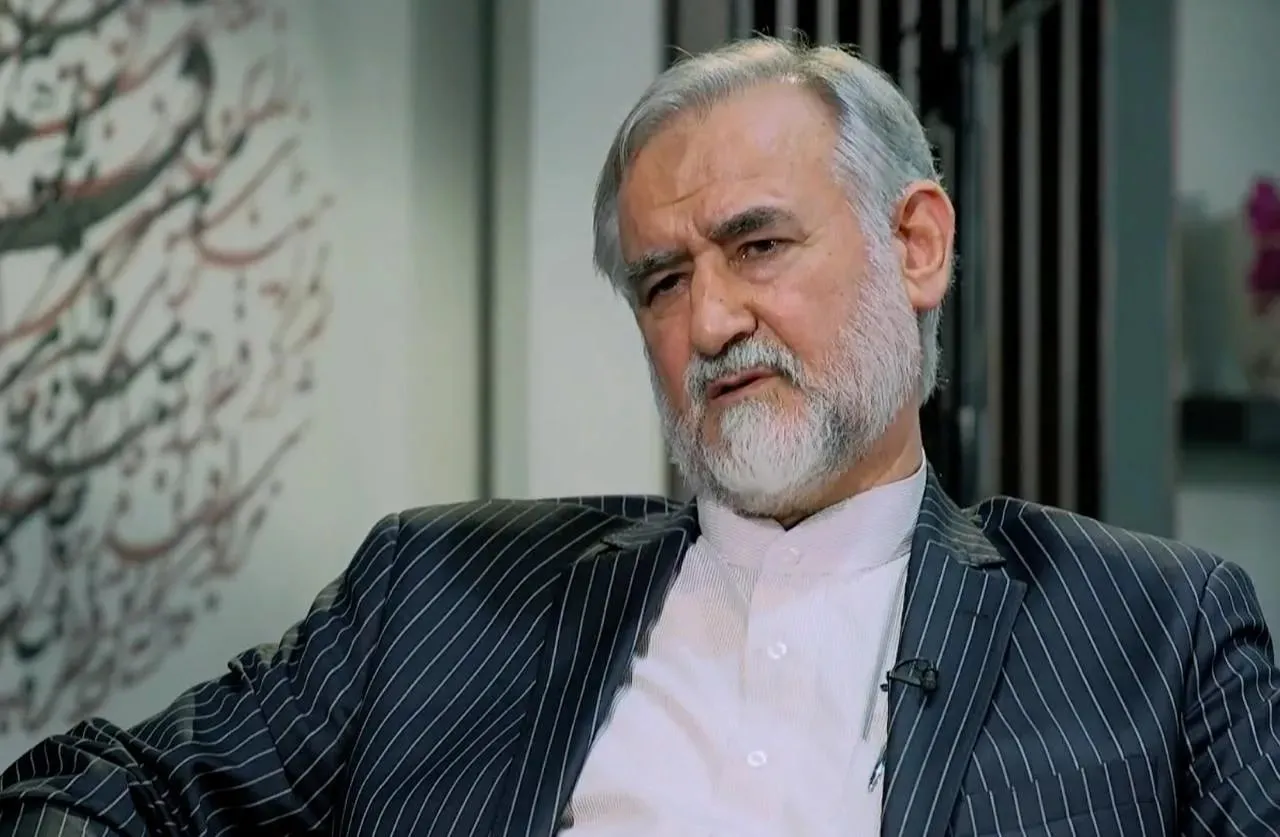
Engineer Gholamreza Shafei, politician, executive manager, and seasoned Iranian economic-industrial activist, born in 1951 in the city of Marand, East Azerbaijan province, is one of the most enduring and multidimensional executive-industrial figures of the Islamic Republic over the four decades since the revolution. A graduate of mechanical engineering from Sharif University of Technology, he spent four months in SAVAK prisons during his student years and, after the revolution, served as the deputy to the martyred Ayatollah Mohammad Mofatteh in the Islamic Revolution Committee of District Four. Shafei's career includes key positions such as Minister of Industries in two terms (the second administration of Mir Hossein Mousavi and the first administration of Seyed Mohammad Khatami), the first Minister of Cooperatives of Iran (in the second administration of Akbar Hashemi Rafsanjani) with the establishment of 6,304 cooperatives and unions, head of the Organization for Development and Renovation of Iranian Industries (IDRO), deputy for strategic supervision at the Management and Planning Organization in Hassan Rouhani's administration, a member of the Oil Contract Adjustment Committee, and the tenth head of the Iran Chamber of Commerce, Industries, Mines and Agriculture (2016-2022). Shafei has also been an exclusive guest of Abdi Media, discussing his experiences as Minister of Industries and Minister of Cooperatives over the past four decades.
Who is Gholamreza Shafei?
Engineer Gholamreza Shafei, politician, executive manager, and seasoned Iranian economic-industrial activist, born in 1951 in the city of Marand, East Azerbaijan province, is one of the most enduring and multidimensional executive-industrial figures of the Islamic Republic over the four decades since the revolution. Shafei, with a career spanning notable positions — including Minister of Industries in two different terms (in the second administration of Mir Hossein Mousavi, 1984-1989, and in the first administration of Seyed Mohammad Khatami), the first Minister of Cooperatives of Iran (in the second administration of Akbar Hashemi Rafsanjani, 1991-1997), head of the Organization for Development and Renovation of Iranian Industries (IDRO) (2012-2014), deputy for strategic supervision at the Management and Planning Organization in Hassan Rouhani's administration, a member of the Oil Contract Adjustment Committee (December 2016), and finally, the tenth head of the Iran Chamber of Commerce, Industries, Mines and Agriculture (from September 2016 to March 2023) — is considered one of the most experienced figures active in the fields of industry, cooperatives, and Iran's private sector economy.
The importance of Gholamreza Shafei in Iran's economic-political sphere can be examined from several perspectives. First, his background as a SAVAK prisoner before the revolution — during which, as a student, he spent four months in SAVAK prisons — and subsequently serving as deputy to the martyred Ayatollah Mohammad Mofatteh in the Islamic Revolution Committee of District Four, and then as head of this committee after Mofatteh's martyrdom in December 1979 until November 1981, formed his revolutionary-credential foundation. This background, which holds significant resonance among the founding generation of the Islamic Republic, places Shafei among the generation of revolutionary elite managers. Second, his exceptional ability to transition between different administrations — from Mousavi's administration (with an Islamic left orientation), to Rafsanjani's administration (with a development orientation), Khatami's administration (with a reformist orientation), and finally Rouhani's administration (with a moderate orientation) — indicates a rare professional-specialist endurance in contemporary Iran's structure. Third, the establishment of the Ministry of Cooperatives as its first minister and the extensive expansion of the cooperative sector during his tenure (with the registration of 6,304 cooperatives and unions across the country) made him one of the main architects of Iran's cooperative structure — a structure later recognized in the Vision Document and the Constitution as one of the three main sectors of the country's economy.
Shafei, in a notable interview with Abdi Media — in which he recounts his experiences as Minister of Industries and Minister of Cooperatives — has become one of the sources of first-hand narratives about the economic-industrial atmosphere of the Islamic Republic over the past four decades.
Life and Background
Gholamreza Shafei was born in 1951 in the city of Marand — one of the notable cities in the northwestern province of East Azerbaijan. Marand, a city in the foothills of Mount Misho north of Tabriz, is a cultural-economic center of the Azerbaijan region and has introduced prominent figures in political, economic, and cultural fields to Iranian society in the post-revolution decades.
Shafei's childhood and adolescence coincided with the events of the 1960s and 1970s — a period in which the socio-economic transformations of the Pahlavi II era, alongside the growth of revolutionary opposition movements, shaped the intellectual atmosphere of the country's young generation.
Education
Shafei completed his secondary education at Khwarazmi High School in Tehran — one of the capital's most prestigious high schools in the 1960s and 1970s — and received his high school diploma in mathematics from this school in 1970.
After that, he entered Sharif University of Technology (known at that time as "Aryamehr University of Technology") — Iran's most prestigious technical university — and studied mechanical engineering. In 1975, he graduated with a Bachelor of Science degree in mechanical engineering.
Experience of SAVAK Prison
One of the notable aspects of Shafei's personal background is spending four months in SAVAK prisons during his university studies. This experience, considered among the events that shaped his revolutionary identity, was relatively common among the student generation at Aryamehr University of Technology in the 1970s — a generation that, in the atmosphere of pre-revolutionary student movements, was under intense pressure from the imperial security apparatus.
Pre-Ministerial Period: Executive-Industrial Management
After graduating from Sharif University of Technology, Shafei began his professional career in industry:
Work at Steel Companies
In the final years of the Pahlavi era and before the revolution, Shafei worked at steel companies — including Isfahan Steel Company, Rey Steel Company, and Tehran Steel Company. These activities formed the foundation of his industrial-steel expertise.
Deputy to Martyr Mofatteh in the Islamic Revolution Committee of District Four
After the victory of the 1979 Islamic Revolution, Shafei joined the nascent revolutionary structure and served as deputy to Ayatollah Martyr Mohammad Mofatteh in the Islamic Revolution Committee of District Four (in western Tehran). This connection with Martyr Mofatteh — one of Imam Khomeini's close companions and an architect of the cultural-revolutionary policy in the early days of the Islamic Republic — is one of the notable aspects of Shafei's revolutionary background.
After the martyrdom of Ayatollah Mofatteh on December 18, 1979 (at the hands of the Forqan group), Shafei assumed the headship of the Islamic Revolution Committee of District Four until November 1981. This position, in the most sensitive years after the revolution and in the midst of the Iran-Iraq war, was considered one of the notable security-organizational positions.
Head of the National Iranian Industries Organization
After this period, Shafei served for two years as the head of the National Iranian Industries Organization — a notable state institution in the field of managing state industries. This position formed the foundation of his familiarity with Iran's state industry structure.
Deputy for Non-Ferrous Metals and Head of the National Iranian Copper Industries Company
After heading the National Industries Organization, Shafei was promoted to the position of Deputy for Non-Ferrous Metals of the Ministry of Mines and Metals and, at the same time, chairman of the board of the National Iranian Copper Industries Company — positions that placed him in the field of Iran's strategic metal-mining industries.
Ministry of Industries (First Term: 1984-1989)
The turning point in Shafei's governmental career was his appointment in late August 1984 as Minister of Industries in the second administration of Mir Hossein Mousavi. After receiving a vote of confidence from the parliament, Shafei held this position for five years — until September 1989.
This period coincided with the most sensitive years of the Iran-Iraq war — including the operations of Val-Fajr, Kheibar, Badr, Karbala, and the end of the war in August 1988. The Ministry of Industries during this period faced serious challenges due to severe economic limitations caused by the war and international sanctions. At the same time, the "state-war economy" of the Mousavi era, characterized by an emphasis on social justice, state distribution of goods, and state management of industries, formed the overall atmosphere of Shafei's activity.
Deputy of the Plan and Budget Organization (1989-1991)
After the end of his term as Minister of Industries and the beginning of Akbar Hashemi Rafsanjani's first administration, Shafei was appointed Deputy for Production Affairs of the Plan and Budget Organization and worked in this position for 28 months. This position, in the early period of the "Development Era" and in the post-war reconstruction atmosphere, was considered one of the key economic-planning positions.
Establishment of the Ministry of Cooperatives: First Minister of Cooperatives (1991-1997)
Shafei's most important structural legacy is the establishment of the Ministry of Cooperatives and his tenure as Iran's first Minister of Cooperatives. In January 1992, with the approval of the Islamic Consultative Assembly, the Ministry of Cooperatives was established as a new ministry, and Shafei was elected as the first Minister of Cooperatives of the Islamic Republic. He held this position until mid-1997 — until the end of Rafsanjani's second presidential term.
Achievements of the Cooperative Ministry Period
Shafei's five-and-a-half-year tenure as Minister of Cooperatives was accompanied by an unprecedented expansion of the cooperative sector in Iran. During his tenure:
6,304 cooperatives and unions were established and registered across the country
The institutional structure of the Ministry of Cooperatives and its affiliated organizations was formed
The legal-rightful position of cooperatives as one of the three main sectors of Iran's economy (alongside the state and private sectors) was consolidated
These achievements made Shafei one of the main architects of Iran's contemporary cooperative structure — a structure that maintained its sustained position in Iran's economic development model in subsequent decades.
Distinguished Cooperative Medal (2011)
In recognition of these efforts, in 2011, the House of Iranian Cooperatives awarded the Distinguished Cooperative Medal to Gholamreza Shafei — a medal considered one of the most prestigious specialized awards in Iran's cooperative sector.
Ministry of Industries (Second Term: Khatami's First Administration)
With the beginning of Seyed Mohammad Khatami's first administration in August 1997, Shafei returned to the Ministry of Industries for a second time and headed this ministry for three years and several months. This return, in the post-2nd of Khordad atmosphere and during the expansion of the reformist movement, indicated the Khatami administration's trust in Shafei's expertise and record.
Head of IDRO (2012-2014)
After a period away from ministerial responsibilities, Shafei served as the head of the Organization for Development and Renovation of Iranian Industries (IDRO) from 2012 to 2014. IDRO, one of Iran's most notable state industrial-investment organizations, is considered among the country's most important industrial development institutions, and its head holds a special position in Iran's economic structure. This tenure occurred during the final year of Mahmoud Ahmadinejad's presidency and then the first year of Rouhani's presidency.
Deputy for Strategic Supervision at the Management and Planning Organization
With the formation of the Management and Planning Organization in the Rouhani administration (after the revival of this organization, which had been dissolved during the Ahmadinejad administration), Shafei was appointed as the Deputy for Strategic Supervision to the head of the Management and Planning Organization. This position held particular importance in Iran's economic planning-supervision structure.
Membership in the Oil Contract Adjustment Committee (November 27, 2016)
On November 27, 2016, by decree of Hassan Rouhani (then president), Shafei, along with Mohammad Forouzandeh, Houshang Nadrian, Seyed Mohammad Mir-Mohammadi, Mohsen Mohebbi, Davoud Danesh-Jafari, and Gholamhossein Nozari, was appointed as a member of the "Oil Contract Adjustment Committee."
This committee was formed in the tense post-JCPOA atmosphere and in line with adapting Iran's new oil contracts (known as IPC) to legal-national interest frameworks and was considered one of the most important specialized institutions supervising oil contracts in this period.
Head of the Iran Chamber of Commerce, Industries, Mines and Agriculture (2016-2022)
The peak of Shafei's private sector career was his election in September 2016 as the tenth head of the Iran Chamber of Commerce, Industries, Mines and Agriculture — the country's largest private sector organization.
September 2016 Election
After the resignation of Mohammad Nahavandian (who served as head during the seventh term of the Iran Chamber's Representatives Assembly) and then the headship of Mohsen Jalalpour in the eighth term (during which Shafei served as vice president), in September 2016, the election for the tenth term was held. In this election, with the presence of 401 members of the Representatives Assembly and 397 votes counted, Shafei was elected as the head of the Iran Chamber with 198 votes — only four votes more than his main rival, Masoud Khansari (head of the Tehran Chamber of Commerce).
Ninth Term: Continuation of Headship
Shafei continued his headship during the ninth term of the Iran Chamber's Representatives Assembly. During this term, one of Shafei's notable achievements was the transfer and assignment of the headship and secretariat of ECO cooperation to Iran — a development that strengthened Iran's economic diplomacy position in the region.
End of Term: Not Registering for the Tenth Election (March 2023)
On February 19, 2023, at the final meeting of the ninth term of the Iran Chamber's Representatives Assembly, Shafei officially stated: "I did not register for this term by my own decision, and I was supposed to make this decision in March 2021." This position indicated Shafei's voluntary decision to step down from this position after approximately six years of headship (2016-2022).
Notable Positions During Headship
During his headship of the Chamber of Commerce, Shafei took influential positions in the field of Iran's economy:
Cooperative Economy: In one of his notable positions — during a meeting with grand sources of emulation in Qom — he stated: "The cooperative economy is among the foundations of the Islamic economy." He added: "Today in Qom, we witnessed a blessed action: three chambers — the Chamber of Commerce, the Chamber of Guilds, and the Cooperative Chamber — in their first regional trip, laid the foundation for a triple coalition in the non-governmental sectors in this holy city, next to the shrine of the noble Lady of the Ahl al-Bayt."
Support for Proposed Ministers: During his headship, Shafei generally took a supportive stance toward proposed ministers for the Ministry of Industry, Mine and Trade. In one of these positions, he called the proposed minister a "suitable candidate" and emphasized "the successful plan of the Khorasan Economic Development Triangle."
Views and Positions
Throughout his long career, Gholamreza Shafei has formulated a clear intellectual-economic framework that can be traced in several axes.
Commitment to the Cooperative Structure
The most central strategic position of Shafei is his deep commitment to the cooperative structure as one of the three main sectors of Iran's economy. This commitment, widely reflected during his five-and-a-half-year tenure as Minister of Cooperatives, continued during his headship of the Iran Chamber with an emphasis on linking the cooperative economy with the foundations of the Islamic economy.
Cross-Factional Pragmatism
A distinguishing feature of Shafei's approach is his cross-factional pragmatism — a characteristic in which he has taken on senior management roles in administrations with opposing orientations — from Mousavi (Islamic left), to Hashemi (development), Khatami (reform), and Rouhani (moderate). This professional endurance indicates his acceptance as a highly specialized technocrat in Iran's executive structure.
Defense of the Private Sector
During his headship of the Iran Chamber, Shafei became one of the most sustained defenders of the non-governmental private sector's interests. The "triple coalition of the Chamber of Commerce, the Chamber of Guilds, and the Cooperative Chamber" that he announced in Qom indicated his effort to consolidate the bargaining power of the non-governmental sector in Iran's economic structure.
Regional Economic Diplomacy
A notable feature of Shafei's approach is his special attention to regional economic diplomacy — especially within the structure of the Economic Cooperation Organization (ECO). The transfer of the ECO secretariat to Iran during his headship is considered one of the notable examples of this approach.
Abdi Media's Interview with Gholamreza Shafei, Minister of Industries and Minister of Cooperatives in Three Governments of the Islamic Republic
Connections with Figures and Currents
Gholamreza Shafei is situated within a network of political-executive connections with prominent figures of the Islamic Republic over the past four decades. At the revolutionary level, his relationship with Ayatollah Martyr Mohammad Mofatteh (for whom Shafei served as deputy in the Islamic Revolution Committee of District Four) is considered among his most important revolutionary background connections.
At the executive level, his relationship with Mir Hossein Mousavi (Prime Minister during his first ministerial term, 1984-1989), Akbar Hashemi Rafsanjani (President during his term as Minister of Cooperatives, 1991-1997), Seyed Mohammad Khatami (President during his second ministerial term), and Hassan Rouhani (President during his term as deputy for strategic supervision and membership in the Oil Contract Adjustment Committee) — four presidents with different orientations — are considered among his key connections.
At the Iran Chamber level, his relationship with figures such as Mohammad Nahavandian (predecessor, during the seventh term), Mohsen Jalalpour (predecessor, during the eighth term), Masoud Khansari (rival in the September 2016 election), Mohammad Reza Ansari and Mohammad Amirzadeh (vice presidents) are considered among his professional-organizational connections.
At the Oil Contract Adjustment Committee level, his relationship with Mohammad Forouzandeh, Houshang Nadrian, Seyed Mohammad Mir-Mohammadi, Mohsen Mohebbi, Davoud Danesh-Jafari, and Gholamhossein Nozari (colleagues on the 2016 committee) are considered among his expert-level connections.
Conclusion
Engineer Gholamreza Shafei is one of the most enduring and multidimensional executive-economic figures of the Islamic Republic over the four decades since the revolution. With a dense career — from serving as deputy to Martyr Mofatteh in the Islamic Revolution Committee of District Four, to Minister of Industries in two different terms (Mousavi and Khatami), the establishment of the Ministry of Cooperatives as its first minister in the Hashemi administration, head of IDRO, deputy of the Management and Planning Organization, membership in the Oil Contract Adjustment Committee, and finally, a six-year headship of the Iran Chamber of Commerce, Industries, Mines and Agriculture — he has occupied a unique position in contemporary Iran's economic-industrial structure. His career — from his birth in 1951 in Marand, education at Khwarazmi High School and Sharif University of Technology, four months in SAVAK prisons, work at steel companies, revolutionary presence in the District Four Committee, transition between the administrations of four presidents with different orientations, the establishment and expansion of the cooperative sector (with the registration of 6,304 cooperatives), and finally, the headship of the Iran Chamber until March 2023 — presents a picture of a multidimensional "founding manager-technocrat."
Shafei's distinguishing feature, at the first level, is his exceptional ability to transition between administrations with opposing orientations — an ability in which a figure with a revolutionary background and technocratic expertise has taken on senior management roles in the administrations of Mousavi, Hashemi, Khatami, and Rouhani. This professional endurance, in Iran's tense political structure, is considered one of the notable aspects of his character. At the second level, his structural legacy in establishing the Ministry of Cooperatives and expanding the cooperative sector — during which 6,304 cooperatives and unions were registered in his five-and-a-half-year tenure — made him one of the main architects of Iran's cooperative economic-legal structure.
From an analytical perspective, Shafei's position exemplifies the phenomenon of the "revolutionary technocrat" in Iran's power structure — a phenomenon in which an individual, combining a revolutionary background (SAVAK imprisonment, deputy to a revolutionary martyr) and technical-academic expertise (mechanical engineering from Sharif University of Technology), has worked in notable managerial-ministerial positions over the post-revolution decades. This pattern, which has numerous examples among contemporary Iran's senior managers, has found particular reflection in Shafei with his four-decade endurance and transition between different factions.
What is clear from today's perspective is that the issues Shafei has addressed in his long career — from the development of Iranian industry, the expansion of the cooperative sector, the regulation of oil contracts, and the strengthening of the non-governmental private sector — remain among the most enduring topics of discussion in contemporary Iran's economic discourse. At a time when Iran's economy faces persistent challenges in the areas of inflation, sanctions, and industrial development, Shafei's experience and perspectives — as one of the most seasoned economic-industrial managers of the Islamic Republic — will remain one of the reference sources for analyzing these challenges. His first-hand narratives — reflected in his notable interview with Abdi Media — remain part of the economic-political historical memory of contemporary Iran.
Frequently Asked Questions
Who is Gholamreza Shafei?
Engineer Gholamreza Shafei (born 1951 in Marand, East Azerbaijan) is an Iranian politician, executive manager, and seasoned economic-industrial activist who has served in numerous positions including Minister of Industries in two terms (the second administration of Mir Hossein Mousavi and the first administration of Seyed Mohammad Khatami), the first Minister of Cooperatives of Iran (in the second administration of Hashemi Rafsanjani), head of IDRO, deputy for strategic supervision at the Management and Planning Organization in Rouhani's administration, and the tenth head of the Iran Chamber of Commerce, Industries, Mines and Agriculture (2016-2022).
What is Gholamreza Shafei's educational background?
Shafei received his high school diploma in mathematics in 1970 from Khwarazmi High School in Tehran and graduated in 1975 with a Bachelor of Science degree in mechanical engineering from Sharif University of Technology (known at that time as Aryamehr University of Technology). During his student years, he spent four months in SAVAK prisons.
What is Shafei's revolutionary background?
Before the revolution, during his student years, Shafei was detained for four months in SAVAK prisons. After the victory of the Islamic Revolution, he served as deputy to Ayatollah Martyr Mohammad Mofatteh in the Islamic Revolution Committee of District Four and, after Mofatteh's martyrdom in December 1979, assumed the headship of this committee until November 1981.
What was Shafei's role in establishing the Ministry of Cooperatives?
In January 1992, with the approval of the parliament, Gholamreza Shafei was appointed as the first Minister of Cooperatives of the Islamic Republic of Iran and established the Ministry of Cooperatives. He held this position until mid-1997 — for five and a half years. During his tenure, 6,304 cooperatives and unions were established and registered across the country. In recognition of these efforts, in 2011, the House of Iranian Cooperatives awarded the Distinguished Cooperative Medal to Shafei.
How did Shafei become head of the Iran Chamber of Commerce?
In September 2016, in the election for the tenth term of the Representatives Assembly of the Iran Chamber of Commerce, Industries, Mines and Agriculture, with the presence of 401 members of the assembly and 397 votes counted, Shafei was elected as the tenth head of the country's largest private sector organization with 198 votes — only four votes more than his main rival, Masoud Khansari (head of the Tehran Chamber of Commerce). Prior to this, Shafei had served as vice president during the eighth term under the headship of Mohsen Jalalpour.
Why did Shafei not register for the tenth term election of the Chamber of Commerce?
On February 19, 2023, at the final meeting of the ninth term of the Iran Chamber's Representatives Assembly, Shafei officially stated: "I did not register for this term by my own decision, and I was supposed to make this decision in March 2021." This position indicated his voluntary decision to step down after approximately six years of headship.
What was the Oil Contract Adjustment Committee?
On November 27, 2016, by decree of Hassan Rouhani (then president), Shafei, along with Mohammad Forouzandeh, Houshang Nadrian, Seyed Mohammad Mir-Mohammadi, Mohsen Mohebbi, Davoud Danesh-Jafari, and Gholamhossein Nozari, was appointed as a member of the "Oil Contract Adjustment Committee." This committee was formed in the post-JCPOA atmosphere and in line with adapting Iran's new oil contracts (known as IPC) to legal-national interest frameworks.
What is Shafei's view on the cooperative sector?
In one of his notable positions — during a meeting with grand sources of emulation in Qom — Shafei stated: "The cooperative economy is among the foundations of the Islamic economy." During his headship of the Chamber of Commerce, he introduced the "triple coalition of the Chamber of Commerce, the Chamber of Guilds, and the Cooperative Chamber" as a model for synergy among the non-governmental sectors of the economy — an indication of his sustained connection to the cooperative sector tradition in which he had established Iran's first ministry.
Is Gholamreza Shafei still active?
After the end of his headship of the Iran Chamber of Commerce, Industries, Mines and Agriculture in March 2023, Shafei, as one of the elder statesmen and experienced figures of Iran's economy, remains active in expert-consultative discussions in the fields of economy and industry. His notable interview with Abdi Media, in which he recounts his experiences as Minister of Industries and Minister of Cooperatives, is considered one of the sources of first-hand narratives about the economic-industrial atmosphere of the Islamic Republic over the past four decades.
Take less than a minute, register and share your opinion under this post.
Insulting or inciting messages will be deleted.
Sign Up