
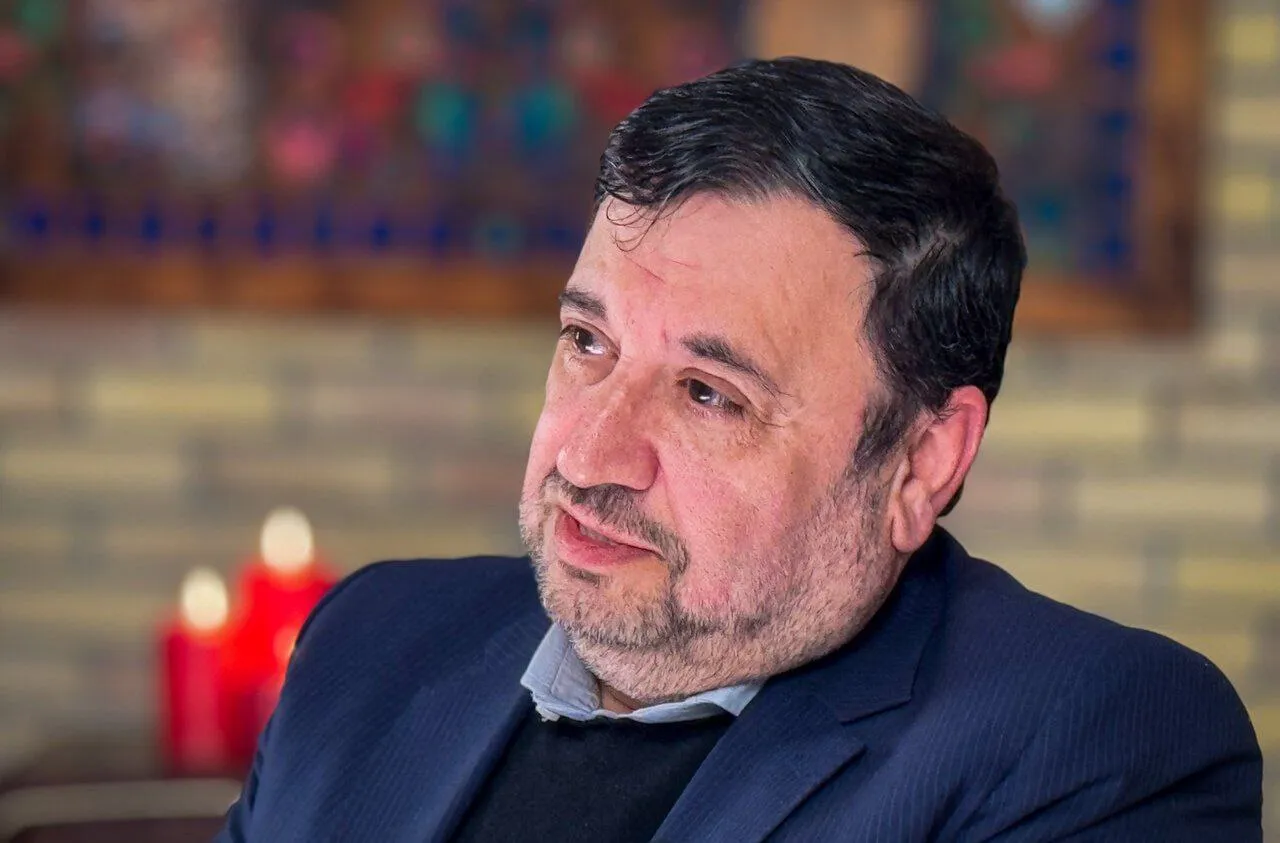
Seyyed Abolhassan Firouzabadi—an engineer, politician, and senior technology executive—is one of the most influential yet controversial figures in Iranian cyber governance over the past decade. Backed by his specialized background in telecommunications engineering and a PhD in Strategic Management, he served for seven years (2015 to 2023) as the Secretary of the Supreme Council of Cyberspace and the Head of the National Cyberspace Center. This turbulent period saw the blocking of major platforms such as Telegram, Instagram, and WhatsApp, and ultimately landed his name on the US sanctions list. Following his resignation in January 2023 and his return to the private sector, Firouzabadi has become a central subject in digital governance analysis due to his candid critiques regarding the harms of internet filtering on artificial intelligence development. In this piece, Abdi Media, alongside an anatomy of his career, presents his exclusive video analysis regarding the possibility or impossibility of controlling cyberspace.
Who is Seyyed Abolhassan Firouzabadi?
Dr. Seyyed Abolhassan Firouzabadi—an engineer, politician, and senior Iranian executive who served as the Secretary of the Supreme Council of Cyberspace and the Head of the National Cyberspace Center of Iran from 2015 to 2023, born in 1961 in Najaf, Iraq—is one of the most influential figures in Iran's technology-cyber diplomacy over the past decade. Backed by a unique combination of technical expertise in telecommunications (a Master's degree in Electrical-Telecommunications Engineering from the Iran University of Science and Technology), strategic acumen (a PhD in Strategic Management from the Supreme National Defense University), a prominent clerical-academic family background (as the presumptive son of Ayatollah Seyyed Morteza Firouzabadi), and extensive experience in the technology industry (at Zaeem Electronic Industries Co.), Firouzabadi spent seven years at the helm of the Supreme Council of Cyberspace. In this role, he sat at the absolute epicenter of decision-making regarding Iran's most critical technological challenges—ranging from platform filtering and the National Information Network to cyberattacks and broader internet governance.
The significance of Seyyed Abolhassan Firouzabadi in Iran's political-technological sphere can be examined from several key angles. First, his position at the apex of Iran's paramount cyberspace policymaking body—the Supreme Council of Cyberspace, which operates under the direct oversight of the Supreme Leader of the Islamic Republic—rendered him one of the most powerful digital policymakers in contemporary Iran. Second, his inclusion on the US Department of the Treasury's sanctions list on May 30, 2018—just weeks after Donald Trump's withdrawal from the JCPOA—under the accusation of "censorship and or altering the free flow of information," stands as a clear indicator of his globally recognized standing within Iran's digital policy architecture. Third, his profound reassessment of filtering policies following his departure from office—transforming into a prominent critic of the very restrictions he once presided over—represents a highly compelling ideological shift among contemporary senior Iranian officials.
Following the acceptance of his resignation by President Ebrahim Raisi in January 2023, Firouzabadi currently serves as the CEO and Chairman of the Zaeem Technology Development Group. He remains a prominent analytical voice and benchmark expert in Iran's mainstream media across the domains of artificial intelligence, cyberspace, digital governance, and cybersecurity. His recent analytical stances—including pivotal declarations such as "the continuation of filtering harms the development of artificial intelligence" and "sanctions are the primary obstacle to Iran's development"—highlight a stark discursive evolution in his post-government chapter.
Life and Background
Seyyed Abolhassan Firouzabadi was born in 1961 in the city of Najaf, Iraq—the most historic and central seat of Shia clerical scholarship in the world. His birth in Najaf is historically tied to his father’s studies in its renowned Islamic seminary (Hawza). This background marks a notable aspect of his profile, placing him among a distinct cadre of senior officials in the Islamic Republic who spent their early years or were born within the religious-intellectual environment of Najaf (akin to Ayatollah Ali Khamenei, Ali Akbar Salehi, and others).
Family Background
Publicly available records paint a vivid portrait of a highly established clerical and scholarly family lineage. According to analytical profiles by local tech media outlets like Peivast and other press reports, Firouzabadi is presumed to be the son of Ayatollah Seyyed Morteza Firouzabadi, a prominent cleric of the Qom Seminary who migrated from Najaf to Qom in 1971 due to escalating pressures and harassment from the Ba'athist regime in Iraq. This timeline indicates that the family relocated when Abolhassan was a child of about ten years old.
Further up his ancestral line, his grandfather is believed to be Ayatollah Seyyed Mohammad Firouzabadi—a highly revered jurist (faqih) in Najaf who had originally migrated to Iraq from Yazd during the Qajar era. This multi-generational scholarly pedigree demonstrates the deep intellectual and religious roots of the Firouzabadi family within traditional Shia jurisprudence.
His brother, Ali Firouzabadi, is also heavily active in the information technology sector, having previously served as the VP of Information Technology at Mobile Telecommunication Company of Iran (MCI / Hamrah-e Aval) and more recently as a member of the executive board of the Information Technology Organization (ITO) of Iran. This familial link underscores a broad and structured presence of the Firouzabadi family within Iran's tech management ecosystem.
Education
Seyyed Abolhassan Firouzabadi’s educational trajectory is defined by a rigorous blend of high-level technical training and strategic-military administrative coursework:
M.Sc. in Electrical-Telecommunications Engineering from Iran University of Science and Technology (IUST): Firouzabadi pursued his technical specialization at IUST, one of Iran's premier engineering institutions, successfully obtaining a Master's degree. This solid engineering foundation served as the core technical benchmark throughout his professional career, directly translating into his handling of massive technological operations.
PhD in Strategic Management from the Supreme National Defense University (SNDU): Firouzabadi entered the doctoral program in Strategic Management at SNDU in 2004, successfully defending his dissertation in 2013. As a premier institution for elite strategic and security education in Iran, SNDU primarily trains top-tier managerial and strategic cadres for the country's governance and military apparatus. Graduation from this university is heavily associated with deep integration into the state's strategic power structures.
The fusion of these two distinct disciplines—telecommunications engineering coupled with strategic management—endowed Firouzabadi with a highly specialized toolkit tailored for the intersection of technology, national security, and state policy; a junction that would come to define the entirety of his public career.
Early Professional Career
Wartime Journalism (1980–1982)
One of the lesser-known facets of Firouzabadi’s career is his early foray into journalism. Between 1980 and 1982—coinciding with the volatile opening years of the Iran-Iraq War—he worked as a writer and analyst for the Sobh-e Azadegan daily newspaper, frequently publishing articles focused on international relations. This experience, occurring during his young adulthood, signaled an early interest in geopolitical affairs that would later manifest through a completely different institutional framework.
Zaeem Electronic Industries Co.
The absolute cornerstone of Firouzabadi’s early professional career was his extensive, multi-decade tenure at Zaeem Electronic Industries—a critical enterprise operating across telecommunications infrastructure, information technology, security systems, and high-level R&D. His leadership arc within this firm spanned roughly 22 years across several progressive stages:
1991–2003: Technical and R&D Director, and Member of the Board of Directors
2003–2009: Chairman of the Board of Directors
Until 2013: Vice Chairman of the Board of Directors
2011: Vice President of the Zaeem Center
Firouzabadi was also the foundational founder of the Research and Development Center at Zaeem Electronic Industries—an entity widely cited as one of the most technologically advanced research hubs in the country. During this extensive tenure, he personally oversaw and managed massive national-level technological projects, the scope of which highlights the breath of his infrastructure expertise:
Digital fiber-optic networks
Satellite communications infrastructure
The digital radio trunk system for the city of Tehran
Electronic warfare (EW) systems
High-power radio and television transmitters
Secure communications and internet security architectures
This project catalog illustrates that Firouzabadi operated extensively at the critical nexus where civilian telecommunications infrastructure intersects with national defense and security systems.
IT Vice Ministry at the Ministry of Intelligence
Prior to his landmark appointment to the Supreme Council of Cyberspace, one of Firouzabadi’s most notable high-level assignments was serving as the Vice Minister for Information Technology at the Ministry of Intelligence (MOIS). This position became public knowledge in 2009 following an official farewell ceremony reported by the Alef news website (associated with Ahmad Tavakkoli). The role underscored Firouzabadi's long-standing position of trust within the state's core national security and intelligence frameworks.
Given his academic credentials from the Supreme National Defense University and his professional mastery over electronic warfare and secure communications, this deployment solidified his reputation as a trusted, elite tech expert within Iran's security apparatus.
Tenure at the Supreme Council of Cyberspace (2015–2023)
The absolute zenith of Firouzabadi’s public profile arrived in 2015 when he was simultaneously appointed by presidential decree to two of the most critical seats in the country's digital ecosystem:
Secretary of the Supreme Council of Cyberspace (SCC): A high-powered council presided over by the President, with members including the heads of the judiciary and parliament, the Commander-in-Chief of the IRGC, and the ministers of communication, intelligence, and culture. Formed by order of Ayatollah Ali Khamenei in 2012, the SCC serves as the ultimate authority on internet policy, tech regulations, and digital strategy in Iran.
Head of the National Cyberspace Center of Iran: The executive, administrative, and monitoring arm of the SCC, operating under its direct mandate.
These appointments were formalized under the administration of President Hassan Rouhani and extended into the administration of President Ebrahim Raisi, lasting continuously until January 2023.
A Seven-Year Record
Firouzabadi’s seven-year tenure at the summit of Iranian cyberspace management was marked by structural upheavals, making it one of the most widely debated chapters of digital policymaking in contemporary Iranian history. According to consensus public records, "Firouzabadi's seven-year record in these twin roles was continuously intertwined with the systemic filtering of major platforms heavily utilized by the Iranian public." Most notably, this period saw the permanent blocking of Telegram (2018) followed by the sweeping bans placed on Instagram and WhatsApp in the wake of the socio-political unrest of September 2022.
Simultaneously, under his administrative watch, the "National Information Network" (NIN)—Iran's domestic intranet infrastructure project—saw massive developmental strides, alongside the formal drafting and codification of the official document outlining the architectural requirements and benchmarks of the network.
US Sanctions Designation (May 30, 2018)
A major international flashpoint during his administration occurred on May 30, 2018. Just weeks after President Donald Trump unilaterally withdrew the United States from the JCPOA on May 8, 2018, the US Department of the Treasury's Office of Foreign Assets Control (OFAC) placed Firouzabadi, alongside the SCC and the National Cyberspace Center, on its sanctions list. The official designation was issued under accusations of "censorship and or altering the free flow of information."
Responding to the sanctions at the time, Firouzabadi dismissed the move as a political maneuver, stating: "The US has engaged in sophistry by sanctioning the Council and the Cyberspace Center, aiming to apply pressure on foreign systems and messaging applications so they refuse to negotiate or cooperate with the Islamic Republic of Iran—efforts that are entirely designed to restrict the vibrant and healthy presence of the Iranian nation in cyberspace."
Resignation in January 2023
Following a turbulent seven-year run, Firouzabadi officially stepped down from both powerful positions in January 2023—amid the tense nationwide aftermath of the "Woman, Life, Freedom" protests and the corresponding near-total clampdown on global digital platforms. His resignation was formally accepted by President Ebrahim Raisi. Leading up to the official announcement, unconfirmed reports and rumors regarding his imminent replacement had already been circulating widely across social media networks.
While the precise internal catalysts for his departure were not detailed in official communiqués, media consensus suggested that intense systemic pressures following the 2022 platform bans, coupled with mounting public and industrial blowback against the state's aggressive digital containment policies, played a decisive role in his decision to step down.
Post-Resignation and Private Sector Return
Leadership of the Zaeem Technology Development Group
Upon transitioning out of public office, Firouzabadi immediately returned to the private technology sector, assuming the roles of CEO and Chairman of the Board at the Zaeem Technology Development Group—marking a return to the exact corporate enterprise where he spent over two decades prior to his senior government career.
Prominent Analytical Voice
Freed from official bureaucratic constraints, Firouzabadi rapidly transformed into one of the country's most vocal and heavily cited independent analysts on cyberspace, artificial intelligence, and digital governance. His commentary and interviews are regularly featured across major national media outlets, including Khabar Online, Entekhab, Eghtesad 100, Asr Iran, and Serat News.
Core Views and Discursive Shifts
Throughout his long institutional and corporate career, Firouzabadi has articulated a highly defined conceptual framework on digital governance. Crucially, his public stances have undergone a remarkable, highly publicized evolution following his exit from the state apparatus.
Reassessment of Internet Filtering
The most highly covered aspect of Firouzabadi's post-government persona is his sharp, public pivot against the blanket policy of internet filtering. In one of his most prominent recent declarations, he stated unequivocally: "The continuation of filtering harms the development of artificial intelligence," arguing that such restrictive policies actively cripple the nation's capacity to "fully leverage the capabilities of AI for information production and advanced data management."
The fact that this critique comes from the very individual who sat at the head of the policy enforcement mechanism that implemented these restrictions for seven years represents one of the most striking examples of political discourse evolution in modern Iranian governance.
Exclusive Dialogue: Filtering and Cyberspace Governance; Is Control Possible? In a detailed, exclusive video analysis provided to Abdi Media titled "Filtering and Cyberspace Governance; Is Control Possible?", Dr. Seyyed Abolhassan Firouzabadi tackles one of the most fundamental questions of the digital age in Iran, offering an insider-turned-critic's perspective on the structural impossibility of absolute digital containment.
Critique of the Negationist-Military Approach
In an acute structural critique of Iran's broader cyber apparatus, Firouzabadi noted: "Both in the offensive (Afand) and defensive (Padafand) domains, there is an excessive, radical reliance on a negationist-military outlook." This perspective targets the over-securitization of digital spaces, warning against treating technological ecosystems purely as military battlefields.
Disclosure of Massive Cyberattacks on the Three Branches of Government
In a remarkably candid post-resignation disclosure that sent shockwaves through local media, Firouzabadi revealed: "Virtually all three branches of our government suffered massive cyberattacks where their data was stolen; the Judiciary, the Legislature, and the Executive alike." This level of public acknowledgment regarding the vulnerability of the state's core databases was unprecedented for an official of his rank.
Direct Critique of International Sanctions
Despite being personally sanctioned by the US government, Firouzabadi's post-government analyses explicitly identify international sanctions as the primary structural roadblock to Iran's overall modernization. He has noted: "Sanctions are the main barrier to development in Iran. Beyond economic hardship, they have severely degraded systemic transparency. A rejection of transparency has, in turn, mired the country in economic corruption."
He went further to challenge hardline domestic rhetoric, asserting: "Contrary to certain propaganda claims that suggest sanctions offer positive domestic opportunities, they are fundamentally a massive lost opportunity and a catastrophic blow to the national economy. For genuine development to occur, lifting sanctions and re-integrating Iran into the global system is absolutely essential."
The Necessity of National Consensus on Filtering
Addressing the continuous political deadlock over internet access, Firouzabadi has argued that "resolving the crisis of filtering requires a deep national consensus," warning that without a unified, institutional agreement, "the country will simply relapse into the exact same destructive cycle the moment the next social protest or friction occurs."
The Reality of Global Platforms
Summing up the inherent contradiction of trying to regulate foreign tech giants while isolated from the global financial system, he bluntly summarized: "Under the weight of sanctions, we cannot realistically expect platforms like Instagram, Twitter, or WhatsApp to come and set up official corporate offices in Tehran."
Critique of Declining Meritocracy
In numerous recent forums, Firouzabadi has consistently lamented the "decline of meritocracy" and the "profound absence of coherent governing theories within successive administrations" in contemporary Iran.
Institutional and Factional Network
Seyyed Abolhassan Firouzabadi sits within a vast network of institutional, familial, and security relationships at the heart of the Islamic Republic's power structure. At the family level, his lineage connects him directly to traditional clerical nobility through Ayatollah Seyyed Morteza Firouzabadi, while his brother Ali Firouzabadi anchors a strong presence within the executive management of national telecom bodies like the ITO.
At the state level, his long-standing membership in the Supreme Council of Cyberspace brought him into continuous, direct working contact with an elite cross-section of the regime's leadership—including the heads of the three branches of government, the head of IRIB, the Commander-in-Chief of the IRGC, the Chief of National Police, the head of the Islamic Development Organization, and the entire cabinet roster handling security, telecom, intelligence, and education.
On the executive axis, his tenure was uniquely sustained under both President Hassan Rouhani and President Ebrahim Raisi, both of whom consciously maintained him as their supreme cyberspace chief despite their drastically different political leanings. In the industrial and commercial sector, his lifetime ties to Zaeem Electronic Industries and the Zaeem Technology Development Group provide him with an ironclad corporate and technical network across Iran's defense-adjacent and civilian telecommunications industries.
Conclusion
Dr. Seyyed Abolhassan Firouzabadi remains one of the most consequential architects of Iran's contemporary digital policy landscape. His unique identity is defined by a multi-dimensional intersection: a prestigious Najaf-born clerical lineage, a dual academic track fusing rigorous telecommunications engineering with strategic defense management, decades of private sector enterprise leadership, and a definitive seven-year tenure commanding the state's highest cyber authority from 2015 to 2023.
What makes Firouzabadi an exceptionally unique case study within the Iranian political apparatus is twofold. First, he successfully bridged the deep technical-engineering world with the high-stakes realm of national security and military strategy—a synthesis explicitly visible in his professional journey through Zaeem, the Ministry of Intelligence, and the SCC. Second, his profound discursive transformation upon exiting office positions him as a classic example of the "former insider turned systemic critic."
This phenomenon—where high-ranking bureaucrats become vocal critics of the very enforcement mechanisms they once directed—is a recurring motif in contemporary Iranian governance. In Firouzabadi's case, this shift has provided a powerful, highly credible insider voice to the ongoing domestic critique of internet censorship, cyber vulnerability, and the economic isolation wrought by sanctions. As Iran continues to grapple with the existential challenges of artificial intelligence development, global platform access, and infrastructure security, Firouzabadi's analytical commentary—backed by years of top-level state experience and balanced by his current critical distance—remains a vital reference point for understanding the past, present, and future of Iran's digital governance.
Frequently Asked Questions (FAQs)
Who is Seyyed Abolhassan Firouzabadi? Dr. Seyyed Abolhassan Firouzabadi (born 1961 in Najaf, Iraq) is a senior Iranian engineer, politician, and technological executive. He served as the Secretary of the Supreme Council of Cyberspace and the Head of the National Cyberspace Center of Iran for seven years (2015–2023). He currently operates in the private sector as the CEO and Chairman of the Zaeem Technology Development Group.
What is Firouzabadi’s educational background? He holds a Master of Science (M.Sc.) degree in Electrical-Telecommunications Engineering from the Iran University of Science and Technology (IUST) and a PhD in Strategic Management from the Supreme National Defense University (SNDU).
What is his family lineage and background? Firouzabadi was born in Najaf, Iraq, where his father was studying in the renowned Islamic seminary. He is widely understood to be the son of Ayatollah Seyyed Morteza Firouzabadi, a prominent cleric who relocated the family to Qom in 1971 due to pressures from the Iraqi Ba'athist regime. His grandfather was the historic Najaf-based jurist Ayatollah Seyyed Mohammad Firouzabadi. His brother, Ali Firouzabadi, is a prominent tech executive and a board member of Iran's Information Technology Organization (ITO).
Why was Firouzabadi sanctioned by the United States? On May 30, 2018, shortly after the US withdrew from the Iran nuclear deal (JCPOA), the US Department of the Treasury placed Firouzabadi, along with the SCC, on its sanctions list under accusations of overseeing "censorship and or altering the free flow of information" via his role in regulating and blocking access to major digital platforms in Iran.
What were his primary professional roles prior to leading the SCC? Before his 2015 appointment, Firouzabadi accumulated extensive experience over 22 years at Zaeem Electronic Industries, serving as Technical Director, R&D Founder, and Chairman of the Board. He also served as a wartime journalist for Sobh-e Azadegan (1980–1982) and held the powerful position of Vice Minister for Information Technology at the Ministry of Intelligence (MOIS) until 2009.
Why did he resign from his government posts in January 2023? Firouzabadi stepped down in January 2023, a resignation formally accepted by President Ebrahim Raisi. While official announcements did not detail the internal reasons, the move came amid immense socio-political friction, widespread public anger over the blocking of Instagram and WhatsApp during the 2022 protests, and structural challenges within the state's internet governance model.
What is Firouzabadi's current stance on internet filtering? Since leaving office, Firouzabadi has emerged as a distinct critic of blanket internet filtering. He has repeatedly warned that "the continuation of filtering directly sabotages the development of artificial intelligence" by locking Iran out of global data ecosystems. He maintains that resolving the filtering crisis requires a deep "national consensus" rather than purely security-driven or military-style containment.
What are his views on international sanctions? Firouzabadi explicitly defines sanctions as the "primary impediment to development in Iran." He argues that beyond causing direct economic damage, sanctions severely degrade institutional transparency, which directly fosters corruption. He contends that for real modernization to take place, lifting sanctions and normalizing Iran’s position within the global system is mandatory.
What projects did he manage during his corporate career at Zaeem? During his over two decades at Zaeem Electronic Industries, he spearheaded several of Iran's most critical technological infrastructure projects, including national digital fiber-optic networks, satellite communications links, the digital radio trunk system for the city of Tehran, electronic warfare (EW) systems, and high-power broadcasting transmitters.
Take less than a minute, register and share your opinion under this post.
Insulting or inciting messages will be deleted.
Sign Up