
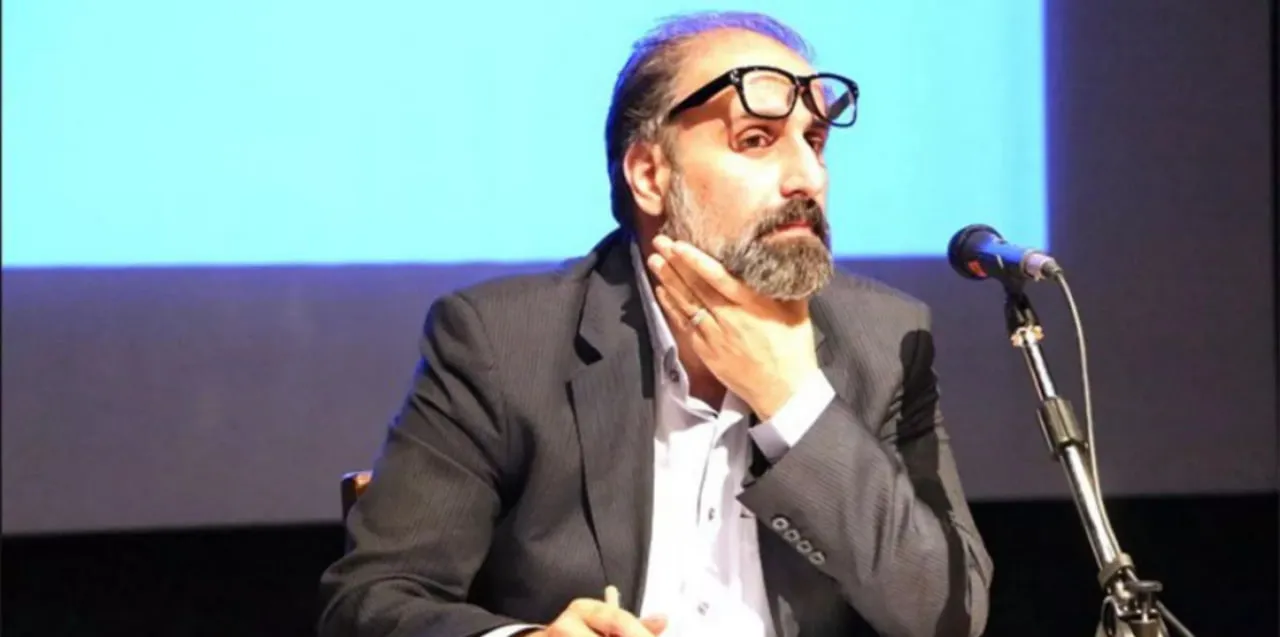
Abdolreza Davari, a political-media activist, journalist, and widely followed Iranian Twitter personality, is one of the most controversial and multifaceted figures in Iran's political-media space over the past two decades. He has served as Deputy Head of the official IRNA news agency and media advisor to Mahmoud Ahmadinejad, before becoming a fierce critic of Ebrahim Raisi's government, the Paydari Front, and even Ahmadinejad himself, making him a prominent example of discursive transformation in Iran's post-revolutionary political landscape. Davari has become one of the most followed Persian-language Twitter users in recent years, making controversial claims such as "the most assassinations of nuclear scientists occurred during Saeed Jalili's tenure" and "Russia has never been our supporter," keeping him constantly in the media spotlight. His recent judicial case in October 2024, due to a controversial claim about Yahya Sinwar, resulted in a 6-month prison sentence, a fine, flogging, and a ban on social media activity.
Who is Abdolreza Davari?
Abdolreza Davari, a political-media activist, journalist, and controversial and widely followed Iranian Twitter personality, born April 10, 1973, in Damghan, is one of the most controversial and multifaceted figures in Iran's political-media space over the past two decades. With a tumultuous career path—from Deputy Head of the official IRNA news agency and media advisor to Mahmoud Ahmadinejad during his presidency, to a fierce critic of Ebrahim Raisi's government, figures like Saeed Jalili, and even Ahmadinejad himself—he has become a prominent example of discursive transformation in Iran's post-revolutionary political landscape. Davari, who in recent years has been known as a "cyberspace activist" and one of the most widely viewed Persian-language Twitter users, has faced several high-profile judicial cases—including his recent case in October 2024, due to a controversial claim about Yahya Sinwar, which resulted in a 6-month prison sentence, a fine, flogging, and a ban on social media activity.
The importance of Abdolreza Davari in Iran's political-media sphere can be examined from several angles. First, his history of playing a role at the highest media levels of the official state structure during Ahmadinejad's era—as Deputy CEO and News Deputy of IRNA (the official news agency of Iran)—which gave him unique access to the internal dynamics of the power structure during that period. Second, his numerous prominent executive positions—from managing director of Shahrvand newspaper, to CEO of the Copper Industries Pension Fund, and advisor to the Minister of Interior and head of the Center for Strategic Studies and Training of the Ministry of Interior (October 2012 to May 2013)—which provided him with a wide network of executive-political experience. Third, his notable discursive transformation—in which he went from being one of the most prominent supporters and close defenders of Mahmoud Ahmadinejad during his presidency, to one of the fiercest critics of the principlist movement, Raisi's government, and even Ahmadinejad himself—is one of the most widely discussed discursive transformations in contemporary Iranian political space. Fourth, his highly viewed presence in cyberspace—particularly on Twitter/X—with controversial claims and unique insider information, has made him one of the most followed Persian-language Twitter users. Fifth, his numerous judicial cases—from the initial arrest warrant in June 2014 on charges of disseminating falsehood (from which he was ultimately acquitted) to the recent case in October 2024—are a direct consequence of his highly visible media presence.
Davari, currently, despite having distanced himself from government and private institutions for several years, is considered one of the most prominent critical voices from within the former principlist movement in contemporary Iranian media—a voice that, with claims such as "Ahmadinejad wants to be Iran's Yeltsin," "Russia has never been our supporter," and "the most assassinations of nuclear scientists occurred during Saeed Jalili's tenure," is one of the widely referenced sources of the discourse of criticizing power in the Persian-language space.
Important Note: This profile reports the narratives published in media sources. Davari's controversial claims—which are mainly published on Twitter—require case-by-case verification from an independent fact-checking perspective and, in some cases, have been met with denial and reactions from the mentioned figures.
Life and Background
Abdolreza Davari was born on April 10, 1973, in the city of Damghan—one of the ancient cities of Semnan province in northeastern Iran. (Some sources list Tehran as his birthplace, but according to prominent sources including Wikipedia, Damghan is his main birthplace.) Damghan, among Iran's oldest cities with a rich historical-cultural background, is one of the traditional-religious centers of northern Iran.
Born in 1973—during the peak of the second Pahlavi era and on the eve of the developments leading to the 1979 Islamic Revolution—Davari belongs to a generation that spent its childhood and adolescence in the early years of the revolution and the Iran-Iraq war, and came of age during the Reconstruction era and then the Reform era.
Education
Davari's educational path began in the technical-engineering field and, ultimately, with the claim of postgraduate studies in economics, diversified.
Mathematics Diploma from Hashtroudi High School (1991)
Davari received his mathematics diploma in 1991 from Hashtroudi High School—one of Tehran's prominent high schools.
Bachelor's and Master's in Mechanical Engineering from the University of Tehran
Davari completed his bachelor's and master's degrees in mechanical engineering at the University of Tehran—Iran's most prestigious university. This technical-engineering background formed his academic foundation.
Claim of a PhD in Economics
According to published accounts, Davari has stated on his personal page that he received a PhD in Economics with a specialization in industrial development from "Carlines University in New York." This claim, the exact identity and academic credibility of which has been debated in Iranian academic literature, is one of the debated aspects of his educational profile.
Previous Academic Activity
Before entering the political-executive sphere, Davari was active in Iran's academic structure:
Research faculty member at the University of Tehran.
Faculty member at the Academic Center for Education, Culture and Research (ACECAR).
This academic background formed the foundation of his entry into Iran's media-political structure.
Activity at IRNA (Ahmadinejad Era)
The initial turning point of Davari's political-media career was his prominent presence in the Islamic Republic News Agency (IRNA)—the official news agency of the Iranian government—during Mahmoud Ahmadinejad's presidency.
Director of Research and Deputy News Editor (June 2008)
In June 2008, Davari was appointed as Director of Research and Deputy News Editor of IRNA. This appointment was his first official high-level presence in Ahmadinejad's media structure.
Deputy CEO and News Deputy of IRNA (July 2009)
Only a year later, in July 2009, Davari was promoted to the higher position of "Deputy CEO and News Deputy of IRNA"—a position that placed him at the highest levels of the official news structure of the Iranian government. This appointment, in the tense atmosphere following the 2009 presidential election and the start of the Green Movement, was one of the significant changes in the Iranian government's media structure.
Managing Director of Shahrvand Newspaper
Davari also served as the managing director of Shahrvand newspaper—a prominent publication in the media space of that period.
Other Prominent Executive Positions
In addition to his media activities, Davari also held several other executive positions.
CEO of the Copper Industries Pension Fund (2010)
In 2010, Davari was appointed as the CEO of the Copper Industries Pension Fund. This position was considered one of the prominent managements in Iran's socio-economic structure.
Advisor to the Minister of Interior and Head of the Center for Strategic Studies (October 2012 to May 2013)
From October 2012 to May 2013—during the final months of Ahmadinejad's second administration—Davari served as an advisor to the Minister of Interior and the head of the Center for Strategic Studies and Training of the Ministry of Interior. This position, which gave him access to the Ministry of Interior's most important strategic studies center, is one of the notable aspects of his executive record.
Media Advisor to Mahmoud Ahmadinejad
During Mahmoud Ahmadinejad's presidency, Davari was known as his media advisor and one of his close supporters and defenders. This relationship, which played a strategic role in shaping Davari's political-media identity during that period, became one of the debated aspects of his record in later years.
Dispute over the Claim of Advisorship
Notably, in later years, Ali Akbar Javanfekr (an advisor and former managing director of Iran newspaper during Ahmadinejad's period, and a prominent figure in the circle close to Ahmadinejad) declared the rumor that Davari was an advisor to Ahmadinejad as unrealistic. This position, issued by one of the prominent figures in Ahmadinejad's close circle, is one of the debated aspects of the true nature of Davari's relationship with Ahmadinejad.
Dismissal from ACECAR (February 2014)
On February 1, 2014, with the coming to power of Hassan Rouhani's government, Davari's dismissal from ACECAR was communicated to him. According to published reports, in a meeting with the head of ACECAR, it was stated that the dismissal was due to political activities. This dismissal, in the atmosphere of the power transition from Ahmadinejad's government to Rouhani's government, was one of the significant events in Davari's academic-executive record.
Initial Judicial Case (June 2014)
Davari's first notable judicial case occurred in June 2014, with the issuance of his arrest warrant. The charges were "disseminating falsehood and falsely attributing statements to officials." Ultimately, Davari was acquitted of the charges—a result that was reflected in Iranian media as one of the notable events.
Discursive Transformation: From Support to Criticism
The most widely discussed chapter of Davari's record in recent years has been his notable discursive transformation from one of the most prominent close supporters of Mahmoud Ahmadinejad to a fierce critic of him and the entire principlist movement.
Admission of Mistake During Ahmadinejad Era
In one of his recent notable statements, Davari declared: "If I make a mistake somewhere, I will certainly admit it, and during the period I was with Ahmadinejad, his political conduct was not proportionate to the country's and the world's conditions."
This position, in which a former supporter of Ahmadinejad explicitly admits his mistake in the past period, is one of the notable aspects of his discursive transformation.
"Ahmadinejad Wants to Be Iran's Yeltsin"
In one of his notable analytical positions, Davari stated: "Ahmadinejad wants to be Iran's Yeltsin. He wants to pretend that he is in this system but not with the system, that he is in the Islamic Republic but not with the Islamic Republic."
This position, in which Ahmadinejad is compared to Boris Yeltsin, is a sign of Davari's structural critique of Ahmadinejad's post-presidency political strategy.
Critique of Raisi's Government
With the coming to power of the 13th government under Ebrahim Raisi, Davari became one of the serious critics of this government. These criticisms, reflected in numerous tweets and interviews, signified his notable discursive transformation from a principlist supporter to a structural critic of principlism.
Conditional Support for Pezeshkian
Regarding the 14th government under Masoud Pezeshkian, Davari stated: "Currently, I am not an unconditional supporter of Pezeshkian and have criticized him and his government on numerous occasions." This position indicates his independent-critical view of all major Iranian political currents in the recent period.
Controversial Claims and Highly Viewed Tweets
In recent years, Davari has become one of the most widely discussed Iranian cyberspace activists through several controversial claims on Twitter and in the media.
Claim about Nuclear Scientist Assassinations
In one of his most widely discussed claims, Davari stated: "The assassination of nuclear scientists by Israel was initiated when Saeed Jalili became Secretary of the Supreme National Security Council," and added: "The most assassinations of nuclear scientists occurred during Saeed Jalili's tenure." These claims, made against Saeed Jalili, met with widespread reactions.
Claim about the Supreme National Security Council Meeting
In one of his recent widely discussed claims (following the 12-day Iran-Israel war), Davari stated: "I have heard from a reliable source that Mr. Jalili did not attend that meeting of the Supreme National Security Council that was targeted." He added: "This proposition of mine has not been denied so far" and emphasized: "It is not clear whether Jalili was not invited or did not attend the meeting, as each of these two propositions has its own meaning."
Claim about the Crescent Project
In one of his notable positions, Davari stated: "The Crescent project was an Israeli project." This claim, regarding the high-profile Crescent gas contract case, is one of his controversial positions.
Challenge with Ali Larijani and Amir Hossein Sabeti
In another controversial position, Davari asked Ali Larijani: "Who provides the Supreme National Security Council's information to Amir Hossein Sabeti?"—a question that Amir Hossein Sabeti responded to, creating one of the notable controversies in Iran's political space.
View on Russia
In one of his notable positions, Davari stated: "Russia has never been our supporter." This position, which stands in contrast to the official discourse of closeness to Russia, is one of the notable aspects of his strategic view.
Recent Judicial Case (October 2024)
The most prominent recent judicial case of Davari was related to his controversial claim about Yahya Sinwar.
Charges
According to published reports, in October 2024, the judiciary filed a case against Abdolreza Davari, and he was prosecuted for "false claims about Martyr Sinwar"—a claim in which Davari had alleged that Sinwar was a Mossad spy.
Sentence
In court, Davari was sentenced to:
6 months in prison.
A fine.
Flogging.
Confiscation of his mobile phone.
A ban on activity on Twitter and Instagram.
This heavy sentence, which included a combination of different punishments, received widespread coverage in Iranian media.
Appeal Stage
According to published reports, the issued verdict is under appeal, and its final fate, at the time of writing this profile, has not yet been determined.
Views and Prominent Positions
Throughout his intellectual-political career, Abdolreza Davari has formulated a changing and complex intellectual framework:
Critique of the Principlist Power Structure
The most central recent analytical position of Davari is his structural critique of the ruling principlist movement—particularly the Paydari Front and figures such as Saeed Jalili, Ali Larijani, and Amir Hossein Sabeti. This critique, issued from the perspective of a former activist in the principlist circle, is one of the widely discussed aspects of his discourse.
Critique of Russia
Davari stands in contrast to the official discourse of closeness to Russia. In his view, "Russia has never been our supporter," and the belief in a strategic alliance with Russia is a structural error in Iran's foreign policy.
View on the Pro-Transition Movement
Davari also has a critical view of the pro-transition movement. In one of his notable positions, in a tweet about Mehdi Mahmoudian, he wrote: "Unfortunately, Mehdi Mahmoudian spent his medical leave from prison at the transition gathering." This position, in which the "transition gathering" is criticized as informal meetings of pro-transition activists, is a sign of his complex view of various civil-political activist spectrums.
Discursive Independence
Despite his notable discursive transformation, Davari emphasizes his discursive independence. In one of his notable positions, he stated: "Currently, I am not an unconditional supporter of Pezeshkian and have criticized him and his government on numerous occasions." This position indicates his independent-critical view of all major Iranian political currents in the recent period.
Connections with Figures and Currents
Abdolreza Davari is situated within a complex network of connections that have undergone significant changes over time. In the past, his relationship with Mahmoud Ahmadinejad and the prominent figures in his close circle formed his early communication network. In recent years, this relationship has largely turned into criticism.
At the current level, Davari is situated within a network of relationships with various figures in Iran's political-media space—from critics of the Paydari movement to some critics of Pezeshkian's government.
At the media level, Davari's main activity is focused on Twitter/X and interviews with prominent media outlets such as Didar News, Fararu, Tabnak, Rooz-e 24, and other Persian-language media.
See: From the Second Step of the Revolution to the Enigma of Power / The Enigma of the Future of the Islamic Republic After Ayatollah Khamenei; Collapse or Rebirth? A Conversation with Abdolreza Davari, Media Activist.
Listen without filter on the Abdi Media Castbox
Conclusion
Abdolreza Davari is one of the most controversial and multifaceted figures in Iran's political-media space over the past two decades. With a unique path—from Deputy Head of the official IRNA news agency and media advisor to Mahmoud Ahmadinejad, to CEO of the Copper Industries Pension Fund, managing director of Shahrvand newspaper, advisor to the Minister of Interior and head of the Ministry's Center for Strategic Studies, dismissal from ACECAR after Rouhani's government came to power, and finally, a notable discursive transformation into one of the fiercest critics of the ruling principlist movement (particularly Raisi's government and figures like Saeed Jalili) and even a critic of Ahmadinejad himself—he has become a prominent example of discursive transformation in Iran's post-revolutionary political landscape. His career—from his birth on April 10, 1973, in Damghan, studying mechanical engineering at the University of Tehran, academic activity at the University of Tehran and ACECAR, entry into Ahmadinejad's media structure at IRNA (2008-2009), various executive positions, an initial judicial case in 2014 (with final acquittal), a notable discursive transformation in recent years, his highly viewed presence in cyberspace, and his recent judicial case in October 2024 due to a controversial claim about Yahya Sinwar—presents a picture of a complex and multifaceted character.
Davari's distinguishing feature, on the first level, is his notable discursive transformation—a characteristic in which a prominent figure of the principlist movement and a close supporter of Mahmoud Ahmadinejad ultimately became one of the fiercest critics of that same movement and even of Ahmadinejad himself. This transformation, which has other examples among former principlist figures in Iran, has found a special reflection in Davari through his outspokenness and highly viewed media presence. On the second level, his exceptional ability to maintain a highly viewed media presence—such that despite having distanced himself from government and private institutions for several years, he remains one of the most followed Persian-language Twitter users—is one of the notable aspects of his character. On the third level, the controversial dimensions of his claims—which are sometimes accompanied by inaccessible insider information and sometimes face charges of disseminating falsehood—are one of the multifaceted aspects of his case.
From an analytical perspective, Davari's position exemplifies the phenomenon of the "transformed figure from within the power structure" in contemporary Iran—a phenomenon in which a figure with a previous background at high levels of the official structure becomes a prominent critic of that same structure in the post-position space. This pattern, which has other examples among post-executive figures in Iran, has found a special reflection in Davari through his special focus on cyberspace and controversial claims.
What is clear from today's perspective is that the topics Davari has addressed in his tweets and interviews—from criticism of the Paydari movement, criticism of figures such as Jalili, Larijani, and Sabeti, claims about nuclear scientist assassinations, the Crescent case, Iran-Russia relations, personal discursive transformation, and complex positions on various governments—remain among the most debated topics in contemporary Iranian political-media discourse. In a situation where Iran is in one of the most tense periods of its political-security discourse—particularly after the 12-day Iran-Israel war in June 2025 and increasing internal challenges—Davari's voice, with a combination of a previous background at high levels of the official structure and an exceptional ability to create media appeal, is one of the most widely referenced voices in the Persian-language cyberspace.
Important Clarification: As noted at the beginning of the profile, Davari's controversial claims—which are mainly published on Twitter—require case-by-case verification from an independent fact-checking perspective and, in some cases, have been met with denial and reactions from the mentioned figures. The narratives presented in this profile are merely a report of published media sources.
Frequently Asked Questions
Who is Abdolreza Davari?
Abdolreza Davari (born April 10, 1973, in Damghan) is an Iranian political-media activist, journalist, and widely followed Twitter personality. During Mahmoud Ahmadinejad's presidency, he was Deputy CEO and News Deputy of IRNA, served as managing director of Shahrvand newspaper, and was an advisor to the Minister of Interior and head of the Center for Strategic Studies and Training of the Ministry of Interior. In recent years, through a notable discursive transformation, he has become one of the serious critics of Raisi's government and the principlist movement.
What are Abdolreza Davari's educational qualifications?
Davari received his mathematics diploma from Hashtroudi High School in 1991. He then completed his bachelor's and master's degrees in mechanical engineering at the University of Tehran. He has also claimed on his personal page to have received a PhD in Economics with a specialization in industrial development.
What are Davari's executive positions during Ahmadinejad's era?
Among Davari's most important positions during Ahmadinejad's era are: Director of Research and Deputy News Editor of IRNA (June 2008), Deputy CEO and News Deputy of IRNA (July 2009), CEO of the Copper Industries Pension Fund (2010), managing director of Shahrvand newspaper, and advisor to the Minister of Interior and head of the Center for Strategic Studies and Training of the Ministry of Interior (October 2012 to May 2013).
Why was Davari dismissed from ACECAR?
On February 1, 2014, with the coming to power of Hassan Rouhani's government, Davari's dismissal from ACECAR was communicated to him. According to published reports, in a meeting with the head of ACECAR, it was stated that the dismissal was due to political activities.
What was Davari's judicial case in 2014?
In June 2014, an arrest warrant for Davari was issued. The charges were "disseminating falsehood and falsely attributing statements to officials." Ultimately, Davari was acquitted of the charges.
What was Davari's recent judicial case in 2024?
According to published reports, in October 2024, the judiciary filed a case against Davari, and he was sentenced to 6 months in prison, a fine, flogging, confiscation of his mobile phone, and a ban on Twitter and Instagram activity for "false claims about Martyr Sinwar"—a claim in which he had alleged that Sinwar was a Mossad spy. The issued verdict is under appeal.
What was Davari's discursive transformation?
In recent years, Davari has transformed from one of the close supporters and defenders of Mahmoud Ahmadinejad into one of the fiercest critics of the principlist movement and even Ahmadinejad himself. In one of his notable positions, he stated: "During the period I was with Ahmadinejad, his political conduct was not proportionate to the country's and the world's conditions." He also stated: "Ahmadinejad wants to be Iran's Yeltsin."
What are Davari's most important controversial claims?
Among Davari's most widely discussed controversial claims are: "The assassination of nuclear scientists was initiated when Saeed Jalili became Secretary of the Supreme National Security Council"; "The Crescent project was an Israeli project"; "Russia has never been our supporter"; a claim about Jalili's absence from the targeted Supreme National Security Council meeting; and the controversial claim about Yahya Sinwar.
What is Davari's view on Pezeshkian's government?
Despite his strong criticism of Raisi's government, Davari also has an independent-critical view of Pezeshkian's administration. In one of his notable positions, he stated: "Currently, I am not an unconditional supporter of Pezeshkian and have criticized him and his government on numerous occasions."
Is Abdolreza Davari still active?
Yes, despite several judicial cases and having distanced himself from government and private institutions for several years, Davari remains one of the most followed Persian-language Twitter users and cyberspace activists. His recent widely discussed claims and positions—particularly in connection with the 12-day Iran-Israel war in June 2025—continue to receive widespread coverage in Iranian media. The ban on his activity on Twitter and Instagram, due to his recent judicial case, is under appeal.
Take less than a minute, register and share your opinion under this post.
Insulting or inciting messages will be deleted.
Sign Up