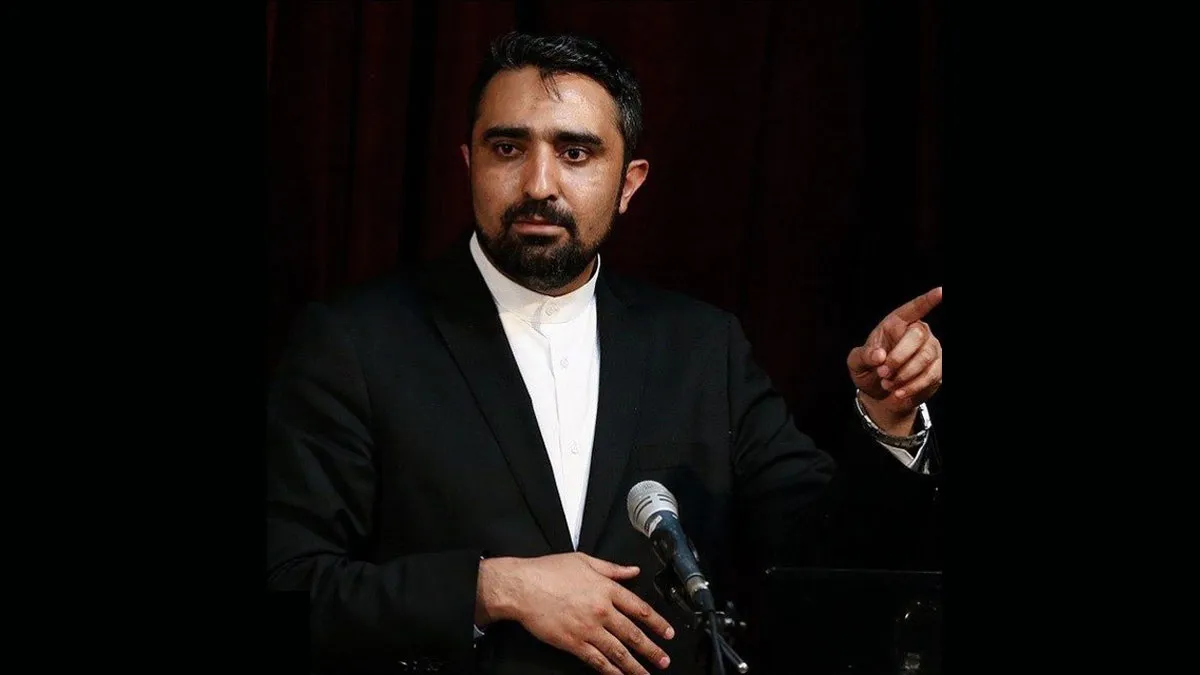
Dr. Saleh Eskandari—a political science researcher, university professor, political analyst, and media executive—is a prominent figure among the mid-generation of active conservatives (Osoolgarayan) within contemporary Iran's academic and media landscapes. Positioning himself as a primary authority for the moderate conservative discourse over the past two decades, Eskandari possesses a unique dual academic background, holding both a Bachelor's and Master's degree in Political Science from Imam Sadiq University, alongside a PhD in Communications from Tarbiat Modares University. This training supports his extensive portfolio in media and research management, which includes executive and editorial leadership roles across the Resalat daily newspaper, Adineh weekly magazine, the Zharfa Center, the Sadid Center, and the central apparatus of the Islamic Azad University, alongside his consistent and visible presence as a public analyst and institutional debater.
Who is Saleh Eskandari?
Dr. Saleh Eskandari is an Iranian political science researcher, university professor, political analyst, and media executive. He is widely recognized as a prominent figure among the mid-generation of active conservatives (Osoolgarayan) within contemporary Iran's academic and media landscapes.
Positioning himself as a key authority for moderate conservative discourse over the past two decades, Eskandari possesses a unique dual academic background: a Bachelor's and Master's degree in Political Science from Imam Sadiq University, combined with a PhD in Communications from Tarbiat Modares University. This interdisciplinary training sits at the exact intersection of political theory and media communication, heavily shaping his career across central think tanks, traditional conservative press rooms, university media empires, and high-profile public debates.
Higher Education and Interdisciplinary Background
Eskandari’s academic trajectory blends two highly strategic fields within the Islamic Republic’s specialized cadre-training institutions:
M.A. in Political Science: Obtained from Imam Sadiq University, the premier academic hub established by Ayatollah Mohammad-Reza Mahdavi Kani to train specialized state administrators. The university is renowned for synthesizing modern social sciences with Islamic foundations, heavily aligning its student body with conservative intellectual thought.
PhD in Communications: Obtained from Tarbiat Modares University, one of Iran's elite postgraduate research institutions. This degree equipped him with advanced methodologies in discourse analysis, media management, and communication models.
This dual background provides Eskandari with a multifaceted framework to analyze the deep-seated connections between state power, media discourse, and public communication.
Media Management and Press Portfolio
Eskandari has directed or heavily influenced several foundational press organs associated with traditionalist and moderate conservative factions in Iran:
The Resalat Daily Newspaper
Eskandari spent years serving as the Political Editor and a member of the Editorial Board for Resalat. Established in 1986 by senior conservative figures such as Morteza Nabavi, Resalat is historically recognized as the official organ of the Islamic Coalition Party (Hezb-e Mo'talefeh-ye Eslami), representing the traditional merchant (bazaar) and clerical conservative alliance. His time there allowed him to systematically formulate the public political stances of traditionalist conservatives.
The Islamic Azad University Media Empire
In May 2017, following structural shifts inside the Islamic Azad University (IAU)—prompted by the passing of its long-time trustee head, Akbar Hashemi Rafsanjani, and the appointment of Ali Akbar Velayati as the Chairman of the Board of Trustees—Eskandari was appointed as the Director General of Public Relations and Media Affairs for the entire university system under interim head Ali-Mohammad Noorian. This massive appointment put him in direct executive control of one of Iran’s largest media conglomerates, overseeing:
The Farhikhtegan Newspaper: A high-circulation daily that serves as a core platform for moderate-conservative cultural and socio-political discourse.
ANA News Agency & ISCA News: Strategic digital news platforms catering to general and university-specific media landscapes.
Additional Press and Ministerial Roles
He has also served as the Editor-in-Chief of the Adineh weekly magazine and functioned as a senior advisor to the Director General of the Media Studies and Development Center under the Ministry of Culture and Islamic Guidance.
Think Tank and Strategic Research Portfolios
Parallel to his operational media roles, Eskandari has held strategic positions within major national think tanks and policy research centers:
Expediency Discernment Council: He served as the Secretary of the Political Working Group within the central Center for Strategic Research (Markaz-e Tahghighat-e Estratezhik), an influential advisory body previously directed by figures like Hassan Rouhani.
Sadid Center: He has headed the Sadid Smart Communication Studies Center, focusing on media effects and modern communications.
Zharfa Center: He served as the head of the Zharfa Strategic and Futures Studies Center, an active conservative-leaning think tank focusing on strategic domestic policy forecasting.
High-Profile Debates and Media Presence
Eskandari is a widely recognized face on national television, having hosted or appeared as an expert analyst on at least 100 political broadcasts for Islamic Republic of Iran Broadcasting (IRIB).
Beyond broadcasting, he has established himself as a frontline campus debater representing the intellectual right wing against prominent reformist critics. A notable example occurred on April 19, 2025 (30 Farvardin 1404 SH), at Shahid Beheshti University, where Eskandari engaged in a highly publicized university debate with Dr. Sadegh Zibakalam (the veteran Tehran University political science professor) on the topic of "Agreement or War?!"—addressing the highly tense state of Iran-US relations during Donald Trump's second presidential term. The event became one of the most widely covered and analyzed academic debates of that year.
Academic Research and Methodology
In his academic capacity, Eskandari utilizes qualitative communication models to analyze domestic political dynamics. His notable research paper, "Examining the Impact of the Social Agency of the Leadership Persona on Political Approach Before and After the 2009 Elections," employs textual discourse and thematic analysis across 30 major public speeches delivered by the Supreme Leader of Iran. His research advances the structural thesis that the political action and state structure of post-revolutionary Iran are continuously shaped by the social agency of the leadership persona, rather than being merely reactive to external political events.
Intellectual and Alignment Frameworks
Traditional-Moderate Conservative: Eskandari represents the intellectual modernization of the traditionalist right wing (Osoolgaraye Sonnati), bridging the old-guard hube of the Islamic Coalition Party with modern media and communication tactics.
Leader-Centric Analytical Model: His analytical framework views the directives and persona of the leadership as the primary driving force in shaping domestic policy, cultural resistance, and systemic stability.
Strategic Pragmatism in Foreign Affairs: During his public debates, Eskandari typically champions a highly cautious, deterrence-first approach toward international agreements and Western negotiations, a stance that mirrors the core philosophy of the moderate conservative mainstream.
Conclusion
Dr. Saleh Eskandari stands as a textbook example of the "analyst-manager" within contemporary Iranian institutional governance. By transitioning seamlessly between drafting political editorials, lecturing on public policy, directing vast university media networks, and stepping into tense academic debate stages, he has emerged as a key intellectual voice for his generation. Backed by his foundational credentials from Imam Sadiq University and Tarbiat Modares, his career illustrates how traditional conservative thought in Iran actively employs advanced communication and media frameworks to navigate modern political and geopolitical challenges.
Frequently Asked Questions (FAQs)
Who is Dr. Saleh Eskandari? Dr. Saleh Eskandari is an Iranian political scientist, university lecturer, media executive, and prominent moderate-conservative analyst who serves as the Director General of Public Relations and Media for the Islamic Azad University.
What are his specific educational qualifications? He holds a Bachelor's and Master's degree in Political Science from Imam Sadiq University and a PhD in Communications from Tarbiat Modares University.
Which major media assets has he managed? He has served as the Political Editor of the Resalat daily newspaper and directly oversees the Islamic Azad University media network, which includes the Farhikhtegan daily newspaper, ANA News, and ISCA News.
What was his notable debate with Sadegh Zibakalam about? In April 2025, Eskandari and reformist scholar Sadegh Zibakalam held a major televised and recorded university debate at Shahid Beheshti University entitled "Agreement or War?!", analyzing Iran's strategic foreign policy options and diplomatic deterrence.
What is his ideological faction within Iranian politics? Eskandari is aligned with the mid-generation of the moderate traditionalist conservative (Osoolgara) faction, maintaining strong historical ties to the political frameworks of the Islamic Coalition Party.


Take less than a minute, register and share your opinion under this post.
Insulting or inciting messages will be deleted.
Sign Up