
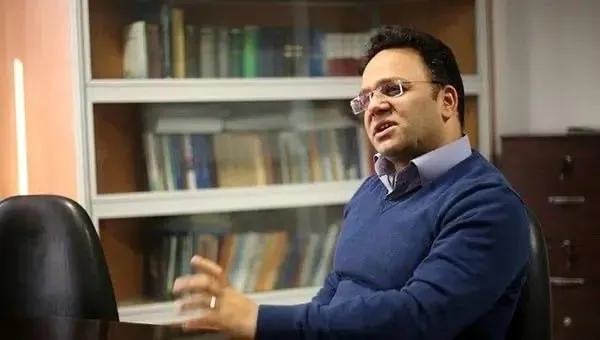
Dr. Rahman Ghahremanpour—a senior researcher in international relations and foreign policy expert—is one of the long-standing and well-known analysts of international affairs in contemporary Iran. Backed by a dual educational background in applied physics and a PhD in international relations, his career features a history of collaboration with the nuclear negotiating team in the early 2000s and directing the Disarmament Studies Group at the Center for Strategic Research of the Expediency Discernment Council. Having navigated the experience of a three-year detention and imprisonment during the 2010s, Ghahremanpour is regarded today as a reference expert in analyzing the dynamics of Iranian diplomacy. In this article, Abdi Media, in addition to a detailed examination of his career and views, presents his exclusive video analysis regarding the prospective scenarios facing Iranian and US diplomacy.
Who is Rahman Ghahremanpour?
Dr. Rahman Ghahremanpour—a senior researcher in international relations, international affairs analyst, and foreign policy expert, born in 1976—is one of the most long-standing yet widely discussed figures among the mid-generation of international relations experts in contemporary Iran. With a unique combination of a dual academic background (a Bachelor's degree in Applied Physics from the University of Urmia and a PhD in International Relations from Shahid Beheshti University), practical experience in Iran's diplomatic-strategic institutions (specifically joining the Islamic Republic's nuclear negotiating research team around 2000 through Hossein Mousavian), and subsequently heading the "Disarmament Studies" group at the Center for Strategic Research of the Expediency Discernment Council during Hassan Rouhani's presidency of the center, Ghahremanpour has become a prominent reference for analyzing Iranian foreign policy.
The significance of Rahman Ghahremanpour in Iran's analytical sphere can be examined from several perspectives. First, his combined career spans both the academic-research and analytical-media domains; alongside his university activities and publishing scientific articles in specialized journals, he has become a frequently featured analyst across Iran's major media outlets. Second, his highly publicized judicial case—in which he was arrested in June 2011 on charges of publishing articles in foreign English-language journals and participating in international conferences, and was ultimately released from Evin Prison on June 20, 2014, after serving his sentence—stands as a prominent example of the pressures faced by Iranian academic researchers due to international scientific engagements. Third, his ties to key figures in Iran's nuclear negotiations—from Hossein Mousavian (who connected him to the nuclear team) to Hassan Rouhani (who appointed him to direct the Disarmament Studies group at the Center for Strategic Research)—place him at the intersection of Iranian research and nuclear diplomacy.
Currently, Ghahremanpour continuously provides analysis as a reference expert for a wide spectrum of Iranian media platforms, including Donya-e-Eqtesad, Etemad Online, Jamaran, EcoIran, Ensaf News, Farhikhtegan, the Strategic Council on Foreign Relations, Iranian Diplomacy, Mosallas, and others. His areas of expertise encompass Iran's foreign policy, the nuclear negotiations and the JCPOA, Iran-US relations, Iran-China relations, Middle Eastern developments, the Caucasus, the war in Ukraine, and Hamas-Israel dynamics.
Life and Background
Rahman Ghahremanpour was born in 1976—a generation born during the tense years preceding the victory of the 1979 Islamic Revolution, spending childhood and adolescence amid the events of the Iran-Iraq War and the subsequent post-war reconstruction era.
While published information regarding Ghahremanpour's birthplace and family remains limited in open media sources, his undergraduate studies at the University of Urmia point to his ties to northwestern Iran—likely West Azerbaijan Province.
Education
Rahman Ghahremanpour's educational path is one of the most unique among Iranian political science analysts, combining two entirely distinct specialized fields from basic sciences to political science:
Bachelor's Degree in Applied Physics from the University of Urmia: Ghahremanpour pursued his initial university education in applied physics at the University of Urmia, one of the primary universities in northwestern Iran. This technical-scientific background is relatively rare among Iranian political analysts and provided him with a distinct cognitive framework in analytical methodology.
PhD in International Relations from Shahid Beheshti University: Following a shift in his intellectual and professional trajectory, Ghahremanpour moved from applied physics to political science and international relations, ultimately earning his PhD in International Relations from Shahid Beheshti University—one of Iran's most prestigious institutions in the field of political science.
The combination of these two specializations—applied physics and international relations—granted Ghahremanpour a unique ability to grasp the technical-scientific frameworks of nuclear issues while simultaneously understanding their international political dimensions; a characteristic that was deeply reflected throughout his subsequent career, particularly within the Disarmament Studies group.
Activity in the Nuclear Negotiating Team (From 2000)
A turning point in Ghahremanpour's professional career was his entry into the research group of the Islamic Republic's "nuclear negotiating team" in the early 2000s (around the year 2000). This connection was facilitated by Hossein Mousavian—one of Iran's chief nuclear negotiators during the Khatami administration and later an advisor to Rouhani's office.
This role placed Ghahremanpour at the heart of contemporary Iran's most critical diplomatic file—the Iranian nuclear issue—and familiarized him with Iran's high-level strategic-diplomatic structure. This experience formed the foundation of his expertise in international negotiations and disarmament issues in the years that followed.
Directorship of the Disarmament Studies Group at the Expediency Council
A few years after joining the nuclear team, Ghahremanpour was appointed as the director of the "Disarmament Studies" group at the Center for Strategic Research of the Expediency Discernment Council. This appointment took place during the era when Hassan Rouhani presided over the Center for Strategic Research—a center considered one of Iran's most vital think tanks and strategic hubs in foreign policy.
This position placed Ghahremanpour at the helm of one of Iran's most specialized research groups focusing on disarmament, weapons of mass destruction, and arms control—an area of immense strategic importance for a country with a sensitive nuclear file. The blend of his applied physics background and international relations expertise made him one of Iran's few uniquely qualified specialists to lead this group.
Judicial Case (2011–2014)
A highly publicized chapter of Ghahremanpour's career was his arrest and imprisonment between 2011 and 2014. This event occurred within the tense atmosphere following the 2009 Green Movement events and during the administration of Mahmoud Ahmadinejad.
Arrest in June 2011
Ghahremanpour was arrested in June 2011 on charges including:
Publishing articles in foreign English-language journals
Participating in international conferences
These charges, which in contemporary Iranian judicial rhetoric are often interpreted as potential indicators of cooperation with foreign states, were brought against Ghahremanpour while he was an active researcher at an official state institution (the Center for Strategic Research of the Expediency Council) and a university lecturer. This contradiction stood out as one of the most remarkable aspects of his case.
His case took place against a broader backdrop of pressure exerted on Iranian political science and international relations researchers due to their academic engagements with Western research centers—a phenomenon repeated frequently during the Ahmadinejad administration and in subsequent years.
Imprisonment in Ward 350 of Evin
Ghahremanpour served his sentence in Ward 350 of Evin Prison—the specialized ward for political and ideological prisoners. In the years following the 2009 events, this ward had become a hub for Iran's prominent intellectual and political inmates.
Release on June 20, 2014
Conclusively, on Friday, June 20, 2014—after approximately three years of imprisonment—Ghahremanpour was released from Ward 350 of Evin Prison upon the completion of his sentence. His release occurred during the presidency of Hassan Rouhani—the very individual who, during his tenure at the Center for Strategic Research, had appointed Ghahremanpour to lead the Disarmament Studies group.
Post-Prison Activities
Following his release, and despite his harsh prison experience, Ghahremanpour vigorously resumed his analytical and media activities, emerging as one of the most frequently featured international affairs analysts in the Iranian media.
Presence in Major Media Outlets
In recent years, Ghahremanpour has provided analysis across a broad spectrum of prominent Iranian media—encompassing reformist, moderate, and even moderate-conservative outlets: Donya-e-Eqtesad (a leading economic daily), Etemad Online (a reformist daily), Jamaran (a media outlet close to the household of Ayatollah Khomeini), EcoIran (an economic media platform), Ensaf News (a reformist news agency), Farhikhtegan (a daily close to the moderate Principalist movement), the Strategic Council on Foreign Relations (a semi-official think tank), Iranian Diplomacy (a specialized international relations platform), and the weekly magazine Mosallas.
This media diversity demonstrates the widespread acceptance of Ghahremanpour's expert credibility across various intellectual and political factions in Iran.
Specialized Panels
Ghahremanpour regularly serves as a keynote speaker at specialized panels hosted by Iranian think tanks, including the Institute for Strategic Research, the Think Tank for Governance Studies and International Relations, and the Center for Strategic Studies of the Presidency. An example of these engagements includes the strategic event series titled "The Outlook of the Islamic Republic of Iran's Foreign Relations in the Fifth Step of Reducing Nuclear Commitments," held alongside figures such as Dr. Ebrahim Mottaqi (Professor of Political Science at Tehran University) and Dr. Ali Khorram (Iran's former Ambassador to the UN Office in Geneva).
Scientific-Academic Articles
In the academic sphere, Ghahremanpour has published numerous scientific articles in specialized Iranian journals, such as International Studies, Strategic Studies, and Rahبرد (Strategy). The primary focus areas of these articles include Iranian foreign policy, US-Iran relations, international security issues, the Middle East, and North America.
Views and Positions
Throughout his analytical career, Rahman Ghahremanpour has formulated a clear intellectual framework trackable across several core themes:
The Idealism-Realism Framework in Iranian Foreign Policy
One of Ghahremanpour's most vital theoretical theses is the dual theory of "Idealism-Realism" in Iranian foreign policy. In one of his core papers (International Studies, 2006), he stated: "It appears that Iranian foreign policy has consistently been influenced by idealism in the domestic environment and realism in the external environment." In his view, "the domestic environment and its political developments, driven by historical and cultural factors, have defined idealism, ambition, and becoming a dominant power as the primary role of foreign policy, whereas the external environment and its developments have acted as a barrier against this ambition."
This framework stands as one of Ghahremanpour's most important theoretical interventions in understanding the structural tension within Iranian foreign policy.
Analysis of US-Iran Negotiations
Ghahremanpour's most central analytical focus is US-Iran negotiations. Over recent years, his consistent analyses have dissected the complex dynamics of these talks. In a recent analysis, he stated: "Trump is moving toward a moderate agreement with Iran." In another analysis, he noted: "Events over the next two weeks will clarify the picture of whether we are moving along the path of an agreement or..."—reflecting his cautious approach to predicting outcomes.
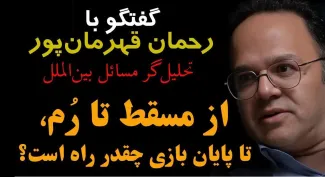
Exclusive Analysis: From Muscat to Rome; How Far to the End of the Game?
In an exclusive video and analysis for Abdi Media titled "From Muscat to Rome; How Far to the End of the Game? Iran and the US on the Complex Path of Diplomacy," Rahman Ghahremanpour dissects the latest signals exchanged between Tehran and Washington.
Stance on the Vienna Talks
Regarding the Vienna talks aimed at reviving the JCPOA, Ghahremanpour has adopted a balanced approach. In one of his notable positions, he stated: "When Mr. Raisi took office, the expectation of the negotiating parties was that the winning faction..." During the Biden administration, he maintained: "The Biden administration, regarding the equation of the Vienna talks and the JCPOA revival process, has completely resorted to..."—an analysis illustrating his complex view of international power dynamics.
Analysis of Iran-China Relations
One of Ghahremanpour's specialized areas is the analysis of Iran-China relations. In his view, China's regional approach—specifically Beijing's alignment with Arab nations (particularly Saudi Arabia)—"does not necessarily mean distancing itself from Iran." This position, which stands in contrast to analysts who view this alignment as China turning its back on Tehran, showcases his critical, multi-dimensional perspective on Eastern diplomacy.
Perspective on the "Look to the East" Policy
While other analysts like Mohammad Bayat criticize the "Look to the East" policy, arguing that "disrupting the traditional political balance by prioritizing an Eastern focus in foreign policy and alienating the West has caused Iran to put all its eggs in one basket," Ghahremanpour similarly maintains a cautious outlook toward this approach.
Views on Hamas and Israel
In analyzing the developments between Hamas and Israel, Ghahremanpour maintains a guarded approach. In a key commentary, he stated: "It is not just The New York Times; various outlets have written analyses on why Hamas was able to resist. Admitting to Hamas's strength does not mean stating that Israel has been defeated." This position highlights his capacity to provide balanced analysis detached from polarization.
Analysis of the Caucasus
In the Caucasus region, Ghahremanpour posits: "The main issue in the Caucasus is Russia's inability to make a definitive decision. Iran was caught by surprise in [recent] years." This view underscores his structural outlook on regional developments.
Analysis of the IRGC Terrorist Listing
In a prominent commentary on the negotiations, he noted: "Removing the Islamic Revolutionary Guard Corps from the so-called US terrorist list, though only one of the disputed items in the Vienna talks, is nevertheless..."—indicating his attention to the sensitive details of the negotiations.
Narrative on Pezeshkian's Victory
Following the 2024 presidential election, Ghahremanpour published a prominent Telegram note detailing why Masoud Pezeshkian won the vote—a piece that received widespread coverage across reformist media.
Relationship with Figures and Movements
Throughout his extensive career, Rahman Ghahremanpour has been connected to a network of leading figures in Iranian diplomacy and foreign policy. At the core of this network sit Hossein Mousavian (who brought Ghahremanpour into the nuclear team) and Hassan Rouhani (who appointed him to direct the Disarmament Studies group at the Center for Strategic Research). These two figures played a foundational role in shaping Ghahremanpour's professional path.
At the academic level, his connections to figures such as Dr. Ebrahim Mottaqi (Professor of Political Science at Tehran University) and Dr. Ali Khorram (former Iranian Ambassador to Geneva)—alongside whom he has appeared on numerous specialized panels—constitute his key professional ties.
Institutionally, his primary affiliations include the Center for Strategic Research of the Expediency Council, the Strategic Council on Foreign Relations, the Institute for Strategic Research, and the Think Tank for Governance Studies and International Relations.
Conclusion
Dr. Rahman Ghahremanpour is one of the most experienced yet multi-faceted figures among the mid-generation of international relations experts in contemporary Iran. He occupies a distinct position through a unique combination of a dual academic background (Applied Physics + International Relations), practical experience within Iran's nuclear diplomatic framework (as a member of the nuclear negotiating research team since circa 2000), strategic-research responsibilities (directing the Disarmament Studies group at the Center for Strategic Research), and concurrently, his harsh experience of imprisonment (three years in Ward 350 of Evin Prison between 2011 and 2014). His career pathway—from his birth in 1976, studying applied physics in Urmia, earning a PhD in International Relations from Shahid Beheshti University, joining the nuclear team via Mousavian in 2000, directing the disarmament group under Rouhani's tenure at the CSR, his arrest in June 2011 for publishing articles in foreign journals, his release on June 20, 2014, and ultimately his strong return to the analytical sphere through continuous features in Iran's leading media—presents the portrait of a seasoned researcher-analyst navigating complex and thought-provoking experiences.
The defining characteristic of Ghahremanpour, at the primary level, is his dual technical and political science background; a trait where the fusion of an applied physics foundation with international relations expertise has given him a unique capacity to analyze both the technical and political dimensions of nuclear and disarmament issues. This combination is rare among Iranian foreign policy analysts. At the secondary level, his ability to maintain expert credibility across a vast array of Iranian media—from reformist to moderate and moderate-conservative—highlights his widespread acceptance.
From an analytical standpoint, Ghahremanpour's position serves as an example of the "independent post-prison researcher-analyst" phenomenon in contemporary Iran; a dynamic where an academic researcher, after experiencing judicial pressure and imprisonment, does not recede from public activity but instead evolves into a reliable reference for analysis. This phenomenon, repeated among several contemporary Iranian figures, finds a enduring example in Ghahremanpour.
What remains clear from today's perspective is that the topics Ghahremanpour focuses on in his analyses—ranging from nuclear talks and the JCPOA, US-Iran relations, Middle Eastern shifts, Iran-China ties, the Caucasus, Ukraine, and global power dynamics—remain the most vital subjects of debate within contemporary Iranian foreign policy discourse. At a time when Iran finds itself in one of its most delicate foreign policy periods—particularly concerning potential talks with the Trump administration—Ghahremanpour's expert analytical voice, blending academic backing with practical experience within Iran's diplomatic framework, will continue to serve as a primary reference for this dialogue.
Frequently Asked Questions (FAQs)
Who is Rahman Ghahremanpour?
Dr. Rahman Ghahremanpour (born in 1976) is a senior researcher in international relations and a leading analyst of Iranian foreign policy issues. He holds a Bachelor's degree in Applied Physics from the University of Urmia and a PhD in International Relations from Shahid Beheshti University. His specialized areas include Iranian foreign policy, nuclear negotiations and the JCPOA, US-Iran relations, Iran-China relations, the Middle East, the Caucasus, and Hamas-Israel issues.
What is Rahman Ghahremanpour's educational background?
Ghahremanpour followed a highly unique educational path: a Bachelor's degree in Applied Physics from the University of Urmia, followed by a PhD in International Relations from Shahid Beheshti University. This dual combination—basic sciences + political science—has given him a unique ability to analyze the technical and political dimensions of nuclear and disarmament issues.
What was Ghahremanpour's role in the Islamic Republic's nuclear team?
Around the year 2000, Ghahremanpour joined the research group of the Islamic Republic's "nuclear negotiating team" through Hossein Mousavian (a chief nuclear negotiator during the Khatami administration). Years later, during Hassan Rouhani's presidency of the Center for Strategic Research of the Expediency Council, he was appointed as the director of the center's "Disarmament Studies" group—one of Iran's most specialized research bodies in disarmament and arms control.
Why was Rahman Ghahremanpour arrested?
Ghahremanpour was arrested in June 2011 on charges of "publishing articles in foreign English-language journals and participating in international conferences"—charges that are typically interpreted within contemporary Iranian judicial rhetoric as potential indicators of collaboration with foreign states. This arrest took place while he was a researcher at an official state body (the CSR) and a university lecturer.
When was Rahman Ghahremanpour released from prison?
Ghahremanpour served his sentence in Ward 350 of Evin Prison—the ward designated for political and ideological prisoners—and was released on Friday, June 20, 2014, upon completing his sentence. His release occurred during the second year of Hassan Rouhani's presidential administration.
What is Ghahremanpour's intellectual framework for analyzing Iranian foreign policy?
One of Ghahremanpour's most vital theoretical concepts is the dual theory of "Idealism-Realism." Within this framework, he argues that "Iranian foreign policy has consistently been influenced by idealism in the domestic environment and realism in the external environment." In his view, domestic shifts drive ambition, while the external environment acts as a barrier against it.
In what media outlets is Ghahremanpour active?
Ghahremanpour provides analysis across a wide range of leading Iranian media, including: Donya-e-Eqtesad, Etemad Online, Jamaran, EcoIran, Ensaf News, Farhikhtegan, the Strategic Council on Foreign Relations, Iranian Diplomacy, and the weekly magazine Mosallas. This diversity reflects the broad acceptance of his expertise across differing political lines.
What is Ghahremanpour's view on Iran-China relations?
In the realm of Iran-China relations, Ghahremanpour maintains a critical and multi-dimensional approach. Contrary to analysts who view Beijing's alignment with Arab states (especially Saudi Arabia) as "China turning its back on Iran," he argues that this alignment "does not necessarily mean distancing itself from Iran," showing his structural and non-polarized view of Iran's Eastern diplomacy.
Is Rahman Ghahremanpour still active?
Yes, Ghahremanpour is one of the most active international affairs analysts in the Iranian media. He regularly features as a keynote speaker at specialized think tank panels (such as the Institute for Strategic Research and the Strategic Council on Foreign Relations), publishes analytical articles and Telegram updates, and addresses contemporary foreign policy topics—from talks with Trump to regional shifts—across major Iranian outlets.


Take less than a minute, register and share your opinion under this post.
Insulting or inciting messages will be deleted.
Sign Up