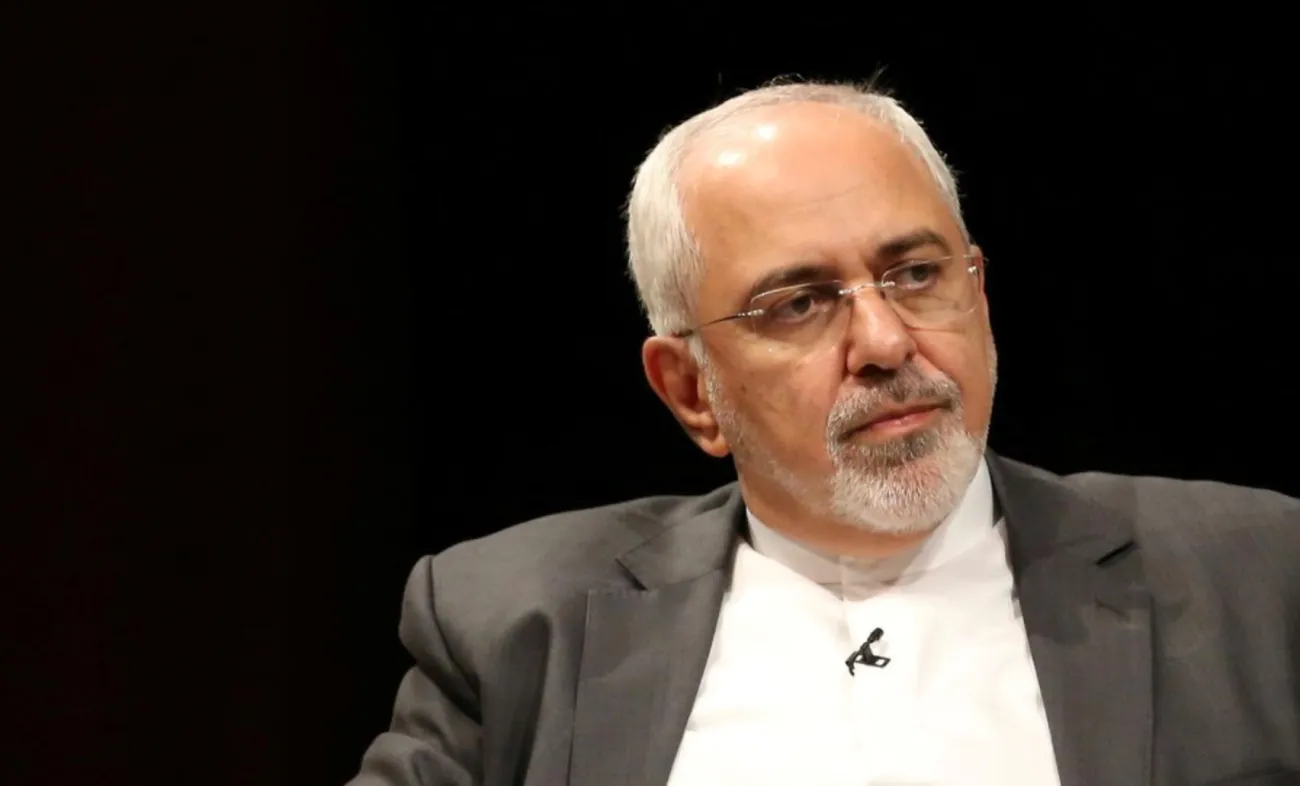
Mohammad Javad Zarif, the former Foreign Minister, in a note titled "The Flight of the Iranian Simorgh" in the "Payab Think Tank" magazine, emphasizing that the signing of the Memorandum of Understanding between the presidents of Iran and the U.S. has created a historic and time-sensitive opportunity for diplomacy, called for utilizing this opportunity.
Zarif wrote: The failure of the U.S. and Israel to achieve their objectives in the two recent wars, along with the signing of the Memorandum of Understanding between the presidents of Iran and the U.S. on June 17, 2026, has opened an exceptional window for diplomacy. This opportunity is time-sensitive; if Iran does not reach a final agreement within the specified timeframes (especially the proposed sixty-day period), economic recovery will be difficult, and the possibility of internal unrest or renewed aggression, especially after the U.S. elections, cannot be ruled out.
In this article, Mohammad Javad Zarif, by proposing a strategy of "comprehensive balance" based on strengthening relations with neighbors, China, Russia, and Europe, has emphasized the necessity of transitioning from a "threat-oriented" view to an "opportunity-oriented" view in domestic and foreign policy.
The text of this article states:
The failure of the U.S. and Israel to achieve their objectives in the two recent wars, along with the signing of the Memorandum of Understanding between the presidents of Iran and the U.S. on June 17, 2026, has opened an exceptional window for diplomacy. This opportunity is time-sensitive; if Iran does not reach a final agreement within the specified timeframes (especially the proposed sixty-day period), economic recovery will be difficult, and the possibility of internal unrest or renewed aggression, especially after the U.S. elections, cannot be ruled out.
In the current "post-polar" world, the U.S. is in decline, and no power—neither the U.S. nor others—has the ability to play the role of a global or regional hegemon; America's failure in the two recent confrontations with Iran is evidence of this trend. However, contrary to expectations, Russia and China neither became Iran's allies nor provided meaningful cooperation in these two wars. UN Security Council Resolution 2817 against Iran, despite undermining the UN's credibility, showed that even 136 countries from the Global South did not shy away from aligning with the aggressors; the result is that even Iran's friends in the Global South are currently reluctant to openly support Iran against the U.S. and the West.
Three key opportunities arising from the Memorandum of Understanding can be identified:
1. The will and ability of the people and the system to resist: The predictions of Netanyahu and Trump regarding military incapability, internal rebellion, or territorial collapse of Iran in less than a week, despite the martyrdom of the Leader and senior commanders, were proven wrong. The inclination of Israel's closest ally in the Persian Gulf toward Iran is a sign of the effectiveness of this leverage.
2. The lack of homogeneity in the objectives of regional actors and even the U.S. and Israel: "Alignment" is not the same as "homogeneity." Netanyahu, in the period between the two wars, managed to poison the minds of Trump and some regional leaders regarding the Iranian people's alignment with the aggressors by exploiting the catastrophes of December 2025 and to draw Trump into the Ramadan War. However, the U.S. has now realized that the collapse of Iran's system—even if possible—would mire it in West Asia for a long time and prevent it from achieving its strategic goal of containing China. The "Israel First" policy in the U.S. is being exposed, and regional countries have realized that they are merely "shields" for Israel.
3. The Strait of Hormuz leverage: Iran demonstrated in the recent war that it has the will and capability to implement its decades-old threat regarding the Strait of Hormuz; the principle is that "the Strait of Hormuz is either for everyone or for no one."
None of these three leverages are permanent: prolonged closure of the Strait or its short-term exploitation would create a global consensus against Iran (even with China); the continuation of unmanaged tensions would also give Israel and its lobby the opportunity to downplay the fundamental differences in their objectives with the U.S.
a) Institutionalizing the Narrative of Achievements
A "patriotic narrative" of achievements must be created immediately to prevent the polarization of society after the MoU. This narrative should be based on a "leap forward from a position of self-confidence," not a return to the past or retreat. Iran's concern for territorial security is 220 years old; for the first time since the era of Fath-Ali Shah (1804 AD), Iran was able to defend its territory despite the support of great powers for the aggressor, in the 12-day war and the Ramadan War, and to prevent the aggressors from achieving their objectives. This is Israel's "incapacity" and the defeat of two nuclear powers, and it should not be allowed to be reduced to a narrative of "humiliation" or "regret."
b) Ending Threat-Orientation and Beginning Opportunity-Orientation.
Iran is the "oldest state-civilization," and the long history of foreign invasions has institutionalized a threat-oriented mindset in the individual and social psyche of Iranians. Now that the era of "confrontation" has ended, this view must be replaced with an opportunity-oriented approach; not just in slogans, but in the government's behavior toward the people and in foreign policy.
Belief in the people as the main pillar of deterrence, leniency toward citizens, and strengthening civil society and the private sector are the domestic prerequisites for this leap, along with confronting the "infiltration organization" in the country. At the global level, diplomacy should be considered one of the main pillars of national security and a central tool for returning Iran to the global value chain.
c) Comprehensive Balance and Multifaceted Opportunity-Oriented Diplomacy
In the traditional view, diplomacy has been used only in existential crises and as "eating carrion," and has been set aside after the danger is removed—from the hostage crisis to the JCPOA. The recent MoU is an "opportunity," not an "imposition."
The proposed strategy of "comprehensive balance" focuses on:
• Neighbors: Utilizing the leap in Iran's position in the Islamic world after the Ramadan War and creating a multilateral coalition with a central core of Iran, Turkey, Saudi Arabia, Egypt, and Pakistan, along with Qatar, Oman, Indonesia, and Malaysia, to politically counter the "Greater Israel" plan.
• Russia and China: Cooperation should be based on the authenticity of ties, not Iran's need and helplessness; China is a more key partner due to its technological and economic position.
• Europe: Restoring relations is essential, although Europe's "strategic autonomy" is limited in practice and dependent on U.S. policy.
• Managing Tensions with the U.S.: This is the main prerequisite for realizing other global ties, because without it, even Iran's allies will refrain from costly cooperation.
The negotiation files are divided into three categories:
1. Unchangeable identity files (political independence, non-recognition of Israel in the face of domination and U.S. support for Israel), which should be managed through agreement on red lines, not full resolution—for example, mutual commitment to non-aggression and Iran's removal from the list of state sponsors of terrorism.
2. Short-term cooperation files such as Iraq, Afghanistan, drugs, migration, and scientific cooperation, which can be managed through continuous dialogue and possibly the reopening of interests sections.
3. Manageable dispute files such as sanctions, the nuclear file, and the missile file, the key to resolving which is reaching a common framework on enrichment and the lifting of nuclear sanctions in exchange for ratifying the Additional Protocol.
The Strait of Hormuz should be presented as Iran's "gain" in the negotiations, not a free concession; any one-sided concession without a return—such as the past voluntary restriction on the range of missiles—only loses this leverage without result.
The future is built only by reconciling with the past, learning from it, and setting aside incorrect narratives. After the JCPOA, the destruction of diplomacy was also put on the agenda; over-reliance on military assessments and securitizing all affairs has been a factor in distancing the people from the government and expanding foreign influence.


Take less than a minute, register and share your opinion under this post.
Insulting or inciting messages will be deleted.
Sign Up