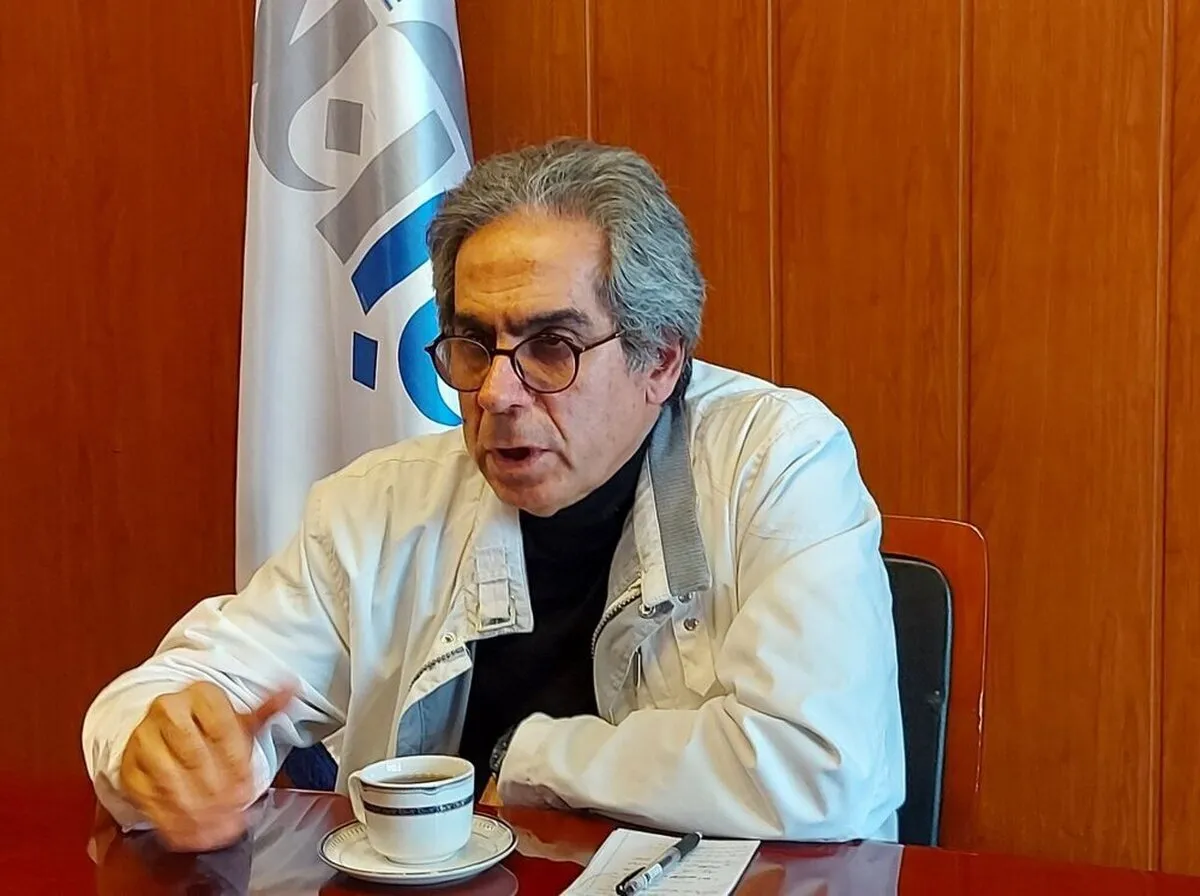
Home / Politics The discourse of the "Islamic Revolution" lacks the power and capability to guide society towards "structural reforms"! Read 2 minutes - Saturday 2024/11/30 - 15:45 News Code: 9026 Share We had over four hours of challenging dialogue on the topic of the "Islamic Revolution Discourse" in Clubhouse's "Voice of Tomorrow. Dr. Ahmad Bokharaei We had over four hours of challenging dialogue on the topic of the "Islamic Revolution Discourse" in Clubhouse's "Voice of Tomorrow." My main challenge was with the positions and conclusions of Dr. Bijan Abdolkarimi, although I also had differences with Dr. Soroush Dabagh. I argued that the discourse of the Islamic Revolution inherently conflicts with the process of rationality in ten key areas. These fundamental contradictions prevent us from acknowledging the effectiveness and applicability of the Islamic Revolution discourse.The first of these is the conflict of the Islamic Revolution discourse with the discourse of "Humanism" and human-centered thinking, using "Wilayat (guardianship)-centered nature." Second, the opposition to globalization, using the scope of Sharia and Islamic jurisprudence. Third, the conflict with rational-legal leadership, relying on charismatic leadership (on three levels: individual, intermediate, and macro). Fourth, the opposition to the gradual and evolutionary nature of historical events by resorting to revolution.The fifth inherent contradiction of the Islamic Revolution discourse with rationality is the conflict with the reality of ideological, generational, and ethnic diversity, resorting to enforced and rhetorical unity. Sixth, the opposition to pacifism by resorting to violence. Seventh, the opposition to Islamic quality-orientation by relying on Muslim quantity-orientation. Eighth, the conflict with democracy and secularism by resorting to the discourse emerging from the intersection of power and ideology. Ninth, the conflict with justice, resorting to justice-seeking slogans, meaning: justice, against justice. Finally, the tenth and last inherent distinction of the Islamic Revolution discourse with rationality is the conflict with cultural convergence in both material and immaterial aspects of culture, resorting to delaying cultural progress and the backwardness of the immaterial aspect of culture. Therefore, the discourse of the Islamic Revolution lacks the power and capability to lead society towards structural reforms. Take less than a minute, register and share your opinion under this post. Insulting or inciting messages will be deleted. Sign Up Comming Up Next Earlier, I replied to another user account about this claim. while paying attention to that note; Now we assume that this article or parts of it are true! خواندن 1 minute Seyyed Abbas Salehi had announced in a tweet the meaningful invitation of Seyyed Ali Khomeini by the third Supreme Leader of the Islamic Republic to the memorial service of Ayatollah Seyyed Ali Khamenei in Qom. خواندن 2 minutes First, determine whether there is a difference between a fatwa and a decree? First, specify whether it is an unannounced fatwa of the marja'iyat (religious authority) or a decree of the absolute Supreme Leader? خواندن 1 minute Did it become clearer? Politics is strangely cruel, one should not be fooled by targeted waves even now خواندن 1 minute Greetings Behrouz Khan. How about the rumors surrounding Saeed Jalili, the representative of the Supreme Leader of the Islamic Republic on the Supreme National Security Council, who also gave a speech at the Razavi Shrine and spoke of blood vengeance? خواندن 1 minute Most Read Memories of Akbar Hashemi - February 20, 2000 - Meeting with Abdullah Jasbi and Concerns About Election Results Movie / Where is Commander Morteza Talaie? Akbar Hashemi's memoirs - 1999 September 10 - The two-person political negotiations with Vaez Tabasi continued until he was escorted to Tehran, where Hashemi apparently decided to seriously participate in the sixth parliamentary elections. The records of the recent periods of the Islamic Council showed that the parliament is not in charge of affairs and cannot interfere or pass resolutions on the authority of the Commander-in-Chief of the Armed Forces at any level, let alone supervise. What will be the future of Iran with the announced candidates for the presidential election? / Conversation with Dr. Taghi Azad Aramaki Can I feel tired with you? A Basiji veterinarian was appointed head of the health network instead of an otolaryngologist. Akbar Hashemi's memoirs - 1999 September 5 - The meeting of the senior managers of the judiciary with Hashemi Rafsanjani and their complaint about the neglect of Hashemi Shahroudi, the new head of the judiciary, continues. Memories of Akbar Hashemi - 1999 September 7 - In continuation of the efforts of the late Vaez Tabasi, who used to encourage Hashemi to participate in the elections in frequent meetings, this time he also met with Hashemi. Akbar Hashemi's memories - 1999 September 9 - Continued visits to the belongings, buildings and works of Astan Quds