
If Akhund Ansari or a traditional cleric had been present at the marriage ceremony, the wedding proceedings would certainly have been accompanied by joy, jokes, and laughter. But for the revolutionary cleric, these things were considered frivolity and play, and seriousness everywhere was the essence of commitment and piety.
Rah va Rahavard
An Experience-Narrative of a Life
Mohammad Kianoush-Rad
Part Fifteen
**Politics Everywhere**
Sheikh Abdolhadi Karami had also come. It was the summer of 1977, the wedding ceremony of my sister Nahid and Sattar Akbarzadeh. The month of Tir in Ahvaz, fire was raining from the sky. As the Ahvazis say, it was the date-ripening season.
Akhund Ansari had recited the marriage sermon that same morning. In the afternoon, we washed the courtyard of the house. The courtyard was brick-paved, and after a while, when the courtyard was shaded, the air cooled a little. The scent of the warmed bricks was pleasant to me. We had placed two rows of folded Arj metal chairs facing each other. The invitees were few. Most of them were political friends. In that limited gathering and in the hot weather, two hand fans were of no use. The heat of the air, mixed with the heat of politics, had made the discussion boiling hot, but its result cooled our hearts.
My uncle Mohammad was the head of the confectioners of the Berim confectionery. In the confectionery they called him "Khalifeh." I do not know what the philosophy of this name was. My uncle had brought several boxes of sweets. Sattar too had bought two or three boxes of sweets from the "Negro" confectionery the night before. The Negro confectionery at the Statue Roundabout was also among the famous confectioneries of those days. The only joy of the gathering was eating sweets.
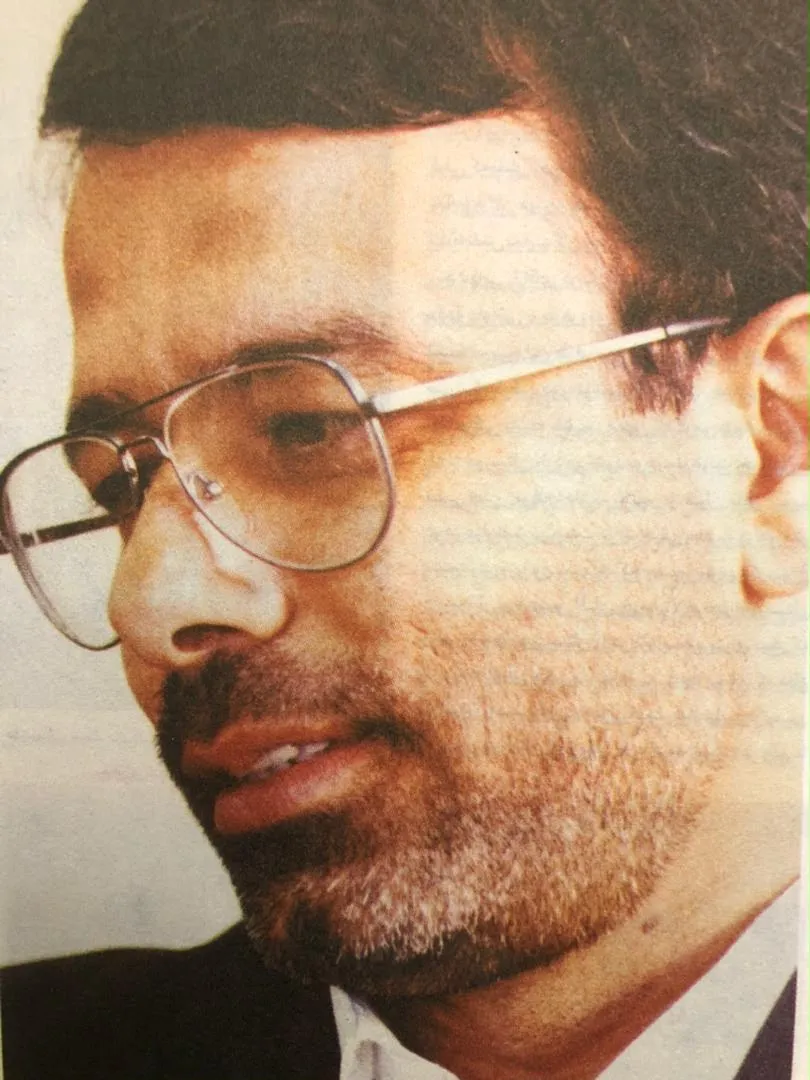
Hadi Karami came in an aba and turban. With a relatively stout physique. He walked agilely and quickly. He was handsome and had large eyes and a penetrating gaze. He had an attractive but serious face. Everyone was happy to see him.
They gathered around him. The gathering became political. Even at the wedding ceremony, there was political talk. They did not talk about fashion and cabarets and dancing and singing and cinema and so on. Even laughing and joy were considered ugly and reprehensible by most of the fighting religious people, and they deemed laughter and joking as frivolity and vain. There was no clapping and no music played.
If Akhund Ansari or a traditional cleric had been present at the marriage ceremony, the wedding proceedings would certainly have been accompanied by joy, jokes, and laughter. But for the revolutionary cleric, these things were considered frivolity and play, and seriousness everywhere was the essence of commitment and piety.
I remember precisely. I was a child when my cousin married. My aunt's small house was near our house. We had a large courtyard. The wedding ceremony was held in our house. They had brought gypsies. The gypsies played music and a young woman danced. I think some had also drunk a little. My mother objected a little. My father said: "Say nothing, it is a wedding after all. It will end now and they will leave."
We in that period were opposed to music. How much we did not understand. Gradually we changed and listened to some music. Especially when Shariati had praised Beethoven's Fifth Symphony, I was eager to understand what it was. I listened. I understood nothing. In a few cases, for example, when we heard Dariush's "Bouye Gandom" (Scent of Wheat), we would reflect a little. We did not say it was bad. Googoosh and Mahasti and Hayedeh and so on had their own place, and we considered them people of hell.
Many religious people spoke badly and abusively about Nematollah Aghasi. They hated him. The reason was his singing of the song "Ameneh Ameneh." But I did not dislike Aghasi. I liked that he made the people of the alley and the bazaar happy. A scene from the film "Nemat-e Nafti" was shot in the alley next to the Fatemiyeh Mosque, near the house, the railway track, and Mr. Shirkol's house.
Aghasi was shooting the scene of selling oil with a tin can and an oil-carrying cart. When the neighborhood kids saw Aghasi, they all remembered Sardar Rajabi. The day before, Sardar had suffered an epileptic seizure and fainted next to the railway track. Exactly where the scene of the film Nemat-e Nafti was being shot, he had fallen. His body was next to the railway track and one of his legs had remained on the rail. The train driver had certainly not seen him or the brakes had not worked. It had passed over his leg. It had been cut above his knee. That day, for the neighborhood kids, a scene of grief and joy was created together.
Years later, I went with one of my friends to Karaj to see Aghasi. He was sitting behind the table of his small and ordinary restaurant. Even the restaurant hall did not have enough and pleasant light. Aghasi's mood had cast a shadow over that space. He had become fat. Excessively. He was doing the work of the cash register and the accounts of the customers. I felt sorry for him. God had mercy, they did not execute him. He rose from his place with difficulty and paid his respects. A few months later, with difficulty and for the first time after the revolution, I brought him to Ahvaz and he sang. His sin is on my neck. I will tell the story in its time. Let me return to Hadi.
Hadi Karami did not fall short in discussion and speech. Abdullah Tarfavi, with his silent laugh and his usual shyness and modesty and respect, said: "The Sheikh goes to the pulpit everywhere. He is not to be let go either. From his view, everywhere is the place for expressing the revolutionary mission." He was revolutionary in the full sense. With a laugh and a joke he said: "The marriage of a Dezfuli girl with a Lor boy is a good thing. The wrong customs and traditions must be done away with."
Sattar was a kid from Rasvand of Izeh and was a student at the Agricultural Institute. At that time, neither I nor my family knew at all where Izeh was. The very fact that Sattar was religious and good friends had introduced him was enough for our family.
The Sheikh referred to the demeaning ethnic jokes. He was severely upset. He gave an example and said: "We must stand against this conspiracy. For example, they say the Arab in the desert is such and the Isfahani is such. These jokes are the conspiracy of the colonialists to separate people from one another." The Sheikh would say several "musts" in every sentence. He would instill his opinion with assertiveness and repeated "must," and the listener would fall silent.
His courage and recklessness had been proven to everyone. His intellectual power was evident. They said he was a student of Allameh Jafari. Whatever he considered right, he would not back down from it in the least. This same spirit created problems for him...
To be continued...
Take less than a minute, register and share your opinion under this post.
Insulting or inciting messages will be deleted.
Sign Up