
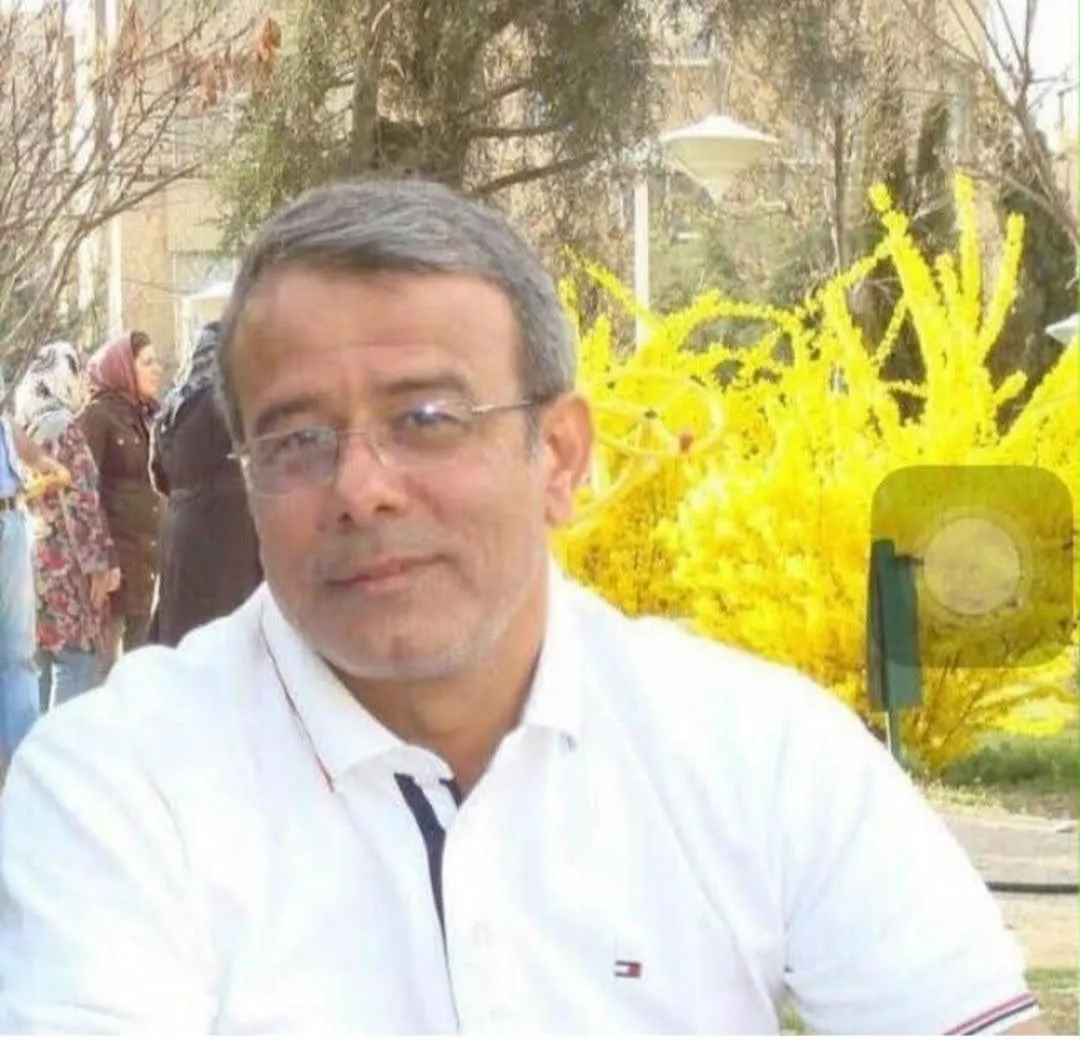
At that meeting, I was the youngest member of that gathering. I was not a member of any group or faction, but I cooperated with the revolutionary Muslim forces.
Rah va Rahavard
An Experience-Narrative of a Life
Mohammad Kianoush-Rad
Part Fourteen
**A Stormy Past**
A coordination meeting had been formed at the house of Nabi Golabkesh, at the corner of Vakili Street, near the Al Tayeb Mosque. A few years ago I went to the vicinity of that house and remembered the stormy past of that period.
I was also with Nabi Golabkesh during the war days. In an operation in Fakkeh. A man of the people and lovable. At that age he had come to the front. He joked with the Basij kids. He promised us the houris. He gave precise descriptions of the heavenly houris. The kids would burst out laughing and forget the hardships of the front.
At that meeting, I was the youngest member of that gathering. I was not a member of any group or faction, but I cooperated with the revolutionary Muslim forces. At that meeting were Yadollah Golabkesh, Mohammad Ali Maleki, Kazem Alam al-Hoda, and several others whom I did not know.
I saw Mohammad Fallah there for the first time. I did not see him again until he had found an important position in the government. He did not even remember me. It was natural. This was the first operation that the Mohedin group intended to carry out. Fallah was explaining how the operation would be carried out. Everyone's duty was determined.
A few days later, to reconnoiter the location, I went there with a chador-wearing girl—whom I did not know who she was and never saw again. It was the first encounter and companionship with the opposite sex. The necessary reconnaissance and assessment was carried out at the location. Everything was ready. But for certain reasons, the operation was not carried out.
Later I wanted to see that brave woman wrapped in an abaya, to rise in respect for her, to look at her, to praise her, but it did not happen. I never saw her.
When Mohammad Ali Maleki and Abdullah came to me. Mohammad Ali said, "I will let you know," but no news came. The Central Saderat Bank was supposed to be set on fire.
As far as I remember, Bank Saderat was the only bank that was subjected to the anger of the people opposed to the regime.
Hojabr Yazdani, the famous Baha'i capitalist, had bought a major share of Bank Saderat's stock. This matter had aroused much opposition and sensitivity in the religious society. Even Ayatollah Shariatmadari announced that they had closed their account at Bank Saderat. Subsequently, some people closed their accounts at Bank Saderat. For this reason, setting fire to Bank Saderat had also found religious justification for the Muslim fighter.
The Central Saderat Bank of Ahvaz burned after the end of office hours. One of those present in this operation said: "We gathered at the house of Kazem Alam al-Hoda. Sheikh Hadi Karami, Yadollah Golabkesh, Mohammad Ali Maleki, Kazem Alam al-Hoda, and a group of others were present. The plan was to set fire to the Central Saderat Bank." The coordination was done. Several of the kids were to bring the gasoline canisters from the park next to the Karun. The coastal road street had not yet been built. Four people came up the stairs of the coastal park and stood next to the bank. They were waiting for Yadollah. Throwing the torch was his responsibility.
Martial law had recently been established. The army and police forces were stationed at a base in Statue Square, the current Martyrs' Square. The telecommunications building was opposite the bank. An armed officer in the telecommunications [building] and an armed officer at the bank's entrance were protecting the bank and the telecommunications [building].
Yadollah came. They broke the bank's security glass and Yadollah threw the torch inside the bank. The sound of breaking glass echoed in the street and the fire blazed up. The kids had to flee. Kazem was supposed to be waiting near the bank with the car for the kids. Sheikh Hadi too was supposed to pick up two others in his white Peykan and flee.
Kazem came right on time. The kids jumped into the car and Kazem quickly fled the scene. Sheikh Hadi did not come. Two of the kids did not know what to do. One fled toward the park and brother ... toward the opposite street, meaning Pahlavi.
The bank's security guard chased brother.... The sound of "Stop, stop" echoed in the air. He did not stop. The officer aimed at him and fired. He was running in a zigzag. At that same moment, a company bus was passing by. The officer's bullet hit the bus driver and wounded him in the neck.
He reached near the Apadana Cinema. No one was chasing him. He entered the cinema. He washed his hands, which were stained with gasoline and smelled. He went inside the hall and crumpled into his seat until the end of the film. He was thinking of brother Habib, one of the kids from the Mollasani faculty. What had become of him? Why did Sheikh Hadi not come? He did not know that the bus driver had been wounded.
A few hours later, this time in the guise of a passerby, he again went to the vicinity of the bank. The smell of burnt smoke filled everywhere. Black soot had settled on the street and the shops around the bank. There, when he heard that the driver of the passing bus had been shot, he was startled.
That night he did not sleep until morning. He had a guilty conscience. Early in the morning he went to the "A Seyyed Ali" Mosque for prayers. He prayed. He had secluded himself with his thoughts. He was still worried about the bus driver. He prayed for him sincerely. He calmed down a little. Before noon he went to Kazem. It was decided to pay a visit to the hospital to find out about the driver's condition.
The following week, to visit the injured person of the incident, they went to the hospital with Kazem. To buy sweets, they went to the famous "Berim" confectionery. Berim was the most famous confectionery and offered the most delicious sweets at that time. With a box of sweets and cautiously, they entered the hospital. They asked around. They made sure of the bus driver's health. The box of sweets was also their cover. At the door of the ward, they gave the sweets to the service officer to deliver to the wounded man. Their minds were at ease and they returned.
The Mohedin group was initially formed with a three-person gathering of Sheikh Abdolhadi, Esmail Kouroshavi, and Kazem Alam al-Hoda. Sheikh, unspoken, had the leadership role of the group. At this stage, the original activity was cultural, but the group soon entered the military phase.
With Kazem's proposal and Hadi Karami's agreement, Yadollah, Mohammad Ali, and Hossein joined the group.
The group had a heyati character, and with a little leniency, they can be considered, in terms of intellectual outlook and practical conduct, the continuers of the "Fadaiyan of Islam" and the Islamic Coalition heyats, and placed within the spectrum of traditional Islamic fighters.
To be continued...
Take less than a minute, register and share your opinion under this post.
Insulting or inciting messages will be deleted.
Sign Up