
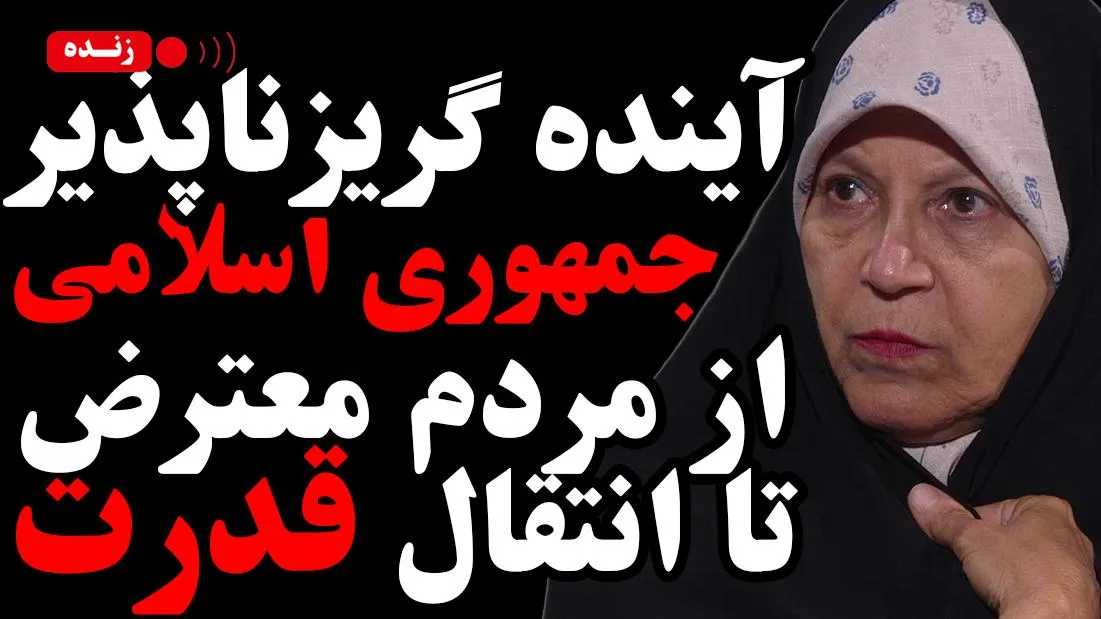
Is it possible to escape the future? This is a very important question: is there any escape from the future or not? History is neither sleep nor fantasy; it is a stubborn reality that sometimes shows its face in the mirror of popular protests, sometimes in negotiations behind closed doors, and sometimes in the shadow of the comings and goings of leaders and their successors. The Islamic Republic, after nearly half a century, now seems to me to be standing in a purgatory between continuity and transition.
Abdi Media: Abdi Media is an independent media outlet, fearless and committed to the truth, even if that truth is bitter, and even if it doesn't bring a like to this independent media. I will tell you the truths, even if they may not be very pleasant for you. If you are not looking for the official narrative, if the silent realities of power and the pulse of Iran's future matter to you, I should say that Abdi Media seeks a light to shine on power and make things a little clearer for you. This light is consciousness, which, like the sun that melts the ice of lies and hypocrisy, is meant to make the space a bit clearer for you. So, if you are seeking consciousness, don't forget that you can support this media with likes and comments, and also, if you wish to provide financial support for this independent media, you can do so through the ways I have mentioned.
Surely you know the topic and know what we are going to talk about tonight. Is it possible to escape the future? This is a very important question: is there any escape from the future or not? History is neither sleep nor fantasy; it is a stubborn reality that sometimes shows its face in the mirror of popular protests, sometimes in negotiations behind closed doors, and sometimes in the shadow of the comings and goings of leaders and their successors. The Islamic Republic, after nearly half a century, now seems to me to be standing in a purgatory between continuity and transition. The accumulated anger of the people, a generation that doesn't believe in promises, the collapse of legitimacy in the eyes of many, and at the same time, the hard fastenings of power have brought great questions to the fore. Why do some see no clear horizon for this country? What, more than politics, is eroding us from within? Economy, unemployment, or this collective sense of helplessness? On the brink of what is Iran standing? Explosion, erosion, or repetition? Is power transfer imminent? Who, how, and with what legitimacy will be replaced? Does the people's voice have a place? This program is an attempt at revelation, to split open the hidden layers and retell what perhaps should not be said.
As you are waiting, tonight we will speak with someone whose very presence is a kind of paradox. Born into one of the founders of the Islamic Republic, but a sharp critic of it. A woman whose voice has sometimes been louder than the silenced men of Iranian politics, shaking the public sphere. She has experience with power and has also paid the cost of her dissent. Ms. Faezeh Hashemi is not only the daughter of Hashemi Rafsanjani, but a different voice from within power, and perhaps against it. Her presence tonight, on the very night that thirty-seven years ago her father was one of the main players in the transfer of power, is an opportunity to face questions that many avoid. If you agree, I would first like to hear your view on the current situation, that is, Iran in 2025, for which vision documents and articles were written and seminars were held. What is your opinion? Is the Islamic Republic in a state of transition?
Faezeh Hashemi: Among your words, you had a phrase that might be a point of commonality: committed to the truth, because I see this in myself, that the most important thing for me is the truth. Whether this truth is in a faction, in the government, or in the opposition, wherever it may be, it doesn't matter to me. I have tried to be committed to the truth and to express it regardless of factional lines. Sometimes it has been to my detriment and I have paid the cost; sometimes it could have been to my benefit, but it never was. However, it has created bases among the people, but the most important thing is the truth, regardless of its consequences.
Abdi Media: What is your view of the current situation, that is, Iran in 2025, the era for which a twenty-year horizon was once written and the vision document was drafted? How do you see the situation today? Do you think the Islamic Republic is in transition? Or is it contracting? How do you see the state of society? Let's have a perspective on the current state of the country and the Islamic Republic.
Faezeh Hashemi: You said you made me a kebab with your talk of the vision document. It reminded me of my father and Mr. Ahmadinejad. The vision document was written during the period when my father was the head of the Expediency Council, aiming for us to be the top in the region by 2025. It is a small document, but it could have had appendices with explanations and executive details for each part. When Mr. Ahmadinejad came, he set aside that document and a thousand other things, saying we don't need them, that we are already the best in the world and the region, and that we don't need expert opinions or documents. So, it remained unused. Recently, the issue of the vision document has been raised again, and it pains us to think about the opportunities we lost during these years, from 2005 to 2021, the past twenty years. What we could have been and what we became due to wrong policies and events that occurred in the country.
Regarding today's situation, I must say that I see a glimmer of hope, and I will explain why I think so. Firstly, I believe that Mr. Pezeshkian's coming was a scenario orchestrated by the establishment itself. From my perspective, the reason could be that the establishment itself realized the direction the country was heading, the predicament it was in, the dark abyss it had fallen into, and how it needed to be saved. Mr. Pezeshkian's coming, with the assumption I have that it was a scenario, was behind the fact that we saw, I won't say deep reforms, but in any case, good things have happened. For example, the hijab law is currently suspended. I think this is due to the establishment's view and Mr. Pezeshkian's efforts. We have a female minister, a female spokesperson, women have entered the cabinet, Sunnis have entered the cabinet. At the same time, it was said that expelled and suspended students from the Mahsa movement have returned to universities; some expelled professors have returned, though this did not include us, as it is said that Azad University is unwilling to comply because, being in the private sector, it doesn't listen to the Ministry of Science. Also, the FATF was approved, though with conditions, but the conditions were natural and nothing special. We have now entered negotiations. Of course, there are many problems on the other side: imbalances, mismanagement, electricity, water, inflation, economic issues, livelihood, fuel, energy, etc., remain in place. However, I have this analysis that the establishment is going to carry out a series of reforms and has already started. I don't know what fate the negotiations will have because I cannot predict. Regarding your question, I cannot predict what the future of the Islamic Republic will be. But I analyze based on evidence, which could be right or wrong. However, so many strange events occur that it is possible that the day after tomorrow, fundamental changes might happen, or they might not, and the same path might continue. But it is certainly among my wishes, and probably others too, that although many times reforms have been carried out but unfortunately, we have regressed a hundred degrees, this time this does not happen. We need this belief in structural reforms, for this process to continue and move forward.
If I want to seriously analyze the current situation, the first point is that Pezeshkian's election was a scenario, and it seems to me it was designed for us to reach Mr. Pezeshkian, a reformist figure.
Abdi Media: Regarding Mr. Pezeshkian, I wanted to ask—I agree with the notion that it was a scenario and have written about it. Do you think that this scenario was designed by the first figure of the Islamic Republic, Ayatollah Khamenei? That he designed and planned this, this measure for the situation, or a kind of salvation, or improvement of the situation—whatever we want to call it—do you not think that one of the reasons Masoud Pezeshkian came was to turn the convergence among the opponents of the Islamic Republic into a divergence? That is, the convergence that occurred during the Mahsa protests, the "Woman, Life, Freedom" movement, was turned into a divergence. Reformists who had gone a step further and, for example, might have become dissidents, returned; for example, Mr. Karoubi returns, Mr. Khatami again invites. It seems to me that this interpretation might also be possible, that the design was actually not for a series of freedoms and reforms to be implemented, but to turn the convergence of the Islamic Republic's opponents into divergence. What is your view on this proposition?
Faezeh Hashemi: On the contrary, I think the Mahsa movement resulted in this divergence and convergence in the opposite direction. I want to take this opportunity to analyze the Mahsa movement's pathology. The Mahsa movement had a great achievement, especially for women, and I consider it a successful movement. The events that followed, women, I think, achieved a significant part of their demands, though many women's issues remain unresolved. It caused the government to change its view of women. For example, the fact that women entered the cabinet—previously there were no female deputies or ministers. Mr. Rouhani had said he wanted to appoint a female minister but it didn't happen. Well, it didn't happen—what does that mean? Who could say no except Mr. Khamenei? Rouhani had to listen. Now we see the establishment and the fundamentalists, female managers or women who are in the IRIB, in any case, have brought women more into the system and political currents. What we see, I think, is the impact of the Mahsa movement: the establishment itself has come to the conclusion that it should somewhat change its positions on women's rights, at least politically and in terms of management and governance. In its own way, it was a very successful movement. But the damage—the events that followed—the convergence that was initially created: the 2009 movement, the Green Movement; in 2017, another movement occurred that the fundamentalists themselves started but it got out of their hands; later in 2019, the gasoline price hike protests; and then we reached the Mahsa movement. In the middle, there are the girls of Revolution Square and Enqelab Street, the movements started by Masih Alinejad—covert freedoms, or White Wednesdays, or every citizen a journalist, or every camera a journalist—these were all positive things that were creating a current in society. Until we reached the Mahsa movement. What happened in the Mahsa movement is that on the one hand, it caused the return—I myself say the government has created a glimmer of hope. Before the Mahsa movement, I did not have such a view; I was a severe critic, but my view has changed too. Firstly, there was so much division among the opposition: monarchists on one side, human rights advocates on another, various currents that existed, and the conflict among them. Some believe this was due to government influence or their agents, but I don't accept that, because I saw this same opposition symbol in prison. There, we could see it wasn't government-influenced, but the same disagreements, the same insider-outsider dynamics, and the same monopolies existed among the opposition and those who were in prison as activists. They applied the same reasons they fought against to their own fellow inmates.
Abdi Media: Which led to the letter you wrote.
Faezeh Hashemi: Exactly. In that letter, I detailed what happens in the opposition—meaning the same critics and opponents of the system in prison—how they treat their fellow inmates. The opposition itself couldn't tolerate itself and turned against itself. Then, the events that happened—violence has two sides in these movements. I believe, as many gentlemen have stated, Sardar Hamedani, not so explicitly but to this effect (I won't quote the exact sentence), but to this effect, there is a group of thugs and hooligans used to suppress protesters. Demonstrations and protests turn violent; they hit and break things. This becomes a pretext for them to say these are rioters and to crack down. This violence usually happens. But on the other side, this movement also became violent; this issue arose. The issue of throwing turbans—we cannot say all clerics...
Abdi Media: Did the people who came to the streets, those who came to the streets, seek change and revolution? They called it the Mahsa Revolution. A revolution without violence is not a revolution. Is it possible to have a revolution without violence? Those who seek change now say—Dariush used to say the last bastion is silence—they say we must be in the middle of the field and fight, like the struggles during the 1978 revolution. The Fada'iyan-e Khalq came, the MKO came. The revolution was also won when armed struggle was at its peak, barricades were built in the streets. The images are there. Molotov cocktails were taught and used on the walls. They protested why some channels teach violence. Although I agree with your point, that violence authorizes the established government to use violence, but is revolution or fundamental change—the percentage of those in the streets is not our discussion—possible without violence at all?
Faezeh Hashemi: Our government knows about velvet revolutions. The changes that occurred in Eastern European countries happened with the presence of people and civil disobedience, leaving the streets—there was no violence. It was more about staying in the streets and showing protest in that same manner, and they were successful. They call these velvet revolutions. But I think—yes, I personally disagree with revolution because usually after any revolution, things get worse, not better. That's why I oppose it. However, fundamental changes have occurred without violence.
Among friends and family, I heard that those wearing hijab felt insecure in the streets, and those who were in the movement acted with anger.
Abdi Media: There was a marked attitude; they said if you wear a chador, you are pro-government.
Faezeh Hashemi: In our own Green Movement, the majority of participants were chador-wearing women and government supporters who joined the movement, and even many fundamentalists joined the Green Movement. At that time, they changed their view toward the government.
The next point regarding this Mahsa movement—I'm not saying all of them—but what I see in prison, they didn't accept the Green Movement; they said they were government supporters. They didn't accept the efforts made for women's rights over the years by many people; everything started with the Mahsa movement. They rejected previous events. They rejected the reformists who went to prison in 2009, were tortured, were killed, and those on the streets who were arrested. They rejected them all. Everything started with the Mahsa movement. The reformists could not continue with them. The neglect of women's rights activities before this movement, or the violence that sometimes occurred, I heard many times in prison, "If we win, we will erect gallows in the streets, we will execute the reformists."
Abdi Media: They have placed a lamppost for every person.
Faezeh Hashemi: Each of these events causes a group of people to fall away. Those who were with the movement decreased. We should not forget the government's suppression, because unfortunately, the government has become very professional and effective at suppression and arrests. I myself was in prison, I was in Cell 209; they arrested people and put them in cells that could hold one or two, but there were eight or nine of them. Setting the suppression aside, when this movement ended, despite the positive achievements it had in my view—and I evaluate it as a successful movement in the metropolis—the behaviors and speeches in these programs caused a decline. Many could not continue on that path and seek change. They stood firm. Those who left came to the conclusion that we must be in elections and real reforms, not revolution, not major changes, but reforms, and they returned. Because such an election was boycotted, for example, there is the famous saying, "What percentage are you?" because very few people participated in this recent election. But then the election atmosphere warmed up again; that scenario was arranged so that people would become more motivated and enter the elections, including keeping Mr. Jalili. This itself was a factor that caused many to enter the elections to prevent Mr. Jalili from being elected.
Abdi Media: There was a marked attitude; they said if you wear a chador, you are pro-government.
Faezeh Hashemi: In our own Green Movement, the majority of participants were chador-wearing women and government supporters who joined the movement, and even many fundamentalists joined the Green Movement. At that time, they changed their view toward the government.
The next point regarding this Mahsa movement—I'm not saying all of them—but what I see in prison, they didn't accept the Green Movement; they said they were government supporters. They didn't accept the efforts made for women's rights over the years by many people; everything started with the Mahsa movement. They rejected previous events. They rejected the reformists who went to prison in 2009, were tortured, were killed, and those on the streets who were arrested. They rejected them all. Everything started with the Mahsa movement. The reformists could not continue with them. The neglect of women's rights activities before this movement, or the violence that sometimes occurred, I heard many times in prison, "If we win, we will erect gallows in the streets, we will execute the reformists."
Abdi Media: They have placed a lamppost for every person.
Faezeh Hashemi: Each of these events causes a group of people to fall away. Those who were with the movement decreased. We should not forget the government's suppression, because unfortunately, the government has become very professional and effective at suppression and arrests. I myself was in prison, I was in Cell 209; they arrested people and put them in cells that could hold one or two, but there were eight or nine of them. Setting the suppression aside, when this movement ended, despite the positive achievements it had in my view—and I evaluate it as a successful movement in the metropolis—the behaviors and speeches in these programs caused a decline. Many could not continue on that path and seek change. They stood firm. Those who left came to the conclusion that we must be in elections and real reforms, not revolution, not major changes, but reforms, and they returned. Because such an election was boycotted, for example, there is the famous saying, "What percentage are you?" because very few people participated in this recent election. But then the election atmosphere warmed up again; that scenario was arranged so that people would become more motivated and enter the elections, including keeping Mr. Jalili. This itself was a factor that caused many to enter the elections to prevent Mr. Jalili from being elected.
Abdi Media: Mr. Faramarz has written a reminder to Ms. Hashemi: "Don't forget that the people were chanting 'Reformist, fundamentalist, it's all over'—meaning many reformists have no credibility."
Faezeh Hashemi: But the reformists of the Green Movement are different from the reformists in those slogans; the issue is different.
Abdi Media: Do you believe "Reformist, fundamentalist, it's all over"?
Faezeh Hashemi: At that time, yes. Today, my view has changed. I saw the situation of the opposition in prison. If proper, structural, and deep reforms are carried out now, I would prefer that over joining a group whose actions after victory are unknown. In my letter, I wrote that I don't think they are much different from dictatorship and the current conditions; if they come to power, the situation will get worse.
Abdi Media: Do you think any opposition can come and create change? In the conditions and time of the Mahsa movement—may her soul be at peace—this girl of Iran created a historical reference. It wouldn't hurt to send a prayer to her soul, for those who believe, to recite a Fatiha for her. We won't mention her name much, but I think much abuse was made of this name and this blood. Previously, did you think it was possible to change the government by replacing the Islamic Republic with anyone?
Faezeh Hashemi: No, I have never sought overthrow; I have not worked for overthrow. But in any case, I have been a harsh critic and did not participate in several elections, and I issued a statement that I would not participate, which had its own reasons. I still believe those policies were correct. But now, I prefer that this very government be truly reformed, not superficially.
Abdi Media: Reform in the sense of reforms, or reform in the truest sense?
Faezeh Hashemi: Reform in the truest sense. I don't care about the reformists; I have issues with the reformists myself. Reforms in the general sense, not the reformist faction coming to power, because it has come to power and didn't do much. Let's not think they split the moon either. Because we have the Supreme Leader above, whoever comes doesn't have much leeway to make changes and reforms; naturally, they have limitations. I agree with the slogan "Reformist, fundamentalist, it's all over," and that was for a time when, in my opinion, Baba was killed. Mr. Rouhani and the reformist parties changed their path, and even in the election after Baba's death, Mr. Rouhani came with a high vote. But due to the political conditions of that time, perhaps they were afraid of the same thing that happened to Baba happening to them, and for various other reasons, they changed their path. They became somewhat aligned with the establishment and did not follow the slogans and demands that the people had voted for. For example, in 2019, when protests started, there were statements that would win the hearts of the government on one side and the people on the other. So, they separated from their own reformist path. I agree that the slogan meant something there. Now, when I say reforms, I don't mean the reformists should come to power, because they didn't leave a pleasant memory. I mean reforms in the general sense.
Abdi Media: It seems that when you encountered some of the protesters in prison, those who even thought of overthrow, you felt that a dictatorial spirit prevailed. Did you think that if there is an overthrow, another dictatorship will come, and no change will happen for the country and the nation of Iran? Is that correct?
Faezeh Hashemi: Yes, to some extent, that is the case. In every revolution, conditions after revolutions around the world have gotten worse, not better. There is no case where a revolution happened and conditions improved. Of course, the velvet revolutions, as the Islamic Republic calls them, and the changes that occurred in Eastern Europe, we cannot call them revolutions in the sense of overthrow; they are different. But since I have never been a supporter of revolution, because I don't see revolution as beneficial, especially afterward, I was not an overthrow supporter either; it wasn't that I tried to overthrow. But I have harsh criticisms, and now many criticisms remain. Now I think, because one of the things said in prison was—those who were on the receiving end of these people's actions would say: "This group has no power; they are here in prison. Imagine if they get power, what they would do. A hundred times mercy on the current government and Mr. Khamenei."
Abdi Media: In a previous interview, you said "a hundred times mercy on SAVAK, we should look for SAVAK with a lantern." I remember you said that.
Faezeh Hashemi: The Islamic Republic has whitewashed the Shah. Every revolution's aftermath will be worse, not better.
Abdi Media: Regarding your statements or Dr. Zibakalam's, there are some comments. People write comments; there are views that say "a deal was made with Faezeh Hashemi in prison; she backed down from her positions."
Faezeh Hashemi: If people had read that letter carefully, the behaviors I criticized as a prisoner, I compared with the Islamic Republic. If I were going to back down, I shouldn't have said those things. I completely reject this, because I myself know, and those who were in prison with me, especially those who were harmed by this group, can testify that no such deal was made. Moreover, for a week, they wanted to release me, and I wouldn't come out. I said if I come out, then they will say she wrote this letter to be released. They forced me out. Those who are in prison can testify. My husband said that twice they forced you into prison and twice they forced you out. I didn't want to come out five times. The last time, they tricked me; they took me to the management office and said the release order has arrived. They said if we keep you for even one more minute, we will be punished. They didn't even let me go back to my ward to get my belongings. Such a thing really didn't happen. This goes back to how people know each other. When I say I seek the truth, I also predicted that if this release happened, these same words would be said. But since my release was not in my hands, I was forced; they threw me out of prison.
Abdi Media: Release along with that letter.
Faezeh Hashemi: Yes. For me, it was important to tell the truth. Whatever the public judgment, for me, expressing the truth is more important, and I think it is my duty as someone who can say I am among the elite; a group of people listen to me. It is the duty of people like us to tell the truth, not to follow the crowd. Sometimes, we see the crowd is right and we follow them, but sometimes we feel there is a mistake, and it is our duty to say so. I swear to God, such a thing didn't happen. At that time, those I criticized with that letter, wrote a "repentance" letter for release in response to me. But if you read their texts, they have not refuted my words. Not one word from those who responded said that Faezeh is lying. They questioned me with lies, saying she was in a special ward, had privileges. It wasn't like that. I was a prisoner like everyone else. Until now, no one has said Faezeh is lying.
Abdi Media: Let me summarize in this chapter of your talk. I will use a message from "Hasti" in the chat room that says: "With this consideration, is your view, that you believe this structure should be maintained, a view for maintaining the status quo?"
Faezeh Hashemi: I don't believe this structure should be maintained. I believe in structural reforms. I had an assessment for myself, and I will use that. I believe in structural reforms. The appearance of the structure may be that the status quo is maintained, but I believe our constitution has several fundamental flaws. If real and proper reforms are to be carried out, these things must happen. First, several referendums must be held. The people's opinion must be sought regarding the nuclear issue, regarding America, regarding the policy of resistance, regarding missile policies, regarding foreign policy. When I say relations with America, that includes foreign policy, including relations with America and the West. In my opinion, the type of government—I do not believe in religious government, because I believe this religious government has two major flaws: one is that it ruined religion, which we saw happened. It is not just ours; wherever there has been religious government, this has happened. Second, religious governments that deal with people's beliefs become stronger dictators and last longer. Religious government, this type of government, is something that should be put to a referendum. If we enter constitutional reform based on this referendum, we should include several points: removing religious government, removing absolute velayat-e faqih. We don't need velayat-e faqih at all. When we had a president and a prime minister, they conflicted, so one was removed, and the president remained. Now, the same conflict happens between velayat-e faqih and the president. The president gets the people's vote and must be accountable to their demands. But when he wins, he practically cannot do anything, or cannot do it well.
Abdi Media: Like Mr. Pezeshkian, who said he wanted to negotiate, and Mr. Khamenei said no, and that was it.
Faezeh Hashemi: Our constitution has discrimination—gender discrimination, racial discrimination—though racial discrimination is not explicit in the constitution—religious and belief discrimination, for example, that the president must be Shia. The constitution has a series of conditions. For example, it says men and women have equal rights within the framework of Islamic principles. Well, who interprets these principles? There are a thousand interpretations, and the result is this. These conditions must be removed. The principles of the constitution must be comprehensive and without loopholes; they cannot have conditions. The principle of revising the constitution itself is not easily implementable; it is difficult to operationalize and must change. Cases that are unchangeable in the constitutional revision must change. I do not believe this structure should be maintained; the structure must undergo these changes.
Abdi Media: The points you mention seem to fall within the framework of Mr. Mir-Hossein Mousavi's view and his statement for structural reforms. Is that correct?
Faezeh Hashemi: Yes, at the time when Mr. Mir-Hossein issued that statement, I also gave a talk at that conference about the future—what we want and what we don't—and raised a series of points that were within this framework.
Abdi Media: Let's define a line. Reform means fixing some things within the current situation. What you are saying is a kind of plowing, meaning structural reforms. Perhaps in English, "reform" might be more beautiful or more understandable, but you are not seeking reform; you are seeking transformation. That is, you seek to change the type of government while maintaining the existing structure, without a revolutionary approach. Do you think this dream is achievable? Is it a dream? Because, in any case, what you are saying is very appealing to many who seek change. Those who have issues with the Islamic Republic or the clerical government, with the current structure and all its pillars, the issue is separation. But some of the things you say might be interesting to many: separating religion from politics, changing the constitutional structure, holding referendums on many issues and then paying attention to the referendums. These are attractive, but is this dream realistic? Or is the people's issue that they say this dream might stop us from the struggle to plow the whole thing? With this action, do you think this dream is achievable?
Faezeh Hashemi: We came to believe that one day girls would be in the streets without hijab. Was that even possible? Could we have ever imagined such a scene? Anything is possible. Could you have believed we would negotiate with America? Eventually, conditions arise where the establishment might—not because it cares about the people, but for its own interests or to preserve itself—be forced to do many things. Even now, these things are happening. The same things can happen. For example, we have the provision for revising the constitution, Article 177, but although it has six stages, five of them must be approved by the Leader. When we reach the sixth stage, the people vote. Or referendums are also foreseen in the constitution.
Abdi Media: In your mind, do you envision the Islamic Republic of Iran remaining? Or becoming the Republic of Iran? Or just Iran? What is your view?
Faezeh Hashemi: I see a republic.
Abdi Media: Meaning "Islamic" is removed.
Faezeh Hashemi: I envision a republican government. My ideal is a republic with a social democratic approach. I see a series of social services that should be provided; the Scandinavian countries are good examples, where they have good social services, education, health, and public services are free for people, while also having a free economy and an active private sector. My view is a republic.
Abdi Media: From the perspective of the rulers of the Islamic Republic, naturally, someone who believes in removing "Islamic" from the Islamic Republic—meaning saying the government becomes hollow from within—would place them in the ranks of those seeking overthrow. Do you agree?
Faezeh Hashemi: No, I don't agree. Of course, I don't know what the government's view is.
Abdi Media: I am talking about the government's view. Let me return to two points you mentioned in your speech: one was the interaction with Azad University at the beginning of your talk, and the second was the discussion of your father's killing—may I use that term? Does the Islamic Republic have a history of killing your father?
Faezeh Hashemi: With me personally.
Abdi Media: With Faezeh Hashemi personally, does it have a history of killing your father?
Faezeh Hashemi: Even if it does, that's not the issue.
Abdi Media: If, for example, some of your statements were a way out for the government from these dependencies, these pressures, these problems—you are proposing a solution for the government to manage properly and for people to live comfortably. This view and theory of yours, whose main theorist is perhaps Mr. Mir-Hossein Mousavi, who is still under house arrest, and others with similar views, or yourself who went to prison, or Tajzadeh who is in prison—the establishment's reading of this view is not reform; it is not within the defined reform. It is a serious opposition to itself.
Faezeh Hashemi: Let me put it this way: I may disagree with these people's methods; I think they are not correct. I would say the issues of hijab and going to negotiate with America—since Trump came, I have seen many of the establishment figures who were opposed to the hardliners, who were against why the hijab law was suspended and why we are negotiating, have come to say the principle is preserving the system, and now for the expediency of the system, these things must happen. If the system is to be preserved, generalize this. If the system is to be preserved, some say the nature of the system is religious. If it is not going to be religious, the system hasn't been preserved. I see it this way: compare the time of the Shah and the Islamic Republic. Were people more religious under the Shah or now? Certainly, under the Shah, one of the concerns of the Pahlavi regime was that girls with hijab were increasing in universities, people were growing beards, and people were turning to religion and faith. These young groups were becoming believers. A wise person in the government would say this performance and religious government have created de-religionization and anti-religion. If our goal is to preserve the system and preserve religion, let's take the Shah's era as a model—not to do those things that religion was not a part of under the Shah, but people were more religious. We have this experience and history. If we want people to become religious again, then let's remove the religious type of government from our title, because our mistakes are not attributed to religion. If we make mistakes and people have problems, they don't say Islam is useless; they say the government made a mistake, like any other government.
Abdi Media: The Islamic Republic does not accept this reading.
Faezeh Hashemi: It might come to it, just as it came to suspending the hijab law. If we are to preserve the system and enter into dialogue with America, many are opposed. What is the harm in having this optimism? People are going to become more religious. If our concern is truly religion, let's remove this title of religious government. People won't attribute our mistakes to religion, and naturally, the people's inclination toward religion might increase again.
Abdi Media: The points you mention seem to fall within the framework of Mr. Mir-Hossein Mousavi's view and his statement for structural reforms. Is that correct?
Faezeh Hashemi: Yes, at the time when Mr. Mir-Hossein issued that statement, I also gave a talk at that conference about the future—what we want and what we don't—and raised a series of points that were within this framework.
Abdi Media: Let's define a line. Reform means fixing some things within the current situation. What you are saying is a kind of plowing, meaning structural reforms. Perhaps in English, "reform" might be more beautiful or more understandable, but you are not seeking reform; you are seeking transformation. That is, you seek to change the type of government while maintaining the existing structure, without a revolutionary approach. Do you think this dream is achievable? Is it a dream? Because, in any case, what you are saying is very appealing to many who seek change. Those who have issues with the Islamic Republic or the clerical government, with the current structure and all its pillars, the issue is separation. But some of the things you say might be interesting to many: separating religion from politics, changing the constitutional structure, holding referendums on many issues and then paying attention to the referendums. These are attractive, but is this dream realistic? Or is the people's issue that they say this dream might stop us from the struggle to plow the whole thing? With this action, do you think this dream is achievable?
Faezeh Hashemi: We came to believe that one day girls would be in the streets without hijab. Was that even possible? Could we have ever imagined such a scene? Anything is possible. Could you have believed we would negotiate with America? Eventually, conditions arise where the establishment might—not because it cares about the people, but for its own interests or to preserve itself—be forced to do many things. Even now, these things are happening. The same things can happen. For example, we have the provision for revising the constitution, Article 177, but although it has six stages, five of them must be approved by the Leader. When we reach the sixth stage, the people vote. Or referendums are also foreseen in the constitution.
Abdi Media: In your mind, do you envision the Islamic Republic of Iran remaining? Or becoming the Republic of Iran? Or just Iran? What is your view?
Faezeh Hashemi: I see a republic.
Abdi Media: Meaning "Islamic" is removed.
Faezeh Hashemi: I envision a republican government. My ideal is a republic with a social democratic approach. I see a series of social services that should be provided; the Scandinavian countries are good examples, where they have good social services, education, health, and public services are free for people, while also having a free economy and an active private sector. My view is a republic.
Abdi Media: From the perspective of the rulers of the Islamic Republic, naturally, someone who believes in removing "Islamic" from the Islamic Republic—meaning saying the government becomes hollow from within—would place them in the ranks of those seeking overthrow. Do you agree?
Faezeh Hashemi: No, I don't agree. Of course, I don't know what the government's view is.
Abdi Media: I am talking about the government's view. Let me return to two points you mentioned in your speech: one was the interaction with Azad University at the beginning of your talk, and the second was the discussion of your father's killing—may I use that term? Does the Islamic Republic have a history of killing your father?
Faezeh Hashemi: With me personally.
Abdi Media: With Faezeh Hashemi personally, does it have a history of killing your father?
Faezeh Hashemi: Even if it does, that's not the issue.
Abdi Media: If, for example, some of your statements were a way out for the government from these dependencies, these pressures, these problems—you are proposing a solution for the government to manage properly and for people to live comfortably. This view and theory of yours, whose main theorist is perhaps Mr. Mir-Hossein Mousavi, who is still under house arrest, and others with similar views, or yourself who went to prison, or Tajzadeh who is in prison—the establishment's reading of this view is not reform; it is not within the defined reform. It is a serious opposition to itself.
Faezeh Hashemi: Let me put it this way: I may disagree with these people's methods; I think they are not correct. I would say the issues of hijab and going to negotiate with America—since Trump came, I have seen many of the establishment figures who were opposed to the hardliners, who were against why the hijab law was suspended and why we are negotiating, have come to say the principle is preserving the system, and now for the expediency of the system, these things must happen. If the system is to be preserved, generalize this. If the system is to be preserved, some say the nature of the system is religious. If it is not going to be religious, the system hasn't been preserved. I see it this way: compare the time of the Shah and the Islamic Republic. Were people more religious under the Shah or now? Certainly, under the Shah, one of the concerns of the Pahlavi regime was that girls with hijab were increasing in universities, people were growing beards, and people were turning to religion and faith. These young groups were becoming believers. A wise person in the government would say this performance and religious government have created de-religionization and anti-religion. If our goal is to preserve the system and preserve religion, let's take the Shah's era as a model—not to do those things that religion was not a part of under the Shah, but people were more religious. We have this experience and history. If we want people to become religious again, then let's remove the religious type of government from our title, because our mistakes are not attributed to religion. If we make mistakes and people have problems, they don't say Islam is useless; they say the government made a mistake, like any other government.
Abdi Media: The Islamic Republic does not accept this reading.
Faezeh Hashemi: It might come to it, just as it came to suspending the hijab law. If we are to preserve the system and enter into dialogue with America, many are opposed. What is the harm in having this optimism? People are going to become more religious. If our concern is truly religion, let's remove this title of religious government. People won't attribute our mistakes to religion, and naturally, the people's inclination toward religion might increase again.
Abdi Media: Is the Islamic Republic's concern really the people's religion? Of course, they have built a hell in Fouman.
Faezeh Hashemi: No, I don't believe that with this performance, their concern is religion. But there might be four wise individuals who think, if we want to save religion, let's remove the religious title from our government. After all, what is wrong with being optimistic?
Abdi Media: For now, they have built hell; let's see when they will build heaven. What is your opinion on the hell they have built? You know it was an IRGC project.
Faezeh Hashemi: The IRGC commander of Fouman announced it. I think it was a very wrong move. Generally, encouraging and positive measures work better than negative and prohibitive ones. If you want to encourage people to be religious, build heaven. One interesting public message was: "Build heaven, it should have wine and houris." How are they going to show that here, with the laws they have made? They can't show it here, so they went the other way. It was a very wrong move; I think it was a big mistake.
I don't expect the things I want to happen immediately, but I think they can happen over time, not too long. Given the current conditions of the regime, I see the possibility of such events occurring.
Abdi Media: I understand your view, and I hope it has become clear for the viewers as well. If you allow, I would like to move on to the next topic, which is the transfer of power. Tonight also has a certain significance—thirty-seven years ago, if I'm not mistaken, Mr. Hashemi Rafsanjani played a key role in the transfer of power. After the death of Mr. Khomeini, the leadership was transferred to Mr. Khamenei. Do you have any memories of that?
Faezeh Hashemi: The things we know are just what we've read. The memory I can share is a bit funny but true, and it's something to laugh about. Whenever people see me on the street or in public places, they say, "We might forgive Mr. Hashemi for many things, but we can't forgive him for this transfer of power. He made this mistake and brought this calamity upon the country." Many people say this.
Abdi Media: The point is that we might see some historical similarities, and perhaps we can talk about the transfer of power these days. Groups are seeking their share of power and trying to put forward their candidates. I think when the transfer of power happened, you were much younger and perhaps not yet involved in politics. Do you see the structure of the Islamic Republic and the power structure preparing for a transfer of power at the leadership level? If so, what evidence do you see for this transfer of power?
Faezeh Hashemi: At that time, as you said, in 1989, I was not involved in politics at all. My first political activity was in 1995 when I ran for the fifth parliament. So, I don't really remember what happened, nor did I follow political issues. If anything happened, I don't remember, because I don't have a strong memory, especially for distant events.
One of the gentlemen told a story, though I wasn't there myself. This was in recent years, after my father passed away. They were recounting that when Mr. Khomeini died, Ahmad Agha was opposed. Many people ask why your father didn't become the leader himself. I say he wasn't after that. This story comes to mind: Ahmad Agha was opposed because he was afraid that if Mr. Hashemi became the leader, he would revive Mr. Montazeri, who had previously been the designated successor. At that time, when those events happened with Mr. Montazeri, my father always supported Mr. Montazeri—perhaps not publicly, but privately he spoke with Mr. Khomeini about not having these behaviors. Part of it also became public, that he would revive Mr. Montazeri and bring him back as the designated successor or something. If the leadership council was formed, Mr. Hashemi would put Mr. Montazeri as a member. This is my answer to those who say why he didn't become the leader himself. Of course, I believe that with this constitutional structure, even if he himself had become the leader, the likelihood of reaching this dictatorship was there, because the structure of the constitution corrupts people; add sanctity and these things to it, and it becomes a disaster.
But in the current situation, regarding the existence of conditions for the transfer of leadership or the currents for this matter, in any case, Mr. Khamenei is close to 90 years old. He was younger than my father; how old is he now?
Abdi Media: Mr. Khamenei was born in 1939.
Faezeh Hashemi: He is now 86 years old. It's natural that something could happen, and he might pass away, after which the process of leadership transition would take place.
Abdi Media: I should mention that in recent elections and ceremonies, Mr. Khamenei has been showing off his health. Even Mr. Mohammadi Golpayegani sometimes sits down to pray on the live broadcast, but Mr. Khamenei shows his health in a certain way.
Faezeh Hashemi: Yes, he speaks for long periods. But in any case, it could happen; at that age, anything can happen. Many people have no problems but suddenly have a stroke, especially strokes have increased among the young. So this could happen. I have heard for years that a three-member committee has been formed to work on the succession of the leadership. If Mr. Khamenei is gone, who should be the replacement? Therefore, a leadership transition at this age and under these conditions is not far-fetched.
Abdi Media: Do you yourself see the system preparing for a transfer of power?
Faezeh Hashemi: A three-member committee is working on this issue, to have candidates so that if Mr. Khamenei is gone, they can replace him and, from their perspective, the country doesn't face a leadership vacuum. At the time of Mr. Khomeini, they quickly handled the issue.
Abdi Media: What parameters do you think are influential in the transfer of leadership to the third Supreme Leader, if we were to compare it with the era of leadership transfer to Mr. Khamenei? At that time, Mr. Hashemi Rafsanjani's role was undeniable—his speech, his advocacy for Mr. Khamenei's acceptability. It could be said that in many times after the revolution, Mr. Hashemi was the closest person to Mr. Khamenei. Even in a conversation I had with your uncle, Mr. Mohammad Hashemi, he said that Mr. Khamenei even offered the succession to your father, and he did not accept.
Faezeh Hashemi: Mr. Tavassoli had recounted this memory.
Abdi Media: Then Mr. Khamenei's office released an audio in response to that interview with Mr. Mohammad Hashemi, about you becoming the leader. What parameters are being considered now? Do you think there is a cleric with the same kind of influence as Hashemi's, whom others would listen to?
Faezeh Hashemi: I don't know if there is such a person. I think the IRGC plays the most significant role in all matters now. In any issue you examine, the IRGC's role is more prominent than everyone else's. Also, if we compare, the Assembly of Experts back then was freer than the current Assembly. Because it is the Assembly of Experts that determines the leadership; supervising the leadership is also part of its duties. At that time, there wasn't this level of disqualifications and election engineering. If there were, they were very rare. That Assembly was freer in terms of thought, but the current Assembly has been completely filtered. The parliament has no role, but it is influential—the parliament has been filtered. In this respect, those who are going to sit and decide on this matter are people who have been defined within a specific path. One of the important reasons is this very thinking about a successor to the leadership, that they have tried hard to ensure that those who sit there do not have much freedom, or that this doesn't happen freely. This is the comparison I can make between now and then. As I said at the beginning, I think the IRGC might play one of the major roles in this matter. Let me also express my own view: from the beginning, I have said that I do not agree with the very concept of velayat-e faqih. I think it has undermined the separation of powers; the authority of the president and other heads of branches is limited and they lack freedom of action. The people's vote for the president or parliament representatives can ultimately be overshadowed by the opinions of the velayat-e faqih. That is, the republic is subjugated to that absolute velayat-e faqih, especially with the word "absolute," which it didn't have during the time of Mr. Khomeini; unfortunately, it was added later. This "absolute" has somewhat—no, not somewhat, it has severely—limited the role of the people in elections. I personally oppose this. I think one of the fundamental reforms of the constitution should be the removal of velayat-e faqih. We should have a republican election, and the president should be elected by the people and have full authority. In any case, there are the parliament and other institutions that oversee each other; there is the judiciary, which oversees to ensure the constitution's principles are implemented. But if, after Mr. Khamenei, another leader is to be chosen—and this law exists—my personal preference would be for Mojtaba, for example. Why? Because...
Abdi Media: The son of Mr. Khamenei.
Faezeh Hashemi: There is discussion about whether it should be Mojtaba or someone else. Many are planning for Mojtaba to succeed Mr. Khamenei. I don't agree with it becoming hereditary, but I say this from the perspective of looking at Saudi Arabia's MBS—the rulers there were all elderly, and when MBS came, he created many changes. Perhaps a new path could be opened. Mojtaba could play a similar role. He is a generation apart and is younger compared to others. Imagine if Mr. Makarem Shirazi—who says everything is haram—becomes the leader, or Alam al-Huda from Mashhad, or Ahmad Khatami from Tehran. Among these options, I think if it's Mojtaba—and I believe velayat-e faqih shouldn't exist, but if it must, then let it be Mojtaba—maybe what happened in Saudi Arabia, with a younger force and a different mindset, could happen here too, and truly move toward what the people want, toward the people's votes, demands, and the majority of society.
Abdi Media: Do you think Mr. Seyyed Mojtaba Khamenei has social legitimacy? Or will they create it? At the time of Mr. Khamenei himself, it also took some time for him to be accepted; he wasn't fully accepted by everyone from the start.
Faezeh Hashemi: No, I think we haven't forgotten the slogans that were chanted about Agha Mojtaba regarding his leadership. He doesn't have that legitimacy. But the group that wants to appoint a leader is seeking legitimacy. Which of their actions is based on legitimacy and popular support? Do the others who are to be chosen have legitimacy? They don't. I mean, they have legal legitimacy, but they don't have acceptability. I don't think there is any.
Abdi Media: Do you think the IRGC would agree? If you disagree with social legitimacy, do you think he has security legitimacy?
Faezeh Hashemi: Acceptability is about the general public's view of the issue. Legitimacy is about being legal and following the legal process. A subject, law, or individual may have legitimacy—the Assembly of Experts might choose them—but they may not have acceptability. You see, the hijab law didn't have acceptability; most scholars opposed it, most politicians opposed it, most prominent figures and society opposed it. Therefore, legitimacy and acceptability are separate.
Abdi Media: If we assume that tomorrow Mr. Seyyed Mojtaba Khamenei becomes the third Supreme Leader, do you think he could create rapid changes? In any case, Iranian society is usually such that after Mr. Raisi's death, they couldn't really criticize him—even those who took his place, even in the anniversary and commemoration ceremonies they held, no one could make harsh criticisms. After Mr. Khamenei, certainly, whether it is Seyyed Mojtaba or anyone else, they will have to follow Mr. Khamenei's path for a period. I don't know how long this period will be. What do you think? How long will it take for changes to occur? Rapid changes or will it take time?
Faezeh Hashemi: It depends on the individuals' character. I don't think it's something predetermined.
Abdi Media: Does the political structure accept immediate changes?
Faezeh Hashemi: If they want to, they can create that atmosphere among themselves. It is in the constitution. Many problems are due to deviations from the constitution. If they are truly seeking real reforms, even with the current constitution, it is quite possible for those reforms to happen. The most important part is Chapter Three, the Rights of the Nation, most of whose articles are not implemented. From freedom of expression, freedom of associations, the situation of political prisoners, to education, employment, and work—I could give many examples, or there's no need.
Abdi Media: Let me ask a question that might be a bit funny.
Faezeh Hashemi: It's all in the constitution. Even if Mr. Khamenei himself wanted to carry out deep reforms now, it would be a return to the principles and rights of the constitution. True, we disagree with some principles, but there are many good ones too. If he implements those, good things will happen. If implemented, political and ideological prisoners must be freed, as they are there against the law. Returning to the law—not even reforms, just returning to the law and the constitution itself—is sufficient. If there is the will, yes, they can do it quickly, because the means exist. There's no need to create something new and strange that a group would oppose.
Abdi Media: In this transition and transfer of power, for example, to Seyyed Mojtaba Khamenei, do you think there will be protests? Is it controllable? If protests arise, and some people seek overthrow, do you see the situation as controllable for the transfer of power?
Faezeh Hashemi: Now, Mr. Bashiri has an analysis: there are 8 conditions for the survival of governments. If the regime's repressive power faces problems, if deep divisions arise among the regime's insiders, and on the other side, if there is unity among the people and they have a leader—these four conditions. The repression power is strong; whatever happens, they will gather it up. You made a good point. I think one of the most costly things in this government, aside from the resistance program, is this security-centric view. What we hear from those around us—a few days ago I was in Rafsanjan, now people are being controlled one by one. Those cameras you see in the city, most of them are for security, not traffic control. The traffic ones are mostly broken and out of order; they are mostly security-related. They understand before someone even breathes that they are going to protest; they call them, summon them. A good cop, a bad cop sits down and threatens them from one side, says other things. They control everything so much that I wonder, if your actions are good, why is there such a strong security approach in society, with everyone under a microscope? From their view, everyone is a security criminal unless proven otherwise. That's how they control everything. I said this to get to the point about repression power, because the strong repressive power still exists in the government. There is no unity among the opposition; there is no leader that all opposition accepts. The repression power exists. There is no deep unity among the regime's insiders. In the current conditions, sometimes unexpected events happen—look at the Soviet Union, how it collapsed in a short time. An unexpected event might suddenly happen. But under the current conditions, I think they can contain it; they have the ability to contain it if there is a protest.
Abdi Media: Let me ask a two-option question. If you had the authority to choose the leader in a free election, and you had two options—one, Seyyed Mojtaba Khamenei with all his background, and the other, Prince Reza Pahlavi—which one would you choose?
Faezeh Hashemi: That's a difficult question. I wouldn't choose either. I wouldn't vote for a leader; I don't believe in velayat-e faqih. I think one of the problems we have is...
Abdi Media: Velayat-e faqih doesn't apply to Prince Reza Pahlavi.
Faezeh Hashemi: But you're putting Agha Mojtaba forward as the leader.
Abdi Media: I'm saying you have two options.
Faezeh Hashemi: I wouldn't vote for either. In any case, whichever is chosen is acceptable.
Abdi Media: Another two-option question: between a Leadership Council and a Transition Council, which would you choose?
Faezeh Hashemi: A Transition Council. A Transition Council that moves toward these structural reforms. I think we need a Transition Council that would actually operationalize these structural reforms. Why wouldn't I vote for Reza Pahlavi? Some believe he is outside the country, that he is the son of Pahlavi and shouldn't come. I don't accept those. He is an Iranian; I think he can come, and from my view, there is no problem with him entering the country to be put before the people's choice. But why wouldn't I vote for him? In prison, we had people who were staunchly in favor of the monarchy—they themselves said constitutional monarchy, but they were extremely fascist. One of the problems in prison was that these two monarchist supporters would severely harass and torment others, constantly starting fights, sometimes leading to physical altercations, just like in public prisons. I had this view: if Mr. Pahlavi cannot control his own associates, if he believes in these things—which are completely unacceptable—because they said, "what we say, if someone other than us says it, they have no right," and they would start fights. Someone would say "the eyebrow is above the eye of Mohammad Reza Shah," and they would start fights, leading to beatings. I shouldn't say this, but they would "make his belly a table." The person who said this was a woman—two of them were monarchists and used this kind of language. If he opposes this, he should be able to keep his supporters in line, respecting others' rights, with freedom of expression, where people can criticize and express opposition. If he believes this, if he can't control them, then it doesn't matter—a leader who can't keep his supporters on the path he advocates, and they act contrary to his words, is not a strong leader. In either case, I think it would be very difficult for him to come and take over the administration of Iran. I'm not saying I don't see ability in him. Usually, in struggle, people become more united; imagine if they get power, you can't do anything. In struggle, people unite and follow a path. Currently, among Mr. Pahlavi's supporters, such things are not seen, and I don't see that freedom and what the activists, including myself, are seeking in the path and process that Mr. Pahlavi's supporters follow.
Abdi Media: One of the issues is that the generation has truly changed. The new generation, known as Generation Z, are also the owners of this country. We need to see how much they accept and like these frameworks. Do you have contact with Generation Z? Do you see their concerns and views? As you said, we couldn't believe that one day women would be without hijab, or that satellite TV would be freely available, or cassette tapes—many things we couldn't believe. Do you think Generation Z can accept this system based on velayat-e faqih? That is, if a power transfer occurs and someone like Seyyed Mojtaba Khamenei comes—though I should say I have clearly written that I think it is unlikely, rather remote, for someone like Seyyed Mojtaba to reach the leadership. I consider it unlikely; it's far from my mind. Do you think Generation Z would accept it? How can the government get along with this generation? In five years, ten years, it must get along with this generation; our generation will pass.
Faezeh Hashemi: I doubt they would accept it. Some of these Generation Z kids were in prison with me, and since we lived together, I got to know their spirits, thoughts, and actions more deeply. I think Generation Z is carefree about everything; they live their own lives. They are not committed to these Islamic Republic things, beliefs, and ideas. They follow what they want and have been successful—they do their own thing. At least from what I see in society, they do their own thing and have largely been able to access what they pursue. It might not be very important to them who is in power, who is going to be the leader, or what the government is; they go their own way. I don't know if I've assessed it correctly, but that's what I perceive.
Abdi Media: Do you think this transfer of power, when it happens, will be as smooth and easy as the transfer from Mr. Khomeini to Mr. Khamenei? In my opinion, it happened smoothly and comfortably, with no conflict; it was managed. Even if there were disagreements internally, they were managed by influential figures like Mr. Hashemi or others, so the voices of dissent didn't rise that we don't want this person. For example, whether it's Mr. Mojtaba Khamenei or anyone else—I don't care about the name—whoever is to be in the leadership position must have leadership ability and at least acceptability within the power structure. Do you think this transfer, given that perhaps many who could have been candidates were not allowed to grow, were removed from the cycle in some way—one of the discussions, as in the previous interview, was that Mr. Hashemi had a dream of leadership, or some say Mr. Raisi also had a dream of leadership, but he is no longer here to have it—do you think this change and transfer of power will be smooth? Or will there be protests, both within the power structure and among the public? And if there are protests, how do you think they will be managed? Are they manageable?
Faezeh Hashemi: You asked this once before, and I said the security approach and management of protests in the country are such that they can contain everything. We have had various experiences that have shown they are strong in security matters. If even a thousandth of the security approach that runs the country were applied to public issues, by God, Iran would be a paradise. So much force and budget are devoted to that aspect, while other areas are neglected. I don't foresee major protests. There will certainly be discussions, various opinions will be expressed, and they will not be few. But I don't see nationwide mass protests happening. However, it's not predictable now; we would have to see the conditions at that time. At present, I don't have that mindset.
Abdi Media: You didn't mention the governing side. Do you think there will be protests within the governing side?
Faezeh Hashemi: In any case, it's not like that. There are many discussions within the governing side, and many people are involved. I think there will be a lot of dialogue on this issue.
Abdi Media: For example, the Paydari faction is pursuing its own candidate; some propose Mirbagheri. The reformist faction certainly has its own plans, and the moderates, for example, those who hold power, have the prisons and weapons. In any case, this position is attractive; everyone tries to maintain their share of the power pie. What do you think?
Faezeh Hashemi: Exactly. Everything is with velayat-e faqih. It is the center where everything is determined, where all authority lies, from which everything is directed. So it's an important place, and it's natural that all intellectual currents look at that position.
Abdi Media: The struggle—I'll call it a struggle—for a share. Do you think it's manageable within the current structure?
Faezeh Hashemi: I think yes, it's manageable. I don't see this as a major crisis.
Abdi Media: Why did I ask this? There are currently some protests that are becoming more prominent. Given the economic issues, there have been protests by farmers, onion growers, pistachio growers, etc., regarding water, electricity, and deficits. These issues have led people, such as truck drivers, to go on strike—protests have turned into strikes. Given that the country is going through a historical process, we might at any moment reach a point of power change or transfer. How do you see these protests and strikes in the country?
Faezeh Hashemi: The protests that exist are all justified. Since Mr. Ahmadinejad's time in 2005, the country has been on a downward slope, and now we are experiencing it. That trend continued, except for the first term of Mr. Rouhani, and continued in his second term and during Mr. Raisi, and the problems deepened. They call it imbalances, but it's not imbalances; it's mismanagement and numerous problems that could have been avoided. If we really acted according to documents, laws, national interests, and people's rights—if we cared a thousandth as much for the people and our own national interests as we do for other places—conditions would be very different. If we had acted with a bit more prudence, perhaps we wouldn't be in this situation. We have reached a point where most strikes and protests are sectoral. After the Mahsa movement, which was the latest, all these protests are justified. The truck drivers' strikes were completely justified because day by day the problems are deepening. Economic problems are not something that can be fixed easily. If negotiations result in the lifting of U.S. sanctions and the trigger mechanism and UN sanctions are not activated—of course, if it reaches a conclusion and they don't pursue it—and if it leads to an acceptable outcome for the other side, that might help. But it can help only if there is strong management—management based on expertise, not on revolutionary zeal, religion, government policies, or who is a government supporter. Even government supporters all say this: the circle of insiders is getting narrower and narrower. This management is needed. I mean, even if sanctions are lifted, I don't think we will have paradise. A smart, efficient, merit-based management is needed that can truly solve people's problems, and that takes time. Because economic problems are very different from social ones; you can decide on the hijab in two days, but economic issues take time. One of the problems is investment—domestic and foreign—which takes several years to flow, be done, and produce results. So putting these together, conditions are not ideal, especially the livelihood issue, which is acute and critical. But with all this, I don't have in my mind that the leadership transition will cause a strange crisis. At the beginning of my analysis of current issues, I mentioned three factors that give a glimmer of hope. One was the scenario I think Mr. Pezeshkian's election was based on, which was managed by Mr. Khamenei himself. Second, the situation of the opposition, which we explained, is that it is divided against itself and cannot achieve anything positive. Third, the slight reforms that have happened. So, if we look at all these together, and that this election, unlike the previous ones, had 50% participation, it doesn't seem that deep protests leading to major crises will occur. But again, unforeseen events can happen, which we must keep in mind.
Abdi Media: So you don't see Iran on the verge of an explosion?
Faezeh Hashemi: In terms of management, economic conditions, social, political, and cultural crises, we are exploding. In my opinion, we are collapsed and disintegrated. But I don't see the reactions as explosive.
Abdi Media: If you had the power to fix something, what would be your first immediate reform?
Faezeh Hashemi: The constitutional reforms I mentioned. If I had the power, I would hold several referendums first. In my opinion, these can be done quickly and don't need much time. The points I think need to be revised—a round of constitutional revision—society's demands have changed, the world's conditions have changed, globalization has happened, technology has advanced rapidly, and we are still in the early stages, still restricting information. We don't see that the internet itself has become a global revolution; we are still acting traditionally. If I had the power, I would hold several referendums first, so they don't say I'm acting based on my own opinion; public opinion must be sought.
1. The type of government. Once you determine the type of government, then the constitutional reforms follow based on that type, which opens up the way to solve the problems we have. Some important points are not about the type of government but about the method of governance—our foreign policy. Of course, one good thing that has happened is that you saw in Saudi Arabia, Mr. Ghasemian released a video of himself. Comparing that with a few years ago—our relations with Saudi Arabia, the attack on the Saudi embassy—the reaction the government is showing now, I think it wasn't just the government's reaction; the government couldn't have done it without Mr. Khamenei's approval. This itself was a positive point. Or now, Mr. Araghchi is sitting in Egypt.
Abdi Media: There was no serious confrontation with Mr. Ghasemian.
Faezeh Hashemi: I didn't expect that. They might do it, but it's not important. What's important is that they stood beside the Saudi government.
Abdi Media: You find this encouraging at this level?
Faezeh Hashemi: I think it was a good move, one I didn't expect to happen. It was interesting that Mr. Khamenei's representative, Mr. Nawab, indirectly condemned Mr. Ghasemian's move and didn't support it. Foreign policy is very important. We should be able to have balanced relations with all countries and active diplomacy instead of resistance and the battlefield. I don't approve of that and see it as contrary to national interests. Experience has shown that it wasn't the right method, and now we see the results, very tangibly, everyone sees. I remember hearing that Qasem Soleimani consulted with my father about going to Syria during the Arab Spring, when the Syrian people rose up against Bashar al-Assad, to protect Bashar al-Assad. My father opposed his going there and our interference in Syria. This resistance hasn't brought good results for us, for the region, for Islam, or for anything. Therefore, active diplomacy is very important, and we should be able to achieve it.
When I read the memoirs of Alam, I saw that the Shah had excellent relations with America and the West, but the Soviet Union had also invested in our country. He said that the interests of some countries should be intertwined. The most important thing is interests, so you can have relations with each other, intertwined, so that the Soviet Union cannot covet our country, and America will not want to covet our country. Everyone should have a role in each other's countries. This is independence. It's true that you might have better relations with some countries, form a bloc, have a treaty—NATO now, and the Warsaw Pact for the Eastern bloc—these are correct. Regional pacts are formed. But our foreign policy should be based on neutral diplomacy, on independence, on national interests, with all countries. I would prefer that and would definitely end this resistance policy, which I don't believe in and think has been detrimental to our national interests and even to those countries; we didn't serve them; I think we betrayed them. Most importantly, I would implement meritocracy. I would set aside the criteria of being revolutionary, religious, and these things that are currently pursued in security and vetting. In my opinion, what matters is expertise, work history, and experience. What should be vetted is moral corruption and financial corruption—that's my red line. Everything else, expertise speaks first, along with the management of competent people and the circulation of elites. "The camel dreams of cotton seeds." I would put constitutional revision on the agenda. Then, I would revive the principles of the constitution that have been neglected, which are good principles based on human rights, freedoms, and the goals we pursued in the revolution. I would pursue and revive the republican aspect.
Abdi Media: Do you have any other memories of your father beyond what has been published? Are there other documents, perhaps personal writings, that you might want to publish later? Why are they being published so late?
Faezeh Hashemi: I think they were published in 2003. In 2016, when my father was alive, there were thirteen other books remaining. These should be asked from Mohsen, who publishes one each year.
Abdi Media: You have no role? They were published in 2002.
Faezeh Hashemi: So there are 14 more volumes remaining. I really don't know the reason. Perhaps they don't have the capacity to publish more than one a year. You should ask Mohsen, because he manages it.
Abdi Media: You're closer; I thought you could recommend they publish them sooner.
Faezeh Hashemi: Also, I have no objection myself. I think it's not a bad policy. As for other documents, as far as I know, there are no memoirs, but there was a letter that can be considered a document—about a hundred pages—that my father wrote to Mr. Khamenei. I think it's not finished yet; its address was Mr. Khamenei. Mohsen gave it to him; this letter is for him.
Abdi Media: Have you read the letter yourself?
Faezeh Hashemi: Yes.
Abdi Media: What was it about in general?
Faezeh Hashemi: I don't know if I should say; Mohsen might argue. Maybe I shouldn't say. Actually, the letter reviews the cooperation, for example, between my father and Mr. Khamenei before and after the revolution, and during the leadership, when my father made efforts for Mr. Khamenei to become the leader.
Abdi Media: Mr. Hashemi points out his role in Mr. Khamenei's leadership.
Faezeh Hashemi: Not at all, it doesn't have those things. I'm saying this as an introduction from myself. I mean, my father and Mr. Khamenei went through many periods together in very different conditions.
Abdi Media: They were together even before the revolution, in the same prison.
Faezeh Hashemi: When my father became president, especially in the second term, they developed some differences of opinion. Then it reached Mr. Khatami and later Mr. Ahmadinejad, when the differences deepened and increased, until the events that happened, which everyone knows. The letter reviews, for example, where the differences started, where they deepened, why these events happened, and why we reached these conditions.
Abdi Media: What were the causes of the differences and the key issues? Was it relations with America, or the authority of the velayat-e faqih, or what?
Faezeh Hashemi: No, it wasn't the authority of velayat-e faqih. My father never had a view on the leadership; he always said the leader is the final authority. That's not what I heard. No, I don't remember more now if I want to say. But I'm not speaking based on the letter; I'm speaking based on what I witnessed, saw, and experienced myself. When my father came, he was seeking the country's development. Look at the summary: something attributed to Mr. Khamenei in response to my father was published, saying, "If the country develops, people's religion will weaken, they will lose their religion." Take this view; this is the foundation. My father was thinking of development, of the country's progress, of the country becoming developed, of people becoming wealthy, of democracy, freedom, and free elections. Put all these alongside his performance—there is a contradiction. That cleanliness, that people should all move toward becoming wealthy and prosperous, was called "aristocracy." There were oppositions, of course, from both the left and the right; at times the left, at times the right, at times both were against my father's ideas. But now we understand that if the 2025 vision document written at that time had come to fruition and that path had been followed, where we would be now and what my father's role in the country's progress would have been.
Abdi Media: In an interview I had with Mr. Rouhani Zanjani, it caused a lot of noise and reaction, even from Mr. Khamenei's office. Mr. Rouhani Zanjani says that Mr. Khamenei was not in favor of welfare. Perhaps that was the same interpretation. Have you heard a similar narrative from Mr. Hashemi that Mr. Khamenei opposes people's welfare?
Faezeh Hashemi: I didn't hear such a thing from my father. But what circulates on social media is that there was a conversation between my father and Mr. Khamenei about the country's development and that people should have better conditions. Mr. Khamenei says no, meaning if people's conditions improve, they will abandon religion. Something like that.
Abdi Media: I don't recall.
Faezeh Hashemi: You haven't heard this?
Abdi Media: It might exist, but I don't recall.
Faezeh Hashemi: It's been widely circulated these past few months.
Abdi Media: I don't know. I can only say what I know with honesty. But the discussion between Mr. Khamenei and Mr. Hashemi regarding relations with America, where Mr. Khamenei said, "I will answer to God," also caused a lot of reaction.
Now we are dealing with nuclear negotiations. There was a view in Mr. Hashemi's time regarding foreign policy—relations with Saudi Arabia at that time were special. Then we reach the developments in Iran's relations with various countries under different governments. Today, what is your analysis of the Islamic Republic's foreign relations and foreign policy? Do you think that given Donald Trump's position and the fact that he has pushed the Islamic Republic to the negotiating table, with Trump saying "no enrichment" and the other side saying "we won't back down from enrichment," what is your analysis? Do you think tensions in foreign policy are moving toward war and military confrontation? What do you see in this foreign policy space?
Faezeh Hashemi: From what I hear and see, I don't think they are moving toward war and military confrontation. I might be wrong, but what I hear is that if an agreement is not reached, perhaps the most that will happen is that Israel will bomb nuclear facilities, which is different from war. The previous two times, Operation True Promise One and Two, and from the other side, Israel struck Isfahan and a few other places in Iran. I think it might be at that level. We might also fire some missiles in response, but I don't see it leading to war. I don't have such an inference.
Abdi Media: Do you think the relations we have with the East, especially with China and Russia, will continue and develop in the same way? In the meantime, it seems there is coordination and alignment at least with Russia, if not with China. It feels like there is a lot of coordination and alignment with Russia. How has the Islamic Republic become so intertwined with Russia? The Russians have a strange history, and this emotional aspect that many feel—that Russians are standing by us and will fight alongside us in any event—where does it come from? What made us pro-Russian and anti-Western?
Faezeh Hashemi: First of all, the Russians went and signed a statement with the Arabs on the three islands.
Abdi Media: That's their impression.
Faezeh Hashemi: In this Trump story, Russia officially announced that, if I'm not mistaken, if Iran is attacked, they will not enter the conflict. But what are we doing? We are going to war with Ukraine, standing beside Russia. What does Ukraine have to do with us? What does Europe have to do with us, that we give weapons to Russia and effectively entered the Ukraine war? Now, wherever Russia and China were supposed to act in our favor, they weren't there. This is one-sided. Our relations with these two countries are, in appearance, with us, because we are providing services to them. China has contracts with us, oil it buys at cheap prices, and it takes its benefits—it didn't stand by us. It hasn't been reciprocal. Look at our real allies: today Mr. Ghalibaf was in Venezuela and Cuba—Venezuela, Cuba, North Korea, Russia, China, another dictator country, and us—that is, we are with every dictator because in most of these countries there is no freedom. China, if it has progressed, still the Communist Party of China decides. Of course, after this event, we haven't heard of widespread protests among the Chinese people—at least it wasn't in the news.
But I base the relationship more on the fact that we are connected with a group of dictator countries and haven't been able to establish relations with free-world countries, because they have criticisms of us regarding our behaviors and policies that prevent strong relationships. What Mr. Pezeshkian is doing now, strengthening relations with the same Arabs, is good; I think it's a good policy, or with neighboring countries. But why shouldn't we, as in my father's time, strengthen relations with European countries? Why shouldn't we have good relations with them and be able to see all countries in our global policies and establish two-way communication with all countries? This aspect is somewhat good; we should acknowledge that something good has been done here. I think we should have a base in the Security Council, although even then, during Ahmadinejad's time, a UN resolution was issued against us and UN sanctions were imposed. Russia and China also voted for it and didn't veto it; even there they betrayed us, and UN sanctions included us. But we don't learn. The relations with these two countries, especially Russia, are one-sided; we are constantly paying tribute, giving concessions, and haven't received reciprocity.
Here, I would like to make a comparison and speak a bit historically. The behaviors the Soviet Union had toward us—the behaviors Russia and America have had—I don't understand why our enmity with America and friendship with Russia should be this way. Bad Soviet behaviors: the treaties of Turkmanchai and Gulistan, which separated parts of Iran; the occupation of northern Iran during World War I or II, when Britain occupied the south and the Soviet Union the north; when the war ended, Britain left, but the Soviet Union didn't, until Qavam tricked them and the Soviet Union agreed to leave during Qavam's premiership. Then, the bombardment of the parliament by the Soviet Union during the Qajar era; support for Saddam Hussein during the Iran-Iraq war—both the Soviet Union and America were on that side. The only countries that supported us were Libya and Syria; the rest of the world was on the other side. That's for the Soviet Union. For Russia: not vetoing or voting for UN resolutions against Iran—several resolutions led to sanctions; signing statements against the ownership of the three Iranian islands with the Persian Gulf Cooperation Council and Arab countries, Saudi Arabia and the UAE. When Mr. Raisi had a trip to Russia, it was very humiliating and caused a lot of noise. A week later, I don't remember if it was the Prime Minister or the President of Israel who went to Russia and was received with full honors. In April 2025, they announced that in case of an American or Israeli attack—meaning this year—they would not intervene to support Iran. Wasn't Iran beside Russia in the Ukraine war? Why shouldn't they be beside us? I remembered these.
Bad American behaviors with us: because America, at the time of British, Russian, and French colonialism, was not a colonial power. We have the 1953 coup and the fall of Dr. Mosaddegh's government—that was a betrayal by America. Then comes the issue of capitulation, which, as far as I remember, Imam Khomeini protested, and I think it was not ultimately implemented.
Abdi Media: It was done, but later they retracted it.
Faezeh Hashemi: After the revolution, we don't see any inherent hostility from America towards us. They were supporters of the Shah—after all, they had brought him to power. After the revolution, America recognized the Islamic Republic, but relations deteriorated due to the hostage-taking and our attack on the U.S. embassy. Everything that happened after that was a reaction to the hostage crisis. We held the hostages for over 400 days. When I look at history, the Soviet Union and Russia have done things to Iran that America hasn't. If it weren't for our hostage-taking, we could have judged America's behavior more easily. After the hostage crisis and the embassy attack, America's actions were retaliatory—reciprocal moves. Our enmity continued, and they reciprocated. Apart from these two instances, I don't see any other case in history where America initiated hostility against us. I really don't understand why we are so hostile toward America and so friendly with Russia and the former Soviet Union. There is no rational or logical reason for it.
Abdi Media: Recently, I read an analysis by Mr. Abbas Abdi. I don't know if you've read it. It was about the 1997 elections. I'd like to ask you—have you read that analysis?
Faezeh Hashemi: I haven't read it fully. I'm not on social media, but I heard some sentences related to my father.
Abdi Media: Did Mr. Hashemi support Mr. Khatami in the 1997 elections?
Faezeh Hashemi: No. I was surprised that Mr. Abdi would say that, because no one said Mr. Hashemi supported Mr. Khatami. The story is that my father, since I was active in the elections and in Mr. Khatami's headquarters, and I gave speeches for him, told me not to speak because it might be interpreted, since I am his daughter, that he supports Mr. Khatami. He said, "I am the president; I shouldn't take a position in the elections and should remain neutral." Even though my father told me this, I didn't listen and was active in Mr. Khatami's headquarters. I remember one day we started from western Mazandaran and went to eastern Mazandaran, giving speeches in 13 cities for Mr. Khatami's headquarters. What we know and remember is that Mr. Hashemi stood for a healthy election and even in the Friday prayer before the election—one week before—he emphasized that the election must be healthy. I'm paraphrasing; I don't remember the exact words. He said, "I will not allow this election to be held unfairly," and he really stood by that and supervised it closely. No one believed that Mr. Khatami would be elected and his votes would be counted. It seems it was predicted that Mr. Nateg-Nouri would be elected, but my father ensured a healthy election, and Mr. Khatami won because of the votes that came out of the ballot box. It wasn't that my father supported Mr. Khatami or favored him. I was surprised that Mr. Abdi said these things; there was no such talk. Why would he say something that doesn't exist, causing misunderstandings?
I should also add that Mr. Khatami held an election that, contrary to reality, led to Ahmadinejad's victory. He actually handed over the election to the IRGC and the Basij to organize. I remember one of the officials of the Interior Ministry's headquarters announced that the election was not in our hands—they handed over the election so much that Ahmadinejad came out of the ballot box contrary to reality.
Abdi Media: I don't know, perhaps that's why the reformists aren't very fond of you now. Some might call you a reformist, but as I follow, many reformists don't have a good relationship with you.
Faezeh Hashemi: Yes, that's certainly the case. The reason is the sixth parliament elections. The reformists did bad things against my father in that election, and they were lies. Wherever I went, I spoke against those lies and tried to tell the truth and express what was real. I stood against them and didn't agree. In the end, the Executives of Construction and the Mosharekat Party reached an agreement to put me on their list, but I didn't accept. It wasn't important to me whether I got votes or not; what mattered was that I wouldn't be on a list of a group I didn't accept and whose moral integrity I didn't recognize, because my reputation was important to me. I had to be where I believed in, and I couldn't tolerate immorality. From that point, the reformists became my enemies, and I also became their enemy. A few years ago, they made statements in some areas, similar to what Mr. Abdi said, that weren't true, and I responded in the media when asked. They criticized why Faezeh would say such things. I said, "You started it. When you say unreal things that are not true, I feel it's my duty to respond. I can't sit back while you say whatever you want, unreal things about my father and those times." Now, this discussion is definitely happening about why we say these things. Mr. Abbas Abdi said something that wasn't true, and I didn't understand the reason behind it.
Abdi Media: I think it's a bitter fate—I don't want to end on a bitter note—but perhaps it's a bitter fate for the Hashemi Rafsanjani family name. After all, Hashemi Rafsanjani was one of the founders of the 1979 revolution, but he reaches a point where the revolutionaries have a "father-killing" relationship with him and you. You mentioned that he was killed; Ms. Fatemeh, your sister, pointed this out, and there have been discussions. I don't want to repeat them. On the other hand, the reformists can't stand the sight of you. It seems to be a bitter fate—you've fallen from both sides. Isn't that bitter?
Faezeh Hashemi: It's not bitter for me, because as I said at the beginning, I am, as you put it, committed to the truth, and I'm willing to pay the price. I think we must express what is real. I never sought to create supporters for myself with lies or with positions I don't believe in. I think it's everyone's duty to tell the truth. Those who like it, accept it, believe in it, and have faith in it will become supporters. Those who don't want the truth to be told will certainly become enemies, or at least opponents—they won't even be enemies, just opponents. Because this aspect was never important to me. If I had thought this way, why shouldn't I have a position in this government? Because from the beginning, I stated my criticisms; I cannot align myself with untruth. I like what Dr. Zibakalam says—that people like us, or anyone, our main duty is to provide conditions based on truth, not to follow the crowd or occupy spaces where power might create better conditions for us. It's with truth. If society understands, realizes, believes, and has faith in it, they will support it; if not, they will oppose it. To add a humorous note, I'll quote something Mohsen says. Mohsen always jokes that when I was in prison, we were always happy, saying, "If something happens, Faezeh is on that side; we will be supported from that side. If there's an overthrow and the system changes, because Faezeh is in prison and involved, nothing will happen to us. But with this letter Faezeh wrote, we lost that position; no one likes us anymore." The reformists, the government—no one likes us. That's really the situation, but I think it's important to follow the truth.
Abdi Media: I always think a lot about the bell of history. I say, if the bell of history had rung differently—if, for example, in 1989, the lot had fallen to your father—today they wouldn't be able to talk to you; you would be the daughter of the Supreme Leader of the Islamic Republic, and I couldn't have found you. It could have happened; it was a possibility. But it's the complexity of history, and these strange corridors, in my opinion, can be summed up in one sentence. I have a very common phrase I use in my notes: "Politics is strangely ruthless." Politics is extremely ruthless.
Faezeh Hashemi: Or a common saying: "Politics doesn't recognize father or mother." The more undeveloped you are, the more ruthless and deep politics becomes. Dictatorships are institutionalized within us, and this is the result.
Abdi Media: I want to conclude, but in this conclusion, I want to convey another voice to you. You referred to a segment of protesting people and a segment of the power transfer process. But some people are at the end of their tether; they say, "We want to smash this regime and government to pieces, even if we are killed. We have no life left. This government hasn't left us any breath. If we are to take a breath, we will first take the government's breath; let both of us go down together." We cannot overlook this group. They might not have a political affiliation; it might be economic. Because we've restricted them so much, they've reached their limit. What is this government going to do with people who are at the end of their tether?
Faezeh Hashemi: My entire talk was about this.
Abdi Media: You didn't refer to them.
Faezeh Hashemi: But unfortunately, the government's behavior supports your point. When the IRGC commander in Fouman announced he was rebuilding hell, most messages on the other side's channels read, "We are already living in that hell. What hell are you trying to show us?" They were describing the situation. Yes, you're right. What should we say about them?
Abdi Media: Or when Trump made comments in Saudi Arabia, Mr. Pezeshkian got upset and said, "They came as thieves." He chose such a term. Mr. Pezeshkian was very offended. They made clips saying, "Look at this theft, look at this embezzlement in that bank, look at that." These things exist. So the other side isn't entirely wrong. Look at these. Part of these voices exist. During the power transfer, during protests, some people think—even if we do a transformation, not reform, change the constitutional structure—they say, "Let anything happen. Anything is better than the Islamic Republic. Let it be Pahlavi; anything." There's this view. They say, "At least we want to secure our children's future." There's even a more dangerous view some places, which I don't want to express, that they say, "We'd rather be under anyone else; we don't want this life." They compare with neighboring countries and say, "We have these resources; it's an art to have brought the country to this state with all these resources and facilities." Apart from protesters and strikers, there is a group that, perhaps, are like the coffin-wearers of 1979, who would say, "I've sacrificed my life; it doesn't matter to me." The problem is that back then, there was a leader; now, for them, it doesn't matter who comes; they'll take his hand because they can't take it anymore—a young person whose dreams have been burned, with class disparities, no life, and they don't care. "If the pot doesn't boil for me, let it boil for the dog." We can't ignore this thinking. They arrested some people after the Mahsa Amini incident and were forced to grant a general amnesty because the prisons had no space; they were full. You mentioned that yourself. I want a conclusion from you regarding our discussion's topic—a general reference to the inevitable future of the Islamic Republic, from protesting people to power transfer. I say we might not have paid serious attention to this segment of people who are at the end of their tether and on the verge of desperate acts.
Faezeh Hashemi: That's exactly right; I agree with you. What is the question?
Listen unfiltered on the Abdi Media Castbox.
Abdi Media: I'd like a concluding statement from you at the end. If there's anything left, please mention it.
Faezeh Hashemi: I accept these words. I once said that I think if a nail were in place of the managers or the government, it would be more useful, because a nail doesn't cause mischief. When you have no positive effect, a nail is neither positive nor negative. Here, most of the time we have been negative—I'm not saying we haven't had positives. Unfortunately, the country's condition has been deteriorating since Ahmadinejad's era, in my opinion. That's exactly when it started. If there were a nail, at least it wouldn't have negative effects. Now, even without positive effects, it's better than the current governing body. In confirmation of your point, one sees things, wrong policies. Who decides? Mismanagement is rampant. It's not all political and dictatorial. Unfortunately, because the criteria for selecting individuals are wrong, this is the result.
The night before last, I went to Rafsanjan and returned last night. In Rafsanjan and on the Kerman road leading to Rafsanjan, I went to four gas stations. I was driving my own car from Tehran. At all four stations, my fuel card, which was for Tehran, wasn't accepted by the machine. The station itself also didn't have cards to give me because they had reduced the fuel quota. Imagine people being stranded in the middle of the road in those conditions with no fuel. A gentleman at one station where my card worked, I gave him my card to use. At another station, another gentleman gave me his card, which was for Rafsanjan, and I fueled my car. I ask, why did they make such a decision? They say it's to prevent smuggling. When Mr. Ahmadinejad says "our smuggler brothers," and when news comes that millions of liters of fuel are piped and smuggled elsewhere, why should we torment people like this for a leisure trip, a business trip, to their own city? We are sitting on oil and gas, yet to get fuel we face such problems. What's the maximum? I might take thirty to forty liters on my own card and sell it somewhere. Is that really proper management? Generalize this to everything happening in the country—everything has become torment and mismanagement.
Or other cases: previously, you would get a ticket from +10 police stations, pay the fine there. Now you go there, get a printout, and have to pay at Bank Melli, navigating traffic, lack of parking, and all the hassle. For everything you pursue, there's a problem of mismanagement and lack of thought. Some of these problems are due to wrong policies. One of the things that has been said is that they take the people's money and spend it in places the people are dissatisfied with, or the majority of the people are dissatisfied with—for example, the resistance. God forbid this news is false, but the Islamic Republic has given or is going to give $400 billion for the tomb of Sayyed Hassan Nasrallah. I heard this news and haven't heard its denial. Or for the commemoration of Mr. Raisi's death anniversary, all the expenses and programs were held. If there really is this financial problem, budget deficit, and imbalance, why should these organizations—the cultural organizations I'm talking about, the Islamic Propaganda Organization, the Seminary—and about 22 or 23 others, have budgets in the seventh development plan under Mr. Pezeshkian? Their performance has been negative. Society has awakened; people have no bread to eat, yet we allocate money for them to do cultural work, the result of which is the people's irreligion. A little thought, reason, prudence, experience, and wisdom are needed in running the country. Unfortunately, almost everything we see ends in mismanagement. And unfortunately, Mr. Pezeshkian is going toward reform in some things; good things have happened, but he is following the same path, and the same things are repeated. We've seen the result. Didn't Mr. Khamenei himself say in the nuclear negotiation talks, "Why not?" Reason and experience say—you have the experience of the U.S. withdrawal from the JCPOA. Experience tells us we shouldn't do this. Why don't we use experience there? For example, a good point was made—Mr. Khamenei said in his speech that we should meet with the provincial governors and go among the people, even if they speak harshly, there's no problem; don't react. If this policy of Mr. Khamenei is implemented correctly and he really said that, then all political prisoners should be freed, because most of them just spoke—some harshly, some less so—and they are still in prison. Why was I in prison? Because I spoke. Did I hold a weapon? Did I commit a terrorist act? Did I fight for overthrow? I spoke—as they say, "I stirred." Should I be in prison? I had a good time in prison; I'm willing to pay the cost if necessary. But at least let's act on our words. If Mr. Ejei truly accepts velayat-e faqih, and if Mr. Khamenei's words are real, then many prisoners should be freed; they have all spoken harshly. Mr. Khamenei himself said don't react, listen to them. Most of their words were right—not all—but the problems they mentioned existed and were expressed.
Abdi Media: They said this is an interpretation from your friends, and that these issues you mention are a kind of sound-making that your father started years ago. How much do you consider your father responsible for the current situation?
Faezeh Hashemi: Many people say this and ask us; they criticize us, saying we are not willing to criticize our father. Naturally, he also has criticisms. But I want to say, contrary to reality, they think my father was a powerful person and that everything he wanted happened, and that he wrote all the country's policies, that he was the main figure of the system. That wasn't the case. I'll name a few things as examples, and there are many more. My father believed in relations with America; he even wrote to Mr. Khomeini and said, "Resolve these two issues while you are alive, because after you are gone, they won't be resolved: one is relations with America, and the other is ending the war." Mr. Khomeini agreed to end the war, but America remained. Or the Leadership Council—Mr. Khamenei himself sought a Leadership Council during the leadership transition but failed to get votes. Or my father himself, especially in his second term, couldn't appoint the ministers he wanted. On the other side, the Kayhan newspaper, the fundamentalists—both left and right—were opposed to him, and his programs were suspended. He was forced not to implement his programs and to stop them midway. I want to say it's not like everything he wanted and every policy he had was implemented, leading to this point. Now, as memoirs are published or discussions on social media between my father and Mr. Khamenei are released, they show that my father opposed many things but had no power to implement them and couldn't do anything. So I believe we should move past the revolutionary discussions—there was war, radicalism, revolutionary behaviors, and many mistakes. But the period when my father was in power and the period when Mr. Khatami was in power had the right direction. There may have been mistakes, but if that path had continued in subsequent presidencies and hadn't been negated by Ahmadinejad—the methods and rails laid by these two, my father laid them and Mr. Khatami continued to some extent—the country would be in good shape now.
During my father's presidency, even the Baha'is themselves said there were no Baha'i prisoners. During my father's and Khatami's time, there were none. Then Ahmadinejad came and started confronting the Baha'is. It's not like we can say my father was a policy-maker and founder of everything. Naturally, he was involved in some ways, and he made mistakes he shouldn't have. Or in the constitution—this is an interesting point—in the first year of the revolution, when the constitution was written, my father's opinion was that it shouldn't go to the Assembly of Experts. Even Mr. Ebrahim Yazdi's memoirs in his book mention this—you don't know my associates—"Go there, and something will be produced that won't be useful; put it to a public vote." But they didn't accept it. Of course, Mr. Bazargan's argument was that this way is more democratic; there are expert discussions, people become more aware, and then they vote. If we just put it to a public vote without awareness, that's not right.
Abdi Media: Did you yourself criticize your father while he was alive? Regarding his decision in the Assembly of Experts, didn't you criticize him, saying "Baba, if you hadn't done this, something else would have happened; if you hadn't played a role in choosing Mr. Khamenei, this wouldn't have happened"?
Faezeh Hashemi: No. First of all, at that time, this Mr. Khamenei wasn't that Mr. Khamenei.
Abdi Media: I mean in the later years of Mr. Hashemi's life.
Faezeh Hashemi: I don't know, maybe yes, maybe no. I don't believe that choice was wrong. The structure of the constitution is dictatorial, because it has absolute power. This is what all philosophers around the world, from West to East, agree on: the separation of powers, the corrupting influence and cultivation of dictators by absolute power—history has shown that absolute power has always led to corruption everywhere. If it had been my father himself in that structure, I believe the same would have happened. I don't think if someone else had been there, it would have been different. The structure is flawed. Otherwise, choosing Mr. Khamenei at that time wasn't a mistake; it was this structure that produced this result.
This is my personal view; it's not political but economic. At that time, they set up contracting companies—one would hire some people, another ministry would hire others, and this still continues. At that time, I said, "What is this—a middleman, a broker in between?" In fact, the day before yesterday, I was in a taxi, and the driver criticized my father, saying, "With all my years of service, I get 22 million tomans. A new employee, because they are officially hired, gets 40 million, while I'm on a contract basis. It's firefighting, but why did Mr. Hashemi betray us by creating these contracting companies? We still can't become official; our contract type differs, our salaries and benefits differ, and there's discrimination."
Abdi Media: Or the entry of the IRGC into the economy happened from that era.
Faezeh Hashemi: The IRGC's entry wasn't an economic matter; it was a kind of assistance. Because of the war, the IRGC had the organization, machinery, and equipment. After the war, these forces would likely be idle, so they needed to keep them busy to prevent a crisis. They didn't set up economic companies; the IRGC would take on projects at low cost, utilizing its organization and structure to execute them. Later, this evolved into setting up companies, operating economically, and taking on projects. That's what I recall. Perhaps that itself was a mistake. If the IRGC hadn't entered in that way, things might not have reached this point. Maybe they would have brought the IRGC back. Yes, I accept that.
Abdi Media: Since we resumed our conversation, in cyberspace I'm accused of being supported by the Hashemi family. If you have supported me, I haven't been told. Anyway, I'm here; if you want to support me directly, I haven't received anything from you.
Faezeh Hashemi: No, neither from me nor from my family have you received anything. This is my second conversation with you.
Abdi Media: I consider Mr. Hashemi's memoirs as one of the most important documents of contemporary Iranian history, regardless of my own analysis of him. He wrote his memoirs in detail, which remains a document that allows us to understand history in its details. I think it's a valuable work. For that reason, I've written several notes and tried in various ways to get these memoirs published sooner. Anyway, here I say to you: please tell Mr. Mohsen Hashemi, your respected brother, that any censorship—whether by the publisher, the readers, or the censors—in my opinion and in the opinion of those interested in history, is a betrayal of Iranian history. In my view, they should not be censored; to the maximum extent possible, even the censored parts can be published later so we know what exists. Thank you for your time.
Faezeh Hashemi: Regarding censorship, let me explain. As far as I know, neither Mohsen nor we have any censorship in the books. When my father was alive, he wrote them himself and gave them for editing, but I doubt they were censored. My father wrote his memoirs in a political manner. It's not as if everything is about the secrets of the system; he expressed it in a way that doesn't require censorship. The reason was that at the time he wrote his memoirs, we family members all read them. Close guests would also read my father's memoirs, which were in a notebook in the drawer of his bedside table. One reason he wrote them fully was that they were being read at that time; perhaps there were many things he didn't want to express. But he was more prudent than to write his memoirs differently for these reasons. However, censorship occurred during Mr. Raisi's period; I think for a few years there were some cases of censorship in some books. Now, with Mr. Pezeshkian's arrival and the change in government system again, I don't know what happened this year. I suspect that this time there might not have been censorship; the government has changed, the fundamentalist government is no longer there, a reformist government with different thoughts has taken over, and Mr. Salehi, who is the Minister of Culture, was also a minister under Mr. Rouhani. I think he is different from the ministers under Raisi. I think with Pezeshkian's arrival, there might not be censorship again. I'm not sure, but they censored for a few years. For your information, in the second year of censorship, Shargh newspaper published the complete version before it was printed.
The full audio of Abdi Media's conversation with Faezeh Hashemi.


![فائزه هاشمی: رئیس جمهور ما اختیار این را ندارد که [در حوزه زنان] هر تصمیمی که میخواهد را بگیرد](/sites/default/files/styles/max_325x325/public/1404-05/rafsanjani.jpg.webp?itok=MF8R3EEw)
Take less than a minute, register and share your opinion under this post.
Insulting or inciting messages will be deleted.
Sign Up