
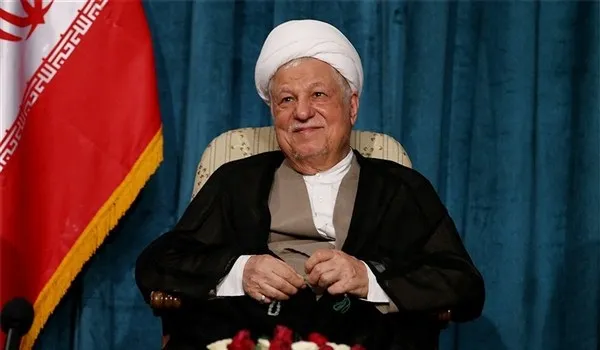
Today, instead of the President, the Speaker of the Parliament accompanied me. Early in the morning, to lay a wreath at the statue of Amir Alishir Navoi, their poet and philosopher, who has many works in Persian and Uzbek and is considered a national hero in their history, we went together to the National Garden. A group of people were gathered for
Today, instead of the President, the Speaker of Parliament accompanied me. First thing, to lay a wreath at the statue of Alisher Navoi, their poet and philosopher who has many works in Persian and Uzbek and is considered their national historical hero, we went to the National Garden. A crowd of people had been lined up there to express their feelings.
From there we went to the massive Independence Square, which was formerly built as Red Square. They said during the Soviet era, Red Square with a statue of Lenin existed in all republics, but in Uzbekistan, immediately after independence, they brought down the Lenin statue and changed the name of the square. It is a very vast and beautiful square with tall government buildings in
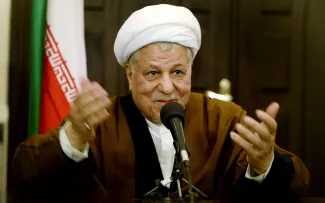
Photo Central Asia
there. Right there, we visited a metro station. It is very magnificent and beautiful with granite and marble stones. The head of the metro gave good explanations.
From there we went to the Institute of Oriental Studies [Abu Rayhan Biruni, affiliated with the Academy of Sciences of Uzbekistan]. The director of the institute gave good explanations about their work and the repository of 40,000 old manuscript volumes and gave a welcome. I also spoke about the importance of the cultural heritage of the two countries and the shared Islamic civilization and the many similarities and the necessity of our cooperation, and I expressed regret over the youth becoming estranged from old cultural treasures due to the abandonment of the Arabic alphabet. Then, at the insistence of Mr. [Abbas] Maleki, we visited the library repository; it was difficult for them and they only accepted four people.
I forgot to write; before these, we went to see the Jameh Mosque in the old quarter of Tashkent city, which was not destroyed in the 1966 earthquake and remains in the same way with narrow alleys and humble old houses. They said a population of 500,000 lives there. The Friday Imam and the head of the spiritual administration of overseas gave explanations. We visited the mosque and the mosque museum. We saw a Kufic manuscript Quran on deer skin which they claimed was the handwriting of Uthman himself, the third caliph. They gave me a photocopy of all its pages as a gift.
Then we participated in a meeting at the old Barak-Khan Madrasah, in the spiritual administration of Mawarannahr. The head of the administration gave good explanations and welcomed us. I also spoke at length and encouraged them to develop Islamic centers.
The last program before noon was a visit to a massive aircraft factory. The factory manager was a Russian engineer who gave explanations. They build and assemble the wings and fuselage of the massive Ilyushin 760 cargo plane and the Ilyushin 114 passenger plane and the even larger wings of the Antonov cargo plane. The halls are very massive.
We returned to the residence. After lunch, prayer, and rest, we moved toward the Iranian goods store established with the participation of the Mostazafan Foundation and the Uzbek government; the goods are from us and the management and building from them and the profit is divided 50%.
A large crowd gathered outside the store. We passed in front of them on foot. I responded to their expressions of emotion. The Speaker of Parliament was surprised by this warm welcome from the people, and generally when passing through the streets, people usually gathered and sometimes expressed their feelings. It was not the government's policy for us to have public maneuvers and we were also being considerate.
We went to the airport. Mr. Karimov was waiting for us. A joint interview was held about the results of the trip and with a send-off similar to the welcome, we flew toward Bishkek, the capital of Kyrgyzstan. We were on the way for an hour and arrived at sunset.
The weather here is cloudy. They gave a warm welcome with an inspection and parade. We held a joint interview and moved toward Bishkek. Our residence is at the state guesthouse in western Bishkek.
After prayer and rest, we moved toward the Arts Center building to participate in a gathering of artists. The Ruhaniyat Association has invited us. "Ruhaniyat" here does not mean the term used in Iran, but rather means artistic and spiritual matters. The head of the Ruhaniyat Association is a modern and intellectual teacher named Akhund who welcomed us and gave explanations about the statue of "Manas" and his parents, saying his mother was Persian. Their legendary national hero is like the Iranians' Rostam. In the large theater hall, they were very warm. They gave me a horse and a hunting falcon as gifts and awarded me honorary membership in the association. I accepted the judge's hat and gave a short speech for them. A few of us went for negotiations and the rest of the delegation stayed for the ceremony. Later, Effat and Fati said that dancing was planned and it was good that we did not stay. In the massive presidential palace, we negotiated for an hour about cooperation items. To the residence
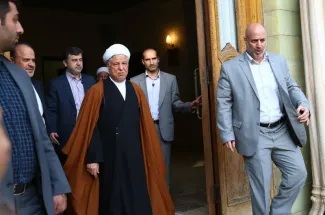
Photo Central Asia trip
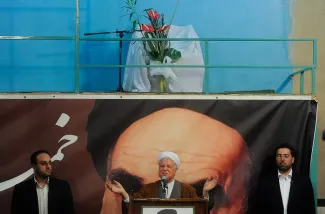
Photo Central Asia trip
we returned. I ate dinner and wrote the memoirs. I listened to the Persian radio and American news and we slept.
Take less than a minute, register and share your opinion under this post.
Insulting or inciting messages will be deleted.
Sign Up