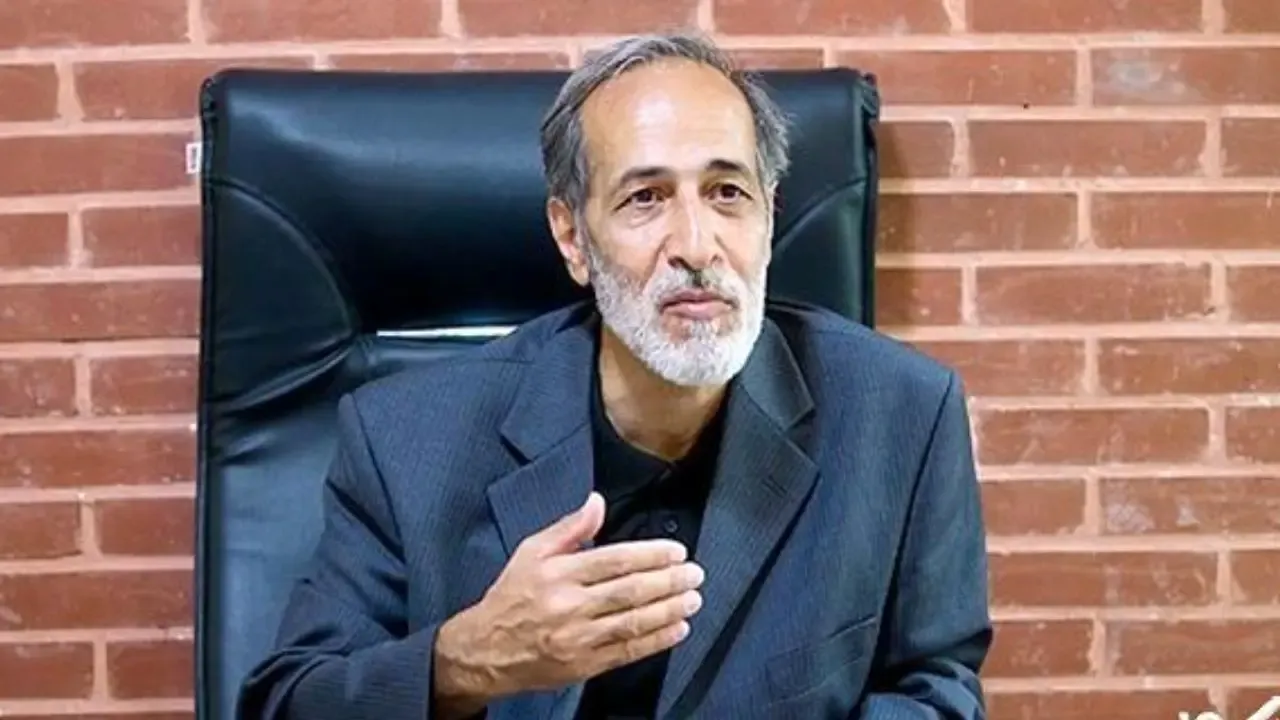
Dr. Nosratollah Tajik, politician, diplomat, author, international affairs analyst, activist and political prisoner before the 1979 Islamic Revolution, born in November 1953 in Tehran, is one of the most prominent and simultaneously most eventful diplomats in Iran over the four decades since the revolution. Tajik, with a dense and tumultuous career including Iran's ambassadorship to Jordan, governorship of Hormozgan province, sustained presence in the structure of the Ministry of Foreign Affairs, candidacy for the tenth term of the Islamic Consultative Assembly in December 2015, and finally, the experience of six years of house arrest in England at the request of the United States (2006-2012), has traversed one of the most unique professional paths among Iranian diplomats.
Who is Nosratollah Tajik?
Dr. Nosratollah Tajik, politician, diplomat, author, international affairs analyst, activist and political prisoner before the 1979 Islamic Revolution, born in November 1953 in Tehran, is one of the most prominent and simultaneously most eventful diplomats in Iran over the four decades since the revolution. Tajik, with a dense and tumultuous career including Iran's ambassadorship to Jordan, governorship of Hormozgan province, sustained presence in the structure of the Ministry of Foreign Affairs, candidacy for the tenth term of the Islamic Consultative Assembly in December 2015, and finally, the experience of six years of house arrest in England at the request of the United States (2006-2012), has traversed one of the most unique professional paths among Iranian diplomats.
The importance of Dr. Nosratollah Tajik in Iran's political-diplomatic sphere can be examined from several perspectives. First, his revolutionary background and imprisonment by SAVAK — during his student years, he was arrested several times by the Pahlavi regime's security-intelligence forces — formed the foundation of his revolutionary credibility in the structure of the Islamic Republic. Second, the controversial and painful case of his arrest on October 26, 2006, in Durham, England, and six years of house arrest, which ultimately ended with a judgment of innocence by the British High Court on December 13, 2012, is considered one of the most high-profile judicial-diplomatic cases of Iran in the past two decades. Third, his sustained and high-profile presence in Iran's media-analytical space in the years following his return — particularly on prominent platforms such as Iranian Diplomacy, Fararu, Etemad Online, Ensaaf News, and other reformist-moderate media — has made him one of the main references for analyzing Iran's foreign policy, Iran-US relations, regional developments, and issues related to the nuclear file. Fourth, his explicitly critical view of the structure of the Ministry of Foreign Affairs — which from the perspective of an internal diplomat, in his view is an "inefficient, corrupt, rotten, and patched-up structure" operating "under the heavy shadow of irresponsible institutions" — indicates his explicit intra-establishment criticism.
In recent months, in one of his most widely reported positions (December 2025), Tajik stated: "Iran is suspicious of the United States and Israel and will not take any action regarding its enriched materials without obtaining guarantees from the other nuclear powers" — a position considered one of the most cited analyses in the tense atmosphere of nuclear negotiation discourse following US and Israeli military strikes.
Life and Background
Nosratollah Tajik was born in November 1953 in Tehran. This generation, born in the aftermath of the August 19, 1953 coup d'état, came of age during the socio-economic transformations of the land reform era, the formation of the urban middle class, and ultimately the events of the 1979 Islamic Revolution.
Student Activities and Imprisonment by SAVAK
After entering university, Tajik began his political activities against the Pahlavi regime, and in line with these actions, he was arrested several times by security forces and SAVAK. This experience, which occurred during his student years, formed the foundation of his revolutionary-political credibility in the structure of the Islamic Republic after the revolution and placed him in the generation of pre-revolutionary student activists — a generation that, during the 1970s, under intense pressure from the imperial security apparatus, played a role in opposition activities.
Executive Positions in the Islamic Republic
After the victory of the 1979 Islamic Revolution, Tajik joined the nascent governmental structure of the Islamic Republic and over the following decades worked in various executive and diplomatic positions.
Governor of Hormozgan Province
One of Tajik's early notable positions in the executive structure of the Islamic Republic was the governorship of Hormozgan province. Hormozgan, a key southern province of Iran on the coast of the Persian Gulf and the Gulf of Oman, is considered one of the most important provinces in the country due to its geopolitical location (bordering the Strait of Hormuz and the Persian Gulf sheikhdoms), economic significance (key ports including Bandar Abbas, Shahid Rajaei Port, and Qeshm), and cultural diversity (with various ethnic identities).
The governorship of Hormozgan is considered one of the most sensitive provincial positions in Iran's executive structure — a position that places an individual at the intersection of internal management, border affairs, regional relations, and port economics. This experience formed the foundation of Tajik's familiarity with practical management issues in strategic fields.
Iran's Ambassadorship to Jordan
The turning point in Tajik's diplomatic career was his appointment as Ambassador of the Islamic Republic of Iran to the Hashemite Kingdom of Jordan — a position he held during a tense period before the regional uprisings and in the complex atmosphere of Iran-Jordan relations. Jordan, as one of Iran's neighbors (though geographically distant), is considered one of the key Arab-Sunni countries in the region and one of America's strategic allies in the Middle East. The ambassadorship to Jordan was considered one of the complex missions in Iran's diplomatic structure.
Tajik's mission as ambassador to Jordan ended in October 2006 — the month in which a new and, at the same time, critical chapter of his life began.
The Story of Arrest in England and Six Years of House Arrest (2006-2012)
The most high-profile chapter of Nosratollah Tajik's career is his arrest in Durham, England — a case that became one of the longest-running judicial-diplomatic cases of Iran in the past two decades.
Arrest on October 26, 2006
On October 26, 2006, after completing his mission as ambassador to Jordan, Tajik was arrested in Durham, England, on charges of "purchasing 10 night-vision cameras for the Islamic Republic of Iran." His first court hearing was held two days after his arrest, and his detention continued.
The court announced that Tajik's arrest was carried out at the request of the US government based on the extradition agreement between the United States and Britain signed in 2003. This agreement, signed in the post-September 11 atmosphere within the framework of anti-terrorism cooperation between the two countries, has been one of the most frequently used tools by the United States for arresting citizens of third countries on British soil in past decades.
Temporary Release on £500,000 Bail
Following follow-ups by Iran's Ministry of Foreign Affairs and the Embassy of the Islamic Republic of Iran in London, Tajik was temporarily released on £500,000 bail and placed under house arrest with strict security measures.
Iran's Diplomatic Efforts
During Tajik's six years of house arrest in England, Iran's diplomatic apparatus made extensive efforts for his release:
Three high-level delegations from Iran traveled to England
In March 2011, Hassan Qashqavi (Deputy Consular, Parliamentary and Iranian Affairs Minister at the Ministry of Foreign Affairs) traveled to London
Two legal and consular delegations from the Islamic Republic were sent to England
The charge d'affaires and ambassador of Britain in Tehran were summoned to the Ministry of Foreign Affairs more than 50 times
Numerous notes regarding Tajik's release were sent to the British embassy in Tehran and the British Foreign Office
Extradition Ruling and Its Subsequent Annulment
On April 19, 2007, the court judge announced the final ruling for Tajik's extradition to the United States; but due to his physical condition and illness, the court postponed extradition pending determination of the former diplomat's health status. This postponement, in practice, became one of the longest delays in extradition cases in the history of British-American legal relations.
Finally, on Thursday, December 13, 2012, with the official announcement by the British Home Office that there was no objection to the court's ruling, the lower court issued a final ruling annulling Tajik's extradition to the United States and ordering his release.
Return to Iran with the Assistance of the Omani Government
After the annulment of the extradition ruling, Tajik flew from Stansted Airport (located 60 kilometers northeast of London) to Oman on a Falcon aircraft. The Sultanate of Oman, considered one of the few countries in the region with sustained friendly relations with both Iran and the West, played a key role in mediating for Tajik's release. The spokesperson of Iran's Ministry of Foreign Affairs, at his weekly press briefing, expressed gratitude for "the good cooperation and assistance of the Omani government in securing Tajik's release."
After a brief stop in Muscat, Tajik arrived at Tehran's Mehrabad Airport and was received by Hassan Qashqavi — who had persistently followed up on diplomatic missions related to his release in previous years as well.
Controversies at the End of the Case
According to reports published in Asr-e Iran newspaper, financial controversies arose at the end of the case, indicating that "payment of lawyers' fees was conditional upon the transfer of Tajik's residential property to the Ministry of Foreign Affairs." This issue was considered one of the criticisms raised at the time regarding the way the case was managed by the official structure.
Candidacy for the Tenth Parliament (December 2015)
After returning to Iran and spending some time focusing on analytical-media activities, Tajik announced his candidacy for the tenth term of the Islamic Consultative Assembly in December 2015. This move indicated his desire to return to the political-organizational arena after the eventful experience of six years in England.
Analytical-Media Activity
After returning to Iran, Tajik became one of the most prominent analytical figures in the field of foreign policy in Iranian media. His sustained presence on prominent media platforms — Iranian Diplomacy (with continuous articles), Fararu, Etemad Online, Ensaaf News, Eghtesad Online, Asr-e Iran, Jam-e Jam, and Dideban Iran — has made him one of the main references for analyzing Iran's foreign policy developments over the past decade.
See / Diplomacy in Limbo | Iran, Victim or Sacrificial Altar? Exclusive Interview with Abdi Media
Views and Analytical Positions
Dr. Nosratollah Tajik, throughout his analytical career following his return to Iran, has formulated a clear intellectual-analytical framework that can be traced in several axes.
Structural Criticism of the Ministry of Foreign Affairs
One of Tajik's most widely reported positions is his structural criticism of Iran's Ministry of Foreign Affairs. In one of his notable stances, he stated: "Our Ministry of Foreign Affairs, although replete with experience and possessing personnel familiar with Iran's external environment, firstly, is part of that same inefficient, corrupt, rotten, and patched-up administrative structure of the country. And secondly, unfortunately, the heavy shadow of irresponsible institutions has influenced it and has marginalized expert work and accountability for political design and diplomatic maneuvers."
This position, issued from the perspective of an internal diplomat with four decades of experience in the official structure, has received widespread coverage in Iran's media space.
Emphasis on "Political Therapy"
In one of his notable positions, Tajik stated that Iran's foreign policy "needs political therapy" and added: "Foreign policy decisions should not be made in private gatherings." This position, in which Tajik points to the informal decision-making structure in Iran's foreign policy, is considered one of his explicit criticisms of the power structure.
Defense of Negotiation with the United States
The most central strategic position of Tajik is his defense of negotiation with the United States. In one of his notable stances, he stated: "The United States bombed the negotiating table with Iran, but negotiation should not become taboo." This position indicates his realistic view of the necessity of continuing diplomacy, even after US and Israeli military strikes on Iran in June 2025.
Challenging the Snapback Mechanism
In one of his notable legal analyses, citing Articles 31 and 61 of the 1969 Vienna Convention on the Law of Treaties and other capacities of international law, Tajik argued that to "challenge the snapback mechanism" activated by the European troika, these legal tools should be used. In his view, "We must argue in such a way that the Council cannot easily trigger the snapback."
View on the Assassination of General Soleimani
Regarding the assassination of General Qassem Soleimani by the United States on January 3, 2020, Tajik expressed a notable analytical response. In one of his positions, he stated: "We should try more, in addition to Article 51 of the UN Charter, to activate international legal capacities to file a complaint against Trump for the assassination of Iranian and Iraqi military personnel." This position indicates his law-oriented view of international issues.
Regarding Iran's response to the Soleimani assassination (the missile attack on the Ain al-Asad base in Iraq on January 8, 2020), Tajik analyzed: "It seems there is news that the Americans were informed of last night's attack. The news from Iranian state TV and the tweets from Trump and Zarif also indicate the satisfaction of both sides. It is hoped that this is the case."
Analysis of Regional Developments
Tajik is consistently active in analyzing key regional developments. Regarding developments in Lebanon and Saad Hariri, he stated: "Regional developments and the consequences of the destructive trend of regional policies and the initiation of proxy wars, along with political-economic problems, prompted the Future Movement and its leader Saad Hariri to acquiesce to compromise with calculation and rationalism and take steps in the direction of Lebanon's internal consensus."
Regarding the danger of ISIS in Jordan, Tajik warned: "There are many grounds, reasons, and evidence that Jordan could potentially become a new destination for ISIS to open a new front and continue war and power struggle there." This analysis indicates his expertise on Jordanian affairs and the depth of his understanding of that country.
Regarding post-Assad developments in Syria, Tajik emphasized: "Developments in eastern Syria have nothing to do with Iran" and added that "Syrian revolutionaries are seeking to demonize Iran."
View on the JCPOA
Regarding the JCPOA, Tajik holds a realistic view. In one of his positions, he stated: "The JCPOA cannot be expected to solve all our problems. The JCPOA is an opportunity that also carries threats, and it is the role of human forces to turn threats into opportunities." In another, he stated: "The JCPOA is the only way and we have no alternative; the JCPOA is the abacus of data..."
Diplomacy Beyond Negotiation
In his broader view, Tajik stated: "Diplomacy is not just negotiation with the United States and Europe, but also producing soft power and arming oneself with deterrent and bargaining capacities." This position indicates his multidimensional understanding of diplomacy as a comprehensive tool.
View on the 2025 Nuclear Negotiations
In the tense atmosphere following US and Israeli military strikes on Iran in June 2025, Tajik stated in one of his recent analyses: "Iran is suspicious of the United States and Israel and will not take any action regarding its enriched materials without obtaining guarantees from the other nuclear powers. This is not strange. The world accepts that if these two cannot impose their illegal demands through conventional means, they will try to achieve their goals and desires through unconventional means."
He also described the "wall of mistrust" as the most important obstacle to understanding between Tehran and Washington and added: "This mistrust has historical roots and has intensified over the years due to the lack of direct and continuous diplomatic relations."
Proposal for Trump's Special Envoy to Visit Iran
In one of his notable practical positions, Tajik proposed that "Trump's special envoy should make a trip to Iran" — an indication of his pragmatic view of the necessity of direct dialogue.
Criticism of the Consortium Plan with Iraq
In one of his notable analytical positions, Tajik criticized the Iran-Iraq academic consortium plan as "unrealistic": "We have neither academic cooperation, nor joint study centers, nor even serious student exchange. Therefore, proposing the idea of a consortium in such circumstances is not realistic and is more of an academic or theoretical project than an operational one."
Connections with Figures and Currents
Dr. Nosratollah Tajik is situated within a network of political-diplomatic connections with prominent figures of the Islamic Republic. At the diplomatic level, his relationship with Hassan Qashqavi (former Deputy Consular Affairs Minister at the Ministry of Foreign Affairs, who played a key role in pursuing his release case in England) is considered one of his closest professional-personal connections.
At the executive level, his relationship with the structure of the Ministry of Interior (during his governorship of Hormozgan) and the Ministry of Foreign Affairs (during his ambassadorship to Jordan and subsequent activities) forms his communication network within the official structure of the system.
At the media level, his relationship with Iranian Diplomacy (as a regular contributor), Fararu, Etemad Online, Ensaaf News, Eghtesad Online, Asr-e Iran, and other reformist-moderate media outlets is considered among his key professional connections.
At the international level, the Sultanate of Oman — which played a key role in mediating for his release from England — is one of his special connections in the realm of regional diplomatic relations.
Conclusion
Dr. Nosratollah Tajik is one of the most eventful and, at the same time, most experienced diplomats of the Islamic Republic who, with a dense career spanning five decades of activity — from student activities and imprisonment by SAVAK before the revolution, to the governorship of Hormozgan, Iran's ambassadorship to Jordan, the eventful experience of six years of house arrest in England (2006-2012), candidacy for the tenth parliament in December 2015, and finally, a sustained and high-profile presence in Iran's analytical-media space over the past decade — has occupied a unique position in Iran's diplomatic-analytical structure. His career — from his birth in November 1953 in Tehran, student activities against the Pahlavi regime, multiple arrests by SAVAK, service in the executive structure of the Islamic Republic (as governor of Hormozgan and ambassador to Jordan), the painful experience of arrest in Durham, England, six years of house arrest, release with the help of the Omani government, parliamentary candidacy, and finally, playing a role as one of the most prominent foreign policy analysts in Iranian media — presents a picture of a multidimensional "experienced and eventful diplomat-analyst."
Tajik's distinguishing feature, at the first level, is his unique dual background of imprisonment — a characteristic in which a politician was both imprisoned by the imperial SAVAK before the revolution and, after the revolution, spent six years in house arrest in England at the request of the United States. This dual experience is relatively unique among Iranian diplomats and has given him an experiential foundation for analyzing the dynamics of Iran-West relations. At the second level, his courage in structurally criticizing the Ministry of Foreign Affairs — coming from the perspective of an internal diplomat with four decades of activity in the official structure — is one of the notable aspects of his analytical character.
From an analytical perspective, Tajik's position exemplifies the phenomenon of the "independent diplomat-analyst with experiential backing" in contemporary Iran — a phenomenon in which a figure with extensive experience in the official structure of the system, at the same time, criticizes that same structure in the public sphere with a critical-analytical view. This pattern, which has other examples among former Iranian diplomats (such as Sirous Nasseri, Hossein Mousavian, Sadegh Kharrazi, and others), has found particular reflection in Tajik with the distinctive characteristic of his painful experience of imprisonment in the West.
What is clear from today's perspective is that the issues Tajik has addressed in his analyses — from nuclear negotiations, the snapback mechanism, Iran-US relations, regional developments (Lebanon, Syria, Jordan, Iraq), structural criticism of the Ministry of Foreign Affairs, and diplomacy beyond negotiation — remain among the most enduring topics of discussion in contemporary Iran's foreign policy discourse. At a time when Iran is in one of the most tense periods of its contemporary history — particularly after the 12-day Iran-Israel war, the activation of the snapback mechanism by the European troika, and the growing challenges of the nuclear file — Tajik's analytical voice, combining deep diplomatic experience, close familiarity with the dynamics of Iran-West relations (especially with his personal experience of imprisonment in England), and a critical-constructive view, will remain one of the main references of this discourse.
Frequently Asked Questions
Who is Nosratollah Tajik?
Dr. Nosratollah Tajik (born November 1953 in Tehran) is a politician, diplomat, author, international affairs analyst, activist and political prisoner before the 1979 Islamic Revolution. Throughout his long career, he has served in numerous positions including Governor of Hormozgan province, Ambassador of Iran to Jordan, and finally, one of the most prominent foreign policy analysts in Iranian media.
What is Tajik's revolutionary background?
After entering university, Tajik began his political activities against the Pahlavi regime, and in line with these actions, he was arrested several times by security forces and SAVAK. This background formed the foundation of his revolutionary-political credibility in the structure of the Islamic Republic after the revolution.
Why was Tajik arrested in England?
On October 26, 2006, after completing his mission as ambassador to Jordan, Tajik was arrested in Durham, England, on charges of "purchasing 10 night-vision cameras for the Islamic Republic of Iran." The court announced that the arrest was carried out at the request of the US government based on the extradition agreement between the United States and Britain signed in 2003.
How did Tajik's England case end?
After paying £500,000 bail and six years of house arrest under strict security measures, on December 13, 2012, the lower court issued a final ruling annulling his extradition to the United States and ordering his release. In the release process, the Sultanate of Oman played a key mediating role, and Tajik flew from London's Stansted Airport to Oman and then to Tehran on a Falcon aircraft. At Mehrabad Airport, Hassan Qashqavi — then Deputy Consular Affairs Minister at the Ministry of Foreign Affairs — received him.
What are Tajik's executive records?
Among Tajik's most important executive positions are the governorship of Hormozgan province (one of the most sensitive southern provinces of Iran on the coast of the Persian Gulf and the Strait of Hormuz) and Iran's ambassadorship to the Hashemite Kingdom of Jordan (until October 2006). He also announced his candidacy for the tenth term of the Islamic Consultative Assembly in December 2015.
What is Tajik's view on the Ministry of Foreign Affairs?
Tajik is one of the serious structural critics of Iran's Ministry of Foreign Affairs. In one of his notable positions, he has stated: "Our Ministry of Foreign Affairs, although replete with experience and possessing personnel familiar with Iran's external environment, firstly, is part of that same inefficient, corrupt, rotten, and patched-up administrative structure of the country. And secondly, unfortunately, the heavy shadow of irresponsible institutions has influenced it and has marginalized expert work and accountability for political design and diplomatic maneuvers."
What is Tajik's view on negotiation with the United States?
The most central strategic position of Tajik is his defense of negotiation with the United States. In one of his notable stances, he stated: "The United States bombed the negotiating table with Iran, but negotiation should not become taboo." He has also described the "wall of mistrust" as the most important obstacle to understanding between Tehran and Washington.
What is Tajik's view on the snapback mechanism?
In one of his notable legal analyses, citing Articles 31 and 61 of the 1969 Vienna Convention on the Law of Treaties and other capacities of international law, Tajik argued that to "challenge the snapback mechanism" activated by the European troika, these legal tools can be used.
What is Tajik's view on the 2025 nuclear negotiations?
In the tense atmosphere following US and Israeli military strikes on Iran, Tajik stated: "Iran is suspicious of the United States and Israel and will not take any action regarding its enriched materials without obtaining guarantees from the other nuclear powers." He also proposed that "Trump's special envoy should make a trip to Iran" — an indication of his pragmatic view of the necessity of direct dialogue.
Is Nosratollah Tajik still active?
Yes, Dr. Nosratollah Tajik is one of the most prominent foreign policy analysts in Iranian media over the past decade. His sustained presence on prominent media platforms — from Iranian Diplomacy (with regular articles), to Fararu, Etemad Online, Ensaaf News, Eghtesad Online, and Asr-e Iran — has made him one of the main references for analyzing Iran's foreign policy developments. His recent notable analyses on nuclear negotiations, the snapback mechanism, and Iran-US relations have received widespread coverage in Persian-language media.
Take less than a minute, register and share your opinion under this post.
Insulting or inciting messages will be deleted.
Sign Up