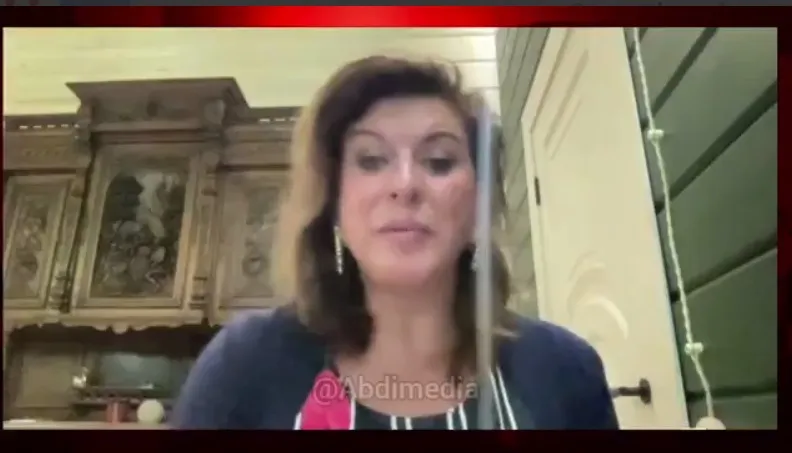
Dr. Lana (Svetlana) Ravandi-Fadai, a prominent Iranologist, author, translator, and Iranian-Russian university professor, is one of the most distinguished academic figures in the field of contemporary Iranology worldwide. A senior researcher at the Institute of Oriental Studies of the Russian Academy of Sciences, professor at the Russian State University for the Humanities (RGGU), and director of the Center for Oriental Culture, she has built a bridge between two ancient cultures — Iranian and Russian — through her unique family background (an Iranian father from Kerman who immigrated to the Soviet Union and a Russian mother). Her academic fame is largely due to her notable book "Caught in the Whirlwind" (co-authored with Touraj Atabaki, translated by Abtin Golkar, Baran Publishers, Sweden, 2024), which examines the fate of more than 20,000 Iranian victims of Stalin's widespread repressions in the Soviet Union. Ravandi-Fadai, as a member of the Valdai Club (Russia's most prestigious intellectual-political club) and through her sustained presence in media outlets such as Izvestia, Sputnik Iran, and Iranian news agencies, is one of the most frequently cited Russian analysts on the dynamics of power in contemporary Iran, leadership succession scenarios, and Iran-US relations.
Who is Lana Ravandi-Fadai?
Dr. Lana (Svetlana) Ravandi-Fadai, a prominent Iranologist, author, translator, and university professor, is one of the most distinguished Iranian-Russian academic figures in the field of contemporary Iranology. With a unique combination of dual cultural background (Iranian father - Russian mother), scientific expertise in the field of Iran-Soviet/Russia relations, and sustained presence in prominent academic institutions of the Russian Federation, she has become one of the main bridges between Iranian culture and Russian culture in contemporary Russian academia. Ravandi-Fadai is a senior researcher at the Institute of Oriental Studies of the Russian Academy of Sciences (one of the most prestigious centers of Oriental studies in the world), a professor in the Department of Contemporary Eastern Studies at the Russian State University for the Humanities (RGGU), and the director of the Center for Oriental Culture.
The importance of Dr. Ravandi-Fadai in the global sphere of Iranology can be examined from several perspectives. First, her unique family background — in which her Iranian father, originally from Kerman, was among the communists who emigrated to the Soviet Union — has provided a dual cultural-linguistic foundation for her research in the field of Iran-Soviet relations. This background, in which her father — in her own words — went to the Soviet Union for communist ideological reasons, later regretted this decision, but remained there, is considered one of the high-profile narratives of "Iranians who went to the Soviet Union" — a narrative that ultimately became the main subject of the daughter's academic research. Second, her dual expertise — which includes historiography of Iran-Soviet relations (focusing on Stalinist repressions, the Communist University of the Toilers of the East (KUTV), and dual-nationality architects) and contemporary political analysis (focusing on Iran-US relations, Iran-Russia relations, regional developments, and power dynamics in contemporary Iran) — has made her one of the few academic figures capable of bridging Iran's past and present. Third, her sustained collaboration with Touraj Atabaki — a renowned professor of Iranian history at the International Institute of Social History in Amsterdam — and the publication of the notable book "Caught in the Whirlwind: The Fate of Iranian Victims of Stalin's Purges in the Soviet Union" (Persian translation by Abtin Golkar, Baran Publishers, Sweden, 2024), has placed her among the main architects of the historical revision of Iran-Soviet relations.
Ravandi-Fadai, as a prominent member of the Valdai Discussion Club — Russia's most prestigious intellectual-political club — and through her sustained presence in prominent international media outlets (from Izvestia and News.az to IMESclub, Sputnik Iran, IRNA, Mehr News, KhabarOnline, Fararu, and IQNA), has become one of the most widely cited Russian academic voices on Iran in the global media-political space.
Life and Family Background
Dr. Lana (Svetlana) Ravandi-Fadai was born and raised in Russia. Detailed information about her exact date of birth is limited in open media sources, but what is clear from her numerous interviews is her unique Iranian-Russian family background, which has formed the foundation of her academic-intellectual identity.
Iranian Father from Kerman
According to Ravandi-Fadai's accounts in numerous interviews, her father was from the city of Kerman — one of Iran's historically and culturally significant cities in the southeastern part of the country. Her father, in the mid-20th century, emigrated to the Soviet Union due to his communist ideological leanings and settled there. In Ravandi-Fadai's accounts, her father later regretted this decision, but due to the conditions of that period — including restrictions on reverse migration from the Soviet Union to Iran during the Cold War — he was unable to return to his homeland and remained in the Soviet Union.
This background, which is part of the broader narrative of "Iranians who went to the Soviet Union" — a group of whom more than 20,000 became victims of Stalin's widespread repressions during the 1930s and 1940s — ultimately became the main subject of Ravandi-Fadai's doctoral research. This personal-academic connection is considered one of the notable aspects of her research character.
Education and Academic Activity
Ravandi-Fadai pursued her university education in Russia and ultimately succeeded in obtaining a PhD in the field of Iranology and contemporary Iranian history. In the Russian academic hierarchy, she has advanced to the rank of Senior Research Fellow — a prominent academic rank.
Activity at the Institute of Oriental Studies of the Russian Academy of Sciences
The turning point in Ravandi-Fadai's academic career is her membership at the Institute of Oriental Studies of the Russian Academy of Sciences (RAS). This institute, with a history of over two centuries, is considered one of the world's most prestigious centers of Oriental studies and is among the leading centers for research related to Iran, the Middle East, and Central Asia.
Ravandi-Fadai works as a senior researcher in the Department of Iranian Studies at this institute. In addition, she also teaches Persian language and literature at the Institute of Oriental Studies.
Professor at the Russian State University for the Humanities (RGGU)
Ravandi-Fadai works as an Associate Professor in the Department of Contemporary Eastern Studies at the Russian State University for the Humanities — known in Russia by the acronym RGGU. This university, one of Russia's most prestigious universities in the humanities, is considered among the main centers for training specialists in Oriental studies and regional studies in Russia.
Director of the Center for Oriental Culture
Another notable position of Ravandi-Fadai is the directorship of the Center for Oriental Culture. This center is considered among the prominent cultural-academic institutions active in the field of Iranian culture and other Eastern countries in the Russian Federation and carries out numerous activities in the field of Russian-Iranian cultural dialogue.
Academic and Research Works
Dr. Ravandi-Fadai is the author of more than 50 scientific works in the fields of Iranology, contemporary Iranian history, and Iran-Russia relations. Her most important works include:
The Book "Caught in the Whirlwind"
Ravandi-Fadai's most prominent work is a co-authored book with Professor Touraj Atabaki (renowned professor of Iranian history at the International Institute of Social History in Amsterdam, Netherlands) with the full title "Caught in the Whirlwind: The Fate of Iranian Victims of Stalin's Purges in the Soviet Union." This work, published in a Persian translation by Abtin Golkar by Baran Publishers in Sweden in 2024, is one of the first comprehensive studies on the fate of Iranians who became victims of Stalin's widespread repressions in the Soviet Union during the 1930s and 1940s.
This book, written using Russian archival documents and interviews with survivors, provides a new foundation for understanding one of the forgotten chapters of contemporary Iranian history. In this work, the authors estimate that more than 20,000 Iranians became victims of Stalinist repressions during this period — Iranians, many of whom had gone to the Soviet Union for ideological, economic, or political reasons.
The Book "Red Iranology"
Another notable work of Ravandi-Fadai is the book "Red Iranology," in which she examines the history of Iranian studies in the Soviet Union and the Russian Federation. This book is considered one of the reference works in the field of Russian Iranology historiography.
The Article "The Communist University of the Toilers of the East (KUTV)"
One of Ravandi-Fadai's notable articles is "The Communist University of the Toilers of the East (KUTV): Iranian Researchers and Students in Moscow 1920-1930," published in the Quarterly of History of Foreign Relations in 2017. This article examines the role of the prominent KUTV university — which, in the interwar period, was a center for training communist cadres for Eastern countries and where a significant number of Iranian students also studied.
The Article "Iran-US Relations: From Tension to Dialogue?"
Ravandi-Fadai has also published a notable article titled "Iran-US Relations: From Tension to Dialogue?" in the Russian International Affairs Council (RIAC) — one of Russia's most prestigious think-tanks in the field of international relations. This article indicates her expertise in the field of contemporary Iranian foreign policy analysis.
Chapter in the Book "Russians in Iran"
Ravandi-Fadai has also written a chapter in the notable international book "Russians in Iran: Diplomacy and Power in the Qajar Era and Beyond" — an academic collection published by prominent international publishers. This work is considered among the reference sources in the field of the history of Russian-Iranian relations in the Qajar era.
Main Research Areas
The main axes of Ravandi-Fadai's research throughout her academic career are:
Contemporary Iranian history (especially the Pahlavi and Islamic Republic periods)
Iran-Soviet and then Iran-Russia relations
Dual-nationality architects (such as Nikolai Markov, a Russian-Iranian architect active in Iran during the first Pahlavi period)
The Communist University of the Toilers of the East (KUTV) and Iranian migration to the Soviet Union
Stalin's widespread repressions and their Iranian victims
Iran-US relations and contemporary diplomacy scenarios
The North-South corridor and regional economic diplomacy
Caucasus and Central Asian security
Power dynamics in contemporary Iran
Academic Collaborations
Ravandi-Fadai is active in a network of international academic connections:
Professor Touraj Atabaki (International Institute of Social History, Amsterdam) — her main collaborator on the book "Caught in the Whirlwind"
Elena Andreeva — Russian-American Iranologist
Rudi Matthee — prominent Iranian historian at the University of Delaware, USA
Abtin Golkar — prominent translator of works from Russian to Persian (translator of "Caught in the Whirlwind")
Nina Mamedova — prominent Iranologist at the Institute of Oriental Studies of the Russian Academy of Sciences
International Media Presence
Ravandi-Fadai has become one of the most prominent Russian voices on Iran in prominent international media outlets:
Valdai Discussion Club: Russia's most prestigious intellectual-political club
News.az: a prominent Azerbaijani news-analytical platform
Izvestia: one of Russia's oldest newspapers
IMESclub (Middle East and Africa Studies Club)
Sputnik Iran: a Russian-Persian language media network
Iranian news agencies: including IRNA, Mehr News, KhabarOnline, Fararu, and IQNA
Views and Analytical Positions
Throughout her analytical career, Ravandi-Fadai has formulated a clear intellectual-political framework that can be traced in several axes.
Analysis of Generational Evolution in the Islamic Republic System
In one of her notable analytical positions, Ravandi-Fadai analyzed Mojtaba Khamenei — the son of Iran's Supreme Leader Ayatollah Ali Khamenei — describing him as "a more complex and even more revolutionary figure than his father — a fighter." This analysis, which was reflected in numerous Russian and Iranian media outlets, was one of the most widely cited Russian academic assessments of power dynamics in contemporary Iran.
Also, in the period before Ebrahim Raisi's martyrdom, Ravandi-Fadai had identified Raisi as a "possible future leader" of Iran — an analysis that received widespread attention in the space of leadership succession scenario forecasting.
Rejection of the Pahlavi Monarchy Restoration Scenario
In one of her notable and widely cited positions, Ravandi-Fadai stated: "The return of the Pahlavi monarchy to Iran is practically impossible." This position, in the context of numerous activities by Reza Pahlavi in recent years, received widespread coverage in Persian-language media both inside and outside the country.
Rejection of a US Ground Operation Scenario
In one of her notable strategic analyses, Ravandi-Fadai stated: "A ground operation against Iran would be suicide for the Trump administration." This position, which was reflected in the tense atmosphere of Iran-US relations during Trump's second administration, indicates her realistic view of the limitations of US military power in the region.
Warning About a Hasty Agreement
In one of her analytical positions, Ravandi-Fadai warned that "a hasty agreement with the United States will be to Tehran's detriment." This position indicates her precise view of the dynamics of negotiations, in which haste by one party can lead to unnecessary concessions.
Emphasis on the Depth of Iranian Culture
A distinguishing feature of Ravandi-Fadai's intellectual framework is her emphasis on the depth of Iran's cultural and identity roots. In her view, "Iranian culture and identity have roots deeper than political ideology" — a position in which the analysis of Iran's developments is conducted not only based on contemporary ideological-political variables but also with attention to deeper cultural-historical structures.
The Full Recording of Abdi Media's Interview with Professor Lana Ravandi-Fadai; Director of the Center for Oriental Culture and Senior Researcher at the Institute of Oriental Studies of the Russian Academy of Sciences
Hear without filter in the cassette box
Connections with Figures and Currents
Ravandi-Fadai is active in a network of international academic-intellectual connections. At the academic level, her relationship with the Institute of Oriental Studies of the Russian Academy of Sciences, the Russian State University for the Humanities (RGGU), the International Institute of Social History in Amsterdam (through Touraj Atabaki), and Baran Publishers in Sweden (the Persian publisher of the book "Caught in the Whirlwind") are considered among her key connections.
At the peer-specialist level, her relationship with prominent figures in international Iranology — including Touraj Atabaki, Elena Andreeva, Rudi Matthee, and Nina Mamedova — forms a broad academic network.
At the intellectual-political level, her relationship with the Valdai Club — where figures such as Sergei Karaganov, Fyodor Lukyanov, and other prominent Russian analysts are active — is considered one of the most important hubs of her analytical activity.
Conclusion
Dr. Lana (Svetlana) Ravandi-Fadai is one of the most prominent Iranian-Russian academic figures in the field of contemporary Iranology. With a unique combination of a dual cultural background (Iranian father from Kerman and Russian mother), academic education and activity in Russia (the Institute of Oriental Studies of the Russian Academy of Sciences and the Russian State University for the Humanities, RGGU), dual expertise in the historiography of Iran-Soviet relations and contemporary political analysis, and extensive media presence at the international level (from the Valdai Club to prominent Russian and Iranian media outlets), she has occupied a unique position in contemporary Iranology. Her career — from her education in Russia, prolific academic activity as a senior researcher at the Russian Academy of Sciences, teaching at RGGU University, directorship of the Center for Oriental Culture, publication of more than 50 scientific works, notable collaboration with Touraj Atabaki on the book "Caught in the Whirlwind," and sustained presence at the Valdai Club and international media outlets — presents a picture of a multidimensional "Iranologist-cultural bridge."
Ravandi-Fadai's distinguishing feature, at the first level, is her dual Iranian-Russian identity — an identity that provides not only a personal background but also a unique academic asset for bridging the two rich cultures of Iran and Russia. This characteristic is relatively rare among contemporary Russian Iranologists and places her in a special category of researchers. At the second level, her dual expertise in history and contemporary politics — in which a prominent historiographer, at the same time, analyzes Iran's contemporary political developments at the Valdai Club and in international media outlets — is one of the notable aspects of her academic character.
From an analytical perspective, Ravandi-Fadai's position exemplifies the phenomenon of the "third-generation Iranologist in Russia" — a phenomenon in which the children of Iranians who emigrated to the Soviet Union (the land of their fathers), in their third generation, combine family-cultural background and classical Russian academic training to operate in the field of Iranology. This phenomenon, which has other examples in the structure of contemporary Russian academia, has found particular reflection in Ravandi-Fadai with her special focus on the fate of Iranian immigrants to the Soviet Union (which is also her personal-family experience).
What is clear from today's perspective is that the issues Ravandi-Fadai has focused on in her research and analyses — from the history of Iran-Soviet relations and the fate of victims of Stalinist repressions, to Iran-US relations, power dynamics in the Islamic Republic system, leadership succession scenarios, and regional security issues — remain among the most enduring topics of discussion in contemporary Iran's academic-political discourse. At a time when Iran-Russia relations are in one of the most tense and, at the same time, most strategic periods of their contemporary history — particularly after the Russia-Ukraine war, the 12-day Iran-Israel war, and possible negotiation scenarios with Trump — Ravandi-Fadai's analytical-academic voice, combining deep historical background and sustained presence in prominent Russian intellectual clubs, will remain one of the main references of this discourse.
Frequently Asked Questions
Who is Lana Ravandi-Fadai?
Dr. Lana (Svetlana) Ravandi-Fadai is a prominent Iranologist, author, translator, and Iranian-Russian university professor. She is a senior researcher at the Institute of Oriental Studies of the Russian Academy of Sciences, a professor in the Department of Contemporary Eastern Studies at the Russian State University for the Humanities (RGGU), and the director of the Center for Oriental Culture. Her unique family background — in which her Iranian father was from Kerman and among the Iranian immigrants to the Soviet Union — forms the foundation of her academic-intellectual identity.
What is Ravandi-Fadai's most important work?
Ravandi-Fadai's most prominent work is the co-authored book with Professor Touraj Atabaki titled "Caught in the Whirlwind: The Fate of Iranian Victims of Stalin's Purges in the Soviet Union." This book was published in Persian translation by Abtin Golkar by Baran Publishers in Sweden in 2024. The work is one of the first comprehensive studies on the fate of Iranians who became victims of Stalin's widespread repressions during the 1930s and 1940s.
What is the background of Ravandi-Fadai's father?
According to Ravandi-Fadai's accounts, her father was from the city of Kerman and emigrated to the Soviet Union in the mid-20th century due to his communist ideological leanings. After some time, he regretted this decision, but due to Cold War restrictions, he was unable to return to Iran. This background formed the foundation of Ravandi-Fadai's academic research on the fate of Iranian immigrants to the Soviet Union.
What is Ravandi-Fadai's main expertise?
The main axes of Ravandi-Fadai's expertise and research are: contemporary Iranian history, Iran-Soviet and Iran-Russia relations, dual-nationality architects (such as Nikolai Markov), the Communist University of the Toilers of the East (KUTV), Stalin's widespread repressions and their Iranian victims, Iran-US relations, the North-South corridor, and the security of the Caucasus and Central Asia.
In which institutions is Ravandi-Fadai active?
Ravandi-Fadai is active in three prominent academic institutions: the Institute of Oriental Studies of the Russian Academy of Sciences (as a senior researcher in the Department of Iranian Studies, teaching Persian language), the Russian State University for the Humanities (RGGU) (as a professor in the Department of Contemporary Eastern Studies), and the Center for Oriental Culture (as director). She also has a sustained presence at the Valdai Club — Russia's most prestigious intellectual-political club.
What is Ravandi-Fadai's view on the return of the Pahlavi monarchy?
In one of her notable and widely cited positions, Ravandi-Fadai has stated: "The return of the Pahlavi monarchy to Iran is practically impossible." This position, in the context of numerous activities by Reza Pahlavi in recent years, has received widespread coverage in Persian-language media both inside and outside the country.
What is Ravandi-Fadai's analysis of Mojtaba Khamenei?
In one of her notable analytical positions, Ravandi-Fadai described Mojtaba Khamenei (the son of Iran's Supreme Leader Ayatollah Ali Khamenei) as "a more complex and even more revolutionary figure than his father — a fighter." This analysis was one of the most widely cited Russian academic assessments of power dynamics in contemporary Iran.
What does Ravandi-Fadai say about US military action against Iran?
In one of her notable strategic analyses, Ravandi-Fadai has stated: "A ground operation against Iran would be suicide for the Trump administration." This position indicates her realistic view of the limitations of US military power in the region. She has also warned that "a hasty agreement with the United States will be to Tehran's detriment."
In which media outlets does Ravandi-Fadai appear?
Ravandi-Fadai has become one of the most prominent Russian voices on Iran in prominent international media outlets, including: the Valdai Discussion Club, Izvestia (one of Russia's oldest newspapers), News.az (a prominent Azerbaijani news-analytical platform), IMESclub, Sputnik Iran, and Iranian news agencies including IRNA, Mehr News, KhabarOnline, Fararu, and IQNA.
Is Lana Ravandi-Fadai still active?
Yes, Ravandi-Fadai is consistently active in three areas: academic activity (as a senior researcher at the Russian Academy of Sciences, a professor at RGGU University, and director of the Center for Oriental Culture), publication of scientific works (more than 50 works to date, with her most recent notable work being the book "Caught in the Whirlwind" in 2024), and analytical-media presence (at the Valdai Club and prominent Russian and Iranian media outlets). Her recent analyses of Iran-US relations, leadership succession scenarios in Iran, and regional issues are consistently reflected in international media outlets.
Take less than a minute, register and share your opinion under this post.
Insulting or inciting messages will be deleted.
Sign Up