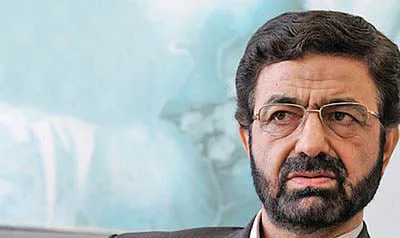
Dr. Fadahossein Maleki, an Iranian politician, diplomat, and seasoned executive manager, born on January 12, 1955, in the village of Esmail Ghanbar in Zabol city, is one of the most enduring and multidimensional executive-diplomatic figures of the Islamic Republic. He has served as Iran's former ambassador to Afghanistan (2007-2011), advisor to the president in the tenth administration, secretary of the Anti-Narcotics Headquarters, head of the Anti-Smuggling of Goods and Currency Headquarters, chairman of the board of Persepolis Football Club, and representative of Zahedan in the eleventh parliament. In June 2024, he also registered as a candidate for the presidential election. In an exclusive interview with Abdi Media, Maleki analyzed "the Islamic Republic's scenarios for open diplomacy with the United States" and, as a member of the National Security and Foreign Policy Commission, elaborated on his views regarding the conditions, red lines, and possible consequences of Iran entering into direct negotiations with the United States.
Who is Fadahossein Maleki?
Dr. Fadahossein Maleki, an Iranian politician, diplomat, and seasoned executive manager, born on January 12, 1955, in the village of Esmail Ghanbar (formerly part of Shib Ab district in Zabol city, Sistan and Baluchestan province), is one of the most enduring and multidimensional executive-diplomatic figures of the Islamic Republic over the past two decades. Maleki, who was born into a religious farming family, with a career spanning notable positions — including Iran's ambassador to Afghanistan (from 2011), advisor to the president in the tenth administration of Mahmoud Ahmadinejad, secretary of the Anti-Narcotics Headquarters, head of the Central Headquarters for Combating Smuggling of Goods and Currency, chairman of the board of Persepolis Football Club (from September 2012), and the second representative of Zahedan constituency in the eleventh parliament — is considered one of the most experienced managers active in the fields of foreign policy, national security, and the development of Sistan and Baluchestan province.
The importance of Fadahossein Maleki in Iran's political-diplomatic sphere can be examined from several perspectives. First, his notable diplomatic experience in Afghanistan — which occurred during a sensitive period of that country's developments (from 2011 onward and negotiations related to the construction of the Kamal Khan Dam) — places him among the reference figures for analyzing developments in Afghanistan. Second, his extensive executive background in areas related to borders and narcotics — including serving as secretary of the Anti-Narcotics Headquarters and head of the Central Headquarters for Combating Smuggling of Goods and Currency — due to the natural connection of these areas with his homeland (Sistan and Baluchestan province, which is Iran's eastern border), has given Maleki a strategic role in Iran's border security structure. Third, his representation in the eleventh parliament from Zahedan constituency and his membership in the National Security and Foreign Policy Commission — which placed him at the intersection of regional representation and international expertise — shaped his parliamentary career. Fourth, his registration as a candidate for the fourteenth presidential election in June 2024 — after the martyrdom of Ebrahim Raisi — indicated his political ambition at a higher level.
Despite his extensive career, Maleki's performance has also faced serious criticism, particularly regarding the lack of sufficient diplomatic action during his ambassadorship in Afghanistan on the issue of Iran's water rights from the Helmand River and the construction of the Kamal Khan Dam — an issue that in later years became one of the main challenges in Iran-Afghanistan relations.
Life and Background
Fadahossein Maleki was born on January 12, 1955, in the village of Esmail Ghanbar — formerly part of Shib Ab district in Zabol city, Sistan and Baluchestan province — into a religious farming family. The permanent residence of his family was the village of Karami Shib Ab.
This background — being born in one of the most underprivileged regions of Iran, in the heart of Sistan (an area with a distinct historical-cultural identity and numerous developmental challenges) — is one of the notable aspects of Maleki's political character, reflected throughout his career in his continuous stances defending the interests of Sistan and Baluchestan province.
Born in 1955, Maleki belongs to a generation that spent its childhood and adolescence in the final years of the Pahlavi era and, in his youth, witnessed the events of the 1979 Islamic Revolution and then the Iran-Iraq war (which also had widespread effects in the border regions of Sistan).
Education
Fadahossein Maleki pursued his university education in political science and ultimately succeeded in obtaining a PhD in Political Science. This academic expertise forms his intellectual foundation, which was reflected in later years in his diplomatic and security positions.
Executive Responsibilities Before Ambassadorship
Before his notable diplomatic mission in Afghanistan, Maleki worked in various executive positions in the post-revolution years. These positions were mainly focused on areas connected with his homeland (Sistan and Baluchestan) and the strategic challenges of this region (narcotics, smuggling, border security):
Secretary of the Anti-Narcotics Headquarters
One of Maleki's notable positions was serving as secretary of the Anti-Narcotics Headquarters — an institution in Iran's security-executive structure responsible for anti-narcotics policy-making. This position, given Iran's border location neighboring Afghanistan (as one of the world's most important narcotics producers) and the position of Sistan and Baluchestan as the main entry point for narcotics, is considered one of the most sensitive security-executive positions in Iran.
Head of the Central Headquarters for Combating Smuggling of Goods and Currency
Maleki also served as head of the Central Headquarters for Combating Smuggling of Goods and Currency — a position that was a natural continuation of his border-security responsibilities.
Special Representative of the President
Maleki also served as the special representative of the president and advisor to the president in the tenth administration of Mahmoud Ahmadinejad. These positions indicate his sustained connection with the government structure during the Ahmadinejad era.
Iran's Ambassadorship to Afghanistan (from 2011)
The turning point in Maleki's diplomatic career was his appointment as Iran's ambassador to Afghanistan from 2011. This mission occurred during one of the most sensitive periods of Iran-Afghanistan relations and involved several strategic challenges:
The Kamal Khan Dam Negotiations
During Maleki's ambassadorship, the construction of the Kamal Khan Dam in Afghanistan was seriously initiated. The Kamal Khan Dam is a dam on the Helmand River in Afghanistan, which in later years, with the reduction of water flow into Iran, became one of the main challenges in bilateral relations.
According to published accounts, "the lack of action by Iran's diplomatic apparatus, especially Fadahossein Maleki, Iran's then ambassador, in explaining Iran's water rights at that time, is considered one of the serious criticisms of his performance." This criticism is one of the most enduring media critiques of Maleki's diplomatic career, which gained wider attention in later years with the worsening of the water crisis in Sistan.
The US Presence in Afghanistan
Maleki's ambassadorship coincided with the US military presence in Afghanistan. In later years, in one of his notable analytical positions, Maleki stated: "The presence and military occupation of Afghanistan by the United States over the past two decades brought nothing but..." — indicating his critical view of the period of US military presence in the region.
Stance on the Taliban
After the developments of 2021 and the Taliban's return to power in Afghanistan, in one of his notable positions, Maleki stated: "Recognizing the Taliban is currently not on our agenda, but people-to-people contacts exist." This position indicates his cautious approach towards the new Afghan administration.
Chairmanship of the Board of Persepolis Football Club (September 2012)
One of the notable and distinctive positions in Maleki's career was his membership on the board of directors of Persepolis Cultural Sports Club from September 2012, and then his chairmanship of the board. Persepolis FC, one of Iran's most popular football clubs, which at that time was still under state ownership, was considered a controversial management position.
This appointment, in Iran's sports-management structure, was an example of the phenomenon of "diplomatic-executive managers at the head of sports clubs" — a phenomenon that has been repeated many times in Iran's state-owned clubs over the past decades.
Representation in the Eleventh Parliament (2019-2023)
After his diplomatic mission, Maleki turned to the parliamentary arena and, in the elections of February 2019, was elected as the second representative of Zahedan constituency — the capital of Sistan and Baluchestan province — to the eleventh parliament. This position marked his return to high-level policy-making.
Membership in the National Security and Foreign Policy Commission
During his parliamentary term, Maleki served as a member of the National Security and Foreign Policy Commission — a commission in which, given his diplomatic and security expertise, he played an active role.
Notable Parliamentary Stances
During his parliamentary term, Maleki took numerous stances:
Vienna Negotiations and JCPOA: In one of his notable positions, regarding the Vienna nuclear negotiations, he stated: "Destroying the negotiating team with the aim of disappointing the people is not approved." And in another analysis: "Very good steps have been taken in the field of sanctions removal..."
Negotiations with Saudi Arabia: Regarding Iran-Saudi Arabia talks, Maleki stated: "There is a very important issue in the negotiations with Saudi Arabia..." — indicating his role in analyzing Iran's regional diplomacy.
The Imam Reza Shrine Incident: In one of his widely reported positions, he announced the National Security Commission's involvement in the Imam Reza Shrine incident — indicating his parliamentary role in following up on notable security incidents.
Mediation in Ukraine: Regarding the Russia-Ukraine war, Maleki stated in one of his notable positions: "All European countries are seeking Iran's mediation in the Ukraine conflict, and this request is not only..." — a position indicating his analysis of Iran's diplomatic standing in the Ukraine crisis.
COVID-19 Controversies in Zahedan: One of his most widely reported parliamentary stances was his protest against incorrect statistics of COVID-19 deaths in Sistan and Baluchestan. In one of his notable positions, he stated: "They give incorrect statistics on the number of deaths. We have no equipment or hospitals; they say beds are empty..." — a position indicating his serious defense of the interests of Sistan and Baluchestan province in the tense post-COVID atmosphere.
Registration for the Fourteenth Presidential Election (June 2024)
One of Fadahossein Maleki's most high-profile recent moves was his registration for the fourteenth presidential election — an election held early after the martyrdom of Ebrahim Raisi on May 20, 2024.
Maleki appeared at the Election Headquarters on the third day of candidate registration (Saturday, June 1, 2024) and introduced himself as a presidential candidate. This move indicated his political ambition at a high level, although ultimately his qualification was not approved by the Guardian Council.
Views and Positions
Throughout his long career, Fadahossein Maleki has formulated a clear intellectual-political framework that can be traced in several axes.
Emphasis on Iran's Water Rights from the Helmand River
The most central strategic position of Maleki in recent years is his pursuit of Iran's water rights from the Helmand River. In one of his notable positions, he stated: "Afghanistan has not yet given any share of Iran's water rights. Their actions are based on no basis or logic, and also contrary to neighborhood, legal, and religious principles." He also, in one of his important analyses, introduced dam construction in Afghanistan as intended to "harm Iran."
Interestingly, Maleki's recent stance on the Helmand issue is, in practice, an attempt to compensate for the criticism raised regarding his lack of action during his ambassadorship on the Kamal Khan Dam issue.
Defense of the Interests of Sistan and Baluchestan
An enduring feature of Maleki's approach is his defense of the interests of Sistan and Baluchestan province — his birthplace and constituency. This defense has been reflected in his numerous stances on Helmand water rights, COVID-19 statistics, provincial development, and other related issues.
Realistic View of Afghanistan
In the field of relations with Afghanistan, Maleki — as a former ambassador and expert on Afghan issues — takes a realistic approach to the country. Regarding the Taliban, despite his cautious view of official recognition, he emphasizes people-to-people contacts.
View on Iran's Defensive Capacity
In one of his notable positions, regarding Iran-Israel tensions, he stated: "Israel cannot do such a thing for several reasons because basically Israel's defensive capability and strength is not at this level. Their advancement is not to the extent that they want to send drones and missiles thousands of kilometers. Of course, Iran has anticipated the necessary measures and has plans; definitely this time our response will be harsher."
Support for the Nuclear Negotiating Team
Throughout his parliamentary career, Maleki has supported Iran's nuclear negotiating team against domestic critics. In one of his notable positions, he condemned "destroying the negotiating team with the aim of disappointing the people."
Abdi Media's interview with Fadahossein Maleki on the topic of the Islamic Republic's scenarios for open diplomacy with the United States
Watch the full interview video:
Listen unfiltered on Castbox
Connections with Figures and Currents
Fadahossein Maleki is situated within a network of political-executive connections in the power structure of the Islamic Republic. At the executive level, his relationship with Mahmoud Ahmadinejad (in whose tenth administration Maleki served as advisor and vice president) is among his key connections. This connection indicates his affiliation with the principlist government spectrum of that period.
At the diplomatic level, his relationship with Iran's diplomatic structure during the Ahmadinejad administration and then subsequent administrations forms his communication network within the Ministry of Foreign Affairs and security-intelligence institutions.
At the parliamentary level, his relationship with prominent figures of the National Security and Foreign Policy Commission of the eleventh parliament forms his parliamentary communication network.
At the regional level, his relationship with prominent figures of Sistan and Baluchestan — especially other representatives of this province in parliament and its socio-political activists — constitutes his regional connections.
Conclusion
Dr. Fadahossein Maleki is one of the most enduring and multifaceted executive-diplomatic figures of the Islamic Republic. With a dense career over four decades after the revolution — including notable managerial positions (secretary of the Anti-Narcotics Headquarters, head of the Central Headquarters for Combating Smuggling of Goods and Currency), executive positions (advisor and vice president to the president in the tenth administration), diplomatic positions (Iran's ambassador to Afghanistan from 2011), sports positions (chairman of the board of Persepolis Football Club from September 2012), and parliamentary positions (representative of Zahedan in the eleventh parliament, member of the National Security and Foreign Policy Commission) — he has occupied a distinctive position in Iran's executive-political power structure. His career — from his birth on January 12, 1955, in the village of Esmail Ghanbar in Zabol city, doctoral studies in political science, sustained activity in the fields of border security and anti-narcotics, ambassadorship to Afghanistan during the sensitive period of the Kamal Khan Dam, chairmanship of the board of Persepolis, representation in the eleventh parliament, and finally, his registration for the fourteenth presidential election in June 2024 — presents a picture of a multidimensional "experienced manager-diplomat-representative."
Fadahossein Maleki's distinguishing feature, at the first level, is his sustained connection with his homeland (Sistan and Baluchestan province) — a connection reflected throughout his career, from activities related to the border (narcotics and smuggling), to ambassadorship to the eastern neighbor (Afghanistan), and finally, parliamentary representation of the provincial capital (Zahedan). This regional endurance, in Iran's political structure, exemplifies the phenomenon of the "manager-representative with a strong regional identity." At the second level, his ability to transition across different arenas — from executive-security to diplomatic, from diplomatic to sports, and from sports to parliamentary — indicates his rare professional flexibility.
From an analytical perspective, Maleki's position exemplifies the phenomenon of the "permanent manager of the power structure" in the Islamic Republic — a phenomenon in which a manager with extensive expertise and experience, across different political periods, works in numerous positions. This pattern, which has numerous examples among contemporary Iran's senior managers, has found particular reflection in Maleki with the special feature of his close connection with Iran's eastern border region.
What is clear from today's perspective is that the issues Maleki has addressed in his long career — from Helmand water rights and relations with Taliban-ruled Afghanistan, to border challenges of Sistan and Baluchestan, nuclear negotiations, and defense of provincial interests — remain among the most important topics of discussion in contemporary Iran's foreign policy-security discourse. At a time when water challenges in Sistan and Baluchestan, Iran's relations with the Taliban administration in Afghanistan, and eastern border security issues remain among the country's most complex problems, the experience and perspectives of Fadahossein Maleki, as one of Iran's most experienced diplomats in Afghanistan, will remain one of the reference sources for analyzing these challenges — although criticisms of his performance during his ambassadorship also remain part of this expert legacy.
Frequently Asked Questions
Who is Fadahossein Maleki?
Dr. Fadahossein Maleki (born January 12, 1955, in the village of Esmail Ghanbar, Zabol city) is an Iranian politician, diplomat, and seasoned executive manager who has served in numerous positions including former ambassador of Iran to Afghanistan (from 2011), advisor to the president in the tenth administration, former secretary of the Anti-Narcotics Headquarters, chairman of the board of Persepolis Football Club (from September 2012), and second representative of Zahedan in the eleventh parliament.
What is Fadahossein Maleki's educational background?
Fadahossein Maleki pursued his university education in political science and succeeded in obtaining a PhD in Political Science. This academic expertise forms his intellectual foundation, reflected in his diplomatic and security positions.
What characterized Maleki's ambassadorship to Afghanistan?
Maleki served as Iran's ambassador to Afghanistan from 2011 — a period that coincided with the serious initiation of the Kamal Khan Dam construction (a dam on the Helmand River that led to a reduction in Iran's water rights). One of the serious criticisms of Maleki's performance was the lack of sufficient action by Iran's diplomatic apparatus in explaining Iran's water rights at that time — an issue that gained wider attention in later years with the worsening of the water crisis in Sistan.
What is Maleki's view on the Taliban?
After the developments of 2021 and the Taliban's return to power in Afghanistan, Maleki has adopted a cautious stance. In one of his notable positions, he stated: "Recognizing the Taliban is currently not on our agenda, but people-to-people contacts exist." He has also taken a harsh stance towards the Taliban government on the issue of Helmand water rights, stating that "dam construction in Afghanistan is intended to harm Iran."
What role did Maleki play at Persepolis Football Club?
From September 2012, Fadahossein Maleki served as a member of the board of directors of Persepolis Cultural Sports Club and, at one point, became chairman of the board of this club. Persepolis FC, one of Iran's most popular football clubs, was under state ownership at that time, and its management was considered controversial.
What role did Maleki play in the eleventh parliament?
Maleki was elected as the second representative of Zahedan constituency in the February 2019 elections to the eleventh parliament and, during his parliamentary term, served as a member of the National Security and Foreign Policy Commission. In his notable parliamentary stances, he addressed issues such as the Vienna negotiations, relations with Saudi Arabia, the Imam Reza Shrine incident, mediation in Ukraine, and Helmand water rights.
For which presidential election did Maleki register?
On the third day of candidate registration (Saturday, June 1, 2024) for the fourteenth presidential election — held early after the martyrdom of Ebrahim Raisi — Maleki appeared at the Election Headquarters and introduced himself as a candidate. This move indicated his political ambition at a high level, although ultimately his qualification was not approved by the Guardian Council.
What is Maleki's view on negotiations with Saudi Arabia?
As a member of the National Security and Foreign Policy Commission, Maleki has taken a constructive approach regarding Iran-Saudi Arabia negotiations. In one of his notable positions, he stated: "There is a very important issue in the negotiations with Saudi Arabia..." — indicating his role in analyzing Iran's regional diplomacy during the period of talks to restore relations with Riyadh.
Is Fadahossein Maleki still active?
Yes, despite the end of his term in the eleventh parliament, Fadahossein Maleki remains active as an analyst of foreign policy and Afghan issues in Iranian media. His analyses on topics such as relations with the Taliban, Helmand water rights, dam construction in Afghanistan, and border challenges of Sistan and Baluchestan province are consistently published in prominent Iranian media outlets (including ILNA, Etemad Online, and Didar News).
Take less than a minute, register and share your opinion under this post.
Insulting or inciting messages will be deleted.
Sign Up