
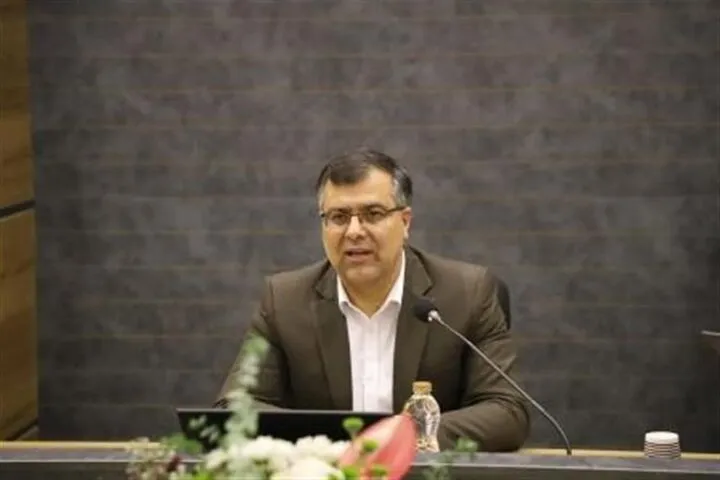
Dr. Ataollah Ebrahimi is an associate professor of nature engineering at the Faculty of Natural Resources and Geosciences, Shahrekord University. He is a prominent researcher in the fields of natural resources, watershed management, and rangeland ecology, with a special focus on the Zagros region and Chaharmahal and Bakhtiari province. He is the head of the second national conference on natural resources and sustainable development in Zagros and is considered one of the most prominent scientific figures in the field of participatory management and social actor conflicts in natural resources arenas.
Who is Ataollah Ebrahimi?
Dr. Ataollah Ebrahimi is an associate professor of nature engineering at the Faculty of Natural Resources and Geosciences, Shahrekord University. He is one of the prominent researchers in the fields of natural resources, watershed management, rangeland ecology, and participatory natural resource management in contemporary Iran. With a special focus on the Zagros region, Chaharmahal and Bakhtiari province, and the issues of social actors in natural arenas, he has become one of the academic authorities of the discourse on sustainable development of natural resources in western Iran. Ebrahimi, with a dense record of scientific-research articles, chairing prominent specialized conferences (including the Second National Conference on Natural Resources and Sustainable Development in Zagros in 2019), and a widely reflected presence in the academic discourse of natural resources, stands at the intersection of ecology, watershed management, social sciences of natural resources, and participatory management.
The importance of Dr. Ataollah Ebrahimi in the scientific-specialized sphere of Iran's natural resources can be examined from several aspects. First, his prominent academic position at Shahrekord University—one of the most important universities in Chaharmahal and Bakhtiari province in western Iran, which is considered one of the educational hubs of natural resources in the Zagros region. Second, his focused expertise in the field of "nature engineering"—an interdisciplinary field in which engineering sciences are integrated with biological and social sciences in connection with natural resource issues. This expertise, which is relatively new and expanding among Iran's academic disciplines, is a sign of his multidimensional view of natural resource issues. Third, his special focus on the Zagros region—as one of Iran's most important natural resource hubs, including oak forests, extensive rangelands, and key watersheds—which is reflected in his numerous works. Fourth, his distinct analytical framework in the field of "social actor conflicts in natural resource arenas"—in which the natural resource issue is analyzed not merely as a technical-environmental phenomenon, but as an arena of social and economic actions. Fifth, his enduring emphasis on public participation in the sustainable management of natural resources—which was reflected in the specialized roundtable of the journal "Nature of Iran" in 2024 and is one of his most important theoretical positions.
Life and Background
Detailed information about Dr. Ataollah Ebrahimi's date of birth, place of birth, and family background is limited in open media sources; a characteristic that is relatively common among university professors in technical-specialized fields, who primarily focus on their academic-research activities. What is clear from his professional path is that Ebrahimi belongs to the middle generation of Iranian natural resource researchers and has been consistently active at Shahrekord University—one of the academic hubs of the Zagros region—over the past years.
Education and Academic Background
The title "Dr." in his identification in official sources, and the rank of "Associate Professor" in Iran's academic structure, indicate his advanced academic background in the fields of natural resources, nature engineering, or similar fields. In Iran's academic ranking system, the rank of "Associate Professor" is considered one of the mid-to-upper scientific ranks, and its criterion is productive research output and scientific-research articles.
Ebrahimi's main expertise is concentrated in the following areas:
● Nature Engineering
● Watershed Management
● Rangeland Ecology
● Sustainable Natural Resource Management
● Remote Sensing in Natural Resources
● Participatory Natural Resource Management
● Sociology of Natural Resources (Analysis of Social Actor Conflicts)
● Plant Ecology
● Multi-Criteria Decision Making (MCE) Models
Shahrekord University and the Faculty of Natural Resources and Geosciences
The turning point of Ebrahimi's academic career is his membership in the faculty of Shahrekord University. Shahrekord University, which is among the oldest and most prestigious universities in Chaharmahal and Bakhtiari province, is considered one of the regional hubs in the fields of natural resources, agriculture, and veterinary medicine.
The Faculty of Natural Resources and Geosciences of Shahrekord University, where Ebrahimi is active, is one of the prominent specialized faculties of regional universities in Iran in the field of natural resources. This faculty, in which various fields of natural resources—including nature engineering, range management, watershed management, soil sciences, and geosciences—are taught, is considered one of the most important centers for training natural resource specialists in the Zagros region.
Distinguished Expertise: Nature Engineering
Ebrahimi is an associate professor of nature engineering; an interdisciplinary field that has developed as an independent discipline over the past two decades in Iran's academic structure, in which engineering principles, ecology, social sciences, and natural resource management are integrated. This expertise, which is among Iran's emerging academic disciplines, has given his views a multidimensional intellectual framework.
Chairing the Second National Conference on Natural Resources and Sustainable Development in Zagros (2019)
One of Ebrahimi's distinguished academic positions was chairing the Second National Conference on Natural Resources and Sustainable Development in Zagros in 2019. This conference, which is considered one of the prominent specialized conferences in the field of natural resources in the Zagros region, serves as a platform for presenting the latest research in this field.
Chairing this conference, in which dozens of researchers and natural resource specialists from across the country participated, is a sign of Ebrahimi's position in the academic discourse of natural resources in the Zagros region.
Scientific-Research Works
Dr. Ataollah Ebrahimi is the author of dozens of scientific-research articles in prominent domestic journals and national conferences. His most important research areas are:
Prominent Articles in the Field of Participatory Natural Resource Management
● "How to involve people in the sustainable management of natural resources" (in the specialized roundtable of the journal "Nature of Iran," 2024) — his most prominent analytical position in the past year.
● "Analysis of social actor conflicts in natural resource arenas and their impacts on rural society (Case study: Boroujen County)" (Rural Research Quarterly, 2017) — one of his prominent articles linking socio-economic issues with natural resources.
Prominent Articles in the Field of Nomads and Migration Territories
● "Analysis and investigation of changes in socio-economic characteristics of nomads in Khuzestan province" (Scientific Journal of Nomad Territory Planning Studies, 2022) — a prominent article on the socio-economic transformations of nomads.
Prominent Articles in the Field of Watershed Management
● "The necessity of a comprehensive approach in prioritizing and selecting watershed management operations: A case study of the Vastegan watershed in Chaharmahal and Bakhtiari province" (Fifth National Conference on Watershed Science and Engineering, 2009).
● "Investigation of land use changes in the Kashkan watershed of Poldokhtar before and after the flood using remote sensing data" (Second National Conference on Natural Resources and Sustainable Development in Zagros, 2019) — related to the prominent 2019 flood that caused extensive damage in Poldokhtar, Lorestan.
● "Investigation of the effect of land use change on the flood hydrograph of the Zayandeh River."
Prominent Articles in the Field of Rangeland Ecology
● "The effect of different growth forms on estimating plant production using the double-sampling method (Case study: Marjan rangeland in Chaharmahal and Bakhtiari province)" (2019).
● "Application of object-based classification in preparing and separating vegetation type maps (Case study: Marjan rangeland in Chaharmahal and Bakhtiari province)" (2019).
● "Investigation of the effect of some soil and environmental factors on the distribution of different vegetation types in the Marjan rangelands of Boroujen" (2019).
● "Site selection for suitable areas for the restoration of the Eurotio ceratoides plant species in the Marjan region of Boroujen using the MCE decision-making model" (2019).
● "Comparison of distance-based methods for measuring density in a simulated random distribution pattern" (Iranian Journal of Range and Desert Research, 2014).
This collection of articles, in which the Marjan rangeland in Boroujen County, Chaharmahal and Bakhtiari province, is recognized as one of Ebrahimi's prominent case studies, is a sign of his deep focus on the rangeland ecology of the Zagros region.
Views and Analytical Positions
Throughout his intellectual-research career, Dr. Ataollah Ebrahimi has formulated a clear intellectual framework, which can be traced in several areas.
Emphasis on Public Participation in Sustainable Natural Resource Management
The most central theoretical position of Ebrahimi is his emphasis on the necessity of public participation in the sustainable management of natural resources. In the prominent specialized roundtable of the journal "Nature of Iran" in 2024, which was held with his presence, "how to involve people in the sustainable management of natural resources" was the main focus of discussion.
This position, which in international natural resource literature is known as "Participatory Natural Resource Governance," stands in contrast to traditional command-and-centralized approaches to natural resource management. In Ebrahimi's view, it is one of the prerequisites for long-term sustainability in this field.
Analysis of Social Actor Conflicts
A distinguishing feature of Ebrahimi's analytical framework is linking socio-economic issues with natural resource issues. In his prominent article on "Analysis of social actor conflicts in natural resource arenas" (with a case study of Boroujen County), Ebrahimi addresses how "conflicts among various social actors—from farmers, herders, state institutions, to environmental activists—affect natural resource management and ultimately rural society."
This framework, in which the natural resource issue is analyzed as an arena of social actions, is a sign of his interdisciplinary view of this field.
Emphasis on a Comprehensive Approach to Watershed Management
In one of his prominent theoretical positions, Ebrahimi has emphasized "the necessity of a comprehensive approach in prioritizing and selecting watershed management operations." In his view, watershed management operations should not be implemented sporadically and without a coherent theoretical framework; rather, they should be conducted with a comprehensive and systemic perspective—one that considers all technical, social, economic, and environmental dimensions.
Emphasis on the Use of Modern Technologies
In his numerous studies, Ebrahimi has emphasized the use of modern technologies in natural resources—including Remote Sensing, Geographic Information Systems (GIS), object-based classification, and Multi-Criteria Decision Making (MCE) models. This approach, in which modern technologies serve the analysis of complex natural resource phenomena, is one of the notable aspects of his research framework.
Sensitivity to Zagros Floods
In one of his prominent studies, Ebrahimi investigated land use changes in the Kashkan watershed of Poldokhtar before and after the flood. This study, conducted in the aftermath of the widespread flood of April 2019—which caused serious damage to the city of Poldokhtar in Lorestan province and other areas of western Iran—is a sign of his sensitivity to the current issues of the Zagros region.
Focus on Nomadic Issues
Among the notable aspects of Ebrahimi's research is his special attention to the socio-economic issues of nomads—particularly the nomads of Khuzestan province. In his prominent article on "Analysis and investigation of changes in socio-economic characteristics of nomads in Khuzestan province," Ebrahimi addressed the socio-economic transformations of this population over recent decades and provided a framework for understanding its structural changes.
This focus, in which the nomadic issue is analyzed in connection with natural resource management, is one of the notable aspects of his research framework.
**See: The Water and Natural Resources Crisis: A Conversation Between Environmental Activist Mohammad Darvish and Ataollah Ebrahimi, Director of the Soil Conservation and Watershed Management Research Institute**
**Connections with Figures and Movements**
Dr. Ataollah Ebrahimi operates within a network of academic ties with prominent figures in Iran's natural resources field. At the academic level, his relationship with colleagues at Shahrekord University and researchers at the Faculty of Natural Resources and Geosciences forms his close professional network.
At the national level, his relationship with the network of natural resource researchers in the Zagros region and prominent figures in Iran's watershed management and rangeland management forms his discursive network.
At the institutional level, his relationship with the journal "Nature of Iran" (which published his prominent specialized roundtable in 2024), the Iranian Journal of Range and Desert Research, the Rural Research Quarterly, and the Scientific Journal of Nomad Territory Planning Studies are among his media-scientific connections.
**Listen | Water and Natural Resources Crisis: A Conversation Between Environmental Activist Mohammad Darvish and Ataollah Ebrahimi, Director of the Soil Conservation and Watershed Management Research Institute**
**Conclusion**
Dr. Ataollah Ebrahimi is one of the most prominent academic figures in the field of natural resources in the Zagros region of contemporary Iran. With a unique combination of specialized academic background (as an associate professor of nature engineering at the Faculty of Natural Resources and Geosciences, Shahrekord University), a distinct thematic focus on the Zagros region and Chaharmahal and Bakhtiari province, an interdisciplinary approach to natural resource issues, productive research output (with dozens of prominent articles in domestic journals and participation in prominent national conferences), chairing the Second National Conference on Natural Resources and Sustainable Development in Zagros (2019), and a distinct intellectual framework linking socio-economic issues with natural resources, he occupies a distinguished position in the academic structure of natural resources in western Iran.
Ebrahimi's distinguishing feature, on the first level, is his interdisciplinary approach to natural resource issues; a characteristic in which the natural resource issue is analyzed not merely as a technical-environmental phenomenon, but as an arena of social, economic, and cultural actions. This approach, which is reflected in his prominent research on "Analysis of social actor conflicts in natural resource arenas" and his position in the specialized roundtable of "Nature of Iran" on "Public participation in sustainable natural resource management," is one of the notable aspects of his intellectual framework. On the second level, his distinct thematic focus on the Zagros region and Chaharmahal and Bakhtiari province—as one of the most important natural resource hubs of Iran—in which the Marjan rangeland of Boroujen, the Vastegan watershed, and the Zayandeh River are recognized as prominent case studies, is one of the distinguishing aspects of his research record.
From an analytical perspective, Ebrahimi's position exemplifies the phenomenon of the "regional-specialist natural resource researcher" in contemporary Iran; a phenomenon in which a specialist, with a special focus on a prominent geographical-ecological region (in this case, the Zagros region and Chaharmahal and Bakhtiari province), over decades of academic activity, becomes one of the enduring authorities in that field. This pattern, which has other examples among contemporary Iranian natural resource researchers, has found a special reflection in Ebrahimi through the feature of linking the technical-ecological approach with the social-participatory approach.
What is clear from today's perspective is that the topics Ebrahimi has addressed in his research—from public participation in sustainable natural resource management, social actor conflicts in natural resource arenas, a comprehensive approach to watershed management, analysis of land use changes after floods, rangeland ecology of the Zagros region, and socio-economic issues of nomads—remain among the most enduring topics in the discourse of sustainable natural resource management in contemporary Iran. In a situation where Iran is in one of the most tense periods of its natural resource crisis—especially with the intensification of Zagros forest degradation, increasing rangeland challenges, and the water crisis in the Zayandeh River watershed—Ebrahimi's academic voice, with a combination of technical-scientific expertise and an interdisciplinary approach, is one of the references for specialized dialogue in this field in Iran's regional universities.
**Frequently Asked Questions**
**Who is Ataollah Ebrahimi?**
Dr. Ataollah Ebrahimi is an associate professor of nature engineering at the Faculty of Natural Resources and Geosciences, Shahrekord University, and one of the prominent researchers in the fields of natural resources, watershed management, rangeland ecology, and participatory natural resource management in contemporary Iran. With a special focus on the Zagros region and Chaharmahal and Bakhtiari province, he has become one of the academic authorities of the discourse on sustainable development of natural resources in western Iran.
**What is Ataollah Ebrahimi's academic expertise?**
Ebrahimi is an associate professor of nature engineering; an interdisciplinary field in which engineering principles are integrated with biological and social sciences in connection with natural resource issues. His sub-specialties include: watershed management, rangeland ecology, sustainable natural resource management, remote sensing, participatory management, sociology of natural resources, and Multi-Criteria Decision Making (MCE) models.
**What are Ataollah Ebrahimi's most important scientific works?**
Among Ebrahimi's most important works are the following articles: "How to involve people in the sustainable management of natural resources" (specialized roundtable of the journal "Nature of Iran," 2024), "Analysis of social actor conflicts in natural resource arenas" (Boroujen County, Rural Research Quarterly, 2017), "Analysis and investigation of changes in socio-economic characteristics of nomads in Khuzestan province" (2022), "Investigation of land use changes in the Kashkan watershed of Poldokhtar before and after the flood" (2019), and "The necessity of a comprehensive approach in prioritizing and selecting watershed management operations" (Vastegan watershed, 2009).
**What is Shahrekord University?**
Shahrekord University is one of the oldest and most prestigious universities in Chaharmahal and Bakhtiari province in western Iran, and is considered one of the regional hubs in the fields of natural resources, agriculture, and veterinary medicine. The Faculty of Natural Resources and Geosciences of this university, where Ebrahimi is active, is one of the most important centers for training natural resource specialists in the Zagros region.
**What are Ataollah Ebrahimi's prominent positions?**
Ebrahimi's prominent positions include: Associate Professor of Nature Engineering at the Faculty of Natural Resources and Geosciences, Shahrekord University, and Chair of the Second National Conference on Natural Resources and Sustainable Development in Zagros (2019).
**What is Ebrahimi's view on public participation?**
Ebrahimi's most central theoretical position is his emphasis on the necessity of public participation in the sustainable management of natural resources. This position, which received wide reflection in the specialized roundtable of "Nature of Iran" in 2024, stands in contrast to traditional command-and-centralized approaches to natural resource management and is one of the prerequisites for long-term sustainability in this field.
**What is the "social actor conflict" framework in Ebrahimi's view?**
In his prominent article on "Analysis of social actor conflicts in natural resource arenas" (with a case study of Boroujen County, 2017), Ebrahimi addresses how conflicts among various social actors—from farmers, herders, state institutions, to environmental activists—affect natural resource management and rural society. This framework is a sign of his interdisciplinary view of the natural resource field.
**What is the geographic focus of Ebrahimi's research?**
Ebrahimi's distinct thematic focus is on the Zagros region. His prominent case studies include: the Marjan rangeland in Boroujen County, Chaharmahal and Bakhtiari province; the Vastegan watershed (Chaharmahal and Bakhtiari); the Kashkan watershed of Poldokhtar (Lorestan); the Zayandeh River; and the nomads of Khuzestan province.
**What is Ebrahimi's methodological approach in research?**
In his numerous studies, Ebrahimi has emphasized the use of modern technologies—including Remote Sensing, Geographic Information Systems (GIS), object-based classification, and Multi-Criteria Decision Making (MCE) models. This approach, in which modern technologies serve the analysis of complex natural resource phenomena, is one of the notable aspects of his research framework.
**Is Ataollah Ebrahimi still active?**
Yes, Dr. Ataollah Ebrahimi, as an associate professor of nature engineering at Shahrekord University, remains active in academic activities—including teaching, research, and supervising student theses. His most recent notable position in the specialized roundtable of the journal "Nature of Iran" in 2024 on "How to involve people in the sustainable management of natural resources" is a sign of his enduring role in contemporary Iranian natural resource discourse.
Take less than a minute, register and share your opinion under this post.
Insulting or inciting messages will be deleted.
Sign Up