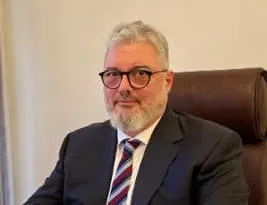
Dr. Amir Chaheki, an international affairs analyst, an expert on Russian issues and foreign policy, living in Germany, is one of the most well-known Persian-speaking analysts living in Europe in the field of international relations and regional developments. He has a specialized doctorate degree (medicine) and life experience in Russia, Belarus, and Afghanistan, and has become one of the main sources of analysis of Iran-Russia relations, regional developments after the Ukraine war, and the dynamics of the Iran-Israel war, with his continuous presence in a wide range of Persian-language media abroad - from Radio Farda and Insaf News to Million Iran and Abdi Media. Chaheki, who was previously the senior advisor to the CEO of Iran Khodro in export affairs and the founder and board member of two banks abroad, analyzed "Russia's role in the Iran-Israel war" in his landmark interview with Abdi Media and looked at Russian issues and foreign policy with his realistic view.
Who is Amir Chahaki?
Dr. Amir Chahaki, an international affairs analyst, expert on Russian issues and foreign policy, residing in Germany, is one of the most well-known Persian-language analysts based in Europe in the field of international relations and regional developments in recent years. Chahaki, who holds a PhD in International Relations, through his sustained and high-profile presence in a wide range of Persian-language media outlets outside Iran — from Radio Farda (especially on the program "Paragraph One") to Ensaf News (a regular contributor), Melion Iran, Abdi Media, and numerous YouTube channels — has become one of the main reference points for analyzing Iran-Russia relations, regional developments after the Ukraine war, and the dynamics of the 12-day Iran-Israel war.
The importance of Amir Chahaki in the Persian-language analytical sphere can be examined from several perspectives. First, his focused expertise on Russian issues — which is relatively rare among Persian-language analysts based outside Iran and has gained particular importance during peaks of the Ukraine crisis, strategic Iran-Russia relations, and Moscow's role in the Iran-Israel war. Second, his transparent critical approach to the foreign policy of the Islamic Republic — in which, through structural analysis, he criticizes the discourse of "neither East nor West" and the strategic issue of "driving Iran into a dead end" — has made him one of the prominent figures of the critical discourse on Iran's regional policy. Third, his bilingual and multimedia presence — which includes Persian-German conversations and continuous analyses on various platforms — has given him access to a broad Iranian and European audience.
Chahaki, in a notable interview with Abdi Media — in which he analyzed "Russia's role in the Iran-Israel war" — has also become one of the reference analysts of this platform in the field of international relations and Russian issues. This interview, published in June 2025 in the midst of the 12-day Iran-Israel war, is considered one of the most widely cited analyses of that period regarding the international dimensions of this war.
Life and Background
Published information about Amir Chahaki's exact date of birth, place of birth, and family background is limited in open media sources — a characteristic relatively common among Persian-language analysts based outside Iran. What is clear from his professional path is that Chahaki resides in Germany and has become one of the most experienced Persian-language analysts based in Europe in recent years.
This background — living in Germany as one of the important centers of Iranian analysis in Europe (alongside London, Paris, and other hubs) — has given Chahaki the opportunity for close contact with European research-analytical institutions active in the field of Iran. Prominent centers such as the Middle East Council on Global Affairs in Berlin — where figures such as Hamidreza Azizi (a non-resident researcher at this center) are active — are part of this intellectual-analytical space; a space in which Chahaki consistently appears alongside its prominent figures in media interviews and roundtables.
Education
Chahaki holds a PhD in International Relations. The title "Dr." used in contemporary Iranian media to identify him indicates his high academic degree. Detailed information about his university of study and the topic of his dissertation is limited in open media sources.
Expertise and Research Areas
The main axes of Chahaki's expertise and analytical activity over the past years are:
Russian Issues
Chahaki's most central expertise is Russian issues. In one of his notable introductions on YouTube, it states: "Analyst of Russian issues." This expertise includes topics such as Putin's foreign policy, the Russia-Ukraine war, the Russian opposition, Navalny's death, Moscow's strategic role in the Middle East, and Iran-Russia relations.
Iran's Foreign Policy
Chahaki consistently criticizes and analyzes the foreign policy of the Islamic Republic in his articles for Ensaf News and numerous media interviews.
Regional Developments
Analysis of regional developments — including the Iran-Israel war, Middle East issues, and regional tensions — is one of the consistent axes of his activity.
Nuclear Negotiations
Chahaki has published numerous analyses during the Vienna negotiations and discussions related to the JCPOA.
Presence in Prominent Persian-Language Media
In recent years, Chahaki has become one of the most prominent Persian-language analysts in prominent media outlets outside Iran.
Radio Farda
Chahaki consistently provides analysis on Radio Farda — especially on the prominent program "Paragraph One." In one of his most widely reported recent appearances on this program — on the topic "Regime change or collapse, which will end the war?" — he analyzed the dimensions of Iran's 2025 crisis alongside Hamidreza Azizi (non-resident researcher at the Middle East Council on Global Affairs, Berlin).
In another interview with Radio Farda titled "The overshadowing of the Ukraine issue by Iran is not in Russia's interest" — after the Iranian Foreign Minister's meeting with Vladimir Putin — Chahaki analyzed that "the Russian president may seek to force Iran to make concessions in negotiations with the United States as a way to satisfy Donald Trump."
Ensaf News
Chahaki is a regular contributor to Ensaf News — one of the prominent reformist media outlets in Iran. In one of his notable articles titled "Does Iran have illusions in foreign policy?" (May 2022), he traced the roots of the slogan "neither East nor West" and wrote: "The slogan 'neither East nor West'... perhaps flowed spontaneously on tongues and lacked specific ideological foundations or a political theory."
Abdi Media
Chahaki also conducted a notable interview on Abdi Media — a Persian-language analytical platform — on the topic of "Russia's role in the Iran-Israel war" in June 2025. This interview, published in the midst of the 12-day Iran-Israel war, is considered one of the most widely cited analyses of that period regarding the international dimensions of this war.
Melion Iran
Chahaki has also published interviews on the Melion Iran platform — a news-analytical site affiliated with the Iranian nationalist current outside Iran — including an important interview alongside Behrouz Bayat (a nuclear issues expert), one of the most experienced Persian-language nuclear experts.
Other Media
Chahaki also appears on YouTube platforms, reformist media inside Iran (including Sarpoosh), and other Persian-language media channels.
Views and Positions
Throughout his analytical career, Dr. Amir Chahaki has formulated a clear intellectual-political framework that can be traced in several axes.
Structural Criticism of the Foreign Policy of the Islamic Republic
Chahaki's most central analytical position is his structural criticism of the foreign policy of the Islamic Republic. In one of his notable analyses on Radio Farda, Chahaki described "driving Iran into a dead end" as the result of the policies of the leadership apparatus and identified "three contested axes in the regional policy of the Islamic Republic."
Criticism of the Slogan "Neither East Nor West"
In his notable article in Ensaf News, Chahaki described the slogan "neither East nor West" as a slogan that initially "lacked specific ideological foundations or a political theory" and believes that the transformation of this slogan into a principle of foreign policy by the structure of the Islamic Republic is one of the main roots of "illusion" in Iran's foreign policy.
Rejection of the Claim that Iran is Controlled by Russia
Contrary to many analysts who portray Russia as the controlling factor over Iran, in one of his notable positions, Chahaki stated: "If we look at the Vienna negotiations and the insistence of some political analysts on Russia controlling Iran's positions, we find no reliable grounds. Moscow's possible opposition to the JCPOA protocol in the new round of negotiations, assuming a conflict of interests between Moscow and an agreement between Tehran and Washington, will not affect the lifting of sanctions if the White House desires it." This position stands in opposition to the dominant discourse among some analysts who see Russia as an obstacle to an Iran-US agreement.
Analysis of Russia's Strategic Role in the Iran-Israel War
In numerous interviews in 2025, Chahaki analyzed Russia's role in the Iran-Israel war. In his view, "Putin may seek to force Iran to make concessions in negotiations with the United States as a way to satisfy Donald Trump." This analysis indicates his realistic view of the complex international relations between Russia, Iran, and the United States.
Criticism of the Diaspora Opposition
A distinctive and, at the same time, controversial feature of Chahaki's analytical position is his explicit criticism of the Persian-language diaspora opposition. In one of his notable positions, he stated: "The political leadership of a nationwide protest movement in a country as vast as Iran with a population of over 90 million has numerous requirements that are not observed in any part of the opposition outside Iran today. Neither in declared policies nor even in structures." This position, in which Chahaki, as an analyst residing outside Iran, engages in structural criticism of the opposition, is considered a rare example of intra-current criticism.
Ethical Sensitivity to Human Rights Issues
Chahaki has shown high ethical sensitivity in his interviews regarding internal protests in Iran. In a report by Sarpoosh based on an interview with him, it is narrated that Chahaki, when talking about the situation of protesters, "reached a point where he suddenly cried deeply for long moments... he kept saying 'I can't continue anymore.'" This narrative indicates his personal concern about Iran's human rights situation.
A View Beyond Political Interest
In the same interview, Chahaki stated: "Saving the life of every Iranian is above any political and factional expediency and interest, both inside and outside the country. History will make its own judgment, eventually an 'Independent Fact-Finding Committee' will be formed, and the dimensions of this incident will be determined. Governments are always responsible for everything that happens in their country."
Connections with Figures and Currents
Amir Chahaki is situated within a network of intellectual-media connections with prominent figures among Persian-language analysts. At the peer-analytical level, his relationship with figures such as Hamidreza Azizi (non-resident researcher at the Middle East Council on Global Affairs, Berlin) — who consistently appears alongside him in Radio Farda roundtables — is considered among his key connections. Also, his relationship with Behrouz Bayat (nuclear issues expert) — who appeared alongside him in the Melion Iran interview — is another of his connections.
At the media level, Chahaki's relationship with Radio Farda (as a regular guest on the program "Paragraph One"), Ensaf News (as a contributor), Abdi Media (as an interview guest), Melion Iran, and Sarpoosh forms a broad media communication network.
At the same time, Chahaki has also faced figures among his critics. In one article on Melion Iran, a critic criticized Chahaki for "justifying war by referencing the bombings of Nagasaki and Dresden" — a critique indicating persistent theoretical-political tensions among different factions of Persian-language analysts outside Iran.
See Russia's role in the Iran-Israel war Abdi Media's conversation with Amir Chaheki
Conclusion
Dr. Amir Chahaki is one of the most well-known and, at the same time, most prominent Persian-language analysts based in Europe in the field of international relations and foreign policy. With a unique combination of academic background (PhD in International Relations), focused expertise on Russian and Eurasian issues, permanent residence in Germany (which has given him access to the European intellectual-analytical space active in the field of Iran), and sustained media presence across a wide range of Persian-language platforms outside Iran, he occupies a distinctive position. His career — from his consistent presence on Radio Farda (the program "Paragraph One"), regular contributions to Ensaf News, notable interviews on Abdi Media (especially on Russia's role in the Iran-Israel war in June 2025), appearances on Melion Iran (in roundtables alongside Behrouz Bayat), and high-profile analyses on topics such as Navalny's death, the Russia-Ukraine war, the Vienna negotiations, and the Iran-Israel war — presents a picture of a multidimensional "critical international analyst."
Chahaki's distinguishing feature, at the first level, is his focused expertise on Russian issues — an expertise that is relatively rare among Persian-language analysts based outside Iran and has given him special analytical importance during periods of peak crisis in Iran-Russia relations and regional challenges. At the second level, his comprehensive critical approach — which simultaneously includes structural criticism of the foreign policy of the Islamic Republic, rejection of the dominant discourse about Russia controlling Iran, and explicit criticism of the Persian-language diaspora opposition — is considered one of the notable aspects of his analytical character; a characteristic that places him in a category of relatively independent analysts who have faced criticism from both sides of the discourse (inside and outside).
From an analytical perspective, Amir Chahaki's position exemplifies the phenomenon of the "critical Iranian-European specialist analyst" in contemporary Persian-language discourse — a phenomenon in which a researcher with deep academic expertise (in a focused field such as Russia), in addition to research-educational activities, consistently appears in the Persian-language media arena. This pattern, which has other examples among the middle-generation Persian-language analysts based in Europe (such as Hamidreza Azizi, Behrouz Bayat, and others), has found particular reflection in Chahaki with his focused expertise on Russia and widespread media presence.
What is clear from today's perspective is that the issues Chahaki has focused on in his analyses — from developments in Russia and Putin's foreign policy, to Moscow's strategic role in the Iran-Israel war, nuclear negotiations, internal protests in Iran, and the structural challenges of the Islamic Republic's foreign policy — remain among the most enduring topics of discussion in contemporary Persian-language analytical discourse. At a time when Iran is in one of the most tense periods of its contemporary history — particularly after the 12-day Iran-Israel war, tensions related to possible negotiations with Trump, and growing challenges in relations with Russia and China — Chahaki's analytical voice, combining deep expertise in Russian issues and a comprehensive critical perspective, will remain one of the main references of this discourse.
Frequently Asked Questions
Who is Amir Chahaki?
Dr. Amir Chahaki is an international affairs analyst, expert on Russian issues and foreign policy, residing in Germany, and one of the most well-known Persian-language analysts based in Europe in the field of international relations. He holds a PhD in International Relations and provides analysis across a wide range of Persian-language media outlets — from Radio Farda and Ensaf News to Melion Iran and Abdi Media.
What is Amir Chahaki's main expertise?
Chahaki's central expertise is Russian issues. His main areas of research and analysis include Putin's foreign policy, the Russia-Ukraine war, the Russian opposition, Navalny's death, Moscow's strategic role in the Middle East, and Iran-Russia relations. He also consistently analyzes Iran's foreign policy, nuclear negotiations, and regional developments.
In which media outlets does Amir Chahaki appear?
Chahaki is active in a wide range of Persian-language media outlets, including: Radio Farda (especially the program "Paragraph One"), Ensaf News (a regular contributor), Abdi Media (with a notable interview on Russia's role in the Iran-Israel war in June 2025), Melion Iran, Sarpoosh, and numerous YouTube channels.
What is Chahaki's view on the foreign policy of the Islamic Republic?
Chahaki is a serious critic of the foreign policy of the Islamic Republic. In his view, the policies of the Islamic Republic's leadership apparatus have led to "driving Iran into a dead end," and there are three contested axes in regional policy that require fundamental revision. He has also criticized the slogan "neither East nor West" as a slogan that initially "lacked ideological foundations."
What is Chahaki's view on Russia?
Chahaki has a realistic and, at the same time, critical view of Russia. In contrast to many analysts, he rejects the claim that "Russia controls Iran." At the same time, in his recent analyses, he believes that "Putin may seek to force Iran to make concessions in negotiations with the United States as a way to satisfy Trump."
What is Chahaki's view on the diaspora opposition?
One of Chahaki's widely cited positions is his explicit criticism of the Persian-language diaspora opposition. In his view, "the political leadership of a nationwide protest movement in a country as vast as Iran with a population of over 90 million has numerous requirements that are not observed in any part of the opposition outside Iran today — neither in declared policies nor even in structures." This position is considered an example of intra-current criticism.
What was Chahaki's view on the Iran-Israel war?
In numerous interviews in 2025 (especially in his notable interview with Abdi Media on "Russia's role in the Iran-Israel war" in June 2025, and subsequently on Radio Farda's "Paragraph One" program on "Regime change or collapse"), Chahaki analyzed the international dimensions of this war — particularly the role of Russia and the United States. In his view, Iran is engaged in a "war of wills," and Iran's reactions occurred in a situation where the United States did not expect such a level of response.
What are the dimensions of Chahaki's ethical sensitivity regarding internal protests?
Chahaki has shown high ethical sensitivity in his interviews regarding internal protests in Iran. According to a report by Sarpoosh, in one interview, when talking about the situation of protesters, Chahaki "cried deeply for long moments" and then stated: "Saving the life of every Iranian is above any political and factional expediency and interest, both inside and outside the country."
Is Amir Chahaki still active?
Yes, Amir Chahaki is one of the most prominent Persian-language analysts in recent years. His recent notable interviews — including on Radio Farda on the topic "Regime change or collapse, which will end the war?", his interview with Abdi Media on "Russia's role in the Iran-Israel war," and the Melion Iran roundtable with Behrouz Bayat — have received widespread coverage in Persian-language media. He continues to consistently analyze current issues of foreign policy, Russia, and regional developments in prominent Persian-language media outlets.
Take less than a minute, register and share your opinion under this post.
Insulting or inciting messages will be deleted.
Sign Up