
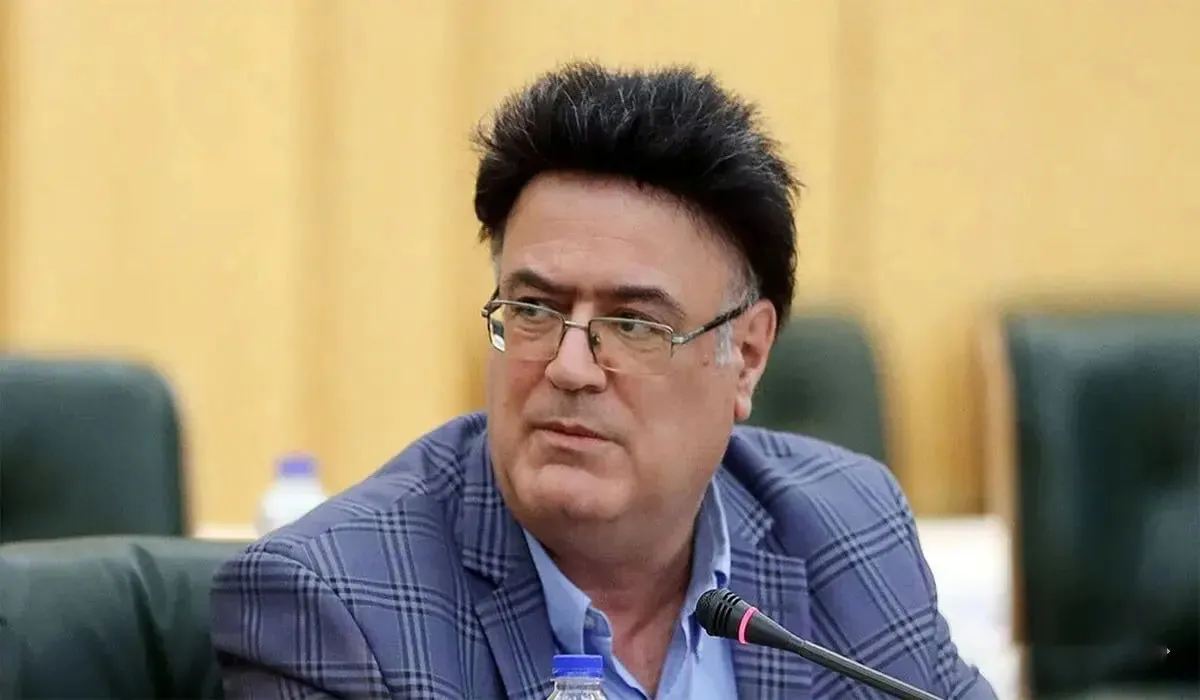
Dr. Albert Boghzian (born 1963 in Tehran), an economist, researcher, and faculty member at the University of Tehran (Kish International Campus), is one of the most enduring and frequently present non-partisan analysts in the economic sphere of Iran over the past two decades. His cohesive academic record is distinguished by receiving all three of his Bachelor's, Master's, and Doctoral degrees in International Economics and Public Sector Economics from Shahid Beheshti University. Relying on his independent positioning and ability to domesticate complex economic concepts, Boghzian is recognized as a reference expert in analyzing macroeconomic challenges such as inflation, foreign exchange policies, the poverty line, and the subsidy mechanism. In this article, while dissecting the trajectory of his intellectual developments and research background, Abdi Media platform explains the critical approaches of this Iranian-Armenian economist toward technocracy and government policymaking.
Who is Dr. Albert Boghzian?
Dr. Albert Boghzian is a prominent Iranian economist, university professor, and one of the most frequently cited economic analysts in Iran over the past two decades. Born in 1963 in Tehran, he represents the mid-generation of Iranian economic scholars.
Boghzian is highly regarded for his strict academic focus, having earned his Bachelor's, Master's, and PhD degrees in International Economics and Public Sector Economics entirely from Shahid Beheshti University—one of Iran's elite institutions for social sciences. Currently a faculty member at the University of Tehran (Kish International Campus), Boghzian has successfully bridged the gap between complex academic theories and public discourse. He serves as a leading, non-partisan authority on macroeconomics, inflation, foreign exchange policies, and market regulations in contemporary Iran.
Educational Trajectory and Academic Specialization
Boghzian’s academic foundation is remarkably cohesive, with all three of his higher education degrees obtained from a single institution:
B.A. in Economics (1989): Completed at Shahid Beheshti University during the conclusion of the Iran-Iraq War, a pivotal period when economic rebuilding became Iran's primary national challenge.
M.A. in Economics (1992): Earned during the early years of the post-war reconstruction era under President Akbar Hashemi Rafsanjani, focusing heavily on development economics and macroeconomic stabilization.
PhD in International Economics and Public Sector Economics (1998): This advanced specialization combines two deeply interconnected fields: International Economics (the study of foreign trade, currency exchange rates, and international economic relations) and Public Sector Economics (the study of state finances, national budgeting, and fiscal/monetary policies).
This dual focus equips Boghzian with a specialized framework to analyze how domestic government policies interact with international financial environments—a critical dynamic given Iran's persistent currency fluctuations and trade challenges.
Academic Career and Modern Research Horizons
After completing his doctoral studies, Boghzian joined the faculty of the University of Tehran, eventually anchoring his academic work at the Kish International Campus.
While his core expertise remains rooted in public finance and international trade, his research portfolio has expanded significantly into cutting-edge branches of modern economics. He actively studies and lectures on:
Behavioral & Experimental Economics: Examining irrational financial behaviors and testing economic theories under controlled conditions.
Cognitive & Neuroeconomics: Merging cognitive psychology and brain activity mapping with real-time economic decision-making.
Domestic Fiscal Studies: Publishing research on structural topics such as corporate asset evaluations on the Tehran Stock Exchange and tax capacity modeling using advanced econometric tools (like the ARDL model).
Non-Partisan Media Presence and Public Commentary
A defining characteristic of Boghzian’s career is his ubiquitous presence across the media landscape. He is widely recognized as a non-partisan expert whose insights are trusted across the entire political spectrum.
His analyses and interviews appear daily and weekly in a highly diverse group of outlets, ranging from reformist newspapers (Etemad, Shargh, Ta'adol) and specialized financial platforms (Donya-e-Eqtesad, Eqtesad 24, Nabz-e Bourse) to conservative dailies, state-run television and radio programs (IRIB), and international Persian-language media networks (Kayhan London, Radio Farda, VOA). This extensive reach reflects a broad national consensus regarding his technical objectivity and academic authority.
Key Economic Stances and Structural Critiques
Throughout his career, Boghzian has maintained a balanced but sharply critical approach toward the economic performance of successive Iranian administrations, focusing on structural reforms over political alignment:
1. Rejecting Factionalism in Economic Management
Boghzian fundamentally critiques the practice of appointing key economic administrators based on political and factional loyalties rather than merit. He has frequently argued that prioritizing group interests over expertise has consistently brought underqualified individuals into regulatory bodies, stating that true development requires appointing capable experts, even if they belong to opposing political camps.
2. Critique of the Ebrahim Raisi Administration
He was a vocal critic of the macroeconomic management under the 13th administration. Commenting on the delayed attempts to curb market instability, Boghzian famously noted that inviting experts to salvage a derailed economy after the fact was an institutional "own goal," comparing the government's retrospective approach to throwing a needle into a haystack and expecting analysts to find it.
3. Opposition to the Elimination of Preferential Exchange Rates
Boghzian strongly opposed the abrupt elimination of the 4,200 Tomans preferential exchange rate (Arz-e Tarjihi). He maintained that removing this subsidy—particularly for essential goods, medicines, and livestock feed—was an ill-timed policy shift that directly triggered severe inflationary shocks across basic consumer markets.
4. Conditional Stance on Cash Subsidies
While he does not oppose increasing direct cash subsidies to support vulnerable populations, Boghzian insists that such measures are useless without strict price controls and proper targeting. He argues that doubling cash handouts without curbing inflation simply dilutes the purchasing power of the public within months, failing to achieve genuine welfare relief.
5. Analysis of the Poverty Line and Social Consequences
When national assessments placed the urban poverty line at 18 million Tomans, Boghzian pointed out that such figures implied only a small fraction of society—mainly state officials, parliamentarians, university professors, and major entrepreneurs—lived comfortably above it. He has continuously warned that an escalating poverty line directly correlates with rising social vulnerabilities, crime rates, and domestic instability.
6. Critique of the Masoud Pezeshkian Administration's Inflation Claims
Boghzian has maintained his independent critical stance under the 14th administration. In early 2026 (Bahman 1404 SH), he publicly challenged claims made by the Minister of Economy regarding cooling inflation, cautioning economic officials against playing with semantics. He noted that the central banking mechanisms had not yet successfully halted the momentum of rising commodity prices felt by ordinary citizens, emphasizing that curbing inflation is a standardized global procedure reliant on structural discipline rather than rhetorical adjustments.
Conclusion
Dr. Albert Boghzian represents the archetype of the "academic-public intellectual" in contemporary Iran. By combining deep academic roots in public sector finance with an accessible, media-friendly communication style, he has made complex macroeconomic issues comprehensible to the general public. His Iranian-Armenian heritage connects him to a long, distinguished tradition of minority scholars who have profoundly shaped Iran's academic and cultural development. As Iran continues to navigate intricate domestic inflation, currency challenges, and complex global trade barriers, Boghzian's strictly independent, data-driven critiques remain a vital benchmark for evaluating national economic policy.
Frequently Asked Questions (FAQs)
Who is Dr. Albert Boghzian? Dr. Albert Boghzian is a prominent Iranian economist, a faculty member at the University of Tehran (Kish International Campus), and a leading independent economic analyst known for his daily media commentaries on macroeconomic policy.
Where did he receive his education? He completed a rare, highly focused academic run at Shahid Beheshti University, obtaining his Bachelor's (1989), Master's (1992), and PhD (1998) degrees in Economics from the same institution.
What is his primary field of economic expertise? His doctoral specialization is at the intersection of International Economics (exchange rates, trade, international relations) and Public Sector Economics (government finance, budgeting, and subsidies).
What is his perspective on the elimination of preferential currency subsidies? Boghzian is a severe critic of the abrupt removal of the preferential exchange rate (Arz-e Tarjihi), arguing that doing so without strong market guardrails directly caused heavy inflation in basic goods and medicine.
Is Dr. Boghzian affiliated with any political faction in Iran? No. Boghzian is recognized as a strictly non-partisan (Farajenahi) analyst. He has consistently applied the same technical and structural criticisms to the economic policies of the Ahmadinejad, Rouhani, Raisi, and Pezeshkian administrations alike.
Take less than a minute, register and share your opinion under this post.
Insulting or inciting messages will be deleted.
Sign Up