
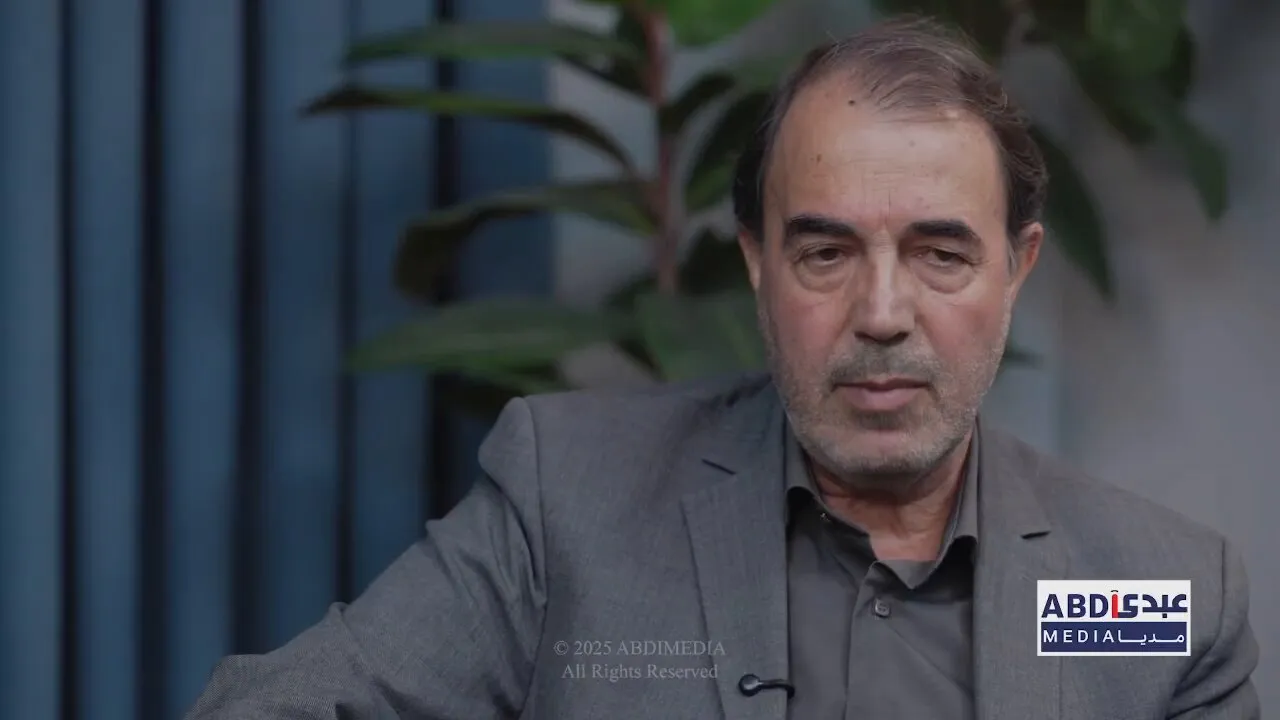
Dr. Adel Jalili is a research professor in the Botany Research Department at the Research Institute of Forests and Rangelands, a former president of this institute, and the former head of the Natural Resources and Watershed Management Organization. With more than two decades of academic activity, experience as Iran's ambassador to the FAO, publication of articles in prestigious international journals such as Elsevier, and as the founder of the Nature of Iran journal, he is considered one of the most influential academic and executive figures in the country's natural resources sector.
Who is Adel Jalili?
Dr. Adel Jalili, a research professor in the Botany Research Department at the Research Institute of Forests and Rangelands, former president of this institute, former head of the Natural Resources and Watershed Management Organization, and one of the most prominent experts in plant ecology, botany, and biodiversity in Iran, is one of the most experienced academic-executive figures in the country's natural resources sector over the past two decades. With a unique combination of international academic backing (featuring key articles in prestigious international journals such as Elsevier), specialized diplomatic experience (serving as Iran's former ambassador to the Food and Agriculture Organization of the United Nations - FAO in Rome during the final months of Mohammad Khatami's eighth administration), a long record of management at the country's sole natural resources research institute (over 12 years as president and research deputy), and in recent years, explicit and critical stances toward natural resources policymaking, environment, and water management, Jalili stands at the intersection of ecological science, natural resources governance, and the critique of developmental policies.
The importance of Dr. Adel Jalili in the scientific-executive sphere of Iran's natural resources can be analyzed from several perspectives:
First, the more than two-decade sustainability of his activities at the Research Institute of Forests and Rangelands—the only specialized natural resources research institute in the country—makes him one of the most experienced scientific managers in this field.
Second, his international academic backing—marked by publishing articles in prestigious global journals such as "Soil seed banks in the Arasbaran Protected Area of Iran" (Elsevier, 2003) and "Government and Range Management in Iran (Policy, Laws and Plans)" (ALOKI, 2018)—indicates his research quality at an international level.
Third, his prominent diplomatic experience at the FAO—the most important international institution active in the fields of agriculture, natural resources, and food security—turned him into one of the key figures in Iran's food and natural resources diplomacy.
Fourth, his prominent scientific roles—as the managing director of the Iranian Journal of Wood and Paper Science Research, editor-in-chief of the Iranian Journal of Range and Desert Research, and founder of the Nature of Iran journal—make him one of the primary architects of Iran's academic natural resources discourse.
Fifth, his courage in taking explicit stances in recent years—particularly his severe critique of the directive on "Requirements for Reforming the Macrostructure of the Ministry of Jihad-e-Agriculture," which led to the practical dissolution of the Natural Resources Organization in 2025—demonstrates his deep commitment to preserving this institution.
In recent months, in one of his widely covered analytical stances, Jalili stated: "When we have such an elementary view of natural resources, it is only natural for a water crisis to emerge. Climate change will devastate us." This position, within the tense climate of Iran's natural resources and water crisis, is considered one of the most frequently cited recent structural analyses.
Life and Background
Detailed information regarding Dr. Adel Jalili's date and place of birth remains limited in open media sources—a trait that is relatively common among research professors and academic-executive figures in Iran who primarily focus on their specialized scientific activities. What is clear from his professional trajectory is that Jalili belongs to the experienced middle generation of Iranian natural resources researchers and has maintained continuous activity at the Research Institute of Forests and Rangelands over the past two decades.
Education and Academic Backing
The title of "Doctor" in his identification in official sources, along with the rank of "Research Professor" in Iran's academic structure—which is among the highest scientific-research ranks—demonstrates his deep academic backing in the fields of plant ecology, systematic botany, and related sciences.
Jalili's expertise is focused on the following areas:
Plant ecology (the primary axis of his research)
Systematic botany
Biodiversity
Rangeland ecology
Forest ecology (particularly the Hyrcanian forests of the north and Arasbaran)
Plants' CSR theory (Competitor-Stress tolerator-Ruderal, Grime's theoretical framework for classifying plant strategies)
Ecosystem modeling
Natural resources governance
Soil seed bank
Research Institute of Forests and Rangelands
The turning point in Jalili's academic-executive record is his sustainable activity at the Research Institute of Forests and Rangelands, an institute categorized as the country's sole natural resources research institute and the main axis of Iran's natural resources research over the past decades.
Faculty Membership
Jalili is a faculty member of the Research Institute of Forests and Rangelands in the Botany Research Department, a position in which he operates as one of the most senior researchers of this institute with the rank of research professor.
Institute Presidency (Over 12 Years)
Jalili's most central executive experience is his presidency of the Research Institute of Forests and Rangelands, which lasted for more than 12 years in total as president and research deputy. This managerial stability is relatively unique among scientific-research managers in Iran and is considered a sign of his technical-scientific credibility within the official natural resources structure. His presidency of the institute from the eleventh administration (Hassan Rouhani's first government) onward, continuing his previous activities at the institute, was one of the prominent aspects of his record.
Ambassadorship of Iran to the FAO (Eighth Administration)
One of the prominent yet less-noticed aspects of Jalili's record was his ambassadorship to the Food and Agriculture Organization of the United Nations (FAO) in Rome, Italy, during the final months of the eighth administration (Seyyed Mohammad Khatami's second government). The FAO, which is among the most important specialized agencies of the United Nations, acts as the global authority in the fields of food security, agriculture, natural resources, and rural development. This diplomatic experience, considered among Iran's international technical-specialized positions, gave a global framework to Jalili's views in the field of natural resources and played a strategic role in pursuing Iran's issues at the international level later in his career.
Head of the Natural Resources and Watershed Management Organization
In recent years, Jalili was appointed to a more prominent position in Iran's official natural resources structure: Head of the Natural Resources and Watershed Management Organization. This organization, which is among the most prominent sovereign institutions of Iran in the field of natural resources with a history of over 100 years, is considered one of the most important Iranian government bodies in pursuing issues related to forests, rangelands, watershed management, and public properties (Anfal). This position, which granted Jalili a strategic role in Iran's natural resources policymking, became one of the main centers of discursive tension surrounding the future of the country's natural resources structure in 2024-2025.
Scientific-Editorial Positions
In addition to his executive roles, Dr. Jalili is among the most prominent editorial figures in Iran's specialized natural resources publications:
Managing Director of the Iranian Journal of Wood and Paper Science Research (one of the prominent journals in the field of wood industries in Iran)
Editor-in-Chief of the Iranian Journal of Range and Desert Research (a leading scientific-research journal in the field of rangeland management)
Founder of the Nature of Iran journal (a publication focused on Iran's natural resources and environmental issues)
These positions, in which Jalili is recognized as the main architect of certain specialized natural resources journals in Iran, indicate his strategic role in shaping the academic discourse of this field.
Scientific-Research Works
Dr. Adel Jalili is the author of dozens of scientific-research articles in prestigious domestic and international journals.
Key International Articles
Among his most important international works, the following can be mentioned:
"Soil seed banks in the Arasbaran Protected Area of Iran and their significance for conservation management" (published in Elsevier BV, Vol. 109, No. 3, pp. 425-431, 2003)—a key article on soil seed banks in the Arasbaran Protected Area.
"Microbial Properties and Dehydrogenase Activity in Semiarid Area, Kerman Province, Iran" (published in HARD Publishing Company, Vol. 28, No. 2, pp. 853-860, 2018).
"GOVERNMENT AND RANGE MANAGEMENT IN IRAN (POLICY, LAWS AND PLANS)" (published in ALOKI Ltd, Vol. 16, No. 4, pp. 4637-4654, 2018)—one of the key analytical articles on government policies in the field of Iran's rangeland management.
"Dynamics of Sexual Regeneration in Three Native Oak Species"—a prominent article on the sexual regeneration of three native oak species (Quercus brantii Lindl. and others).
Domestic Articles
In addition to international articles, Jalili is the co-author of dozens of scientific-research articles in prominent domestic journals such as the Journal of Plant Research, Nature of Iran, and Iranian Journal of Range and Desert Research. The topics of these articles include: "Classification of plant species according to CSR theory," "Investigation of the relationship between production and plant species richness in Tang-e Chenar rangelands of Yazd province," "Modeling the relationship between ecosystem structure and function," and "Identification of effective ecological factors in Sabalan wetlands." These works are among the academic-research reference sources in the field of plant ecology in Iran.
Severe Critique of the Decree on Dissolving the Natural Resources Organization (2025)
Jalili's most widely covered recent stance was his severe critique of the directive on "Requirements for Reforming the Macrostructure of the Ministry of Jihad-e-Agriculture and Affiliated Organizations." This directive was prepared by the Administrative and Recruitment Affairs Organization of the country in 2025 and communicated by the First Vice President. Based on this directive, the Natural Resources and Watershed Management Organization, with a history of over 100 years, was subjected to downsizing, and its duties were distributed among provincial Jihad-e-Agriculture offices and the Department of Environment, in a way that practically dissolved the organization.
Inconsistency with the Constitution
In one of his key stances, Jalili stated: "The directive of the Recruitment Affairs Organization is not only inconsistent with two principles of the Constitution regarding the custodianship of public properties (Anfal), but under wartime conditions, it also puts the country's food security at risk." This position, in which a prominent academic-executive manager explicitly criticizes a directive communicated by the First Vice President, was one of the notable stances in Iran's natural resources discourse in 2025.
Emphasis on the Sovereign Nature of Natural Resources
In one of his key theoretical stances, Jalili described the protection of natural resources and public properties (Anfal) as a sovereign action and declared: "It is no joking matter." This position, which emphasizes the "custodianship of public properties" as a constitutional principle, indicates his structural-legal view of the issue.
Predicting the Consequences of the Water Crisis
Continuing his critique of the directive, Jalili pointed to its structural consequences on the water crisis: "When we have such an elementary view of natural resources, it is only natural for a water crisis to emerge. Climate change will devastate us." This position, within the tense climate of Iran's water crisis, was one of the most frequently cited structural-critical analyses.
Request to the President
Jalili ultimately requested Masoud Pezeshkian (the President) through an official demand to amend this erroneous directive.
Viewpoints and Analytical Positions
Throughout his intellectual-analytical career, Dr. Adel Jalili has formulated a clear intellectual framework that can be tracked across several axes:
Comprehensive View of Natural Resources
Jalili's most central theoretical stance is his emphasis on a comprehensive view of natural resources and his critique of the "absence of a comprehensive view in development plans." In one of his prominent positions (in an interview with Mizan News Agency), he declared: "We must have a serious halt in the execution of development projects to think about this sector [natural resources]." This position, which considers the temporary suspension of development projects as a prerequisite for a structural review of the perspective toward natural resources, is one of his sustained critiques of Iran's developmental model.
The Concept of "Water Stress"
In one of his key theoretical frameworks, Jalili introduces the phenomenon of "water stress" as a central concept. In his view: "The phenomenon of water stress means the shortage and insufficient amount of water at a specific time and place." He added: "Water stress at the watershed scale must be analyzed by considering phenomena such as climate change and the natural hydrology system of the basin..." This framework, which analyzes the water issue not as a local phenomenon but as a system at the watershed scale, indicates his technical-specialized view of the matter.
Critique of Excess Livestock Grazing
One of Jalili's key analytical stances is his critique of excess livestock grazing in the country's rangelands. In one of his prominent positions, he declared: "Various factors threaten the country's rangelands. The main attention is on the presence of excess livestock, which itself plays a highly significant role in the destruction of rangelands." He has also pointed to the necessity of "changing the attitude in animal husbandry and moving toward establishing industrial livestock farms."
Scientific Critique of Paulownia Cultivation
In one of his specialized positions, Jalili criticized the cultivation of the Paulownia species—a type of Chinese tree that had been introduced as a commercial tree in Iran in recent years. In his view: "The scientific evaluation of forest species takes about 20 years, and in this process, the compatibility of the species with climatic conditions, resistance to diseases and pests, and its invasiveness are investigated in research stations." He added: "The Paulownia species does not have economic value for wood production. The wood quality of this tree is low and light, and it is not suitable for industries." This position, in which an experienced researcher stands explicitly against official policies expanding the cultivation of foreign species, indicates his scientific commitment to ecological principles.
Critique of the Reduction in the Per Capita of Northern Forests
In one of his analytical stances, Jalili pointed to the issue of the reduction in the per capita of the country's northern forests and the increasing need for wood, introducing this phenomenon as one of the structural challenges of Iran's natural resources.
Emphasis on National Identity
In one of his macro positions, Jalili pointed to the importance of "having national beliefs, behaviors, and characteristics, a sense of belonging among every single individual, and accepting these assets." This stance indicates his structural-cultural view of the issue of natural resources conservation.
See: The water and environment crisis in Iran, a conversation between Mohammad Darwish, an environmental activist, and Adel Jalili, an ecologist.
Connection with Figures and Movements
Dr. Adel Jalili is positioned within a network of academic-executive connections with prominent figures in Iran's natural resources, agriculture, and environment sectors. At the academic level, his relationship with prominent professors and researchers at the Research Institute of Forests and Rangelands—including Behnam Hamzeh, Parvaneh Ashouri, Nastaran Jalilian, Rafat Habibi, Sedigheh Zare Kia, and other research colleagues (who have played roles in co-authoring articles with him)—forms his close research network.
At the level of the official structure, his relationship with Seyyed Mojtaba Khayam Nekouei (Deputy Minister of Jihad-e-Agriculture and Head of the Agricultural Research, Education and Extension Organization) is considered one of his key executive connections.
At the national level, his relationship with prominent figures in Iran's natural resources and environment sectors—including Mohammad Darvish, Esmail Kahrom, Ali Akbar Mehrabian, and other activists and experts—shapes his discursive network in this field.
At the international level, his past relationship with the FAO and other international bodies active in the fields of natural resources and food security forms his international communication framework.
Conclusion
Dr. Adel Jalili is one of the most experienced and yet prominent academic-executive figures in Iran's natural resources sector over the past two decades. He occupies a unique position in the academic-executive structure of Iran's natural resources through a unique combination of deep academic backing (holding the rank of research professor and publishing key articles in international journals), specialized diplomatic experience (serving as Iran's former ambassador to the FAO during the final months of Khatami's eighth administration), a long record of management at the country's sole natural resources research institute (over 12 years as president and research deputy of the Research Institute of Forests and Rangelands), a pivotal role in the official natural resources structure (as head of the Natural Resources and Watershed Management Organization), prolific academic production (including dozens of scientific-research articles and prominent editorial positions), and finally, courage in taking structural critical stances in recent years (particularly his severe critique of the decree on dissolving the Natural Resources Organization in 2025).
His career—ranging from sustained academic activity at the Research Institute of Forests and Rangelands, the ambassadorship to the FAO, the presidency of the institute since the eleventh administration, the publication of key international works (such as the reference article "Government and Range Management in Iran"), the founding of the Nature of Iran journal, and finally, acting as a structural critic of the 2025 decree—presents a multi-dimensional picture of a "research professor-diplomat-structural critic."
The distinguishing feature of Jalili, at the primary level, is his exceptional ability to bridge academic, executive, and diplomatic arenas; a trait whereby a research professor with deep expertise in plant ecology simultaneously maintains active roles in key executive levels (presidency of the research institute, headship of the Natural Resources Organization) and international diplomacy (ambassadorship to the FAO). This multi-dimensionality is relatively rare among Iranian natural resources specialists. At the secondary level, his courage in structurally criticizing official decrees—especially his severe critique of the directive communicated by the First Vice President regarding the dissolution of the Natural Resources Organization—is considered a remarkable aspect of his character.
From an analytical standpoint, Jalili's position is an example of the "research professor - executive manager - structural critic" phenomenon in contemporary Iran; a phenomenon where a figure with deep academic backing, while playing a central role within the official structure, views official policies with a structural critical eye in the public sphere. This pattern, which has other examples in the contemporary academic-executive structure of Iran, finds a special reflection in Jalili due to his focus on the prominent field of natural resources and years of continuous pursuit of this issue.
What is clear from today's perspective is that the subjects Jalili addressed in his academic-analytical stances—ranging from natural resources governance, water stress at the watershed scale, biodiversity, excess livestock grazing, reduction in the per capita of northern forests, critique of invasive species like Paulownia, custodianship of public properties (Anfal), and preserving the structure of the Natural Resources Organization—have remained among the most sustainable topics of debate in the environmental-developmental discourse of contemporary Iran. In conditions where Iran is in one of the most tense periods of natural resources and water crises in its history—particularly with the intensification of low rainfall, land subsidence, air pollution, and simultaneously, the structural challenges of communicating new organizational decrees—Jalili's specialized-critical voice, combining deep academic credibility, extensive executive experience, and courage in expressing positions, will be one of the main references for this conversation.
Listen | Makhlas 132 | Water and Environmental Crisis in Iran | A Conversation between Mohammad Darvish and Adel Jalili on Abdi Media
FAQ
Who is Adel Jalili?
Dr. Adel Jalili is a research professor in the Botany Research Department at the Research Institute of Forests and Rangelands, former president of this institute, former head of the Natural Resources and Watershed Management Organization, and one of the most prominent experts in plant ecology, botany, and biodiversity in Iran. He has served for more than 12 years in prominent managerial positions at the Research Institute of Forests and Rangelands (as president and research deputy).
What are the executive records of Adel Jalili?
Among the most important executive positions of Jalili, the following can be mentioned: faculty member of the Research Institute of Forests and Rangelands (with the rank of research professor), president and research deputy of the Research Institute of Forests and Rangelands (for over 12 years), ambassador of Iran to the Food and Agriculture Organization of the United Nations (FAO) in Rome during the final months of the eighth administration (Khatami's second government), and head of the Natural Resources and Watershed Management Organization.
What are the most important scientific works of Adel Jalili?
Among the most important international works of Jalili, the following articles can be mentioned: "Soil seed banks in the Arasbaran Protected Area of Iran" (Elsevier, 2003), "Government and Range Management in Iran (Policy, Laws and Plans)" (ALOKI, 2018), and "Microbial Properties and Dehydrogenase Activity in Semiarid Area, Kerman Province" (HARD Publishing, 2018). He is also the author of dozens of key articles in domestic journals.
What are the scientific-editorial positions of Adel Jalili?
Jalili is among the most prominent editorial figures in specialized natural resources publications in Iran: managing director of the Iranian Journal of Wood and Paper Science Research, editor-in-chief of the Iranian Journal of Range and Desert Research, and founder of the Nature of Iran journal.
What is Jalili's view on the decree regarding the dissolution of the Natural Resources Organization?
Jalili is one of the serious critics of the directive on "Requirements for Reforming the Macrostructure of the Ministry of Jihad-e-Agriculture" (approved in 2025), which leads to the practical dissolution of the Natural Resources and Watershed Management Organization. In his view: "The directive of the Recruitment Affairs Organization is not only inconsistent with two principles of the Constitution regarding the custodianship of public properties (Anfal), but under wartime conditions, it also puts the country's food security at risk." He has requested Masoud Pezeshkian (the President) to amend this directive.
What is Jalili's view on Iran's water crisis?
In one of his prominent stances, Jalili stated: "When we have such an elementary view of natural resources, it is only natural for a water crisis to emerge. Climate change will devastate us." Within his theoretical framework, he has introduced the concept of "water stress at the watershed scale" as a central concept and believes that it must be analyzed by considering phenomena such as climate change and the natural hydrology system of the basin.
What is Jalili's view on excess livestock grazing?
Jalili is a serious critic of excess livestock grazing in the country's rangelands. In one of his prominent positions, he declared: "Various factors threaten the country's rangelands. The main attention is on the presence of excess livestock." He has also pointed to the necessity of "changing the attitude in animal husbandry and moving toward establishing industrial livestock farms."
What is Jalili's view on Paulownia cultivation?
Jalili is a serious critic of cultivating the Paulownia species in Iran. In one of his specialized positions, he stated: "The scientific evaluation of forest species takes about 20 years." He added: "The Paulownia species does not have economic value for wood production. The wood quality of this tree is low and light, and it is not suitable for industries."
What is the scientific expertise of Adel Jalili?
Jalili's main expertise lies in the fields of plant ecology, systematic botany, biodiversity, rangeland ecology, forest ecology (particularly the Hyrcanian forests of the north and Arasbaran), plants' CSR theory, ecosystem modeling, natural resources governance, and soil seed bank.
Is Adel Jalili still active?
Yes, Dr. Adel Jalili, as a research professor at the Research Institute of Forests and Rangelands and one of the most experienced managers in Iran's natural resources sector, is still active in the academic-executive arena. His latest key stances—including his severe critique of the directive on "Requirements for Reforming the Macrostructure of the Ministry of Jihad-e-Agriculture" in 2025, analysis of the water crisis at the watershed scale, structural critique of natural resources policymaking, and his request to President Pezeshkian to amend this directive—have been widely covered in Persian-language media.
Take less than a minute, register and share your opinion under this post.
Insulting or inciting messages will be deleted.
Sign Up