
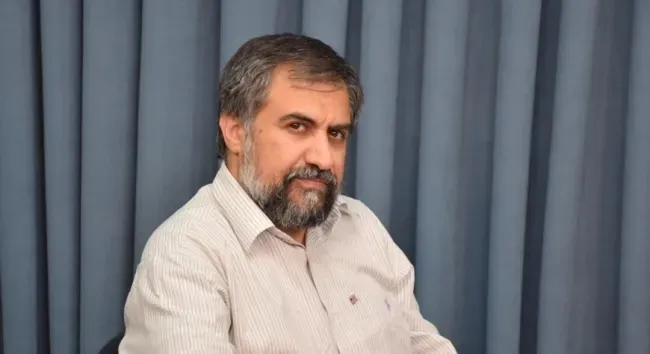
Shahabuddin Haeri Shirazi—a cleric, religious researcher, social media activist, and well-known critic of the Islamic Republic of Iran—is one of the most distinct figures among the younger generation of dissident clergy. His prominence stems not only from his explicit critical stances against the power structure in Iran, but particularly from his family background. As the son of Ayatollah Mohieddin Haeri Shirazi (the former Friday prayer leader of Shiraz, member of the Assembly of Experts, and an influential regime cleric) and the son-in-law of Ahmad Tavakoli (the late conservative politician and prominent figure in the parliament and the Expediency Discernment Council), he has become a unique phenomenon in Iran's intellectual and political landscape.
Who is Shahabuddin Haeri Shirazi?
Shahabuddin Haeri Shirazi—a cleric, religious researcher, social media activist, and well-known critic of the Islamic Republic of Iran—is one of the most distinct figures among the younger generation of dissident clergy. His prominence stems not only from his explicit critical stances against the power structure in Iran, but particularly from his family background. As the son of Ayatollah Mohieddin Haeri Shirazi (the former Friday prayer leader of Shiraz, member of the Assembly of Experts, and an influential regime cleric) and the son-in-law of Ahmad Tavakoli (the late conservative politician and prominent figure in the parliament and the Expediency Discernment Council), he has become a unique phenomenon in Iran's intellectual and political landscape.
The significance of Shahabuddin Haeri can be examined from several perspectives. First, he is one of the few "critic Aghazadehs" (children of elite officials) in contemporary Iran who, despite belonging to a thoroughly establishment family, chose a different path—and in some instances, one in open opposition to the stances of his father and father-in-law. This generational-familial positioning turns his character into a unique sociological phenomenon that can be studied in analytical literature under the theme of "intra-generational transition in traditional clerical families." Second, his judicial conviction in November 2023 by the Special Clerical Court of Shiraz to a total of three years in prison, a fine, and a three-year ban on social media activities under charges of "publishing falsehoods against Ayatollah Khomeini" and "propaganda activity against the regime" made him one of the dissident clerics who has paid heavy judicial costs for his stances. Third, his activity on his personal Telegram channel titled "Virayesh-e Zehn" (Mind Editing) over recent years has turned him into a distinct voice among dissident clerics in the Persian-speaking digital space.
The controversial turning point of Haeri's activity was the publication of a memoir by Mahmoud Doaei (Iran's first ambassador to Iraq after the revolution) regarding the role of Ayatollah Khomeini's speeches in the outbreak of the Iran-Iraq War—a memoir that led to his highly publicized judicial case following a lawsuit by the Institute for Publication of the Works of Ayatollah Khomeini.
Life and Background
Shahabuddin Haeri Shirazi was raised in a thoroughly clerical and establishment family in Shiraz. His father, Ayatollah Seyyed Mohieddin Haeri Shirazi (born Mohammad Sadeq Haeri Shirazi, 1936–2017), was a prominent cleric of the Islamic Republic regime who played a highly significant role within the structure of the official clergy in Shiraz and at the national level for nearly three decades.
Ayatollah Haeri Shirazi served for 27 years—from 1983 to 2010—by consecutive appointments from Ayatollah Khomeini and subsequently Ayatollah Khamenei, in the position of the Representative of the Supreme Leader in Fars Province and the Friday prayer leader of Shiraz. This position is considered one of the most key official clerical posts in one of Iran's most important provinces. Additionally, he was a member of the Assembly of Experts, the body tasked with supervising the Supreme Leader and appointing the leader.
The father of Shahabuddin Haeri passed away in 2017, a year that marked the beginning of a more pronounced period of intellectual-political evolution for his son.
As a child of this clerical family, Shahabuddin Haeri was raised in an environment filled with official ceremonies, close relationships with institutions of power, and continuous religious education. This background, which carves out a well-established path within the same structure for many clerical Aghazadehs, led to a different outcome in the case of Shahabuddin Haeri.
Education and Clerical Activity
Haeri Shirazi pursued his religious-seminary education in the traditional clerical line, reaching the rank of Hojjat al-Islam. In published accounts, he is introduced as a "religious researcher"—a title that, in the contemporary clerical sphere, is primarily applied to clerics who, alongside traditional seminary training, have become familiar with comparative studies and social sciences.
Haeri's research-religious background has allowed him in recent years, by relying on the jurisprudential and religious tradition, to critique the regime's official approaches to religion and politics—a feature that places him among dissident religious innovators, though he does not define himself within that tradition.
Family Link to Ahmad Tavakoli
One of the unique and rare aspects of Haeri Shirazi's background is his family link to Ahmad Tavakoli (1951–2025). Haeri Shirazi was the son-in-law of Ahmad Tavakoli, the well-known conservative politician and economist, former Member of Parliament across multiple terms, former head of the Parliament Research Center, and member of the Expediency Discernment Council.
This link placed Shahabuddin Haeri within a unique network of family-political relationships: on one side, the son of a prominent regime cleric, and on the other, the son-in-law of a prominent conservative economic-political figure. This position, in which his extended families were embedded inside the regime, makes the contrast of his intellectual-political path with his family environment even more striking.
It is worth noting that Ahmad Tavakoli, despite belonging to the conservative faction, was himself an independent and persistent critic of economic corruption in Iran; this characteristic of his father-in-law likely played a role in shaping Shahabuddin Haeri's independence of opinion. Tavakoli passed away in August 2025 at the age of 74.
The Rise of Media and Social Media Activity
The turning point of Shahabuddin Haeri's public activity was the gradual expansion of his presence in the digital space, particularly through his personal Telegram channel titled "Virayesh-e Zehn." This channel, which became one of the well-known channels in the field of intellectual-religious-political critique among clerical audiences, was his main platform for publishing notes, memoirs, analyses, and critical positions.
The content of this channel covered a wide spectrum: from religious and jurisprudential analyses to historical-revolutionary narratives, memoirs quoted from prominent regime figures, and critical stances toward current policy-making.
The Doaei Memoir and the Start of Controversy
The primary starting point of the judicial controversies surrounding Haeri Shirazi was the publication of a memoir by Mahmoud Doaei—the first ambassador of Iran to Iraq after the Islamic Revolution and one of the well-known figures of the reformist clergy (who passed away in 2022). This memoir, which Haeri narrated on his Telegram channel, addressed the role of Ayatollah Khomeini's speeches in the outbreak of the Iran-Iraq War.
According to Doaei's narrative, which was republished on Haeri's channel, the revolutionary-interventionist speeches of Ayatollah Khomeini (which contained calls to export the revolution to other regional countries, including Iraq) were one of the main factors provoking the Iraqi Ba'ath regime to initiate the war against Iran in September 1980. This narrative challenged the official and prevalent narrative of the Islamic Republic regime, which views the Iraqi attack solely as an act of "aggression" and does not accept Iranian provocative factors.
This publication met with a serious reaction from the Institute for Publication of the Works of Ayatollah Khomeini. In March 2023, the institute filed a judicial lawsuit against Shahabuddin Haeri for what it called "publishing falsehoods against Ayatollah Khomeini," demanding his accountability in court. This was the beginning of his highly publicized judicial case.
Trial and Conviction
Haeri Shirazi's case was referred to the Special Clerical Court of Shiraz. The Special Clerical Court is a specialized judicial body in Iran that operates outside the structure of the Judiciary to handle crimes attributed to clerics, and its procedures have faced widespread criticism from human rights activists and independent lawyers across various periods.
After a period of proceedings, on November 25, 2023, Haeri Shirazi went to the Special Clerical Court of Shiraz to receive the issued verdict. He transparently published the details of the verdict on his Telegram channel that same day:
On the charge of publishing falsehoods against Ayatollah Khomeini: serving two years in prison, paying a 15-million-toman fine, and a requirement to restore reputation through widely circulated newspapers.
On the charge of propaganda activity against the regime: serving an additional one year in prison.
As a supplementary punishment: a ban on social media activities for three years and the closure of his Telegram channel as the "instrument used to commit the crime."
The total sentences issued against him amounted to three years in prison plus a fine and social media bans. These sentences stood as one of the heaviest cases in recent years in the realm of crackdowns on dissident clergy.
This conviction met with widespread reactions in Persian-language media inside and outside Iran, including Radio Farda, IranWire, and the Memorial Freedom Watch. Human rights organizations described the case as an example of restricting the freedom of expression of dissident clerics.
Views and Positions
Throughout his years of activity, Shahabuddin Haeri Shirazi has formulated a clear and explicit intellectual framework that aligns with the discourse of "internal religious critique of the regime."
Critique of Ayatollah Khamenei's Governance
The most central stance of Haeri in recent years has been the critique of the governance policies of Ayatollah Khamenei (the Leader of the Islamic Republic). In numerous notes and positions, he has criticized the methods of exercising power, the lack of accountability of official institutions, and the regime's deviation from the initial ideals of the revolution. This stance takes on special significance given that his father was the Representative of the Supreme Leader in Fars for years.
Critical Re-reading of Ayatollah Khomeini's Legacy
Another prominent feature of Haeri is his willingness to critically re-read the legacy of Ayatollah Khomeini. While in the official discourse of the Islamic Republic, the personality of Ayatollah Khomeini is considered "beyond critique," Haeri has quoted memoirs and narratives in his notes that view this figure from more critical angles. The memoir of Mahmoud Doaei regarding the role of Khomeini's speeches in the outbreak of the war is one of the clearest examples of this approach.
Critique of Official Clerical Policies
As a cleric, Haeri is also active in critiquing the performance of the official clergy and religious-governmental institutions. In his view, the contemporary clergy, by becoming tied to the structure of political power, has distanced itself from its primary mission—namely, the spiritual guidance of society.
Defense of Justice and Freedom of Expression
In one of his highly publicized stances, Haeri declared that "as long as there is no justice, the Islamic Republic..." (continuing critically regarding the existing situation). This position shows his persistence in linking his critiques to the ideal of justice, which holds a central position in the religious tradition as well.
Critique of the Election Process and Power Structure
In one of his controversial stances, Haeri did not shy away from expressing criticism regarding Mostafa Tajzadeh (the reformist activist and former political prisoner) and even the leadership in fields related to democracy and elections. These stances were among the factors intensifying judicial pressure on him in Iran's sensitive political atmosphere.
Reaction to the Stances of the Thirteenth Government
As an activist in the digital space, Haeri Shirazi also reacted to the statements and policies of the thirteenth government led by Ebrahim Raisi, serving as one of the active clerics in the media in critiquing the performance of this administration.
Relationship with Figures and Movements
Shahabuddin Haeri Shirazi is situated within a complex network of relationships where family, clerical, and intellectual ties are intertwined. At the center of this network is Haeri Shirazi's paternal family—including his late father (Ayatollah Mohieddin Haeri Shirazi, former Friday prayer leader of Shiraz) and other members of this well-known clerical family. On another familial level, the Tavakoli family (his father-in-law, Ahmad Tavakoli, and his extended family) is one of his primary connections.
At the intellectual-political level, Haeri falls within the discourse of dissident clerics—a current in which figures such as the late Ayatollah Montazeri, Hassan Yousefi Eshkevari, Mohsen Kadivar (both dissident clerics residing abroad), and other dissident clerics have been active in recent years. At the level of intellectual reference, his frequent referencing of the memoirs and views of Mahmoud Doaei (the reformist cleric) shows his link to the tradition of dissident clergy within the system.
Conclusion
Hojjat al-Islam Shahabuddin Haeri Shirazi is one of the most distinct figures of the new generation of dissident clergy in contemporary Iran who, through a rare combination of an establishment family background (as the son of a well-known Friday prayer leader and the son-in-law of a conservative politician) and explicit critical positions, has occupied a unique spot. His record—from activity on the Telegram channel "Virayesh-e Zehn" to the publication of the Doaei memoir on Khomeini's role in starting the war, the lawsuit by the Institute for Publication of Khomeini's Works, and finally his three-year conviction by the Special Clerical Court of Shiraz in November 2023—presents a picture of an "indigenous cleric-critic" who emerged from the heart of the system and arrived at a foundational critique of it.
The distinguishing feature of Haeri, at the first level, is his courage to critically re-read sanctified figures—particularly Ayatollah Khomeini—in an environment where such re-readings carry heavy judicial and social costs. At the second level, his family background lends his critique a different weight and nature; this critique is raised not by an expatriate secularist, but by a cleric, the son of a Friday prayer leader, and the son-in-law of a conservative figure.
From an analytical perspective, Shahabuddin Haeri's position is an example of the phenomenon of "generational transition in traditional clerical families" in contemporary Iran; a phenomenon where the children of the older generation of official clergy, when faced with the experience of four decades of religious governance, arrive at different evaluations of this experience. This phenomenon is relatively rare among the children of clerics; as some analysts have noted, Aghazadehs mostly shape their identity in line with their father and become supporters of his policies and thoughts. Shahabuddin Haeri, while maintaining his clerical-familial identity (and refraining from publicly critiquing his late father), has chosen a different path that places him among the "newly forged identities" in the generation of clerical Aghazadehs.
What is clear from today's perspective is that the case of Haeri Shirazi—which includes three years in prison, a fine, the requirement to restore reputation, and a ban on social media activities—is part of a broader trend of crackdowns on dissident clerics in contemporary Iran. In conditions where the space for open critique toward the power structure and its sanctified figures faces mounting restrictions, the voice of clerics like Haeri—who criticize from within the religious tradition—will remain one of the most important components of critical discourse in contemporary Iran.
Frequently Asked Questions (FAQs)
Who is Shahabuddin Haeri Shirazi? Hojjat al-Islam Shahabuddin Haeri Shirazi is a cleric, religious researcher, and social media activist who has become one of the well-known dissident clerics of the Islamic Republic in recent years. He is the son of Ayatollah Mohieddin Haeri Shirazi (former Friday prayer leader of Shiraz and former member of the Assembly of Experts) and the son-in-law of Ahmad Tavakoli (the late conservative politician).
Who was Shahabuddin Haeri Shirazi's father? His father, Ayatollah Seyyed Mohieddin Haeri Shirazi (born Mohammad Sadeq Haeri Shirazi, 1936–2017), was a prominent cleric of the Islamic Republic regime. For 27 years (1983 to 2010), under consecutive appointments from Ayatollah Khomeini and subsequently Ayatollah Khamenei, he was the Representative of the Supreme Leader in Fars Province and the Friday prayer leader of Shiraz. He was also a member of the Assembly of Experts. He passed away in 2017.
What was Shahabuddin Haeri's relationship with Ahmad Tavakoli? Shahabuddin Haeri Shirazi was the son-in-law of Ahmad Tavakoli (1951–2025)—the conservative politician, multi-term Member of Parliament, former head of the Parliament Research Center, and member of the Expediency Discernment Council. Tavakoli, who was himself an independent and persistent critic of economic corruption, passed away in August 2025.
Why was Shahabuddin Haeri Shirazi prosecuted? His case began following the publication of a memoir by Mahmoud Doaei (the first ambassador of Iran to Iraq after the revolution) on his Telegram channel; a memoir indicating that the interventionist speeches of Ayatollah Khomeini were one of the factors behind the outbreak of the Iran-Iraq War. In March 2023, the Institute for Publication of the Works of Ayatollah Khomeini filed a lawsuit against him for this reason.
What was Shahabuddin Haeri Shirazi's conviction? On November 25, 2023, the Special Clerical Court of Shiraz sentenced him to a total of three years in prison: two years in prison and a 15-million-toman fine on the charge of "publishing falsehoods against Ayatollah Khomeini" (along with a requirement to restore reputation through widely circulated newspapers), and one year in prison on the charge of "propaganda activity against the regime." He was also sentenced to a three-year ban on social media activities and the closure of his Telegram channel "Virayesh-e Zehn" as the "instrument used to commit the crime."
What was the name of Shahabuddin Haeri's Telegram channel? His Telegram channel was known as "Virayesh-e Zehn" (virayeshe_zehn), where his notes, memoirs, analyses, and critical positions were published. Based on the verdict of the Special Clerical Court, this channel was blocked as the "instrument used to commit the crime."
Why is Shahabuddin Haeri called a "critic Aghazadeh"? In the analytical vocabulary of the Iranian space, the term "Aghazadeh" is applied to the children of officials and prominent figures of the regime. Usually, Aghazadehs shape their identity in line with their father and support his policies. Shahabuddin Haeri, however, despite a thoroughly establishment family background (a Friday prayer leader father and a conservative politician father-in-law), chose a different and critical path, placing him among the "critic Aghazadehs"—a relatively rare phenomenon in Iran.
What is Shahabuddin Haeri's view regarding Ayatollah Khamenei and Khomeini? The most central stance of Haeri in recent years has been the critique of Ayatollah Khamenei's governance and a critical re-reading of Ayatollah Khomeini's legacy. He has been explicit in critiquing the methods of exercising power, the lack of accountability of official institutions, and the regime's deviation from the initial ideals of the revolution, and has published critical memoirs and narratives in re-reading Ayatollah Khomeini's role in events such as the outbreak of the Iran-Iraq War.
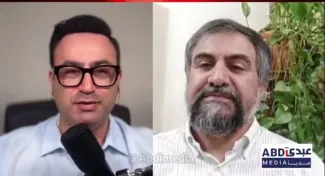
What is Shahabuddin Haeri Shirazi's stance regarding the Absolute Guardianship of the Jurist (Velayat-e Faqih) and elections? In an exclusive interview with Abdi Media, Haeri Shirazi emphasizes that the current definition of the Absolute Guardianship of the Jurist and the expansion of the authorities of appointed bodies (such as the approbatory supervision of the Guardian Council) have practically confronted the existential philosophy and true position of the presidential elections with a challenge of legitimacy and inefficiency. He believes that the power structure must be accountable to the direct will and choice of the people.



Take less than a minute, register and share your opinion under this post.
Insulting or inciting messages will be deleted.
Sign Up