
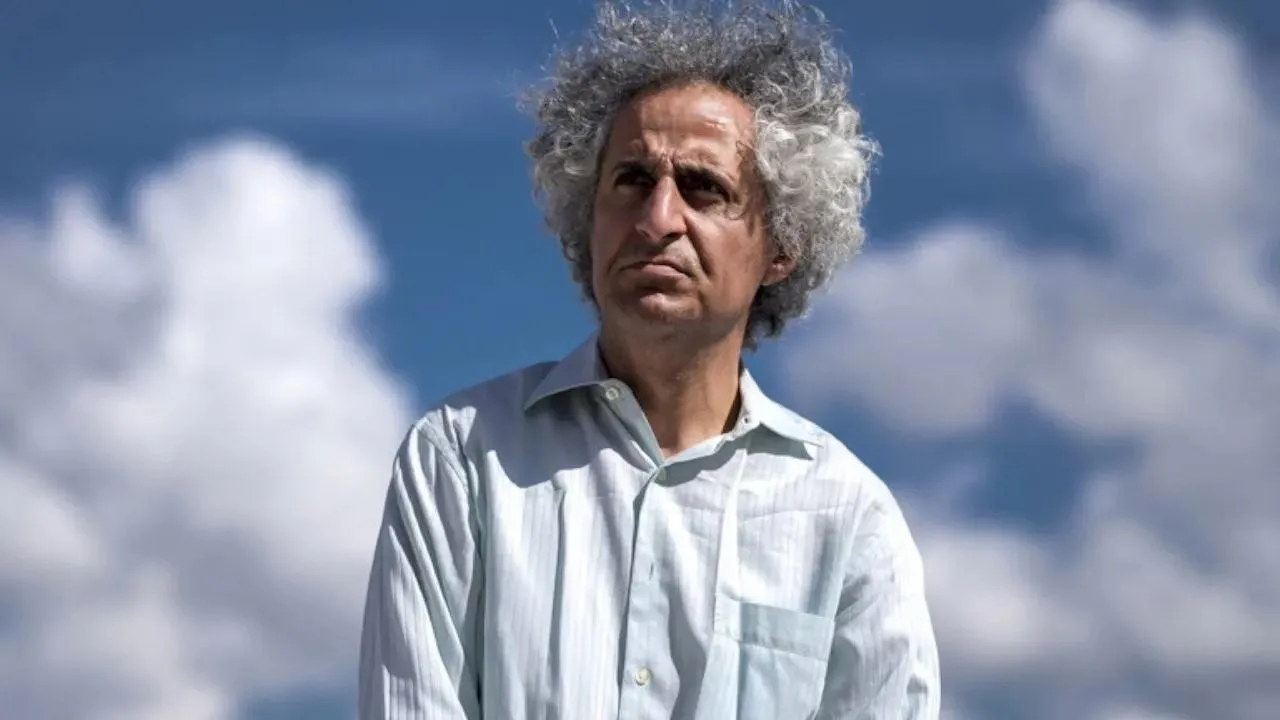
I have seen that after Mohsen Namjoo's return, old videos have resurfaced of his explicit positions against the Islamic Republic and even against the sacred Sharia.
Abdollah Abdi - Abdi Media
I have seen that after Mohsen Namjoo's return, old videos of his explicit positions against the Islamic Republic and even against the sacred Sharia have been widely republished by some pages affiliated with opponents of the Islamic Republic.
This is also happening regarding some other opponents who intend to return to Iran or are pursuing different positions.
But the question is: regardless of the intentions of those who republish these materials, what function does this ultimately serve, and whose narrative does it ultimately benefit?
When you constantly remind people of how much an individual once spoke against the Islamic Republic, Islam, or Shiite sanctities, in order to prove their "contradiction" or "betrayal," you are—knowingly or unknowingly—completing the most important part of the narrative desired by the Islamic Republic's security apparatus:
That even the most hardcore opponents, even those who crossed all the red lines, have ultimately "returned," and the Islamic Republic has accepted them.
What greater gift could there be for building the narrative of "repentance," "return," and "the open arms of Islam"?
This is where the concept of a certain kind of "Hur-making" becomes significant.
The foundation of the narrative of Hur ibn Yazid al-Riyahi is precisely built on this contradiction: Hur was the commander of the group that blocked Husayn ibn Ali's path and played a role in halting his caravan in Karbala; but on the morning of Ashura, when he realized that war and the Imam's martyrdom were certain, he separated from Omar ibn Sa'd's army, joined Husayn, and was ultimately martyred alongside him.
But Hur's symbolic power in Shiite culture did not remain confined to this historical event. Over the centuries, on pulpits, in Rawda-khani ceremonies, Ta'ziyeh performances, laments, and religious poetry, he was made into one of the most powerful symbols of "repentance" and "return": a person whose past—the more heavily it is portrayed—only magnifies the grandeur of his moment of return.
In such a narrative apparatus, the harsher a person's past, the more radical their positions, and the greater their distance from the Islamic Republic and the official religious narrative, the more symbolic value their "return" carries.
Simply put: those who today seek to undermine individuals by republishing archives of their past opposition may—willingly or unwillingly—be writing the first act of the very story that the Islamic Republic wants to narrate in its final act.
At the same time, in a note written during the height of the second and third wars, I said that Iranians residing abroad who did not side with the foreign enemy may, in the era of the third Supreme Leader's guardianship, have the possibility of freely entering the country permanently or traveling in and out repeatedly.



Take less than a minute, register and share your opinion under this post.
Insulting or inciting messages will be deleted.
Sign Up