
We slept until eight in the morning. I read the reports. I watched some Indonesian TV last night and today. They have nine channels, three of which are news channels. It is more entertaining, more diverse and more artistic than our television. For negotiations and meetings, to another building in the same
We slept until eight in the morning. I read the reports. Last night and today I watched Indonesian television for a while. They have nine channels, three of which are news channels. It is more entertaining, more diverse, and more artistic than our television.
For the negotiations and meetings, we went to another building in this same compound. First we had a group meeting and negotiation; it was only ceremonial and a few words were said about the natural situation and fighting mosquitoes. Indonesians do not have the custom of negotiations being around a table like in many other places; specialized groups of ministers and experts negotiated separately, and Suharto and I negotiated privately. In our negotiation, Mr. Seyyed Hossein Marashi, the head of my office, was taking notes, and there was one translator from us and one from them, and one note-taker from them. I spoke in Persian and he spoke in their native language, and we were connected through English.
He gave a summary of Indonesia's five five-year plans after Sukarno, called the First Twenty-Five Year Plan, and considered the goals of the Second Twenty-Five Year Plan to be more about development and raising the standard of living. He said the per capita income of the people is currently about seven hundred dollars and described the future outlook. I too explained an analysis of Iran's First Plan and economic adjustment and movement toward self-sufficiency and reducing import and foreign currency needs, and I encouraged him to use our experience well and more. We did not enter into specific and detailed matters.
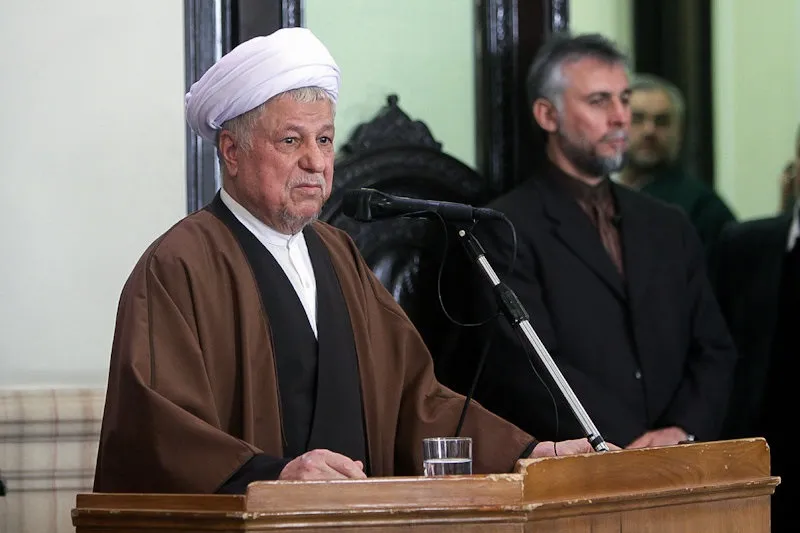
We returned to the residence. Then we went to the Independence Mosque to perform the Friday prayer. A good crowd had gathered for the Friday prayer. Most were young; orderly and without noise. It is a large mosque. The government built it. The Friday sermon-giver and the Friday prayer leader were not one person; one gave the sermon and the other led the prayer. The sermons were short and in Arabic and lacked social and political content, consisting of praises and supplications and Quran and superficial Islamic moral advice.
After the prayer, the people rushed toward me with warm feelings. They tried to reach their hands to me. I passed in front of the rows of people and responded to their feelings. The words Allahu Akbar and Rafsanjani and Islam and Iran were repeated a lot. Outside the mosque, I responded to the feelings of the people who had crowded on the surrounding balconies.
The minister accompanying me was their Minister of Housing, who had little information; he even thought the mosque's built area was five thousand meters and at the same time said it has a capacity for a hundred thousand people for prayer; later he corrected it to ten thousand meters in three floors. He was also uninformed about his country's iron and steel production. He said they produce 22 million tons of cement.
In the garden compound of the palace too they have a mosque where a large crowd of people had come for the Friday prayer here. He said in all government institutions and organizations, there is a mosque for prayer.
For the trip to Bandung, we went straight from the mosque to the airport. With two planes we flew to Bandung, 180 kilometers east of Jakarta, to visit the aircraft and helicopter manufacturing factories. With the welcome of the governor and the factory managers, we went to the administrative office and heard explanations.
It was established in 1976. It has sixteen thousand employees. They assemble a 36-seat aircraft with a Spanish company. Half is built by these and the other half by them here and there. They themselves have designed a fifty-seat aircraft and its first unit is to be produced soon; they also build it with foreign partnership, and its engine and electronic components are imported. They assemble three types of police helicopters: the American Bell "Super Puma," the French.
We visited the factory and the assembly halls. They have many machines and accept parts manufacturing orders for many aircraft manufacturers and large machines. Mr. Suharto said they have so far invested 1.4 billion dollars. We have bought several Super Pumas from them, but we have not paid the advance payment and it has remained outstanding.
Then we went by minibus and took a tour of the city of Bandung. It is a clean city with narrow streets. We had not prayed the afternoon prayer; we hurried to reach the airport. At sunset, in a large and newly built mosque near the airport, we prayed. Suddenly a torrential rain came, which the people considered a blessing of our footsteps. We passed in front of a museum that is the venue of the famous Bandung Conference; we did not have time to visit. At Maghrib we flew toward Jakarta. I slept a little. I was tired.
Then Mr. Suharto and his family came; his wife and two daughters and his daughter-in-law. It was a family gathering. From our side too were Effat and Fati and Faezeh and Mehdi and Fereshteh and the painter lady and Hossein and Kazem and Ali. We had many private negotiations. We emphasized the permit for Iran Air to fly to Jakarta and the construction of a textile factory in Iran with their company.
Mrs. Siti Hartinah, Suharto's wife, said she is busy building a tourist farm where all Indonesian fruits are gathered; in such a way that tourists pick and buy from the tree of their choice. We went to sleep late.
Take less than a minute, register and share your opinion under this post.
Insulting or inciting messages will be deleted.
Sign Up