
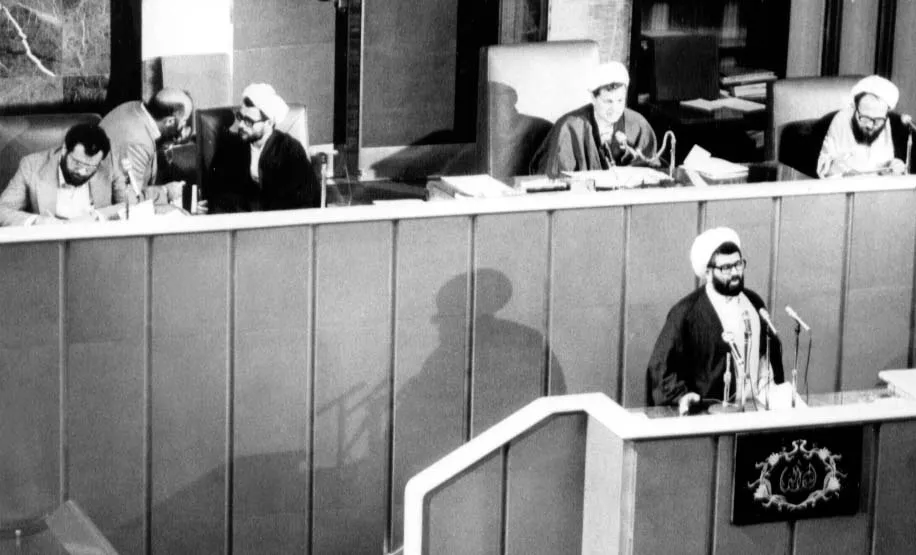
For the speech in Isfahan, I did some studying. I read the report of the UN delegation; it is relatively realistic: the Iraqis have had very little destruction in their country. For the most part, regarding civilians and the population—as the delegation itself admits—there was no deliberate targeting or intent on our part, but the destruction of
For the speech in Isfahan, I did some studying. I read the report of the UN delegation; it is relatively realistic: the Iraqis have had very little destruction in their country. For the most part, regarding civilians and the population - by the delegation's own admission - there was nothing deliberate or targeted on our part, but they have deemed our civilian destruction extensive, deliberate and inhumane; of course, our officials did not take them everywhere, for example, to Hamadan, Ahvaz, Gilan-e Gharb, Kermanshah and Hamidiyeh [they did not take them], and they even wanted not to take them to Qasr-e Shirin, but at the delegation's own insistence they went as far as its vicinity; all in all, it is good. I also made up for the two or three days' delay in the memoirs. Since the main telephone line at home is broken, contact with the outside is limited. I rested and watered the garden.
At four in the afternoon, I went to the airport. Accompanied by Messrs. [Mohyi al-Din] Fazel Herandi and [Qorbanali] Dori [Najafabadi] and [Ahmad] Salek [Ashtiani], we flew to Isfahan; to attend the ceremony for the martyrs of the Seventh of Tir and to create unity among the dispersed forces and factions (the [Islamic Republic] Party and the [Isfahan] Society of Combatant Clergy and Mr. [Jalal al-Din] Taheri and other clerics and the Revolutionary Guards). An official reception was held at the airport by the clerics and revolutionary institutions and heads of government offices. I spoke briefly to them and thanked them. Then I went to the Martyrs' Cemetery – graveyard-; they said that more than three thousand named martyrs and one thousand two hundred unnamed or missing martyrs have graves there.
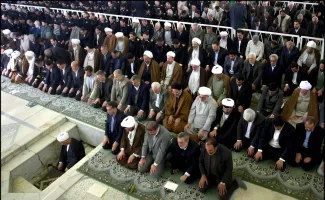
I went to the governorate. We had a meeting with [members of the Isfahan] Society of Combatant Clergy; all their talk was complaints and disparagement of the [Islamic Republic] Party of Isfahan and the opposing clerics, including Mr. Khademi; I gave them some advice and called for unity. At iftar, Mr. [Jalal al-Din] Taheri, the Friday prayer leader of [Isfahan], also came. We prayed together. After iftar, we met with the Central Council of the Islamic Republic Party. Their remarks were the reverse of those of the Combatant Clergy. I advised them and explained the line of unity. I also conveyed the decisions of the Central Council [of the Islamic Republic Party]. Then I had a meeting with [a group of] clerics (non-Combatant). They strongly complained about Mr. [Jalal al-Din] Taheri and the [Isfahan] Society of Combatant Clergy for monopolism. They had also brought a letter from Ayatollah Khademi [head of the Isfahan Seminary] that consisted entirely of complaints about Mr. Taheri and those around him and the [Isfahan] governorate. The Revolutionary Guards commanders also complained about Mr. Taheri and the governorate and the [Isfahan] Society of Combatant Clergy. At ten thirty in the morning, I gave a speech in Imam Square to the attendees -who, they said, numbered about half a million -. It was a huge crowd and I spoke for more than an hour and a half. Messrs. Taheri and Khademi had also attended the meeting. At twelve noon, we came to the airport and flew to Tehran. At the airport, we also had a brief meeting with the Isfahan Revolutionary Guards Command Council. I went straight to the Majles; I slept a little and then ate the pre-dawn meal, prayed and went to sleep.

Take less than a minute, register and share your opinion under this post.
Insulting or inciting messages will be deleted.
Sign Up