
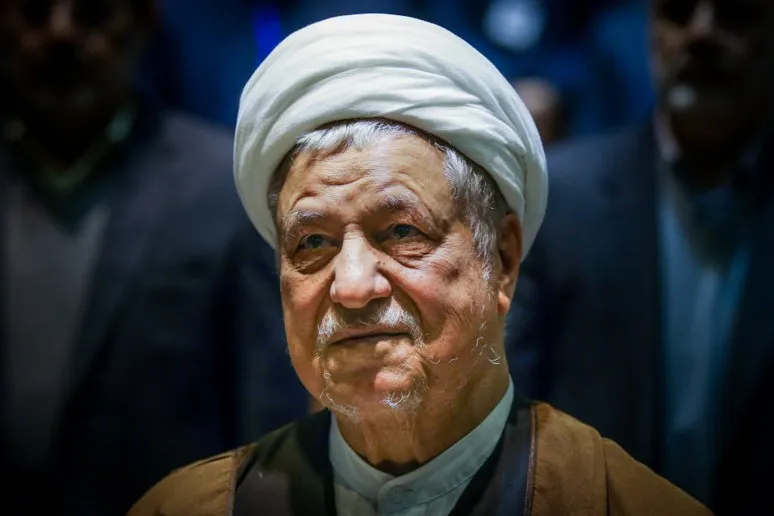
I went to Parliament at six in the morning, an hour before the plenary session, because early that morning we had received information that the counterrevolutionaries were planning acts of sabotage in Parliament.
I went to Parliament at six in the morning, an hour before the plenary session, because early that morning we had received information that the counterrevolutionaries were planning acts of sabotage in Parliament. Specialists from the Revolutionary Guards, the army, and the police came and searched everywhere, and full security measures were put in place to protect the representatives.
I was worried that Parliament might not convene because we would be short of the required quorum. Fortunately, after a one-hour delay, the quorum was reached and the plenary session was officially opened. This was considered a major success, since we had twenty-seven martyred representatives and nine wounded. Although some of the wounded came from the hospital to Parliament to make up the shortfall, their doing so itself had an important impact, and two of them also spoke from the podium: Messrs. Baghani and Marvi, representatives from Mashhad and Sabzevar. However, the timely arrival of ten new representatives solved the problem. Some interpreted the ringing of the bell announcing the formal opening of Parliament as an announcement of the counterrevolution’s defeat, since their aim had been to paralyze the three branches of government.
The entire time before the agenda was devoted to speeches, all concerning the martyrdom of seventy-two of the best like-minded Muslim revolutionaries in the bomb explosion at the office of the Islamic Republican Party. The speeches were very appropriate, timely, and effective. The remainder of the session was devoted to the swearing-in ceremony for the new representatives, amendments to the bill on housing transactions, and referring the electoral amendment to the internal committee for approval. Overall, it was a very useful and constructive session.
In the afternoon, we held a meeting of the presiding board. We discussed and made decisions regarding the following week’s agenda, the security of the representatives, and financial assistance to the families of the martyrs.
Then a meeting of the Central Council of the Islamic Republican Party was held in my office. We discussed reorganizing the Council, seven of whose members had been martyred in the bombing disaster, as well as the by-elections.
Ahmad Khomeini called and said that the Imam had assigned me to lead Friday prayers in Tehran during Mr. Khamenei’s convalescence.
That night, we held a meeting of the Provisional Presidential Council in my office, with Mr. Rajaei and Mr. [Mousavi] Ardebili present. We discussed strengthening the country’s intelligence apparatus, ensuring security, and current national affairs. I spoke with Mr. Montazeri by telephone, offered my condolences, and consulted with him.
I came home late. Effat was alone; Yaser and Mehdi were asleep, and Fati and Faizeh were not at home. Mohsen’s letter had arrived. I read it and was happy. We had fried eggs for dinner; it was not bad, but I had absolutely no appetite. I thanked God that I had not lost my patience. I walked around for a while and thought deeply about the extent of the turmoil and the calamities: the loss of so many valuable and effective forces; Mr. Khamenei’s poor physical condition, despite the highly constructive role he had been playing in dealing with the Revolution’s problems; the Imam’s illness and old age; and the complicated circumstances of the war.
Take less than a minute, register and share your opinion under this post.
Insulting or inciting messages will be deleted.
Sign Up