
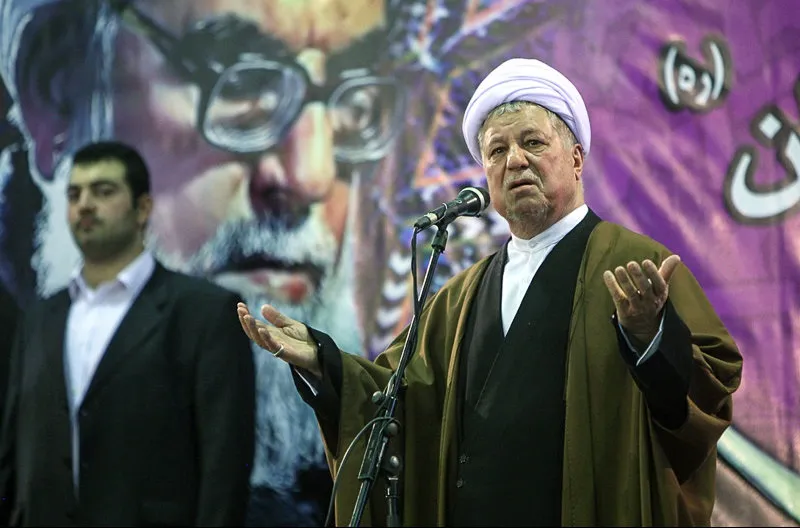
We had breakfast with Mohsen. I read the reports. We went to Ahvaz Airport and inaugurated the terminal development plan. The airport manager requested permission to create a new runway. Because of the oil wells next to the runway, the Ministry of Oil does not allow it. We flew to the sugarcane project site. On the way
We had breakfast with Mohsen. I read the reports. We went to Ahvaz Airport and inaugurated the terminal development project. The airport manager requested permission to build a new runway. Due to the presence of oil wells beside the runway, the Ministry of Oil does not allow it. We flew to the sugarcane project site. On the way, Engineer Seyyed Hadi Tabatabai gave explanations. We landed at the Amir Kabir unit [of the Agro-Industry Complex]. They gave explanations at the briefing session.
Eighty thousand hectares and seven units for producing 800 thousand tons of sugar, 350 thousand tons of printing and writing paper, and 820 thousand tons of animal feed [and semi-light fiber], which altogether at today's rate has an annual added value of 800 million dollars. It supplies the country's basic needs and creates fifty thousand new jobs and develops the desert region.
We saw the polyethylene pipes that are used in various sizes instead of the third and fourth degree irrigation canals and save cost and land consumption and make irrigation work easier. They have built a factory to produce it, which gets its materials from domestic petrochemicals.
Right there we announced the start of work on twenty-five thousand hectares of eucalyptus and I planted a seedling that is being created by the [Headquarters for] Reconstruction [of War Zones] and the Agro-Industry for paper production. Then we went and saw one of the water pumping stations from the Karun for the Deybal Khazaei unit; with 18 pumps, to transfer 33 cubic meters of water per second from the Karun. The pumps have not yet been installed, but the building is ready and the first-degree canal has also been built. They have obtained the pumps with technology from China; each pump at a price of about one hundred thousand dollars.
Then we went to the farm. We watched the huge trencher machines that were busy digging the canal and installing the drainage pipes at a depth of two meters in the ground. At the same time they dig and lay the pipe and pour graded sand over it and can advance more than one hundred meters per hour; it is very interesting, a pity we had not brought the journalists.
We flew toward Khorramshahr. On the way, from the air we saw the Khorramshahr industrial estate and the general situation of the region, and to see the city's condition, we flew over Khorramshahr for a while. There are still many unbuilt spots. I landed beside the city stadium. It was a magnificent gathering. Despite their problems, they expressed their feelings very enthusiastically, with Persian and Arabic and anthems and recitations and clapping and hand-waving and women's kel-keshan. Mr. Seyyed Abolhasan Nouri Mehri, the Friday prayer leader, and Mr. Younes Mohammadi Karim, the representative and governor, gave welcome speeches and raised the needs and thanked for the work done. I too gave an encouraging speech and promised to fulfill the demands for employment and sewage, including the creation of a free trade zone; not with a definite promise.
Then we went to the pier area and saw the port; it is very extensive, with several piers and good new warehouses and a vast area, about one and a half million square meters. We visited the warehouses that also had abundant goods. We visited the Negin passenger ship; it is clean and advanced and fast. It goes to Kuwait every day. They charge about twenty thousand tomans per passenger. It is four hours on the way. They have bought it from Australia for five million dollars. Mr. Mohammad Madad, the CEO of the Ports and Shipping Organization, and Mr. Akbar Torkan, the Minister of Roads and Transportation, gave explanations and asked for help to complete and reconstruct the port.
Opposite us lies the Iraqi island of Umm al-Rasas, which is completely ruined; its palms have dried up and the people have left. It is a good comparison for the reconstruction of the two countries. We toured the city for a while and saw the various reconstruction sections and the Karun riverside street. They have pulled out and reconstructed about one thousand five hundred launches and boats that were sunk in the war, and their owners have taken them. They have built one side of the shore. They are preparing a place for building a war museum. Mr. Mehdi Chamran, the head of the Foundation for Preserving the Works and Values of the Sacred Defense, gave explanations. They have also kept the places of the bullets of the war time in the building. It is the main office building of the Oil Company.
We visited the newly established beverage factory—Arso—of the Islamic Propagation Office of Qom. They have built it with the help of the Reconstruction Headquarters. They said it is the most modern factory in the Middle East. Mr. Mohammad Jafari Gilani gave explanations. We inaugurated the Fatemeh Zahra (AS) Hospital. All its personnel are women.
We went to Abadan. With the enthusiastic welcome of the people, first we inaugurated the gifted students' school. Mr. Javad Ejei, the Leader's advisor and head of the National Organization for the Development of Exceptional Talents, gave explanations. We went and inaugurated the Karun Sara Hotel, whose reconstruction has recently been completed. It has been built with the help of the Reconstruction Headquarters. It is confiscated and at the disposal of the Executive Headquarters of the Imam's Order. During the war, it was the stationing place of the Fadaiyan of Islam headquarters. We stayed there.
After lunch and a little rest, we flew toward the shrimp farming site in the south of Abadan Island. On the way, Engineer Mohammad Reza Shamsai, the head of the Water Committee of the Construction Jihad, spoke about the important irrigation project of the island. Before the revolution, it was designed by the Swedes; for both Iran and Iraq, for the period when the water of the Arvand will not be fresh. From a point of the Karun that is not salinized by the sea tide, they transfer the water with a huge pumping station to Bahmanshir and from Bahmanshir to the island; it has a high cost.
We landed at the shrimp project site. Mr. Rasoul Lahijanian, the Deputy Minister of Construction Jihad and head of the Fisheries Company, gave explanations; it is very huge. They are converting more than five thousand hectares of deserts into shrimp farming pools. With the tide they take water from Bahmanshir and put it at the disposal of the private sector. They said that up to two hundred thousand hectares can be developed on the Khuzestan coast. They had also set up the Abadan handwoven carpet exhibition; a profitable and productive and employment-creating work.
From there we went to Arvandkenar. We passed in front of the people through the city street; they welcomed very enthusiastically. A woman poured a bottle of rosewater on my clothes; they complained why we did not stay. It has been reconstructed well and the people are cheerful. We flew toward Abadan. From the air we saw the houses that Mr. Ali Fallahian is building for the deprived with my help, and he gave explanations. We also saw the Choebdeh port and the huge dredgers that are dredging Bahmanshir.
To shorten the route to the speech venue, instead of the airport, we landed in another place. Although we went toward the gathering place by another route, the crowd of welcomers slowed our movement. In the Abadan stadium, the people's emotions were at their peak; especially the women who had taken their scarves out from under their chadors and were twirling them above their heads, and the sound of the praising slogans did not stop for a moment; even during the speech. After the welcome of Mr. Gholamhossein Jami, the Friday prayer leader, I gave a short speech that was repeatedly interrupted by slogans of support. Truly, Abadan was all fervor and it amazed those present.
We went for the inauguration of the pasteurized milk factory. The Ministry of Defense has built it. Before the war, there was a milk factory in this same place that the Iraqis had occupied and destroyed. Recently, with the help of the Reconstruction Headquarters, the building has been renewed; more equipped and larger. We prayed the evening and night prayers there. It was arranged that the Construction Jihad would also subsidize it like the other factories.
We took a tour of the Abadan industrial estate. They said 160 contracts have been concluded and they asked for help to equip the second phase. We went for the inauguration of the Taleghani Hospital. It has been reconstructed and developed with 240 beds and modern equipment. Due to fatigue, I did not visit the various sections. In a meeting in the hospital amphitheater, I gifted the house documents to dozens of female-headed households, free of charge. About two thousand five hundred small housing units have been built by the Reconstruction Headquarters from the properties left over from the refugee camps.
We had a meeting of the [War-Zone] Reconstruction Headquarters. Mr. Hamid Mirzadeh, the Deputy Executive of the President, gave a report on the work. I too gave a short thankful speech. From there we went to the Abadan port area. Many boats and ships and launches had docked. I spoke with one of them that had loaded three hundred tons of stone for Kuwait. Thank God, the port is active. We went to the hotel for dinner and sleep. I slept tired.

Take less than a minute, register and share your opinion under this post.
Insulting or inciting messages will be deleted.
Sign Up